Lassen (or Another Boondoggle Day)

Well, more a semi-boondoggle day. It started with us getting lost just north of San Francisco. A GPS has an unusual mindset sometimes, and that morning ours firmly believed that side streets with speed bumps were a more direct route north than I-80. Our destination was Lassen Volcanic National Park. But once we successfully found I-80 we failed to take a right turn where we needed to and were on the wrong road, then discovered our error, retraced our steps only to learn that the right road was closed 47 miles ahead (just a few miles before the park), so the wrong road we’d taken was actually the right road. All this added a good hour to our trip.

We finally arrived at Lassen Volcanic around 4pm, and it turned out to be a lovely time to drive the tour road through the park. The park was fairly empty, and the light was good for photographing the peak and the surrounding lakes. Lassen Volcanic is still an active volcano, as it’s been less than 100 years since it erupted. The road, another masterwork of switchbacks to rival Rocky Mountain, climbs through the park to reach 8,512 feet and then slowly descends to about 6,000 feet at Lake Manzanita where we camped. We especially enjoyed a stop at Emerald Lake, a glacial lake that was isolated when the glacier receded. Algae at the bottom of the lake give it a deep greenish-blue color. The lake was stocked with rainbow trout many years ago which they are trying to remove, as they feed on the tadpoles of a rare native species of frog.

20130730-153310.jpg

20130730-153346.jpg

20130730-171847.jpg

20130730-172002.jpg

You can’t travel anywhere in the West without being faced with man’s intervention with nature in the form of dammed rivers, mining operations, land-clearing for crops or asphalt parking lots for large shopping centers, or air filled with smoke from man-made forest fires or factories. In some cases, it is arguably progress. But when you visit the national and state parks and see their pleas to save the bears, the trees, the frogs, to not interfere with the wild animals or the land that holds precious fossils, or to protect the rivers and their inhabitants, you have to wonder at what we’ve already done to this Earth and what the real long term effects will be. It’s chilling to look at a place like Yosemite and realize that there were once powerful men who only saw it as a rich resource of raw materials for industry or commerce. Fortunately it has been preserved for us by the federal government, but how much else of our incredible country is at risk? How much can we afford to sacrifice to progress?

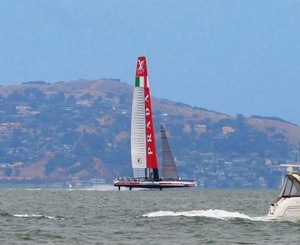
When Boats Fly

It was a perfect day for sailing–blustering, fits of sun breaking through, cool enough for fleece or even parka. We joined the hundreds (not thousands) of people at the Americas Cup Pavilion on the Embarcadero to check out the two sailboats in today’s race: the New Zealand boat sponsored by Fly Emirates and the Italian boat sponsored by Prada. True to American marketing practices, the sponsors names shout from the sails, readable without binoculars even when far from shore.

Thus far, the Americas Cup has been somewhat of a non-event in San Francisco, generating fewer crowds, jobs and revenue than hoped for. But it’s early. July and August are qualifying races. The big event is in September, so the participation and revenue stream should improve.

San Francisco Bay is the perfect place for racing, with the stiff and steady breezes creating the kind of wind that can send a sailboat with the right equipment shooting through the water up to 45 knots (like 50 mph.) These boats are equipped with the latest technology in sailing gear that make them worth millions. They’re big enough to require a crew of 16 who they look like high-tech Spider-Me n as they scramble all over the boat when it’s in flight.

And they do fly! At full speed, they rise out of the water, only attached to the water by a thin hydrofoil; see the picture below.

20130730-130824.jpg

20130730-130921.jpg

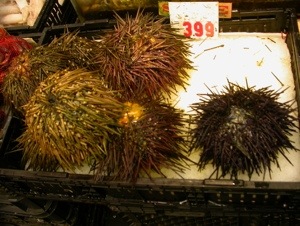
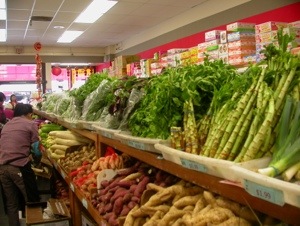
As we were traveling with an Italian, we were rooting for the Prada, but unfortunately it was having a bad day and trailed the Emirates by several miles to the finish line. That didn’t stop us from at least celebrating afterwards with fish we bought from the most remarkable market I’ve ever seen. The New May Wah Market is a classic Asian market where fish eyeballs stare at you from the all the fish piled on mounds of ice, where crabs skitter in boxes on the ground, and sea urchins sit with their bristles drooping in death. Chicken carcasses and chicken feet were in the row with the eels and (I think) the snakes. And the rows of greens wrapped in rubber-banded stalks that filled several aisles were as green and robust as if they were still in the field. Everything was incredibly fresh.

  • 20130730-131147.jpg

    20130730-131214.jpg

    20130730-131236.jpg

    Jelly Belly

    San Francisco! Nearly three thousand miles to get here, but it’s a prize worth winning. The city is gloriously gray, overcast and foggy, a lovely relief from the 100 degree plus weather we experienced coming down from Yosemite. It has its brief bouts of sunshine too, which are well-received, but there’s something refreshing in the cool crispness of the air.

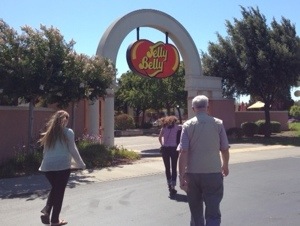
    Saturday was Jelly Belly day–an opportunity to tour the factory that creates these remarkable nuggets of unusual flavors. They specialize in the unusual: chocolate pudding, cake, Dr. Pepper, spicy mango, and toasted marshmallow being some of the more socially acceptable. Less so are flavors that mimic earwax, rotten eggs, Tabasco, toothpaste and grass clippings. And they’re always willing to accept suggestions for new flavors, so send them on.

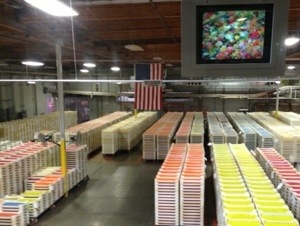
    Our guide was super-enthusiastic about telling us about all the steps required to create a Jelly Belly–it takes 21 days from start to finish–and I was amazed to learn each one worthy of carrying the Jelly Belly name goes through 3 filtering and inspection steps to assure they’re the right size, shape and color before the name gets stamped on each one. I never realized this before as I was too occupied with eating them.

    20130727-164053.jpg

    20130727-164138.jpg

    20130727-164215.jpg

    20130727-164226.jpg
    And of course, the gift shop at the end of the tour will sell you anything made of or commemorating Jelly Bellies. Even their rejects, which they sell as Belly Flops.

    Yosemite

    Awesome is a word that’s been overworked in recent years, but somehow no other word works as well with Yosemite. Stunning, spectacular, incredible could also be used, but none of those capture the overwhelming impact of such natural and diverse beauty concentrated in one national park.

    Yosemite has it all: towering stone cliffs, waterfalls that tumble thousands of feet, rivers that wander through beautiful forests that invite picnicking, and hiking trails that take you as far as you want to go into the parks hidden treasures. The park itself is huge, large enough that, even when filled with tourists during one of the busiest months of the year, it still has enough space that you never feel crowded. Indeed, the large number of pulloffs taking in all the vistas are invitations to pause and enjoy.

    Visiting the park was special to me because the last time I was here was with my family as an almost-teenager. In the distant reaches of my memory, I can hear my father’s voice saying the names of what we were seeing with that crisp, enthusiastic tone that told me this was some special. Tioga Pass, El Capitan, Bridal Veil Falls–these were all sights I can recall the immense pleasure he took in sharing with us. Seeing them again a good 50 years later brought back a lot of those memories, and they’re still as special today.

    Below is a slideshow with just a few of today’s special moments.

    This slideshow requires JavaScript.

    Lee Vining

    Our 7th day on the road was spent viewing more iterations of dry, dusty, scrubby land which varied from flat as a pancake for twenty miles in front of you to brown-toned boulders piled on either side in novel arrangements. Roger and I both agreed by the time it was over that the route we took from Dinosaur, CO to Lee Vining, CA was the longest route you could do the distance with the maximum amount of desert. Why did we do it? Because we hadn’t taken that route before–often our profoundest motivation for planning our trips.

    We did have a bit of excitement when out in the middle of nowhere a pickup headed our way lost a tire. That took the pickup careening off the road, throwing up a huge cloud of dust, and for a few seconds we had no idea whether a loose tire or, worse, another vehicle dodging the mishap would be meeting us. I’m here to write about it, but it was one of those life lessons that reminded us how fragile our grasp on life truly is.

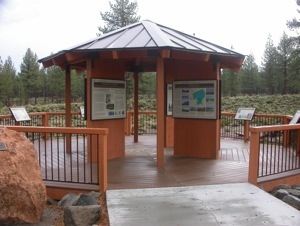
    Shortly before our stop for the night, we pulled over to see the site of a former wood mill just outside Lee Vining. It’s history had been captured in a beautiful kiosk that described the wood cutting, milling and shipping that took place at that site. With 4 saws and 25 men, a crew (when sober) could produce 80,000 board feet a day.

    I was equally impressed with what a few local people proud of their heritage can accomplish to preserve it for the future. The woodwork and stone monuments showed great thought and high quality handwork had been put into the project.

    Tomorrow we see one of the major sites we came for: Yosemite National Park, just a few miles from our campground.

    20130726-164926.jpg

    20130726-170334.jpg

    Dinosaurs and Deserts

    Allosaurus Skull

    Allosaurus Skull

    Our sixth day on the road carried us off to the land of dinosaurs–Dinosaur, CO and the Dinosaur National Monument. For me, dinosaurs have always been something other-worldly, a fantasy that appeals mainly to young children. But in this land I could imagine these huge animals nibbling on trees, slurping river water, and wandering across the terrain. And the proof is here too. In a huge quarry hall, they have the products of their archeological digs in the nearby hills. A few examples are found in Dinosaurs.

    Leaving the dinosaurs behind, we headed off into the wilderness of western Colorado, into Utah and Nevada. The terrain is spectacular, although there are many who would say its spectacularly boring. The land is dry, sometimes barren, and rugged. But there is beauty in the million shades of brown that are used to paint the myriad land formations. We’ve spent nearly three days going through varying landscapes, and they rarely replicate. Below are just a few examples of the diversity of the desert West.

    DSCN6977

    DSCN7040

    DSCN7034

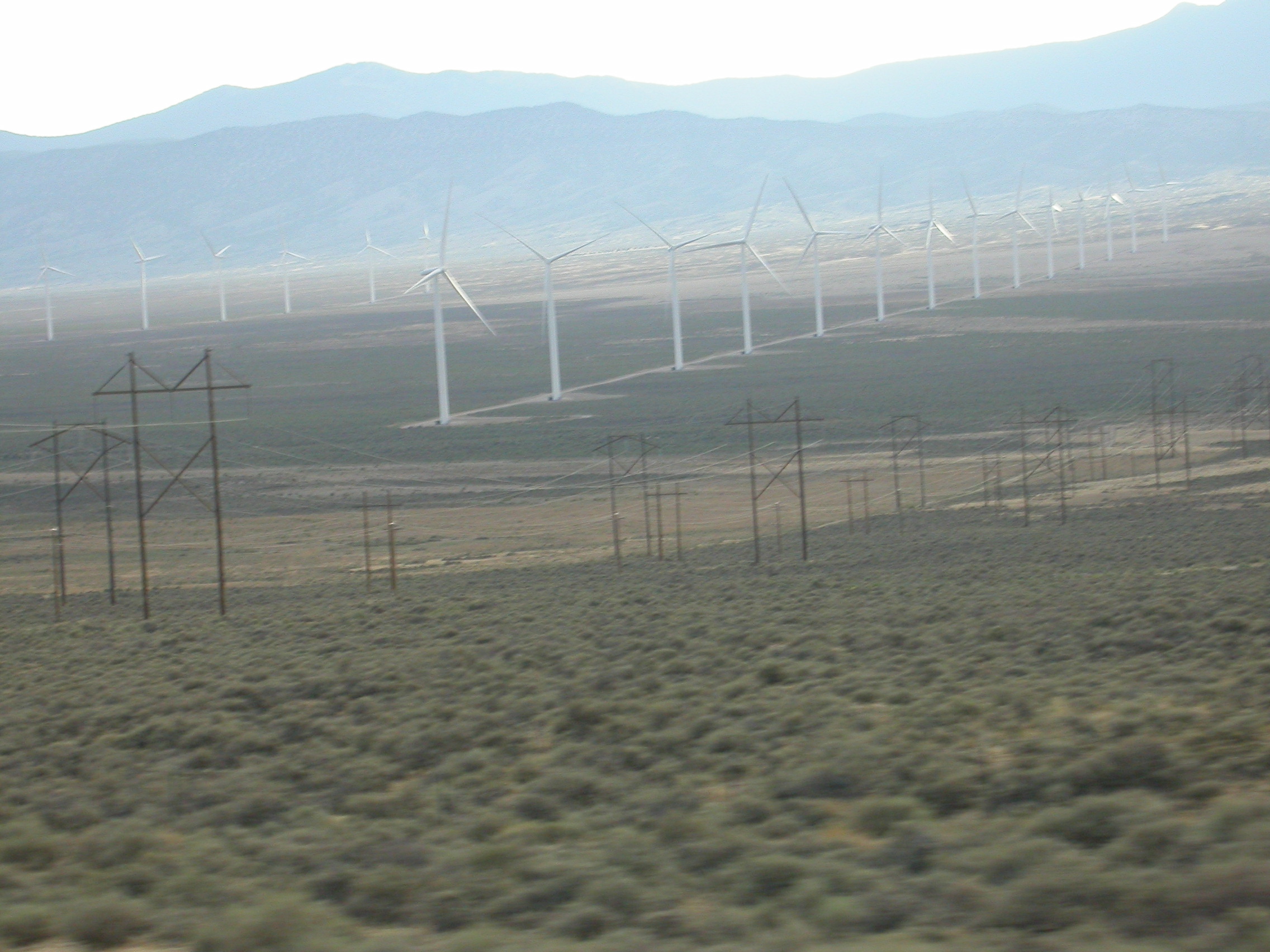
    And it was good to see that some of these wide open spaces are being used to harness wind power. We’ve passed several wind farms on our travels through these states.

    DSCN7031

    On to California and Yosemite.

    Our First Boondoggle

    Definition of boondoggle: an inadvertent and often self-imposed blip in on otherwise well-ordered course of action, often the result of inattention, lack of knowledge, or sometimes sheer stubbornness to pick up the phone and call.

    Bonney Lake State Park in Idalia, CO. It was on the map. There were signs for the campground along the road. Just 3.7 miles down a dusty, rutted, rocky road straight a 50’s Western and we’d be home for the night.  We were both convinced that we didn’t need to call because state parks always had space during a weekday.

    But the lake had dried up, and the campground was abandoned. We were in the middle of country where 150 years ago justifiably angry Native Americans could have come racing on horseback over the horizon to avenge our invasion of their hunting ground. No John Wayne to come to the rescue either. Salvation came in the form of a KOA near Denver, 108 miles away. When we rolled in after 12 hours driving 535 mies, we were ready to stake a claim and stay put forever.

    But of course we couldn’t do that. The following morning found us climbing the steps of the State Capitol in Denver. As in Kansas, there was heavy-duty renovation going on, the most notable part being their restoration of the covering of the outside of the dome. This requires an unusual “hat” for the capitol. See below.

    DSCN6638

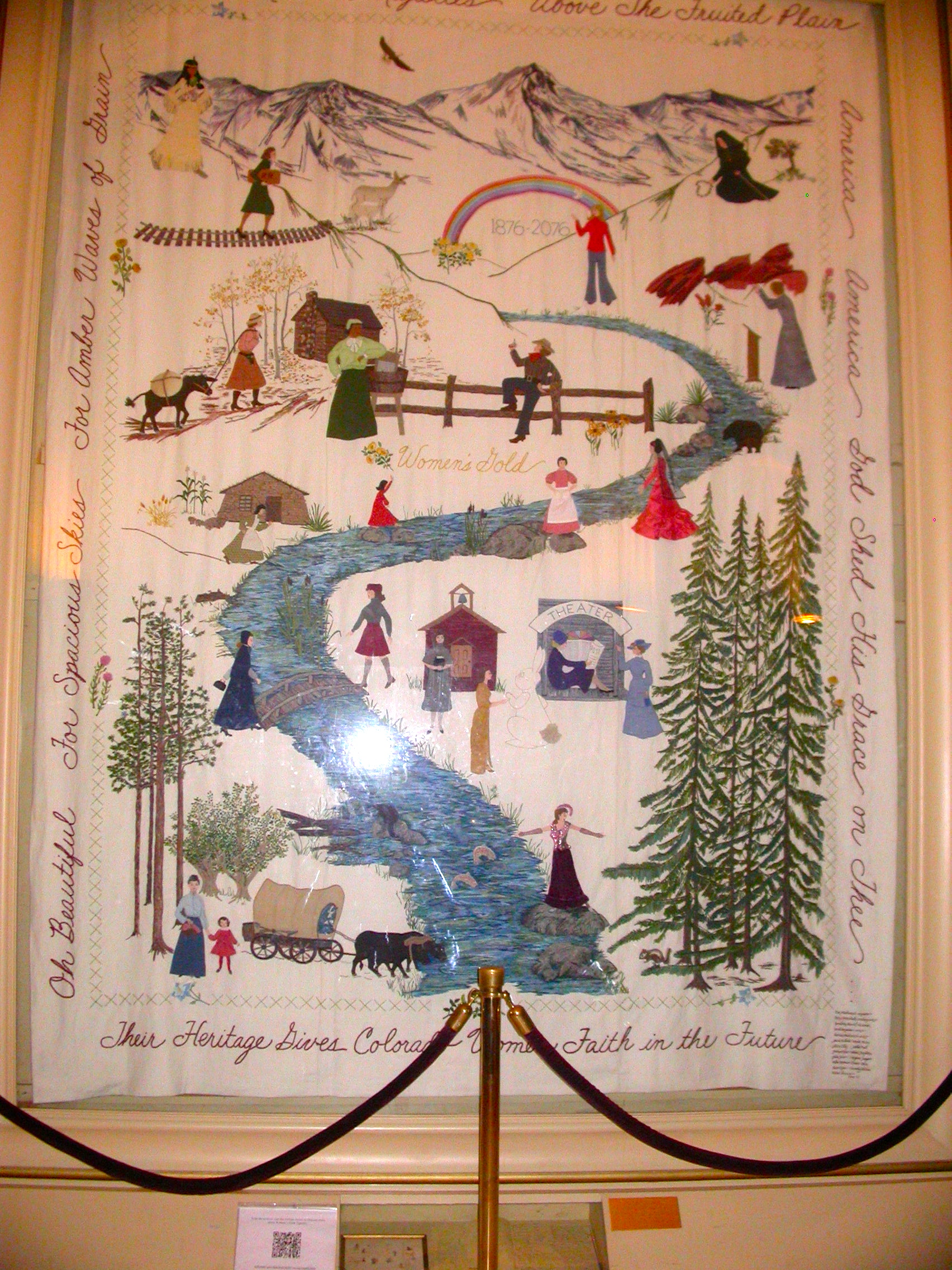
    One of the most notable things we saw was a remarkable quilt that had been made by the women of Colorado to commemorate the significant contributions of Colorado women in settling the state. It hangs from floor to ceiling in the Capitol in a place of honor.

    DSCN6656

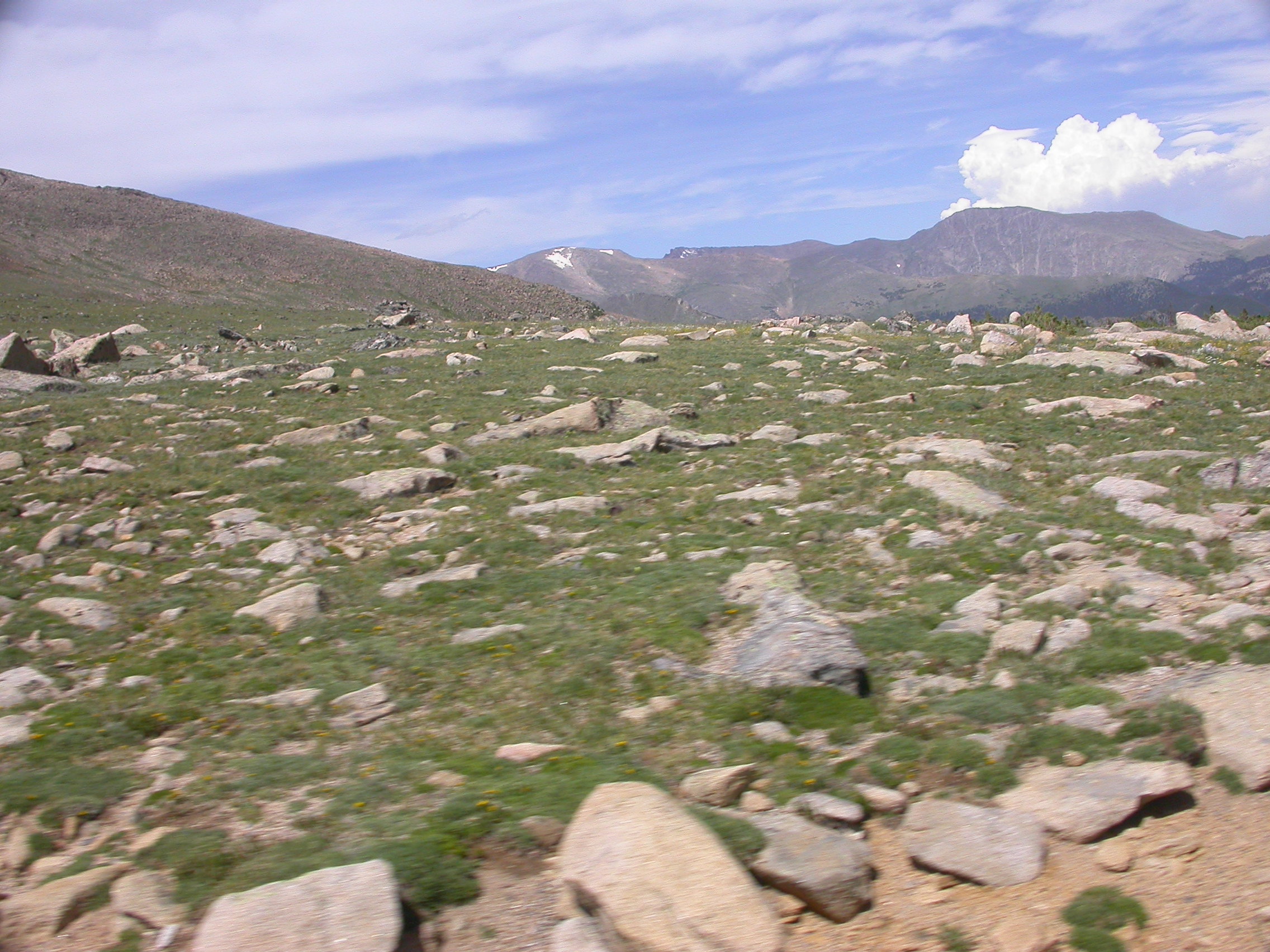
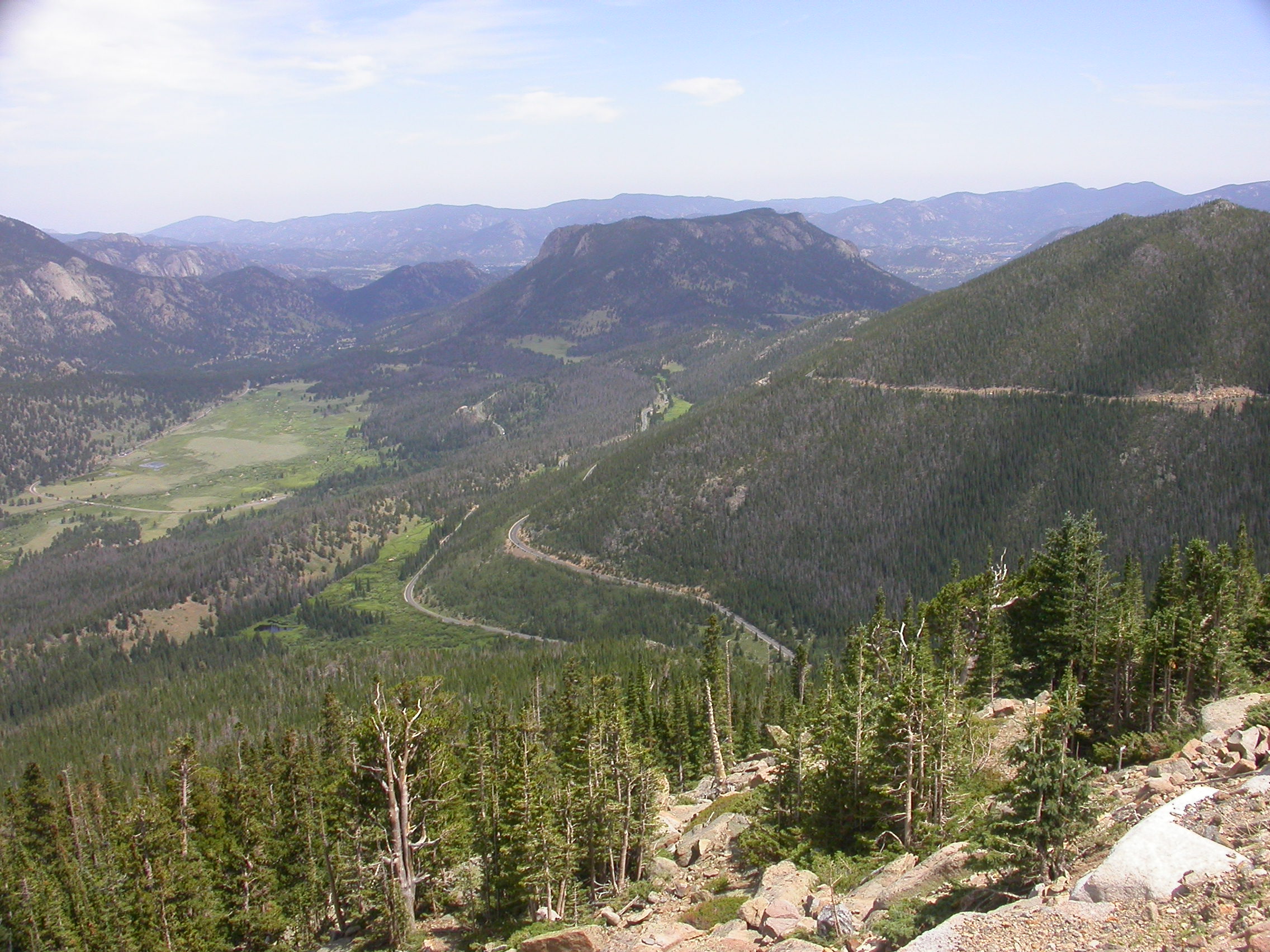
    On to Boulder, where the bicyclists outnumber the cars, and then to Estes Park where we had lunch before taking on Trail Ridge Road in Rocky Mountain National Park. We rode the entire route from one end of the park to the other and passed through multiple time zones of geologic activity. There are too many photos to share here, but below are a couple showing the glacial moraine, and one of the many remarkable switchbacks that I marvel anyone can do in an RV. We reached 12,200 feet where life, and the air, is rare.

    DSCN6739DSCN6727

    For additional photos, see Rocky Mountain National Park

    Three Days Without a Signal

    Postings have been sparse–downright non-existent–because we’ve been wandering through a communications desert for the past few days. Our preference is to stay off the interstates and away from major metropoli as much as possible, which has the unfortunate side-effect of also being absent from anything approaching a potent wireless signal. My regrets for keeping everyone hanging about what we’ve been doing in Kansas, Colorado and Utah.

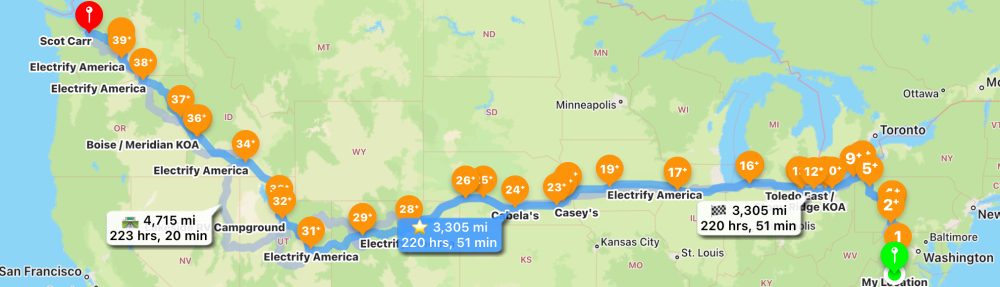
    Driving 400-500 mile days has been a large part of it. The result is that here we are now in Ely, Nevada, a town we’ve visited on other trips. Out here, distance means something very different from back in the East. A sign at the office of campground here in Ely said: Roundtrip to Walmart-398 miles. I don’t think they’re joking. We’ve begun thinking ourselves, “it’s just another 150 miles, piece of cake.”

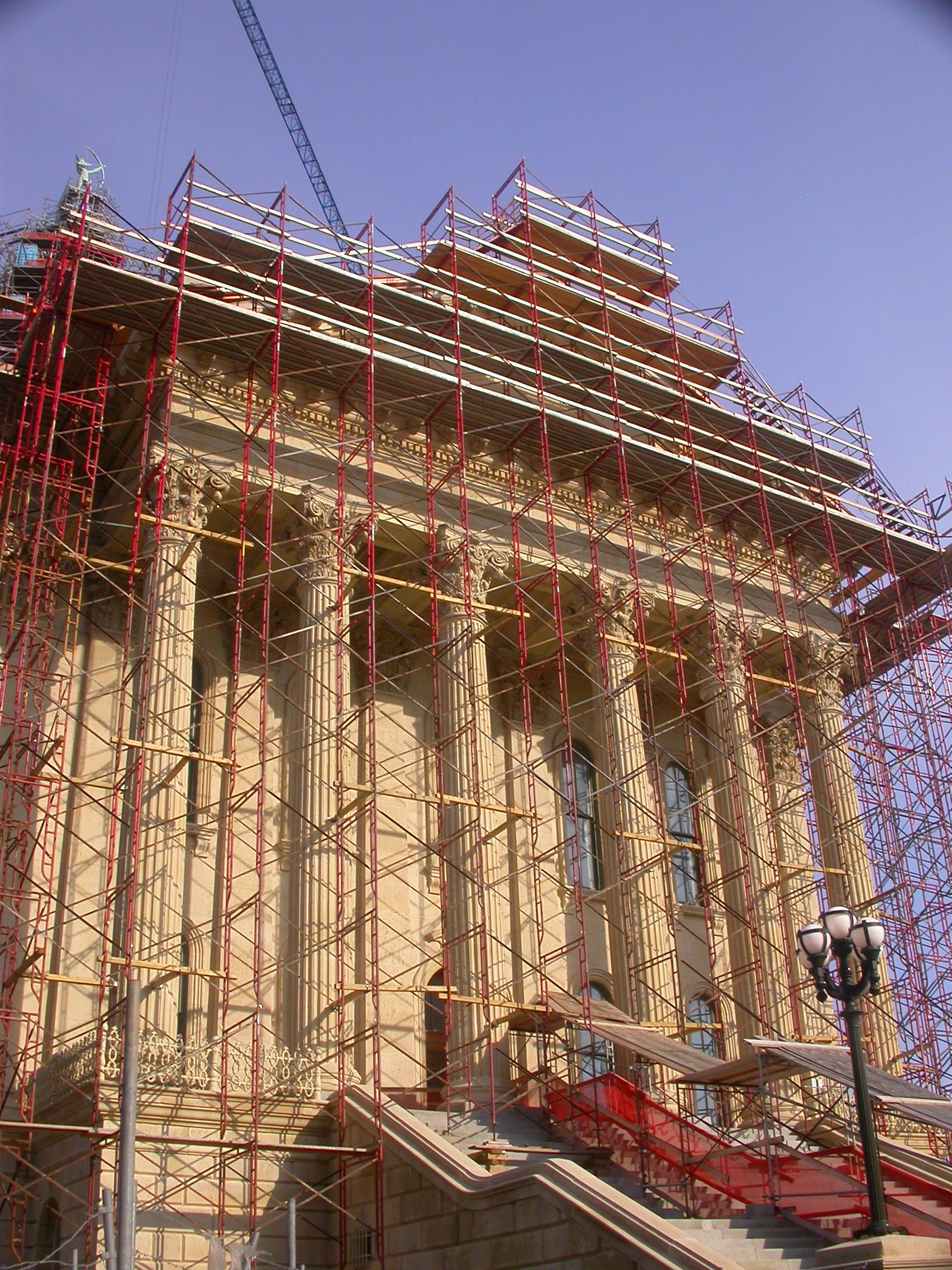
    But going back to three days ago, our day started off with a spectacular bang by touring the newly restored Kansas State Capitol in Topeka. We visited here a couple of years ago, but had the unfortunate timing of arriving on the 4th of July, just as every citizen in Topeka was converging on the State Capitol grounds for the fireworks show. Needless to say, the Capitol was closed. It was worth the wait. After pouring in at least 350 million dollars over the past 14 years (half of that federal funding) to restore it to its early 1900’s state (think heavy Victorian), it gleamed, and the employees were glowing too, bust-ing-their-buttons proud of their new”old” capitol building. Note all the scaffolding in the picture below. The interior is in fine shape. The exterior still needs some work, and they’re also building a new Visitor Center. That will cost another $150 million.

    Kansas State Capitol

    Kansas State Capitol

    Kansas Capitol Dome

    Kansas Capitol Dome

    Much of the rest of the day was spent working our way through the mazes of corn that constitutes most of central Kansas. We stopped briefly in Concordia, Kansas, to see a museum newly formed to commemorate the nearly quarter of a million children who were part of the Orphan Train program that took place from about 1870 to 1910. It was a time when there were too many orphans in the major cities of the East Coast, and too few children in the growing midwest, where a child’s labor on a farm could make a huge difference. So they were collected by the Children’s Aid Society in New York City and sent on trains to towns in the Midwest. This museum, in tiny Concordia in an old train station, is not only a historical museum but also a “clearing house” of sorts for those tracing their roots. (For you literary folk, the recently published book The Chaperone, deals with this topic, and it’s a remarkably story–a great read.) The yard was peppered with delightful children’s sculptures, and below is my favorite.

    DSCN6554My next post will be about our fifth day on the road, which we spent in Colorado, touring the Capitol in Denver and then driving through Rocky Mountain National Park.

    Third Day: Two Paragons of Statesmanship

    In the middle of the country, in two relatively small cities, we spent most of the day exploring two museums that brought together examples of fine statesmanship.

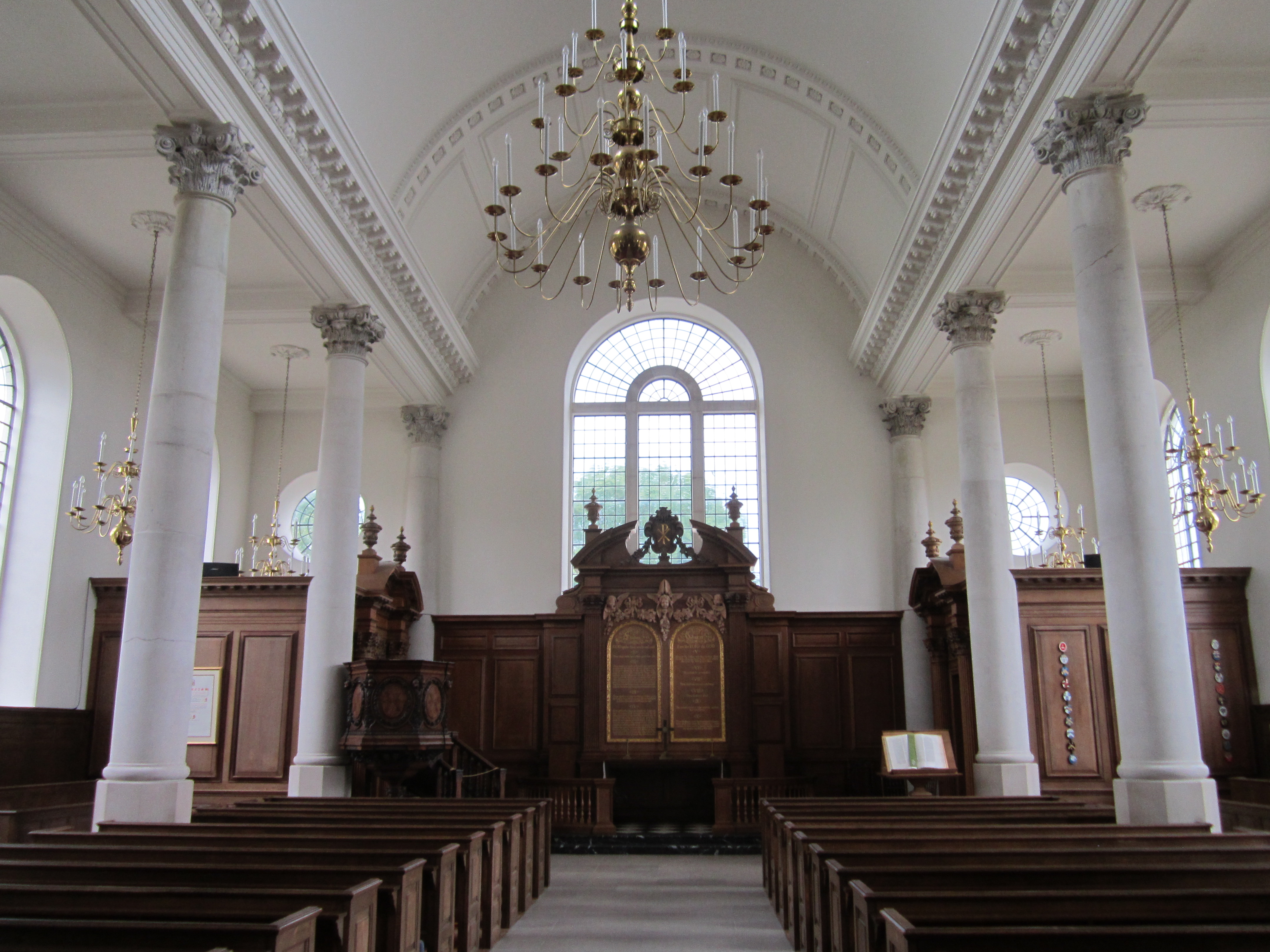
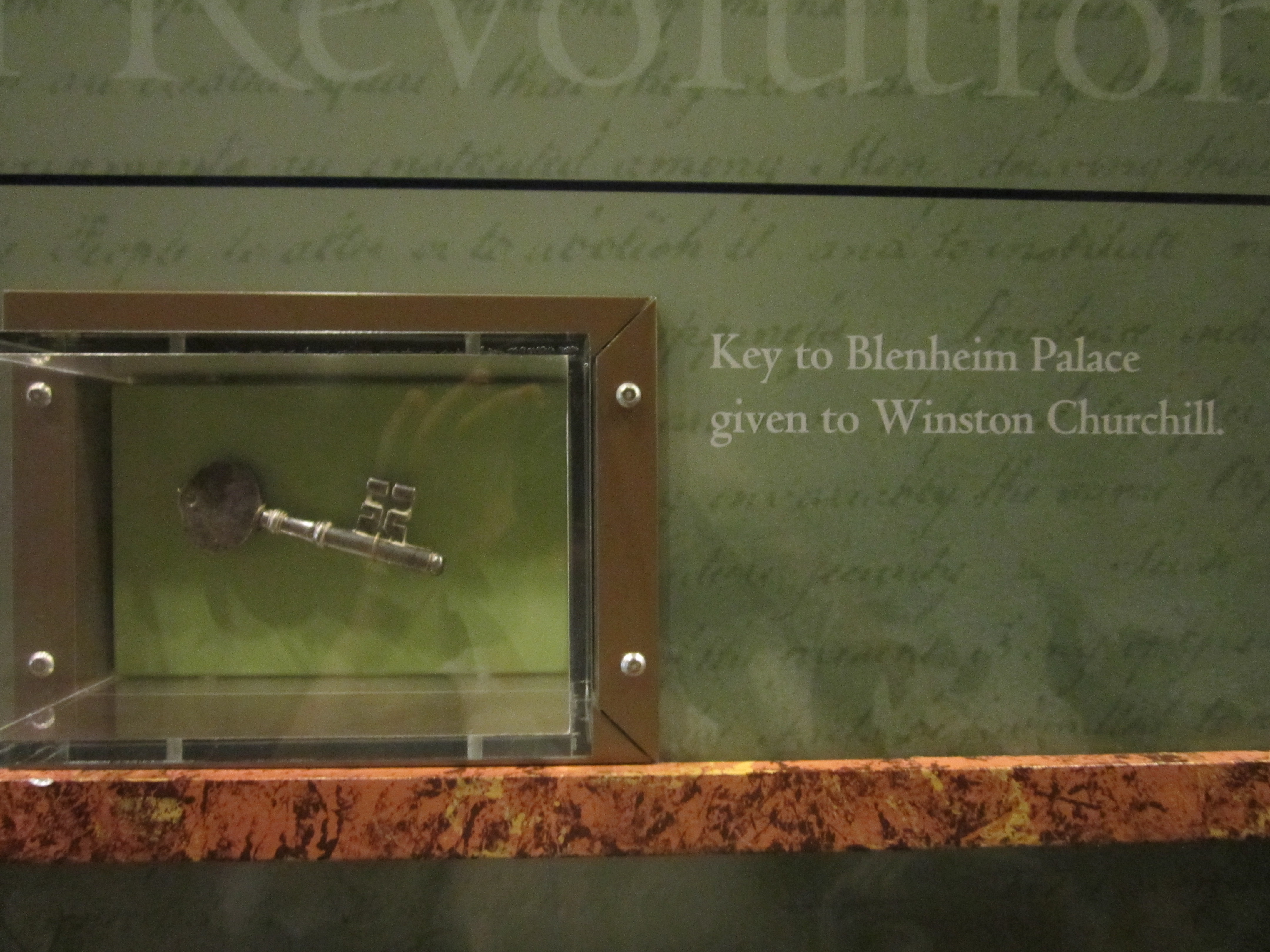
    In the days after World War II, Winston Churchill, relieved of his duties of Prime Minister, toured the United States. In 1946, he visited Westminster University in Fulton, Missouri where he gave the famous speech in which he first used the term “Iron Curtain.” The university has created a beautiful museum based on this event, which now comprises both a history of Winston Churchill and of World War II. This museum is housed in the lower level of a church reconstructed from a London church originally designed by Christopher Wren that was destroyed in World War II, St. Mary Alderbury. It contained an fine collection of Churchill memorabilia, including a key to Blenheim Palace, and a remarkable piece of artwork in a nearby plaza.

    IMG_1315

    St. Mary Alderbury, Site of Churchill Museum

    St. Mary Alderbury, Site of Churchill Museum

    Key to Blenheim Palace

    Artwork made from the Berlin Wall at Westminster University

    Artwork made from the Berlin Wall at Westminster University

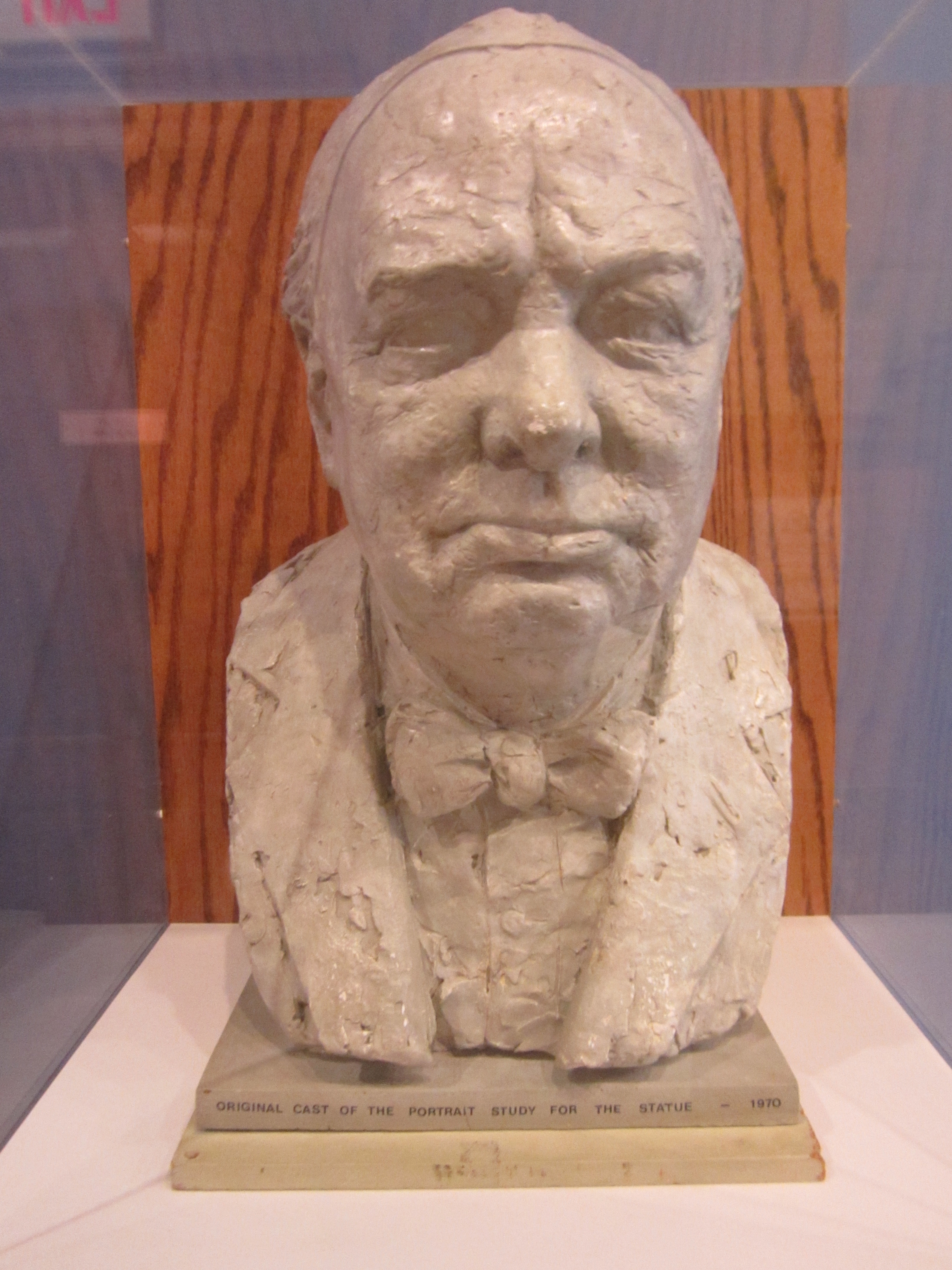
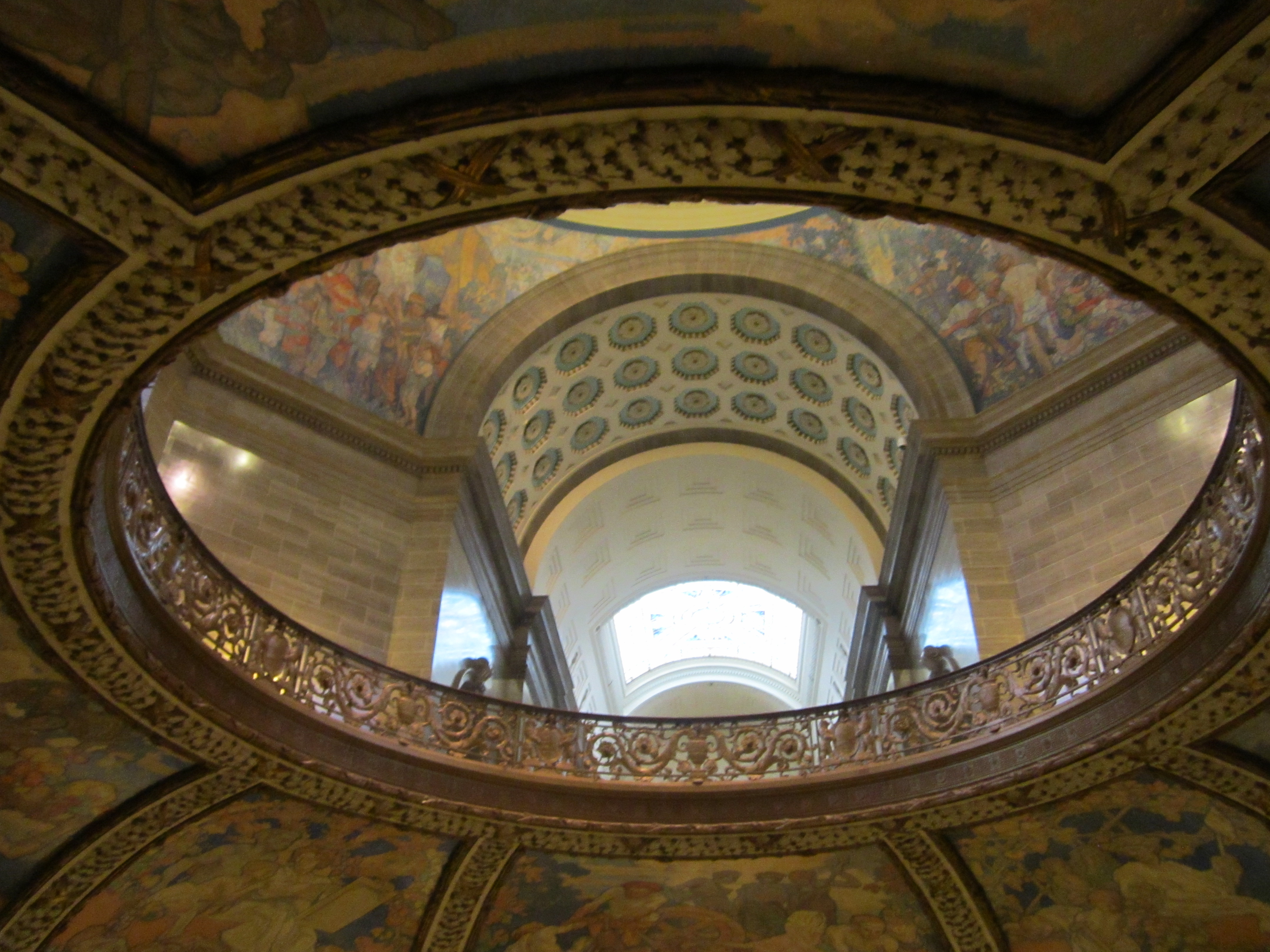
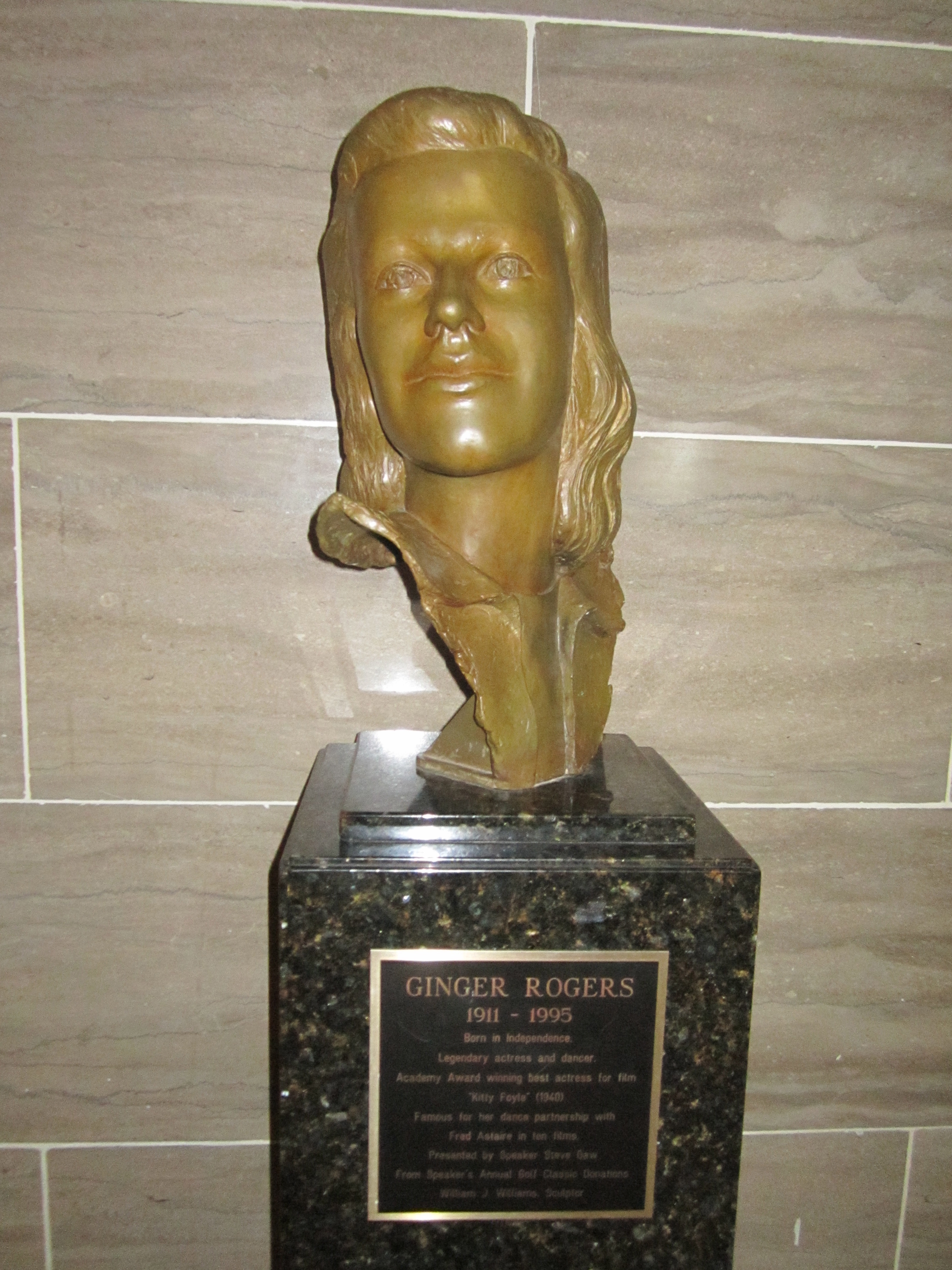
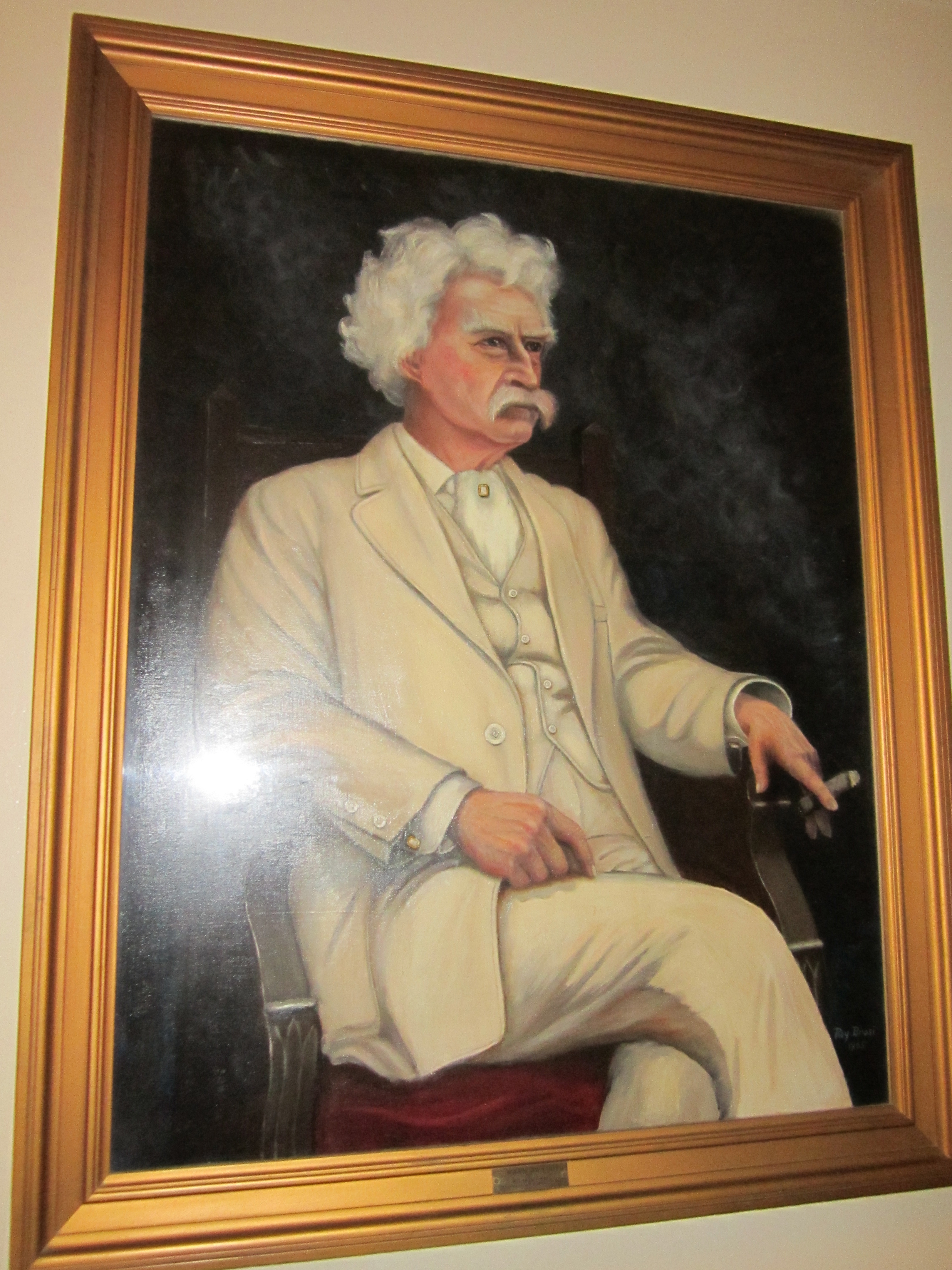
    The Missouri State Capitol was also a celebration of statesmanship, recognizing many of the Missouri governors, senators, and representatives and other important Missourians. The center rotunda is stunning, as in most capitols, but the most interesting part was the gallery of busts of notable people with a connection to Missouri. Scot Joplin, Bob Barker,  Ginger Rogers and Betty Grable stood in state with the likes of Walter Cronkite, Walt Disney, and the man who founded Hallmark cards. And, of course, Mark Twain was enthusiastically recognized.

    Missouri Capitol Rotunda

    Missouri Capitol Rotunda

    Betty Grable

    Ginger Rogers

    Samuel Clemens

    Samuel Clemens

    2nd Day: Kentucky to Missouri (through Indiana and Illinois)

    Our morning started with a quick pass by the Toyota Factory in Georgetown, KY where my Sienna minivan was made. I grew up in Detroit, so big factories were nothing new. But it was a surprise to see such a big group of huge buildings busy making vehicles under a blue sky that wasn’t being filled with pollutants. One of the few times I saw that in Detroit was when GM, Ford, and Chrysler all went on strike at the same time.

    We covered the same number of miles as we did yesterday plus one (455), and there’s no denying it’s a long, flat ride through the center of the country. Some of the high points of the day were watching the outdoor temperature gauge on the dashboard slowly rise from about 70 up to 95 and back again, dodging a hawk that nearly dropped its prey as it dodged our windshield, taking some lovely backroads that got us off I-64 and its boredom for at least a few miles to discover really healthy looking crops of corn, tobacco and soybean. We drove through the territory where Lincoln spent most of his childhood, passed by the St. Louis Arch, and crossed the Ohio, Mississippi, Wabash, and Missouri Rivers, all of which looked remarkably similar with their breadth and their muddy water. (I’ll be uploading photos as soon as I get a decent signal. We’re camped out in a wireless desert right now.) Despite their relative unattractiveness, (compared at least to a babbling brook following a curving mountain road) you can’t help but feel the awesome power these rivers hold for making the commerce of our country flow smoothly. And the bridges that have been built to cross them are pretty neat too.

    The true highlight of our day was a surprise. While studying the map for novel and efficient ways to get around St. Louis without passing straight through the center of its downtown (and almost beneath the Arch), I discovered that Jefferson Barracks was situated off the first exit after crossing the Mississippi and entering Missouri. My father was stationed in Jefferson Barracks during World War II when my brother and sister were youngsters and before I was born (when I was just a glint in my father’s eye, as he used to say.) All these years I’ve envisioned Jefferson Barracks as being a relatively small base situated out in the country with a lot of trees. I discovered it was a huge base built originally in 1825 where notable military men like Robert E. Lee, Jefferson Davis, General Sherman and others served (and of course, my father.)  It was decommissioned shortly after the end of World War II. Now it is a VA hospital, with much or the original land given to the city of St. Louis for a park. It was very moving to have a part of my father’s history that I never knew before brought home to me.

    Stay tuned for photos!