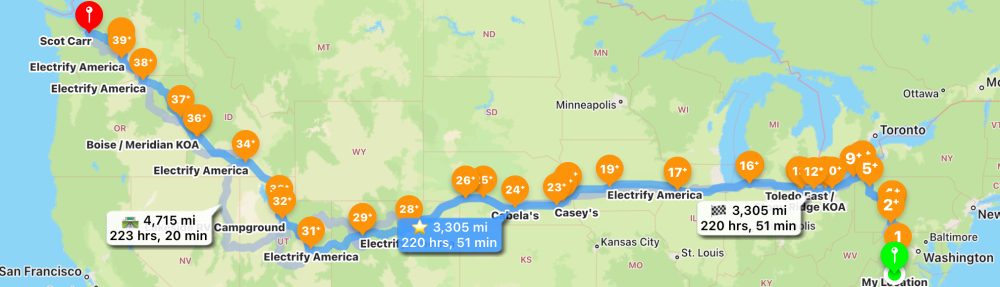
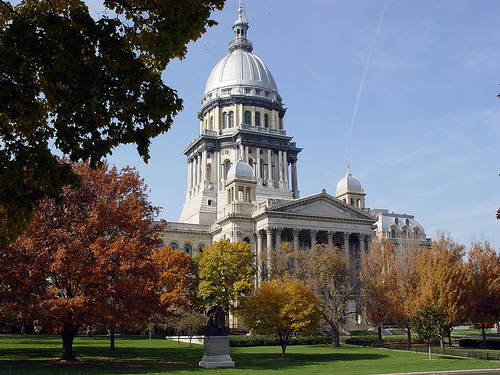
Our final state capitol was Indianapolis on our penultimate day of travel. Now on a tight time budget, we were fortunate to secure a parking place for our over-sized vehicle directly in front of the capital. Remarkable, considering the challenges we’ve had in other capital cities.
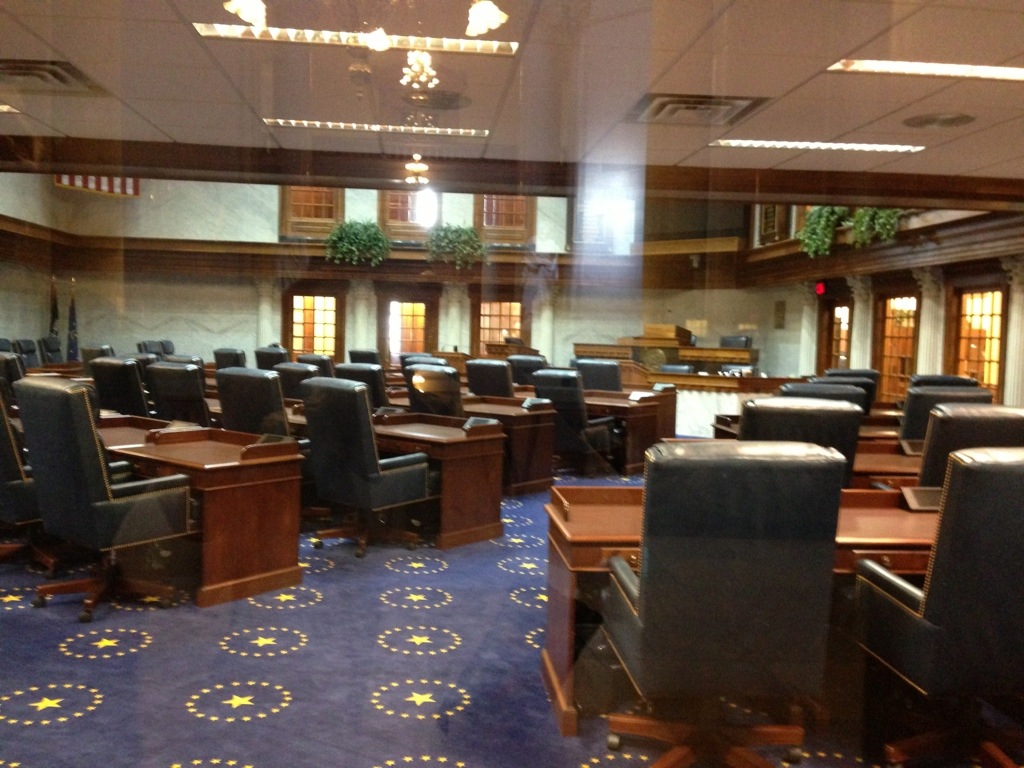
Indiana is a prairie state, a no-nonsense-let’s-get-the-work-of-the-government-done state, and one of the few that had both legislative chambers open to visitors. Security was at a minimum, too, and the guard who greeted us was utterly delighted we had come to visit. What more could you ask?
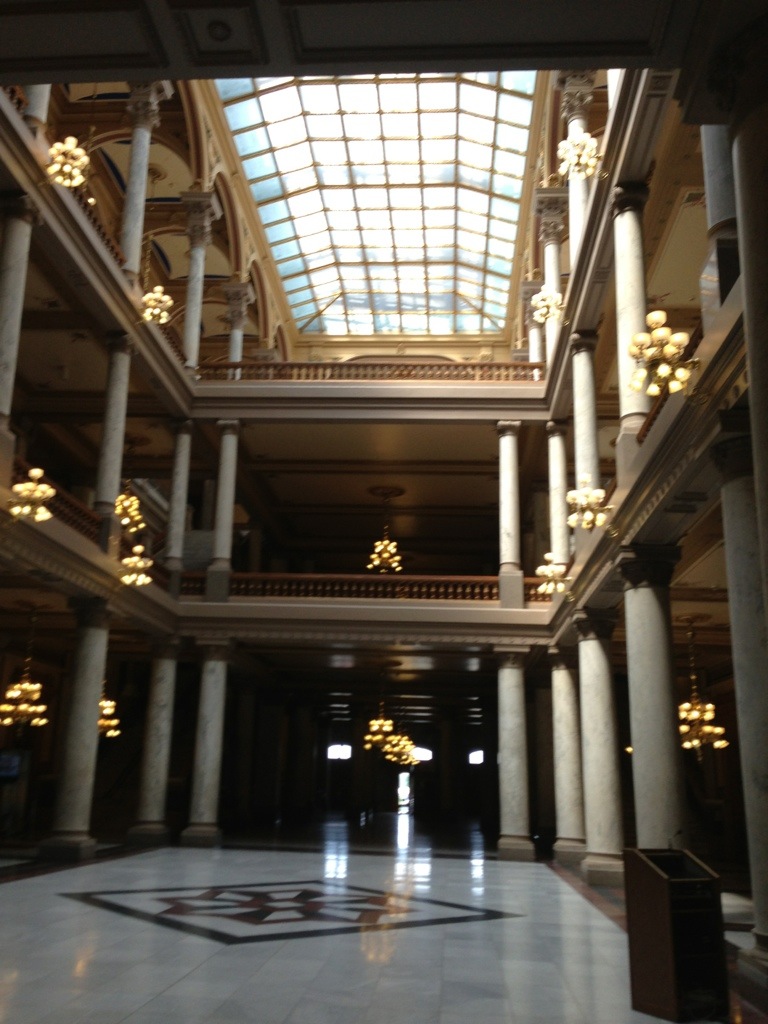
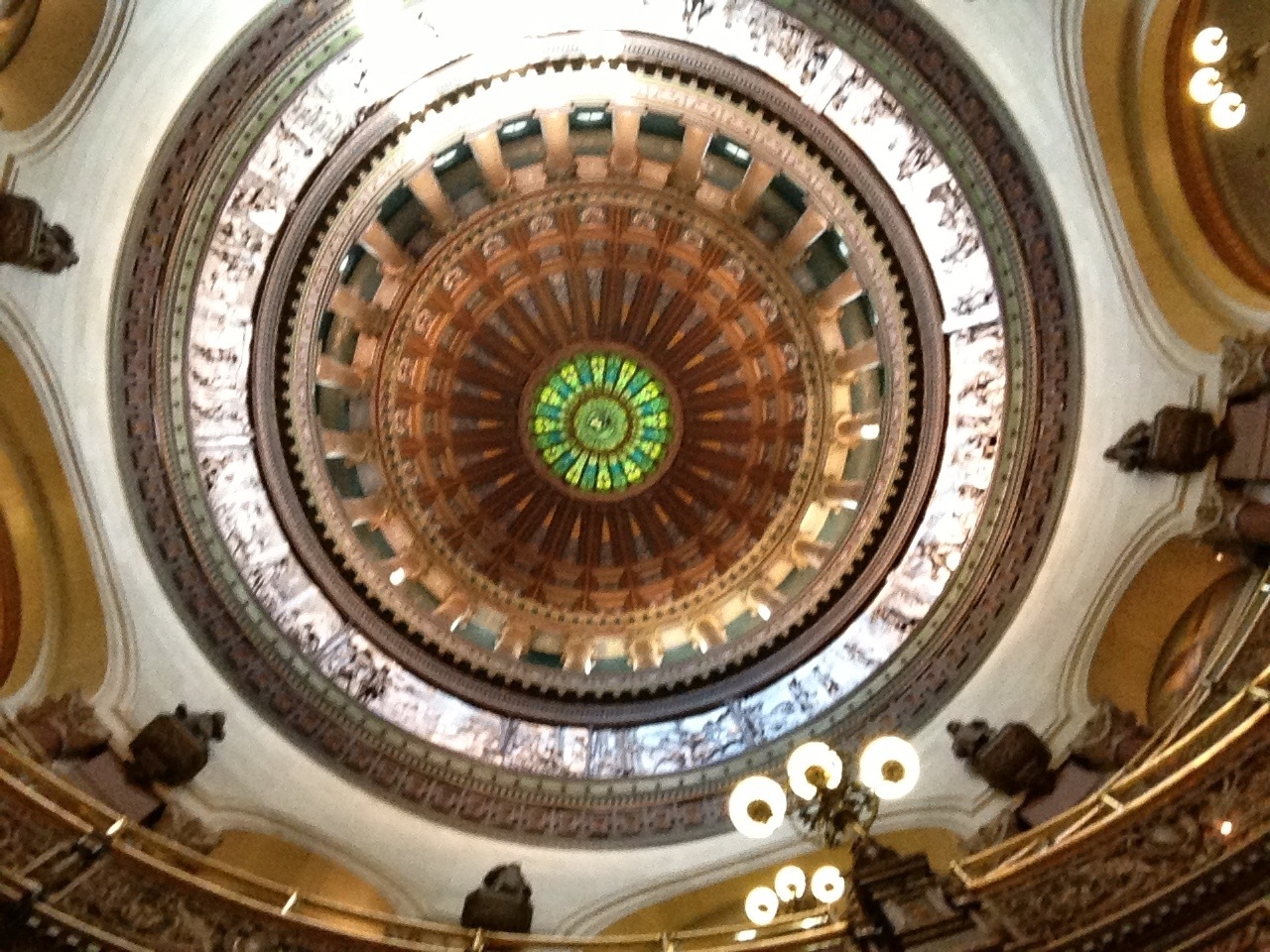
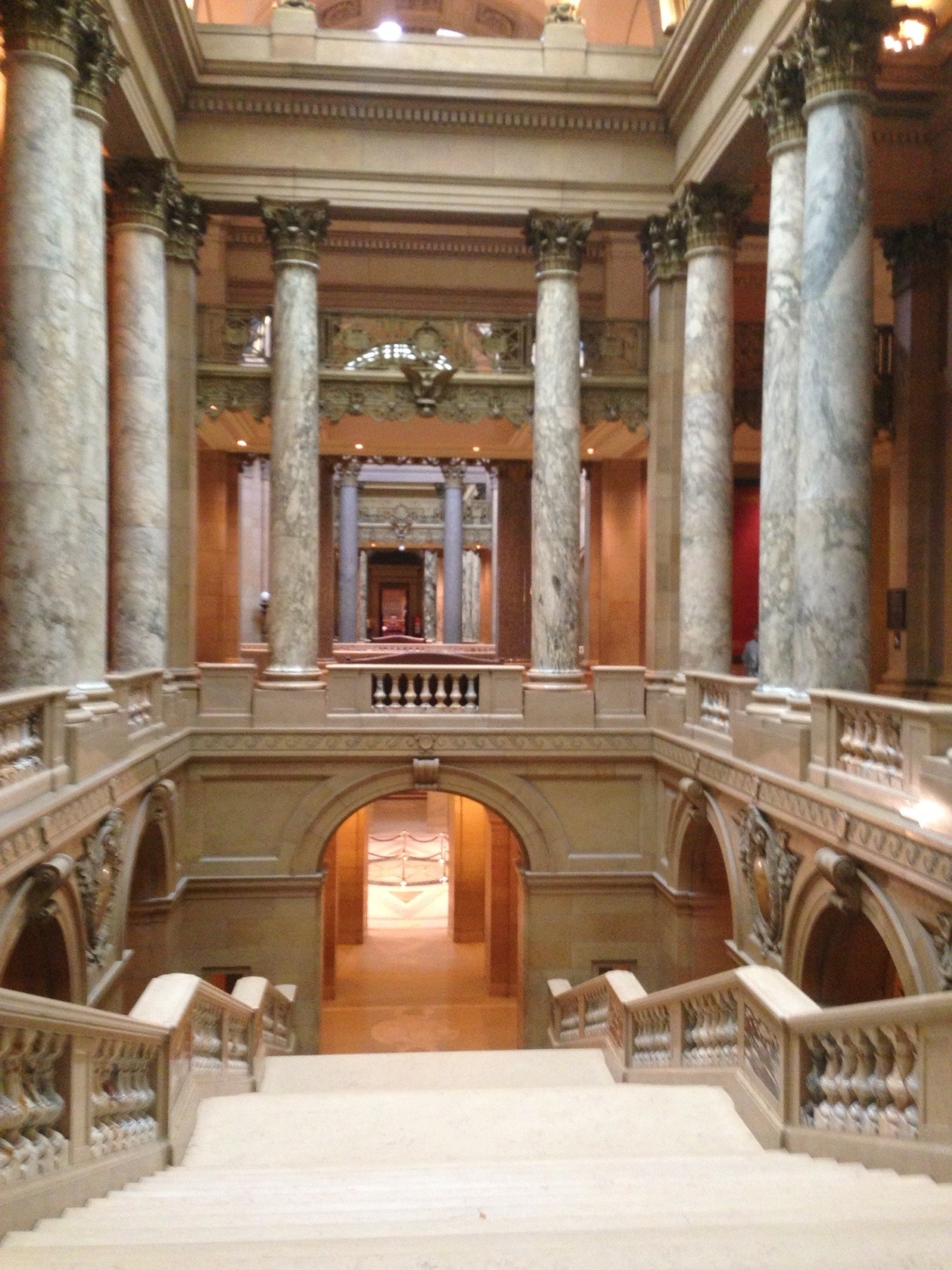
The halls are elegant in their decoration. There isn’t the slavish homage paid to the Victorian era found in some of the other capitals, but a great appreciation for the beautiful workmanship and materials that was chosen back in the 1800s.


Usually off-limits for visitors, the guard at the Supreme Court chambers opened it up to show us some rare volumes in a showcase next to the judge’s chairs. As I’ve never had the opportunity to stand at a podium facing five Supreme Court justice chairs (thank heavens the justices weren’t seated in them) I stood for a moment just to get the sense and, even in an empty chamber, it was awe-inspiring. Of the rare volumes they had on display, the most interesting was a tiny one from the 18th century that contained the trial and execution documents related to Marie Antoinette. The law librarian couldn’t explain how it happened to be in the capitol, but, to compensate I think, she directed me to another rare volume, the original charter of Pennsylvania that was printed by Benjamin Franklin. Amazing to find out he spelled Pennsylvania as “Pensilvania.”
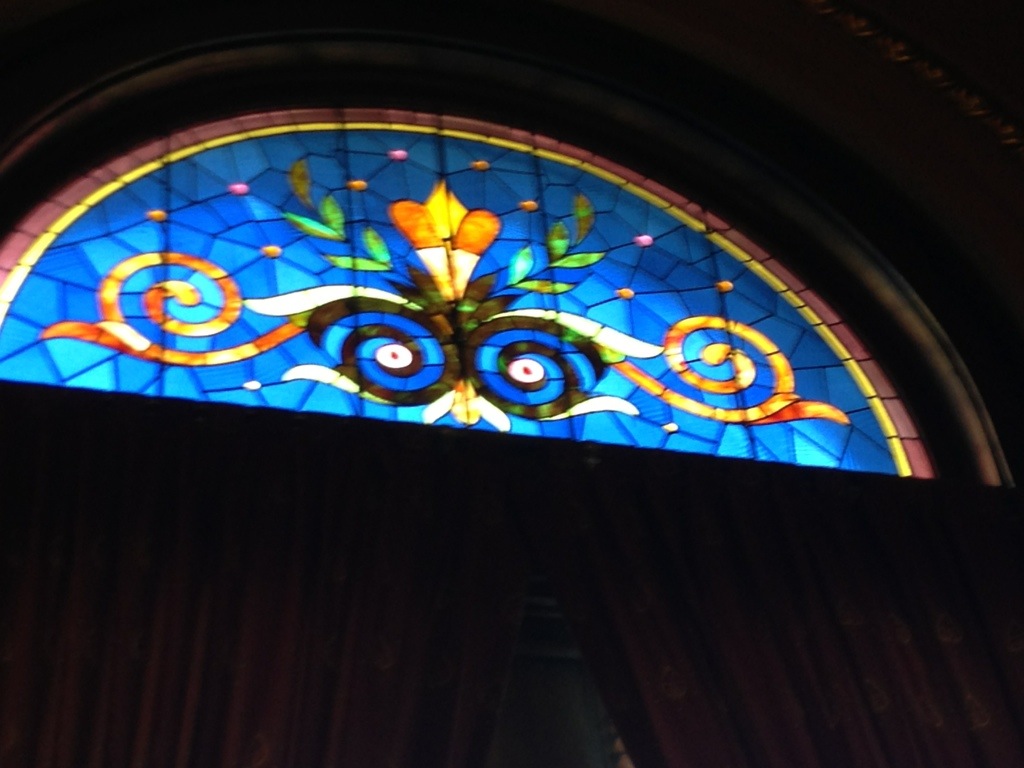
I couldn’t take any photos of the books, but the picture below is of one of the half dozen or so stained glass windows in the Supreme Court chambers.




















 On the Road Again