
It’s easy to recognize those faces that dominate the news whenever civil rights are at issue. Martin Luther King, Julian Bond, John Lewis, to name but a few. All have made history in their own way. But in Virginia, we have a modest museum that commemorates a small group of young people that made significant history as part of the Brown vs. Board of Education litigation that ultimately overturned “separate but equal” as the standard for civil rights. The Robert Russa Moton Museum in Farmville, Virginia is considered the “Student Birthplace of America’s Civil Rights Revolution.”

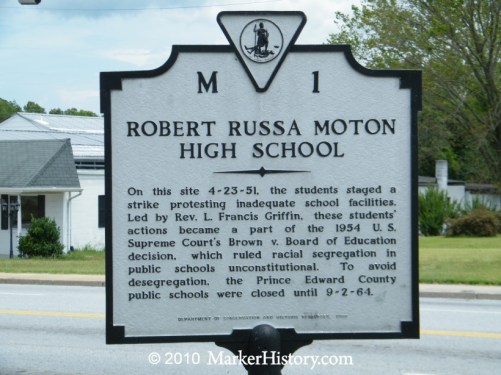 Robert Russa Moton High School in Farmville, VA
In 1951, black Farmville students had had enough. Built in 1939 to accommodate 180 black students, their school had no gymnasium, no cafeteria, no science laboratories, and no athletic field. A decade later, the county constructed several freestanding buildings, made of plywood and tar paper, to accommodate a student population of more than 400. The buildings had no plumbing and were heated by wood stoves.

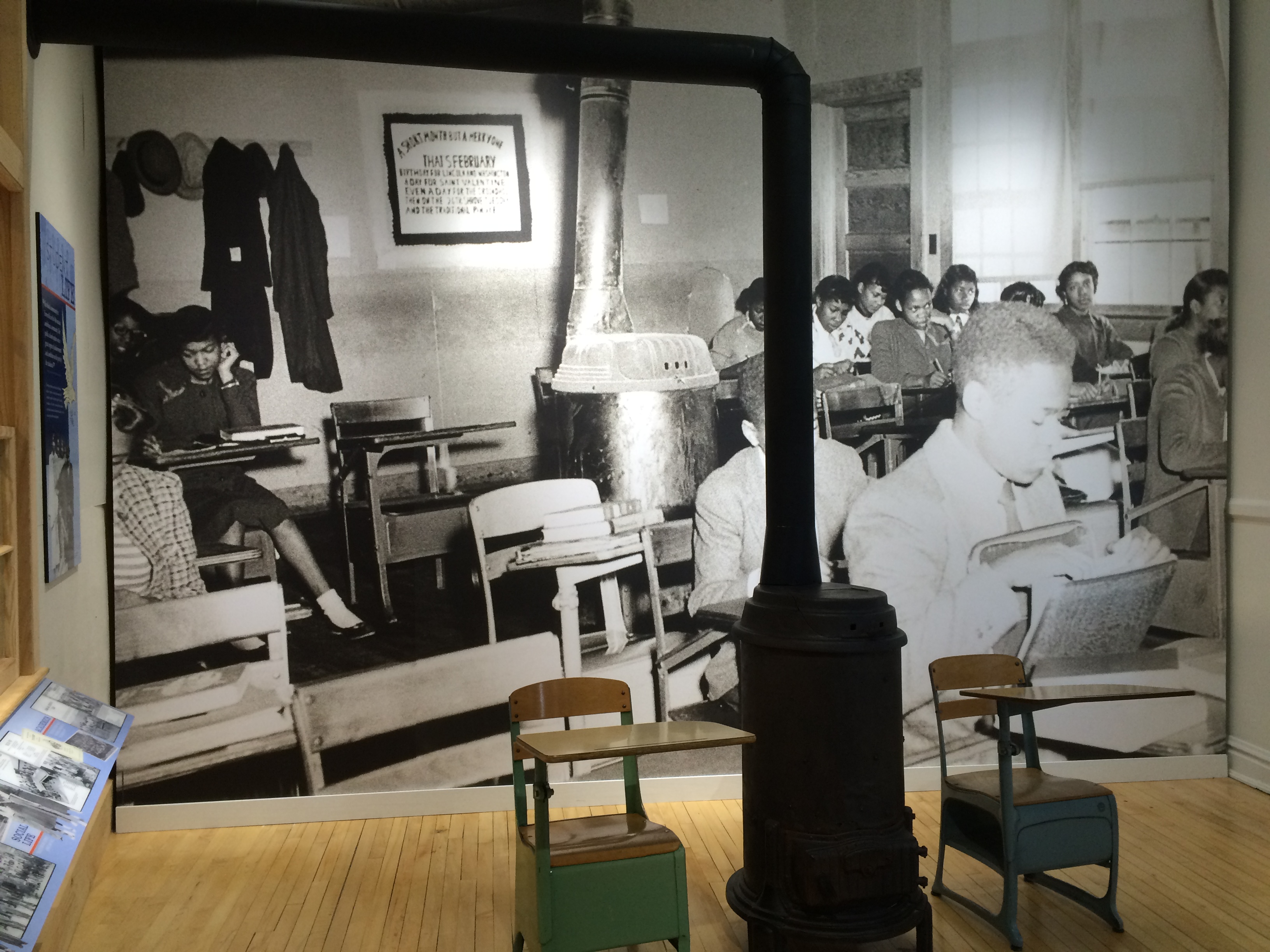

The black students were acutely aware of the substantial inequities between their school and the white school (only $316 was allotted per black student per school year compared to over $1,000/white student). Led by a remarkable young woman, Barbara Johns, they walked out of their school and set the town on end. They met with resistance from the school administration, from the town leaders, and from some black parents who were afraid to attempt change. Ultimately, a letter from Barbara Johns brought the NAACP down to review the situation, and they made it a component of the lawsuit that ultimately incorporated four other schools around the country under the case name of Brown vs. Board of Education.
The museum tells in detail, with much attention to the personalities involved, how the lawsuit traveled through the various courts to reach the Supreme Court. Along that path, Prince Edward County ultimately decided to close the public schools rather than integrate, as ordered by the court, which prompted the community to build private schools for the white students only. Black students either did not attend school for the five years the schools were closed, or were forced to live with relatives elsewhere or their families moved out of the county in order for them to receive an education.
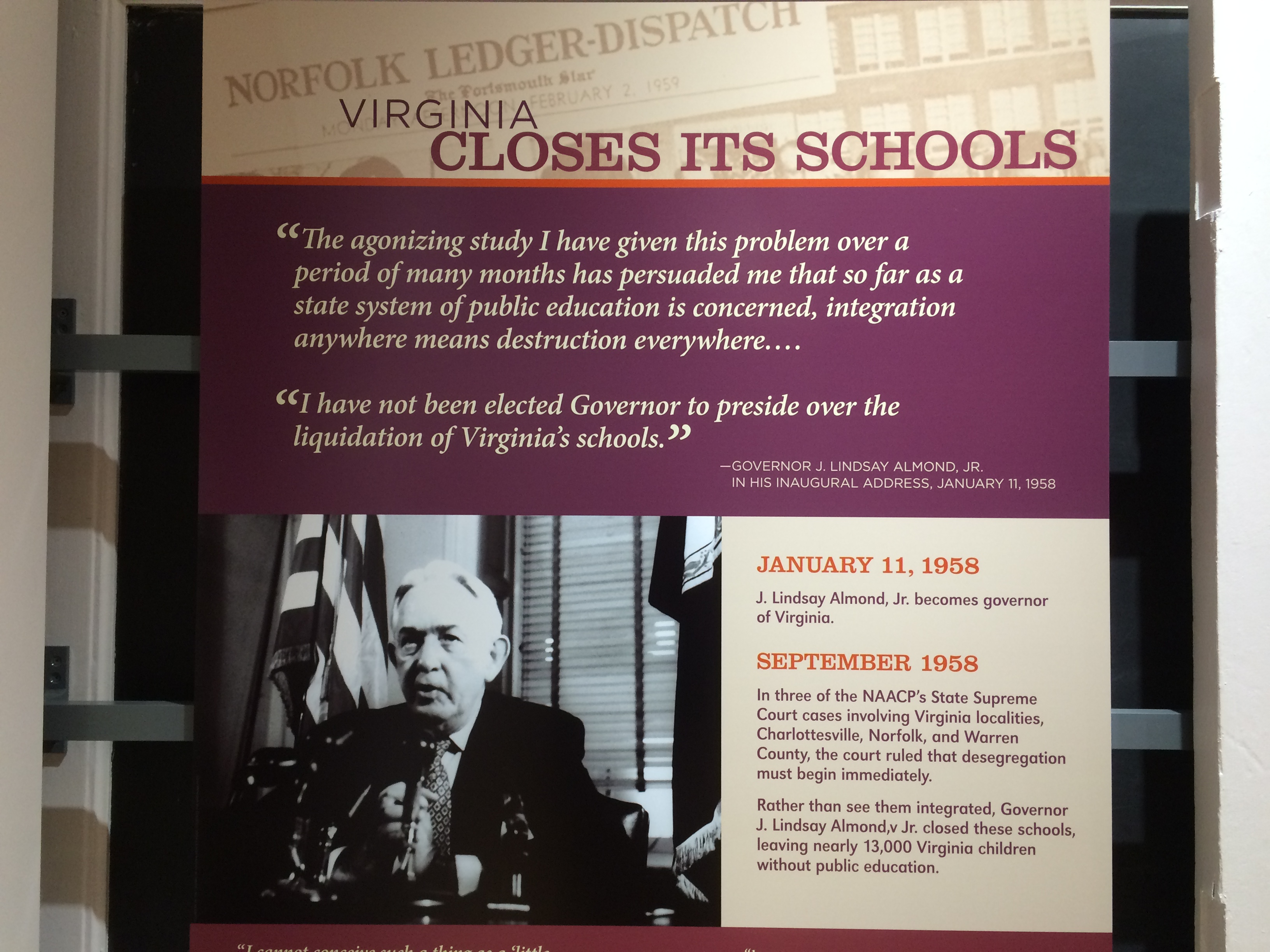
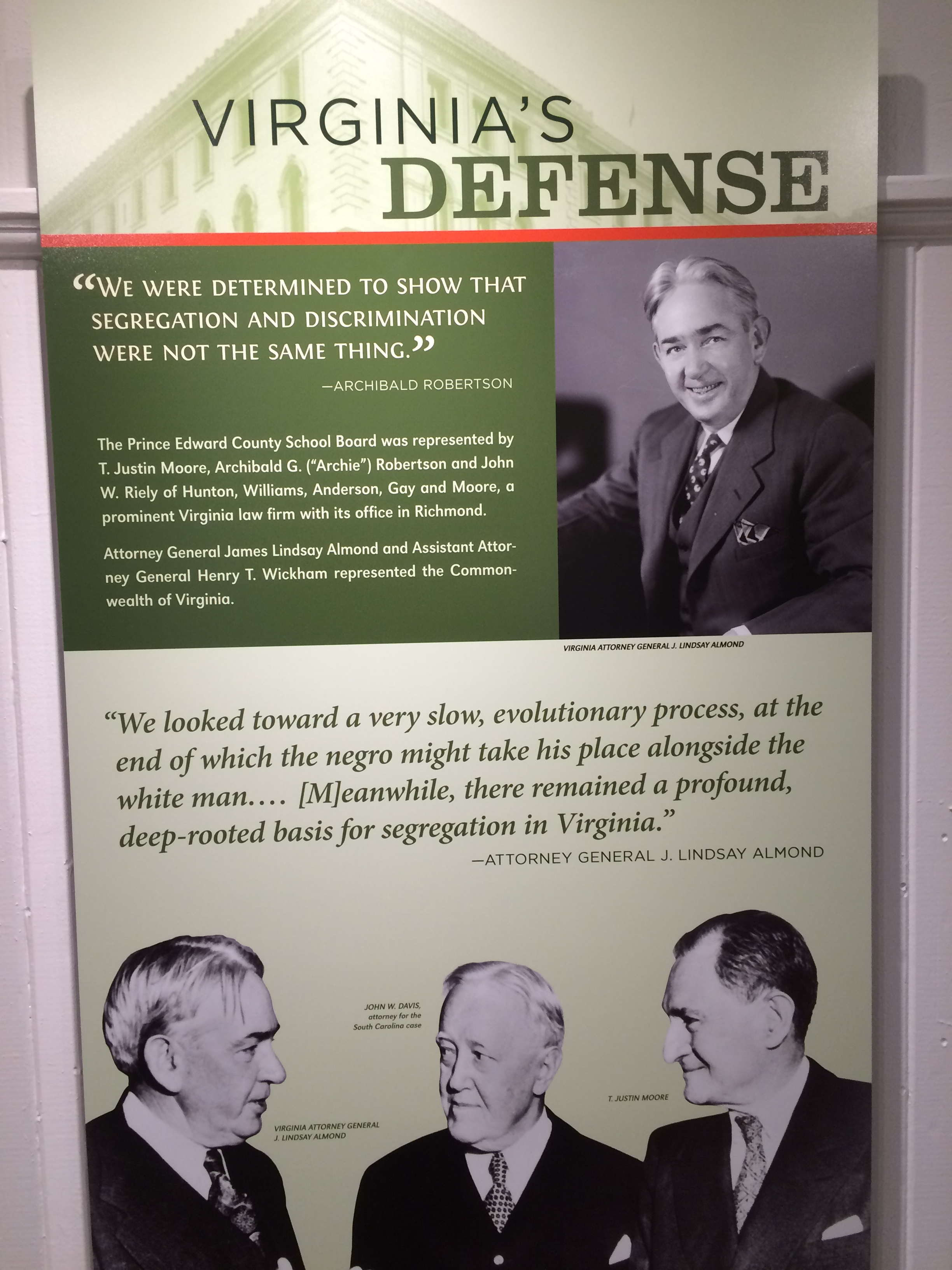
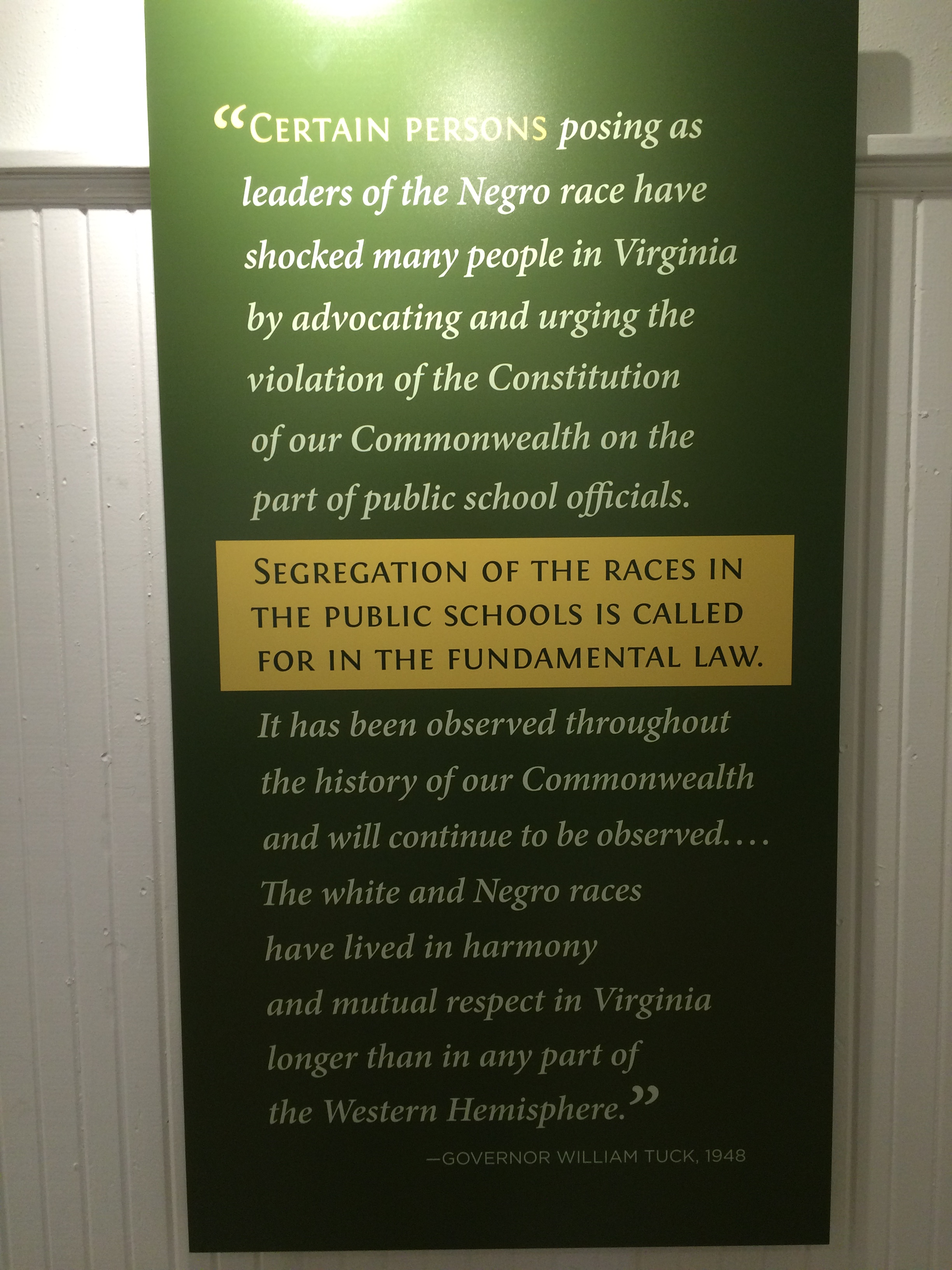
The story of heroism on the part of the students (the Farmville lawsuit was the only one of the Brown vs. Board of Education lawsuits that was initiated by students), and of their persistence in the face of significant pushback by the county, state and national courts and judges is well presented. The posters below reflect some of the negative attitudes they encountered:



Of course there were advocates as well who ultimately prevailed.
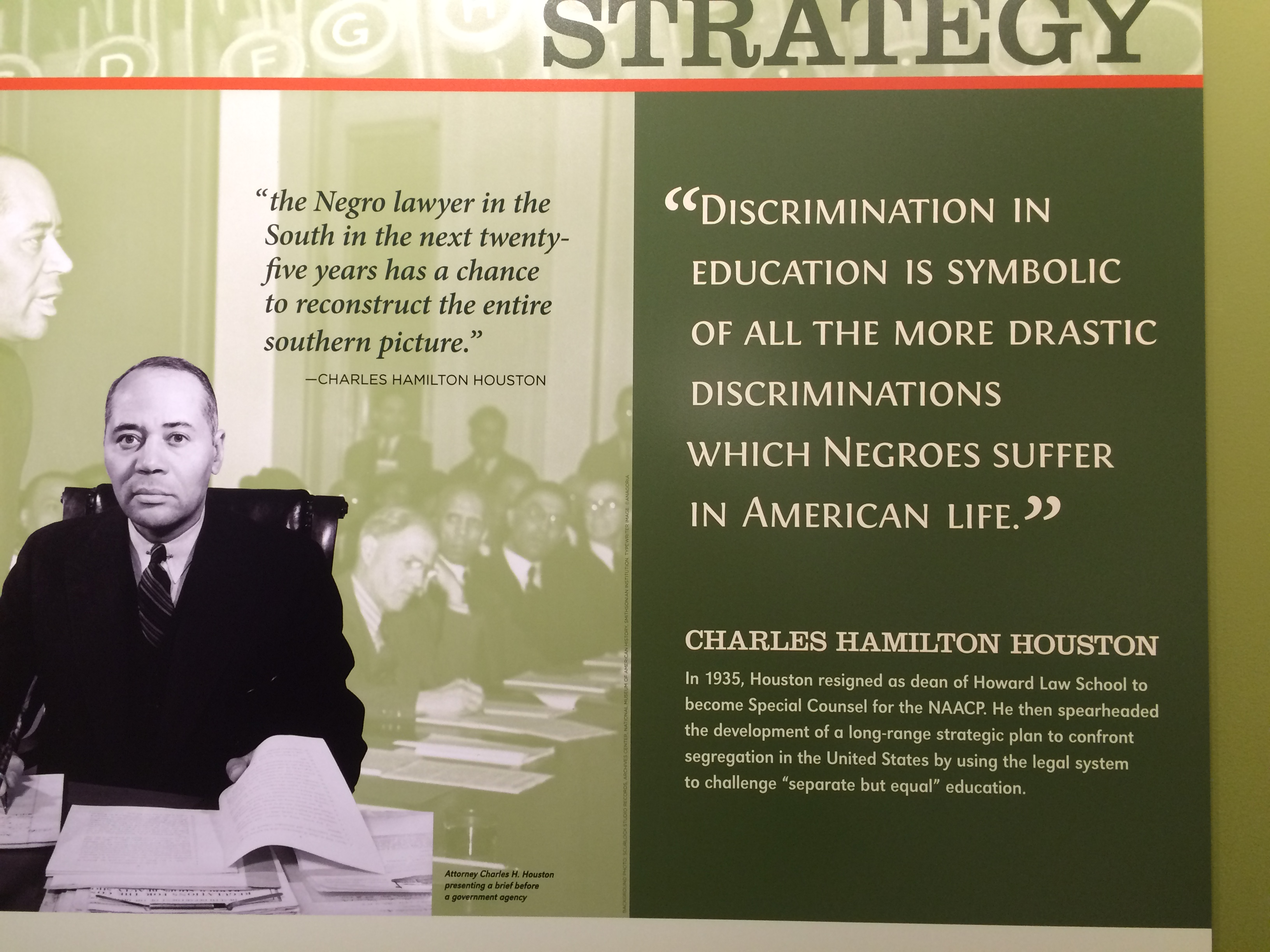

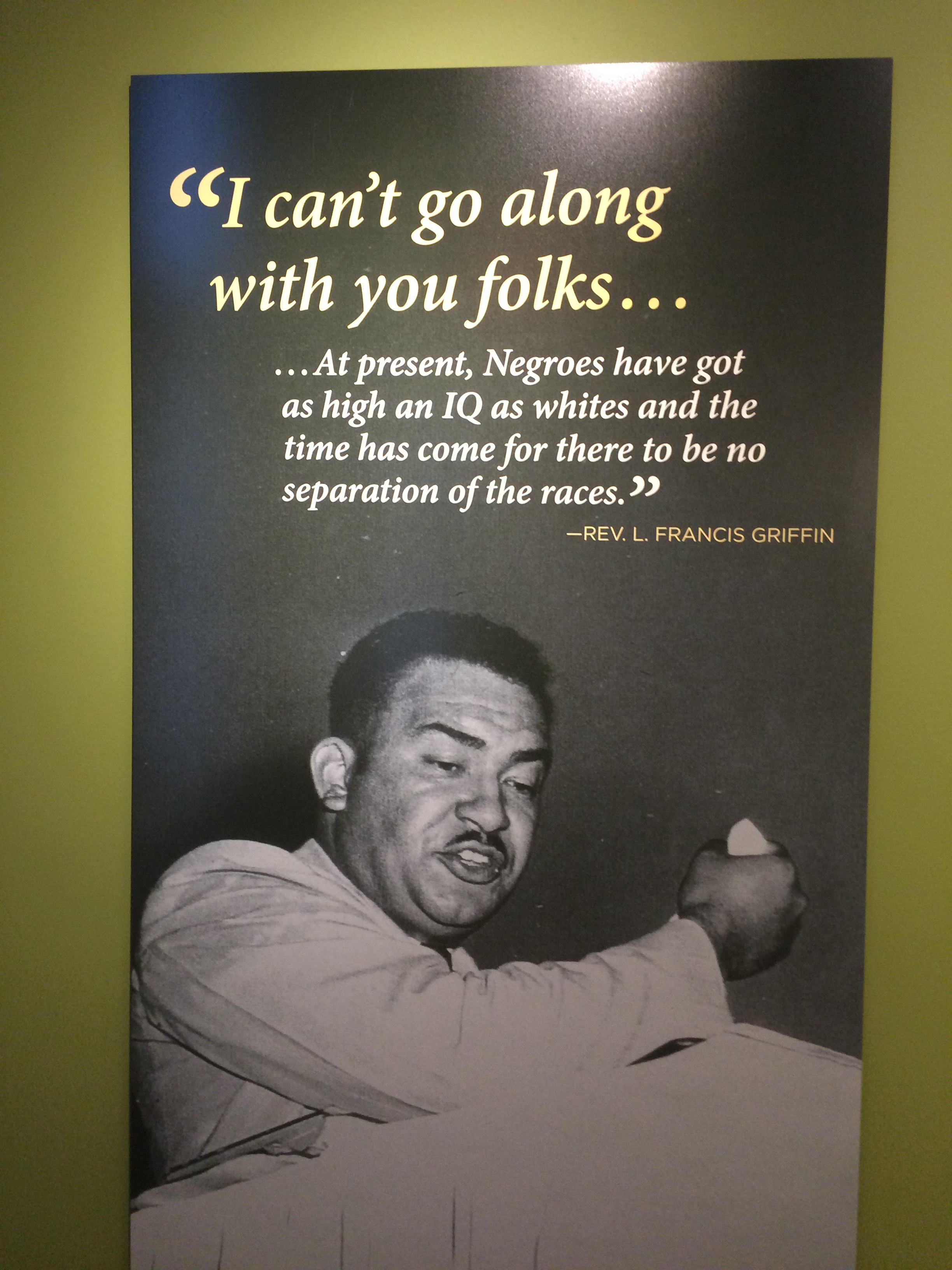
Knowing the ultimate outcome of Brown vs. Board of Education made it easier to engage with the exhibits, but the fact that it was being presented in the school where such rampant racism had existed made me painfully aware that all of this had taken place in my lifetime and in my home state, just an hour’s drive from where I now live. It still feels too close for comfort even as I write this. I highly recommend this museum, now a National Historic Landmark and a civil rights training ground, and commend the museum for making the students the principal focus of this museum. You can learn more about it at http://www.motonmuseum.org.
 On the Road Again