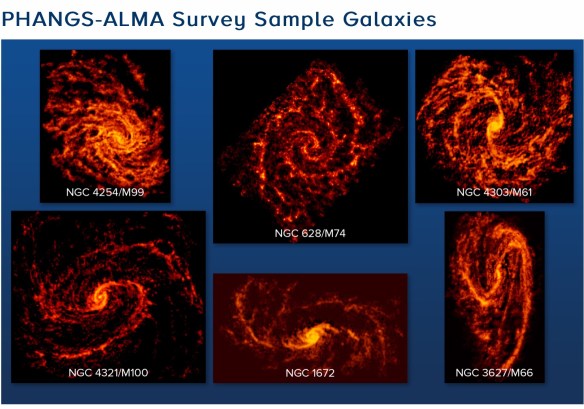
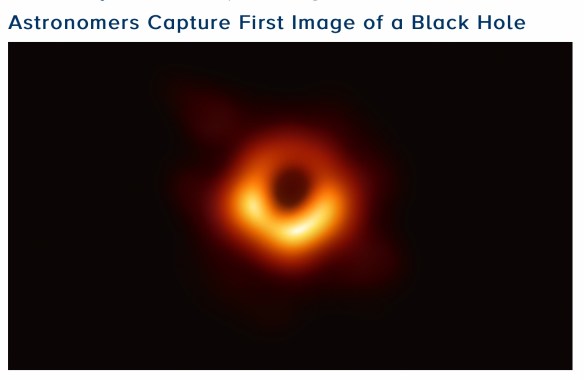

If you’ve ever wondered where pictures like these come from, it can only be from the radio waves emitted from these objects billions of light years away. So you need something on earth that can translate these radio waves into images, and that is the Very Large Array (VLA.)
The Very Large Array, one of the world’s premier astronomical radio observatories, consists of 27 radio antennas in a Y-shaped configuration on the Plains of San Agustin fifty miles west of Socorro, New Mexico. Each antenna is 25 meters (82 feet) in diameter. The data from the antennas is combined electronically to give the resolution of an antenna 36km (22 miles) across, with the sensitivity of a dish 130 meters (422 feet) in diameter. The entire array and the associated computer constitutes a single telescope.
The array has to be situated in an very isolated place to minimize the amount of radio frequency interference from Earth, and New Mexico is the ideal place. It is located in the central part of the state southwest of Albuquerque and many miles (and cattle guards) away from civilization and still large enough that Route 60 goes right through the middle of the telescope. They are very strict that no electronics are permitted to be turned on (airplane mode doesn’t cut it) and they’re particularly strict that no drones be allowed. Because of these restrictions, taking photos with my iPhone wasn’t possible, so the pictures below are from the VLA website image gallery.

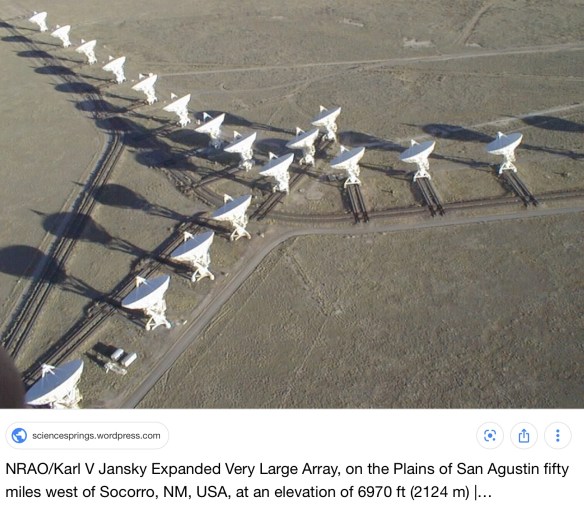
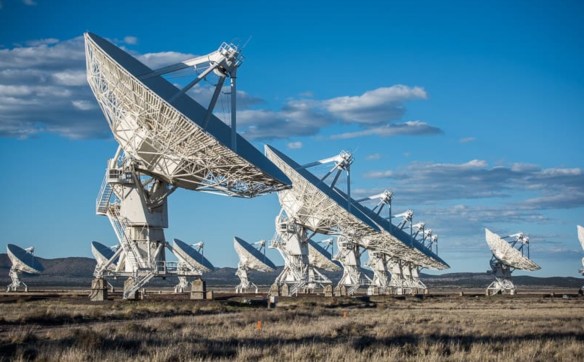

I highly recommend visiting this website for more information about this remarkable, hidden away treasure in our country. In particular, there is an excellent 23 minute video narrated by Jodie Foster giving a great overview of the VLA and its plans for a future Next Generation VLA at https://public.nrao.edu/gallery/beyond-the-visible-vla/. Check it out!
 On the Road Again
When we lived in New Mexico the digital concerns were not an issue. Amazing how things have changed. Not far from the Array there is/was pie town. Is it still there?
>