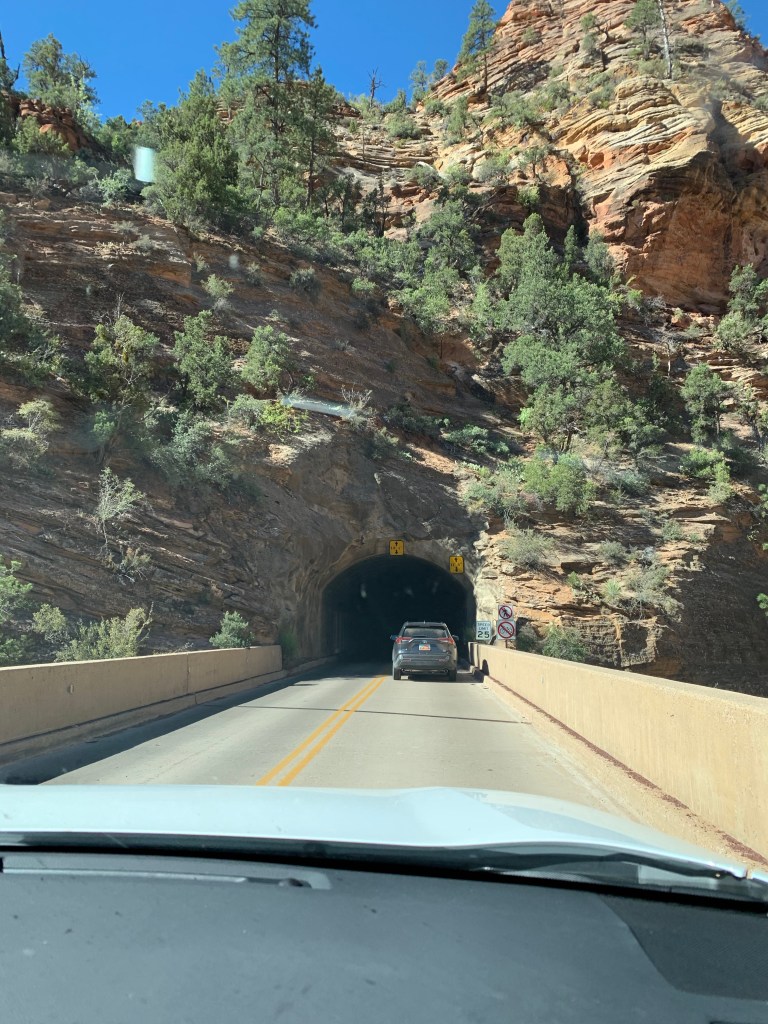
The above is an 1895 quote from John Wesley Powell, one of the early explorers of this region of Utah. Zion National Park is a remarkably beautiful mixture of soaring mountains and richly colored canyons, all forged over thousands of years by the Virgin River. The river is now a trickle, but the mountains and canyons are still there with plenty to be viewed from a winding road through the park that includes an awesome tunnel built when the park was created in the early 1900’s. This tunnel has openings that give you a unique glimpse of the mountains up close and was one of the highlights of our trip.
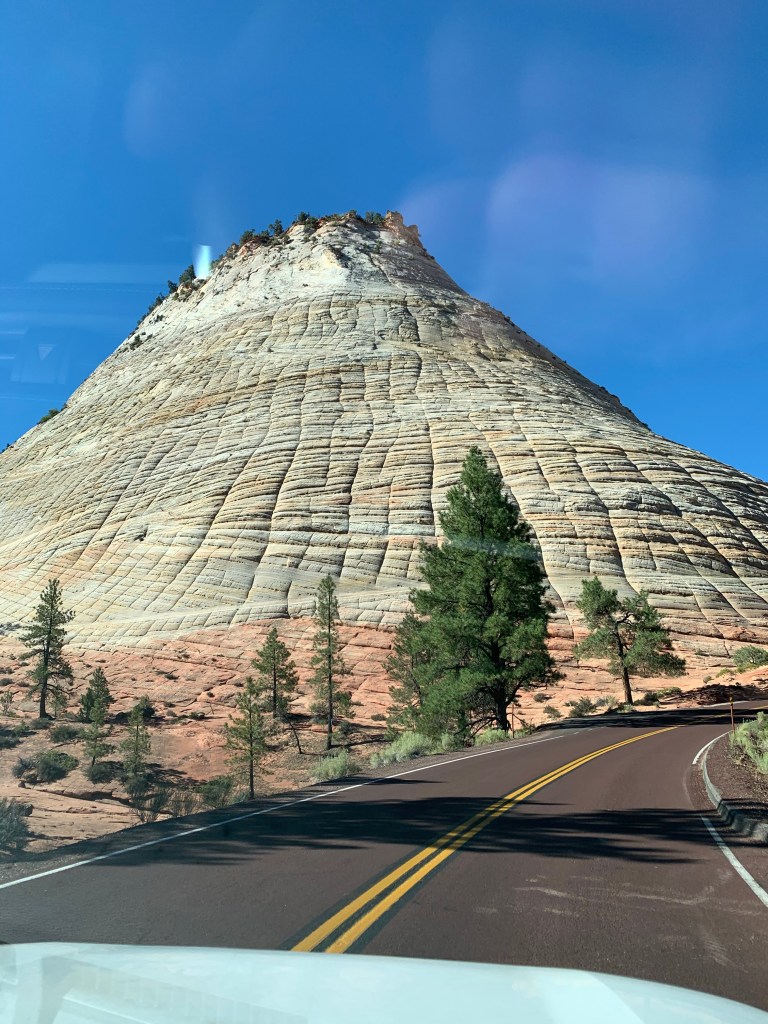
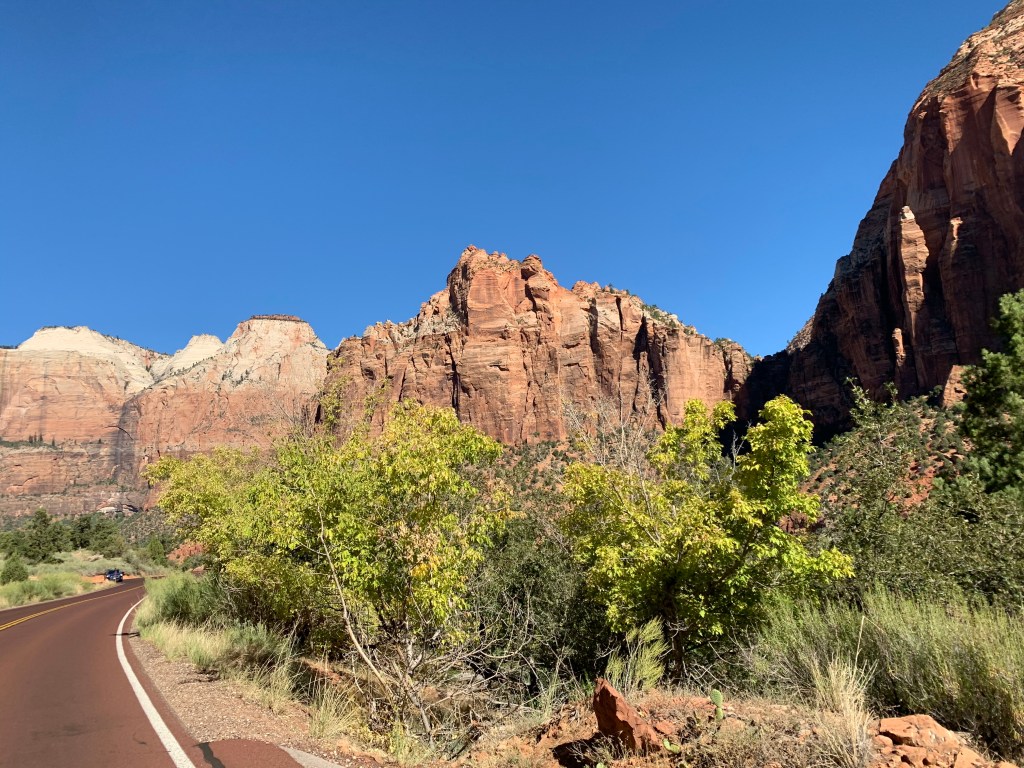
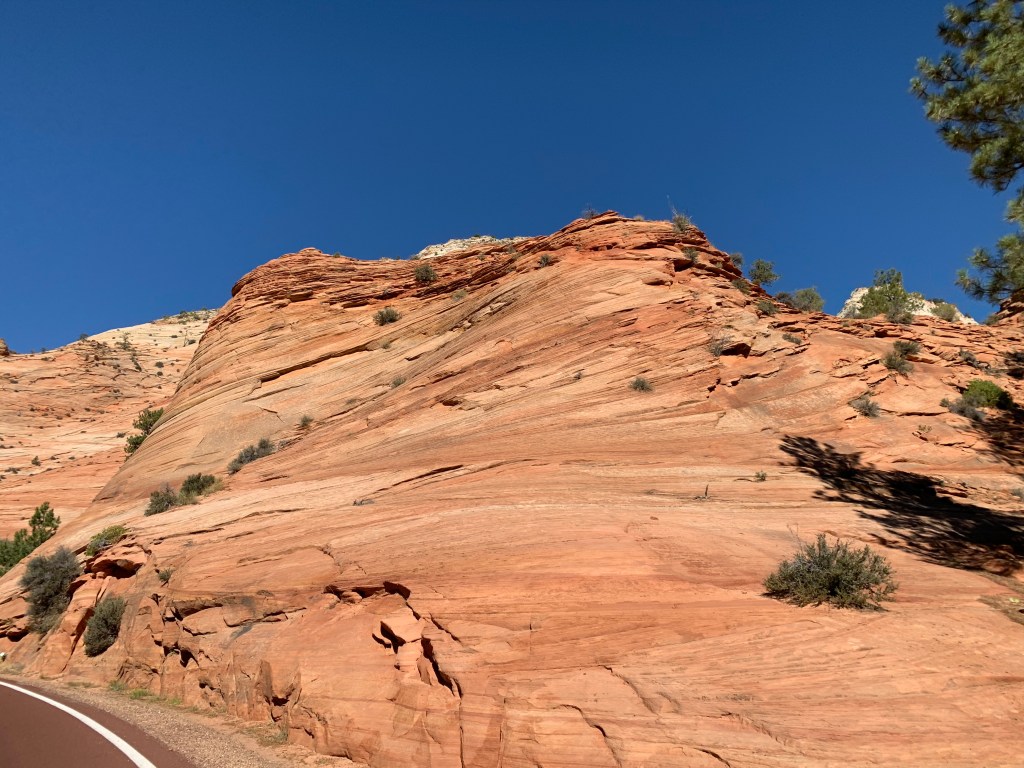
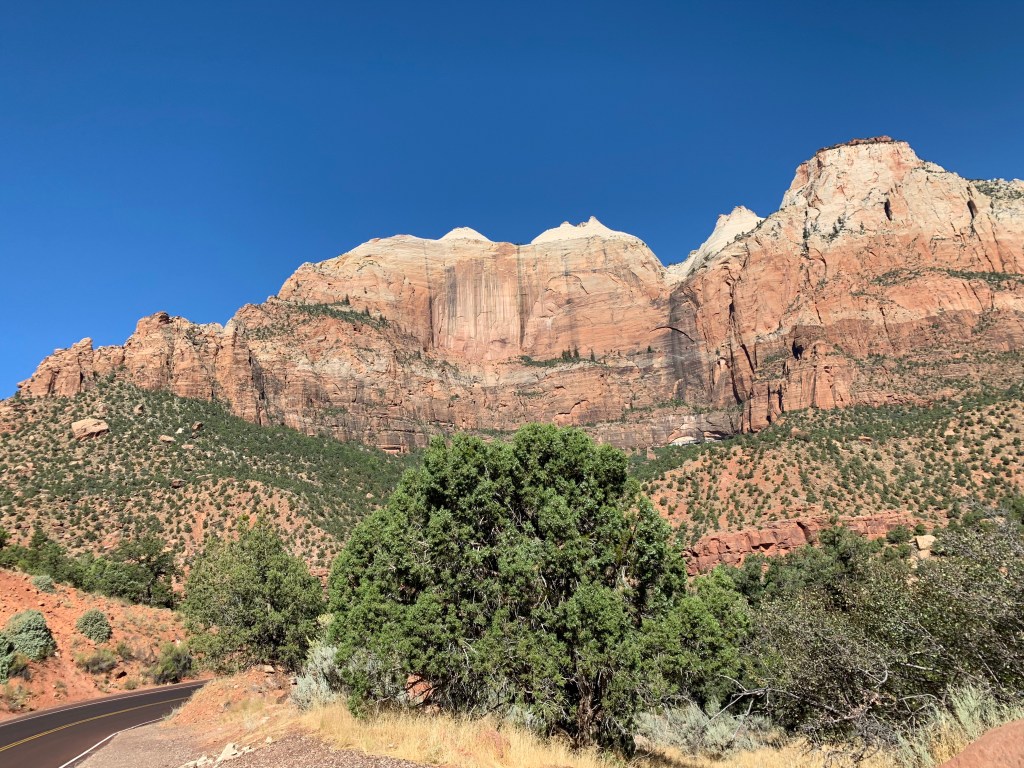
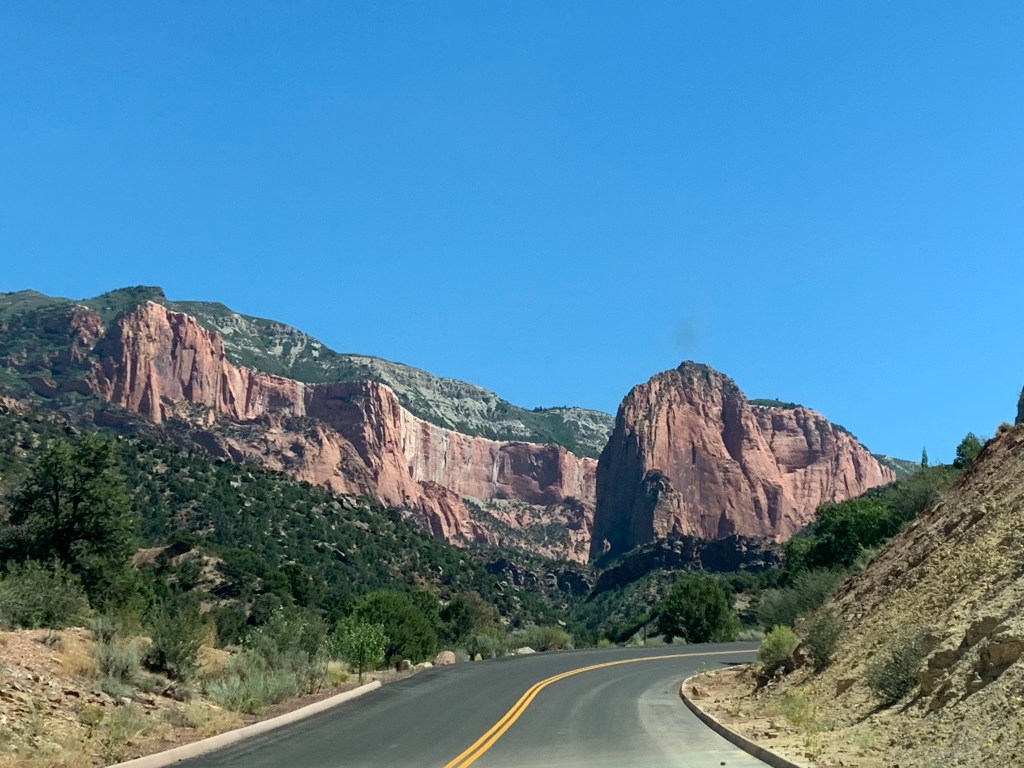

While Native Americans lived here for many years before it was discovered by the pioneers, it was named Zion by the Mormons who came to settle nearby because it meant “promised land” and “sanctuary.” It is very easy to feel the peace of time standing still for a few moments when you’re surrounded by so much beauty, but in reality time is steadily moving forward with all the forces of nature moving very slowly but steadily to continue to change the terrain.
“Long before today’s landscape even appeared, streams, oceans, deserts and volcanos deposited thousands of feet of mud, lime, sand, and ash. The immense pressure and heat of acccumulating sediments turned lower layers to stone. Later underground forces uplifted the Colorado Plateau, a 130,000-square-mile mass of rock, over 10,000 feet above sea level. Rain’s watery fingers then worked the Plateau’s minute cracks, loosening grains and widening fractures—and eroding today’s mighty canyons. These processes continue: rivers still deposit sediments that turn to stone, earthquakes still punctuate the Plateau’s upward journey, and erosion pries rockfalls from Zion’s seemingly immutable cliffs. Eventually this beautiful canyon will melt away and others will form. All it takes is time.” Excerpt from NPS Brochure
 On the Road Again
Thanks much for the great description!
What a wonderful adventure you are having, thanks for the great description and pictures. Have fun, and stay out of the desert.