Do you know who Sergeant Charles Floyd was?

If you’re really into the Lewis and Clark Expedition, it’s a giveaway question. Of course! He’s the only one of the expedition who died along the way.

Quite early in the expedition in fact. They were exploring the Louisiana Purchase, and found themselves in Sioux City, Iowa on July 31. Floyd became ill at the end of July 1804 and took a very severe turn for the worse on July 31. It was appendicitis, an illness that no doctor was capable of treating at that time. He ultimately died what Clark described as a most painful death on August 20 and was buried on a bluff overlooking the Missouri River, named Floyd’s Bluff in his honor.
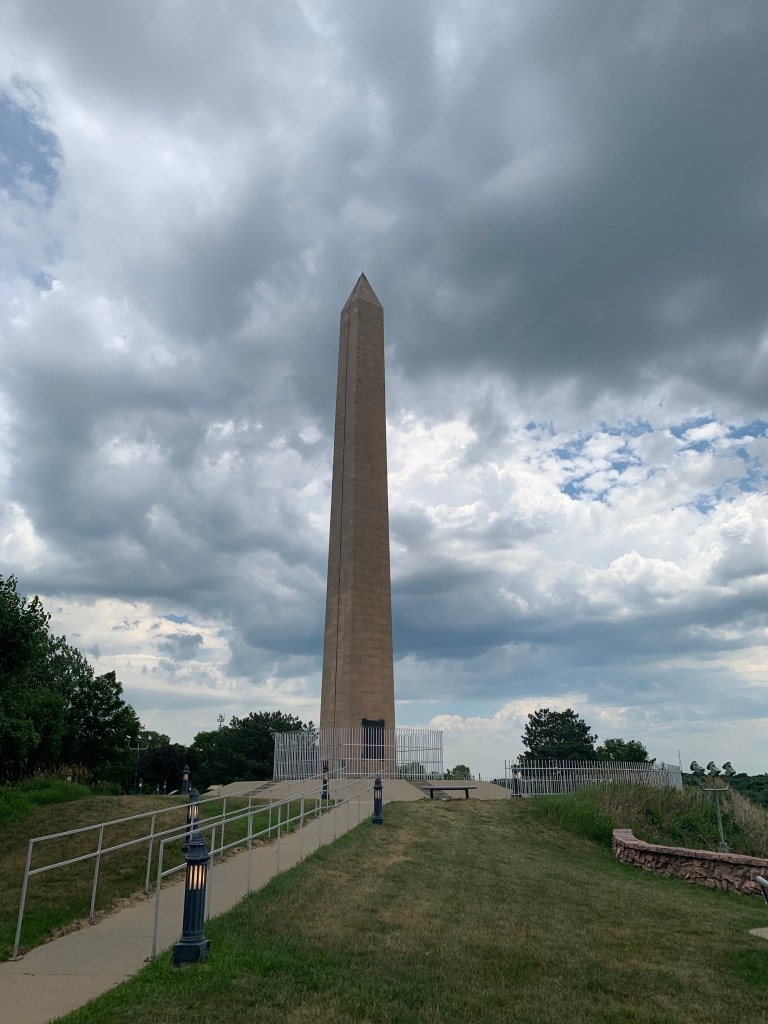
Sergeant Floyd’s Monument overlooking the Missouri River
The Missouri River below Floyd’s Bluff

A riverboat was also named after Sergeant Floyd, which has now been turned into a museum covering the Missouri riverboat era. It is one of many visitor centers along the Lewis and Clark National Historic Trail
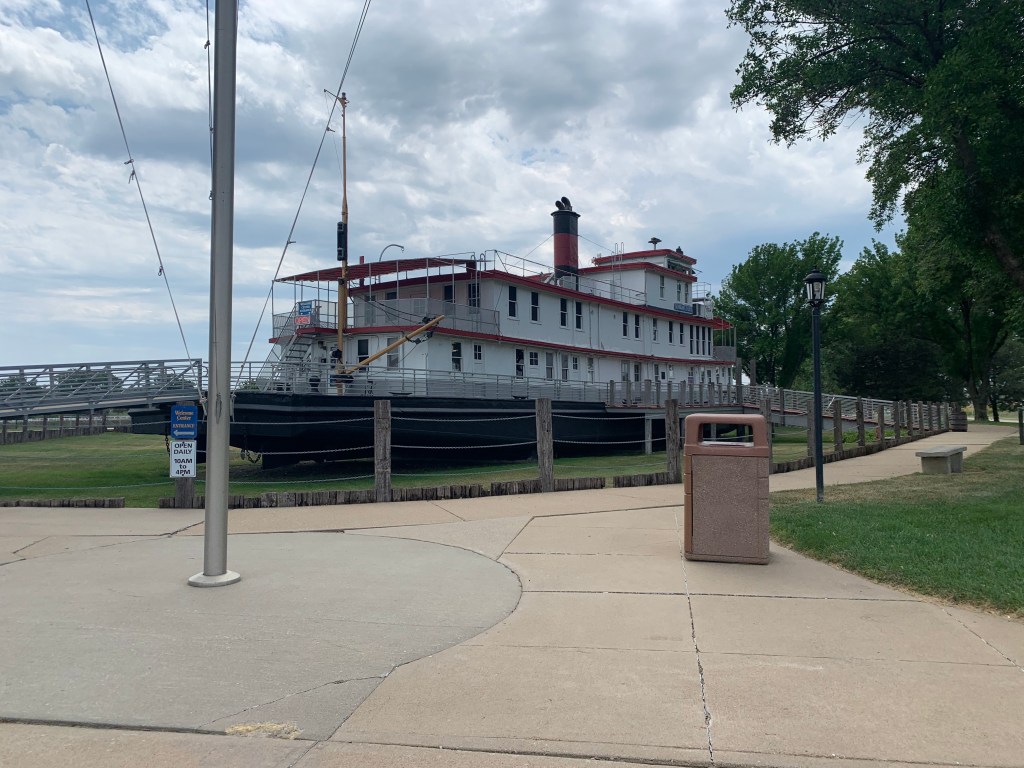
The Segeant Floyd Museum
A hand-hewn canoe, made as a school project. One of the best things about this museum was how much they incorporated works created by students.

While it covers a wide number of topics related to the river boats on the Missouri River, it also offers the rare chance to view the pilot house on one of these boats. This one even had a friendly pilot on board.

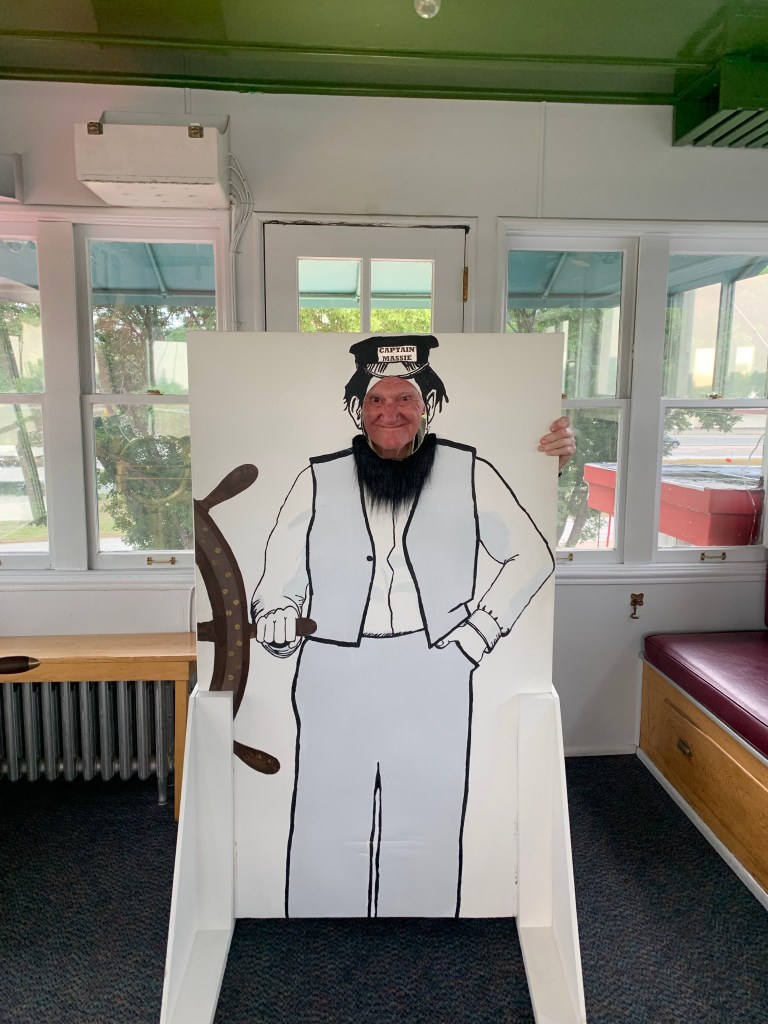
Captain Carr

Who would drive 900 miles to watch cars go round and round?

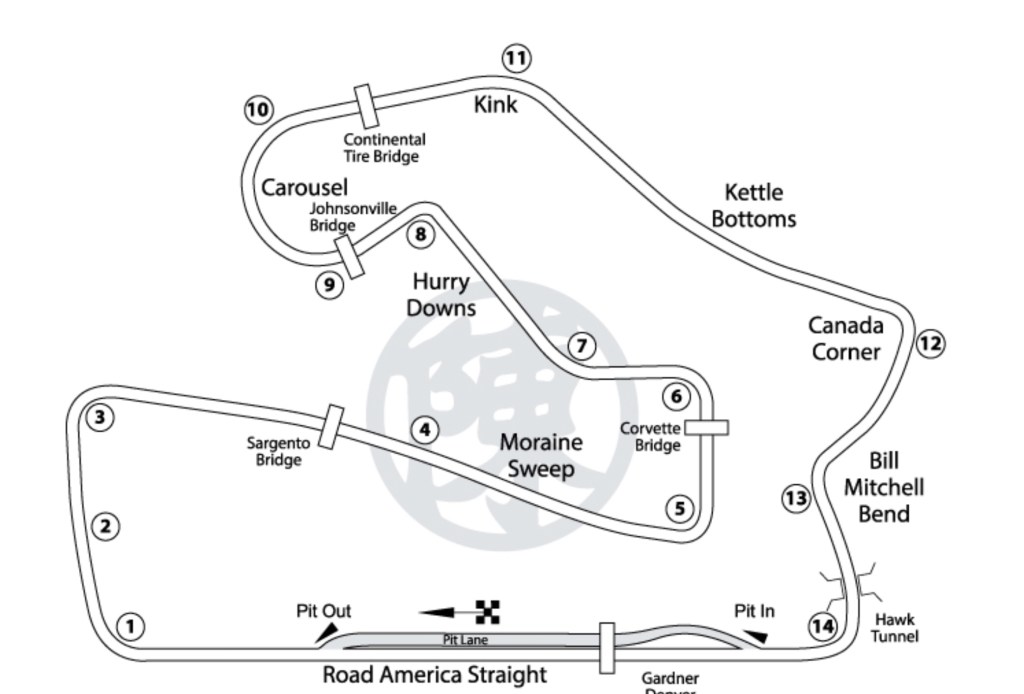
We would. All the way to Elkhart Lake, Wisconsin where the Indycars were racing at RoadAmerica, a 4.5 mile road track that had some incredible twist and turns.

We’ve been to several races before which involved a lot of sitting on bleachers and wearing headphones because of the extreme noise of the race cars, or schlepping lawn chairs around to hills with a good view of one or two of the curves. This time, we indulged in tickets to a special room located right in the middle of the race course (i.e., cars whizzing by on both sides) which provided large screen TV coverage of the race, along with a delicious hot breakfast and lunch, free drinks, and (drum roll) private bathrooms. No porta-potty lines this time!

We did a circuit of all the vendors before the race and found some very interesting kiosks.

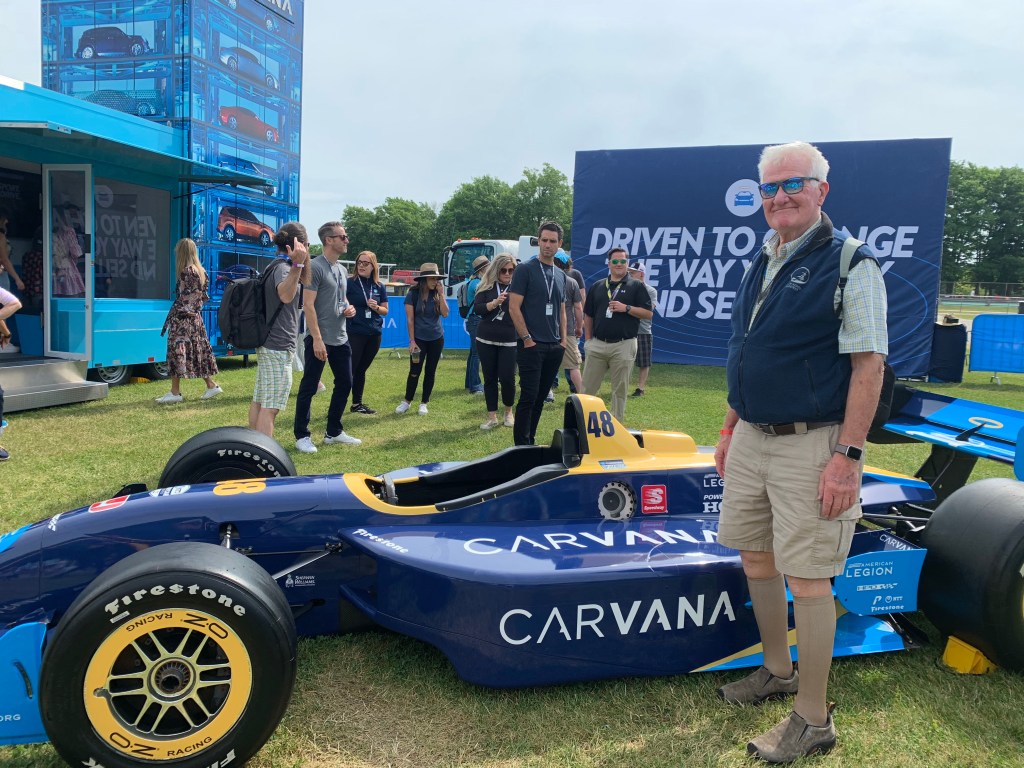
Jimmy Johnson, recently of NASCAR and now a rooky in Indycar, drove a racecar like this. (He crashed his car early in the race but finished near the end of the pack.
Firestone was a sponsor and also provided many of the tires being used. In Indycar races, each car generally goes through three sets of tires. The pit crew’s skill of replacing times within a matter of seconds is truly incredible.
This is a bike designed to be pushed in a race with a person onboard. Team Triumph hosts many events for all types of competitors at all levels of physical capabilities.
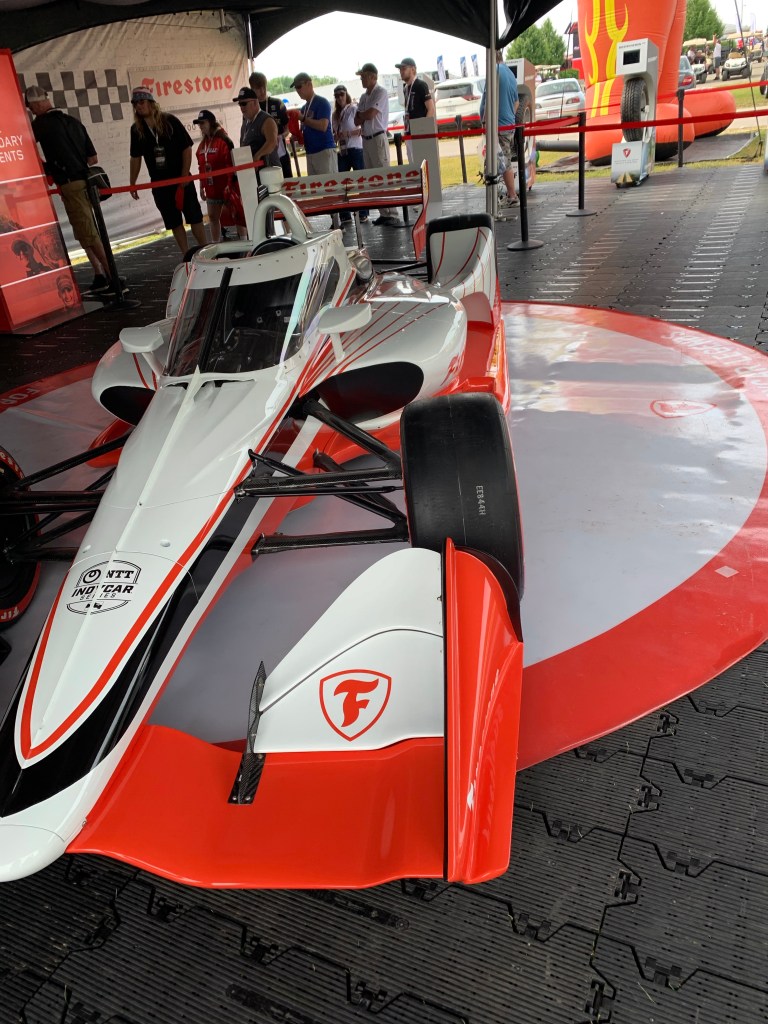
This is an example of the type of car being race in the Indycar race.
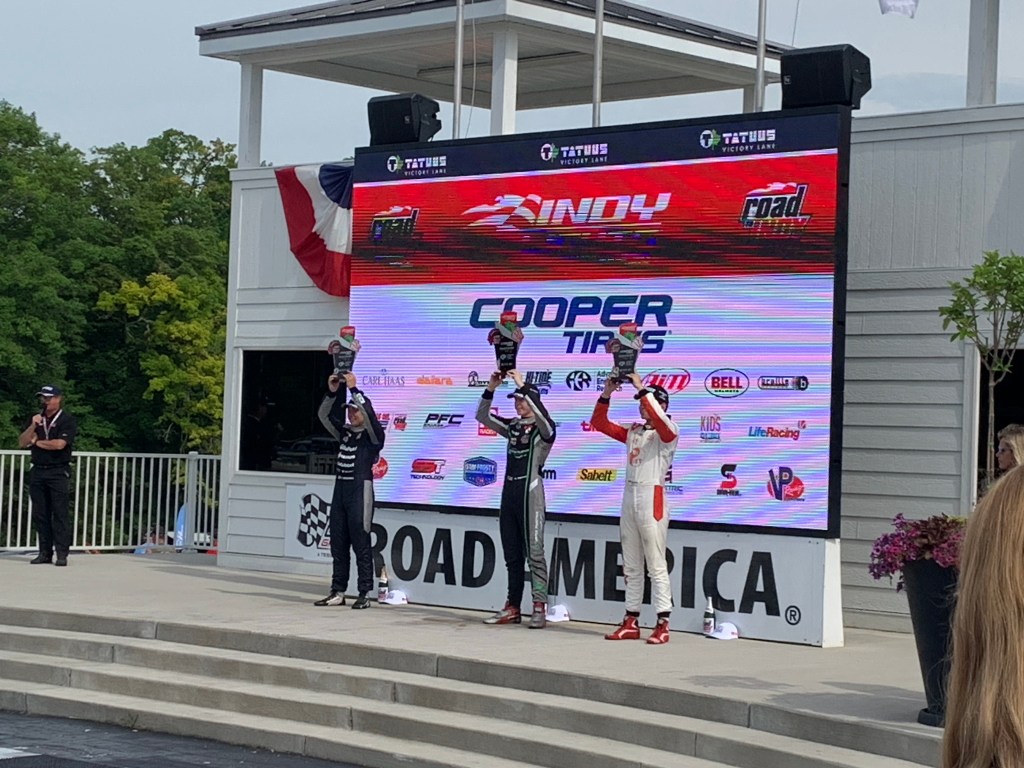
And in any race, there are winners and losers. We left before the champagne started to squirt all over.

While some might argue that we missed a lot of the excitement by viewing it indoors, we were able to see every major maneuver and pass (and crashes), with an ongoing commentary from people who know the course and the racers. All that with free food and air-conditioning made it a great experience.

Seen any good Harleys lately?

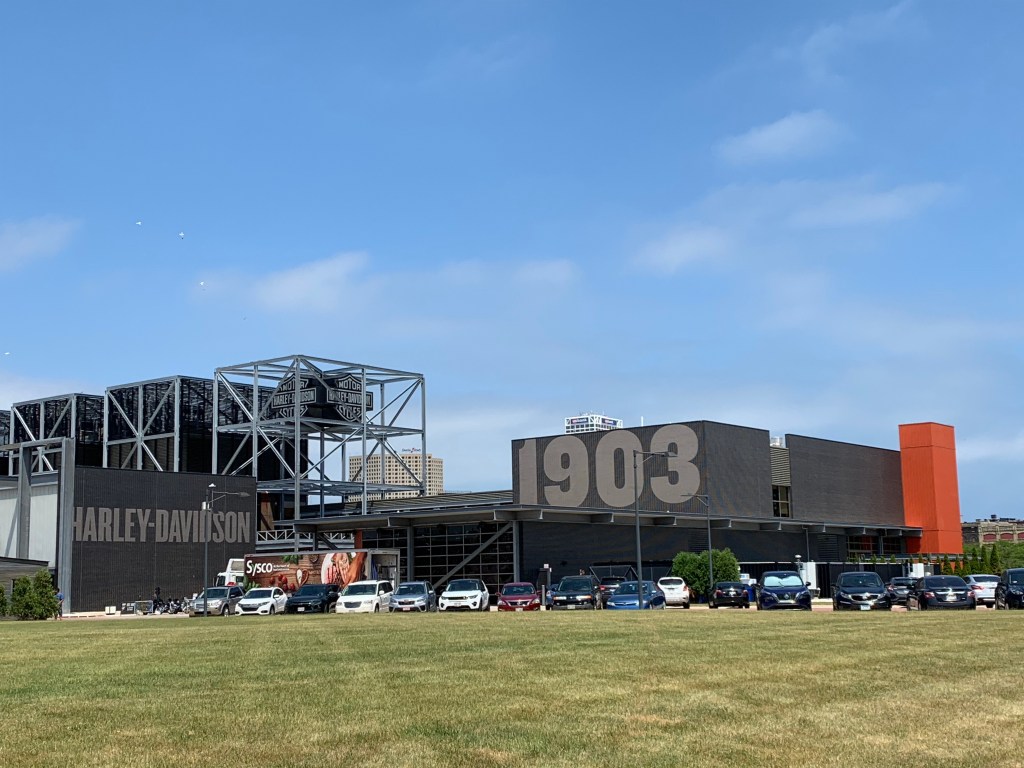
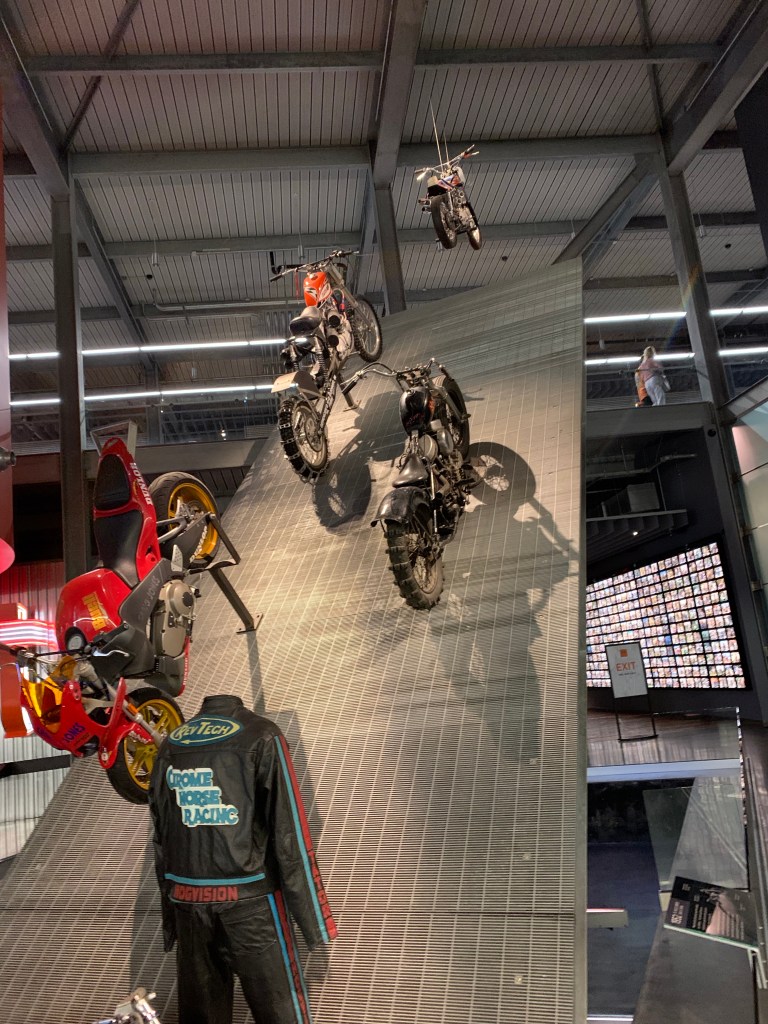
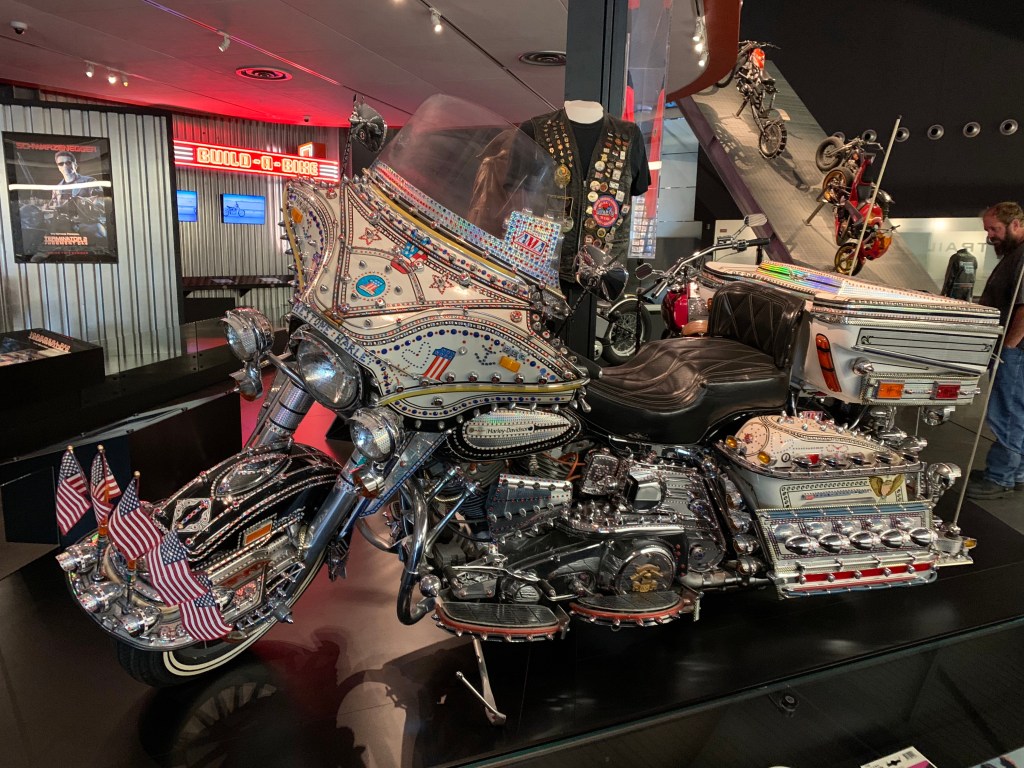
We did! In the Harley Davidson Museum in Milwaukee, Wisconsin, there now exists a huge museum exhibiting hundreds of beautiful and/or unique Harleys in what was part of the original Harley factory.

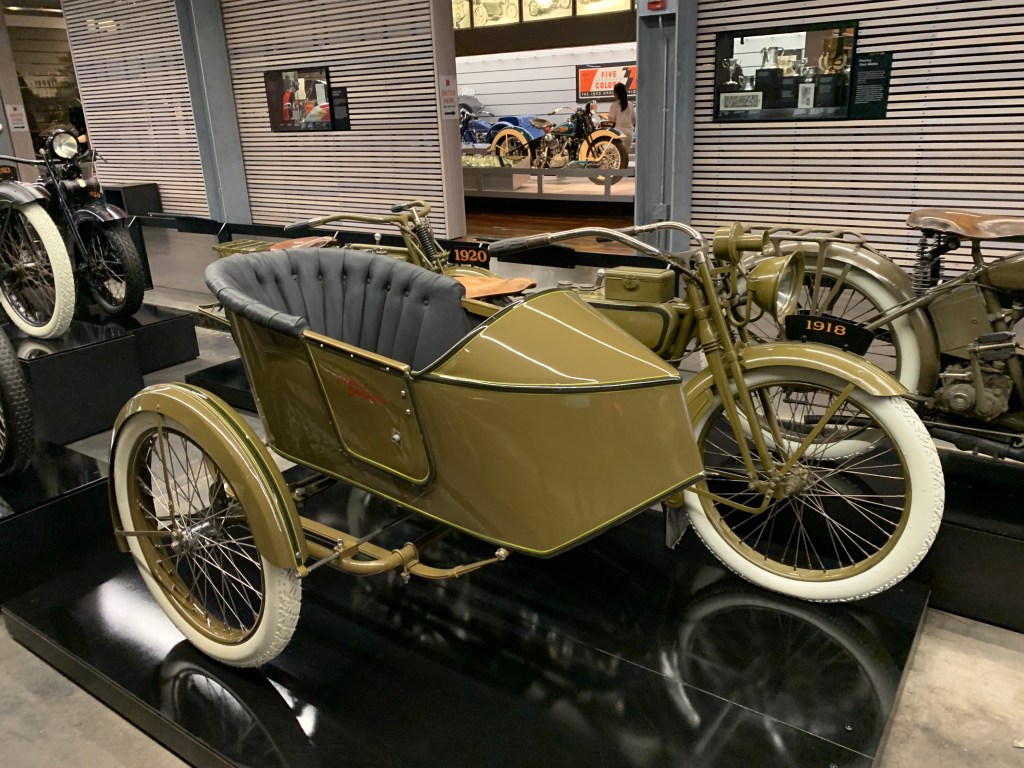
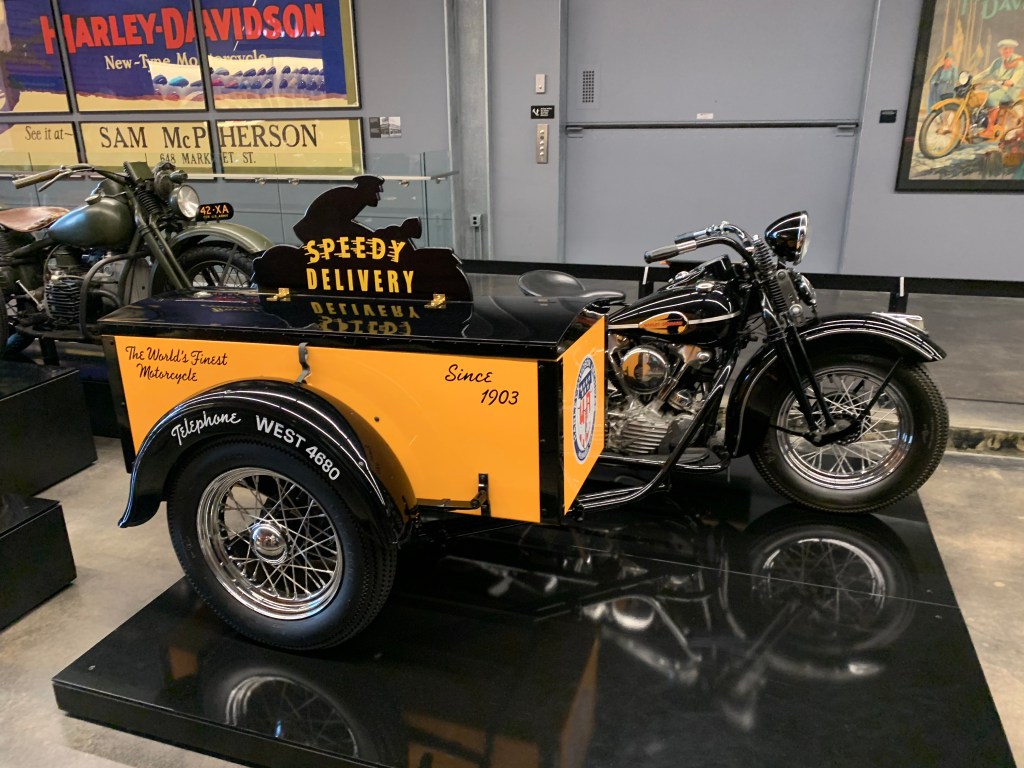
The museum is comprised of multiple buildings in a park-like campus and is currently celebrating its more than 100-year history of Harley-Davidson motorcycles. It contains more than 450 HD motorcycles and thousands of artifacts from the HD Motor Company’s 110-year history. These are my favorites below:

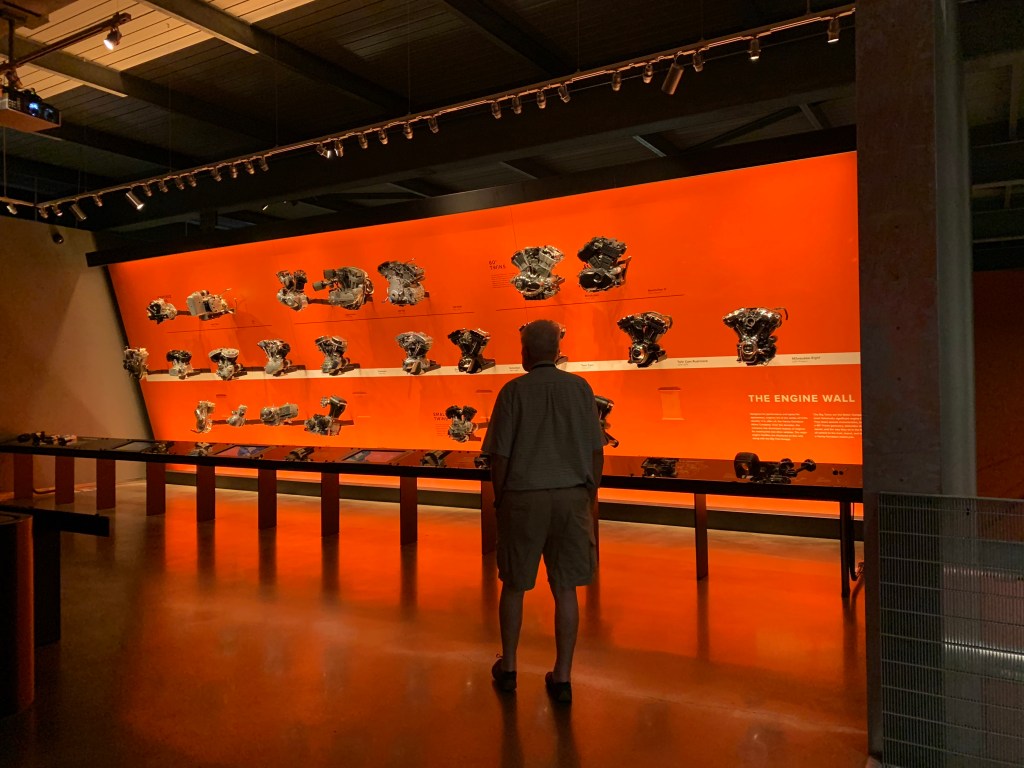
This wall contains examples of all of the different types of HD engines.
At one time, hill-climbing (like very steep hills) was a sport, and these are an assortment of those types of bikes.
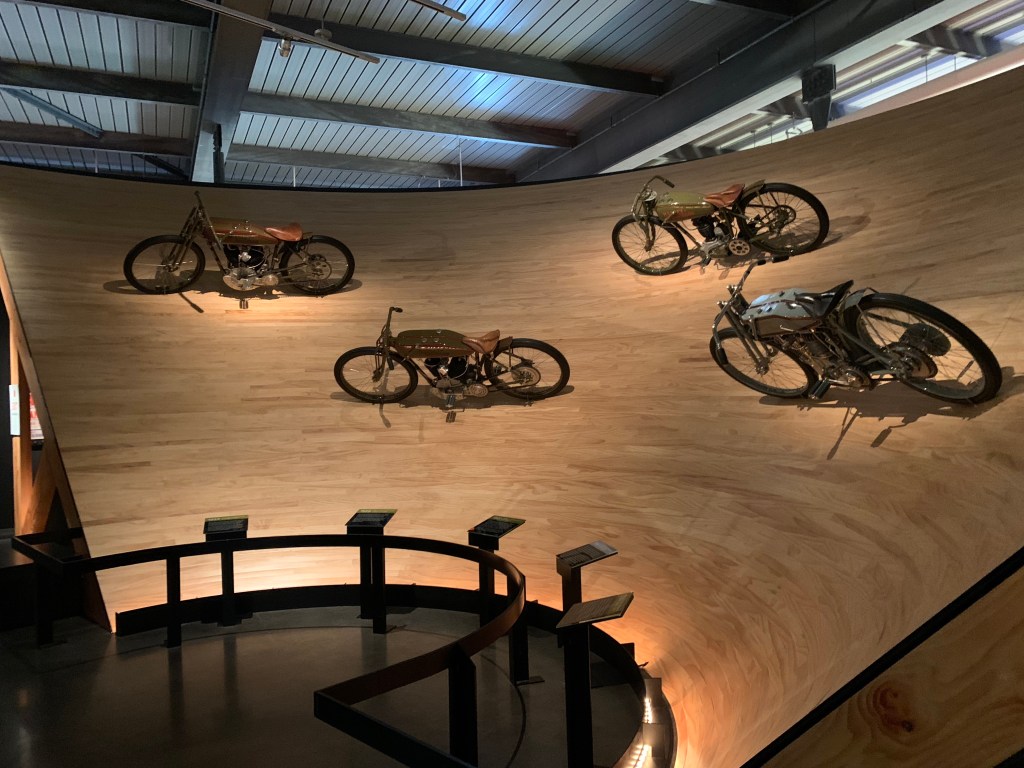
Track cycling on a velodrome which is made of a steeply banked oval track was another sport that Harley made specific models for.
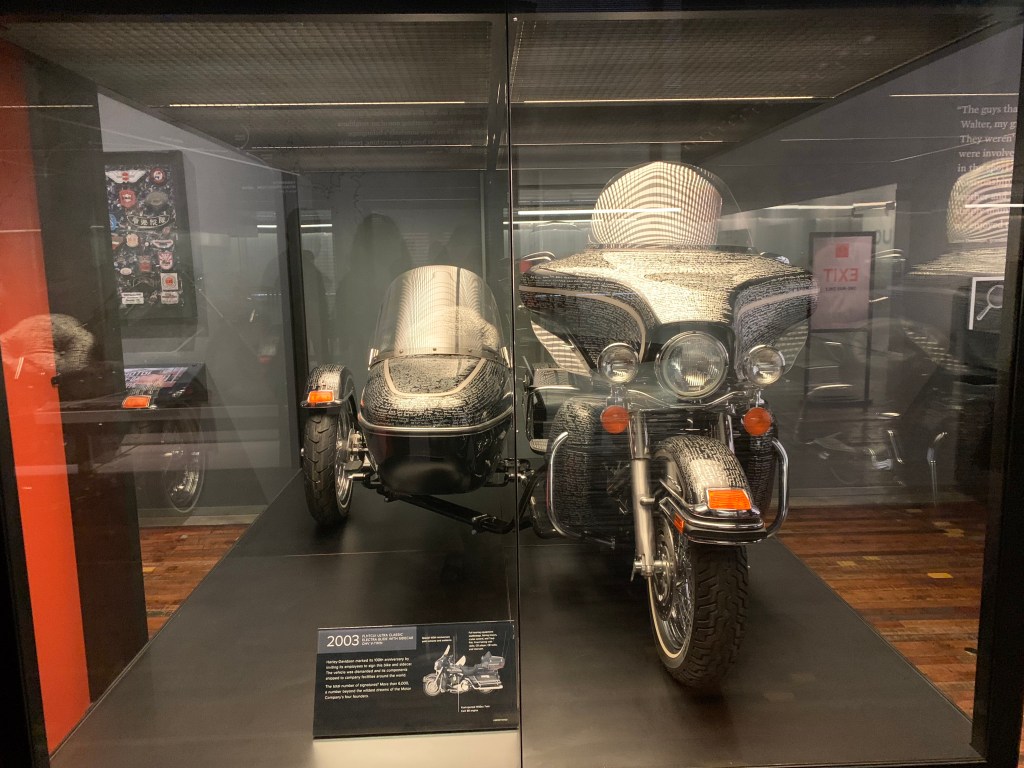
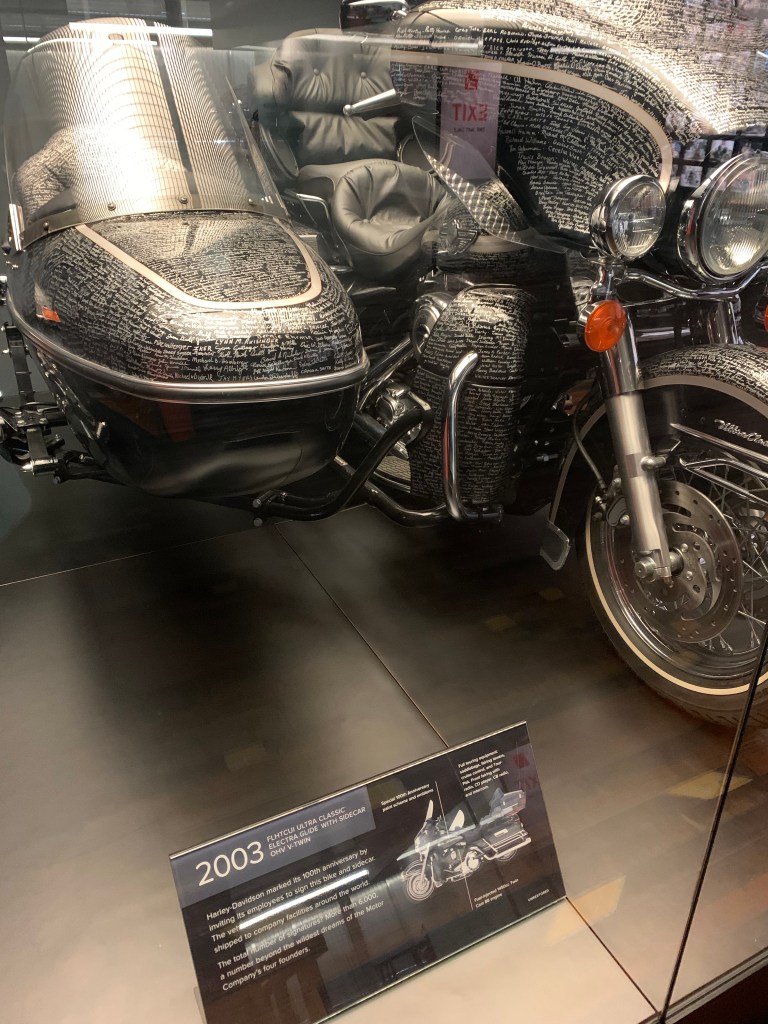
This motorcycle contains the signatures of several thousand HD employees to celebrate the company’s 100th anniversary.
And of course there’s a show-off in every crowd.

The museum spent considerable time explaining the remarkable story of Harley-Davidson nearly going under, agreeing to being bought by AMF and the consequent deterioration of their quality over the next nine years. The best part of that story is how a group of HD executives bought back HD from AMF and how they climbed to be the huge success they currently are in the motorcyle business.

They were also offering free demos on several different types of Harley’s in the driveway in front of the museum, but we passed. This time.

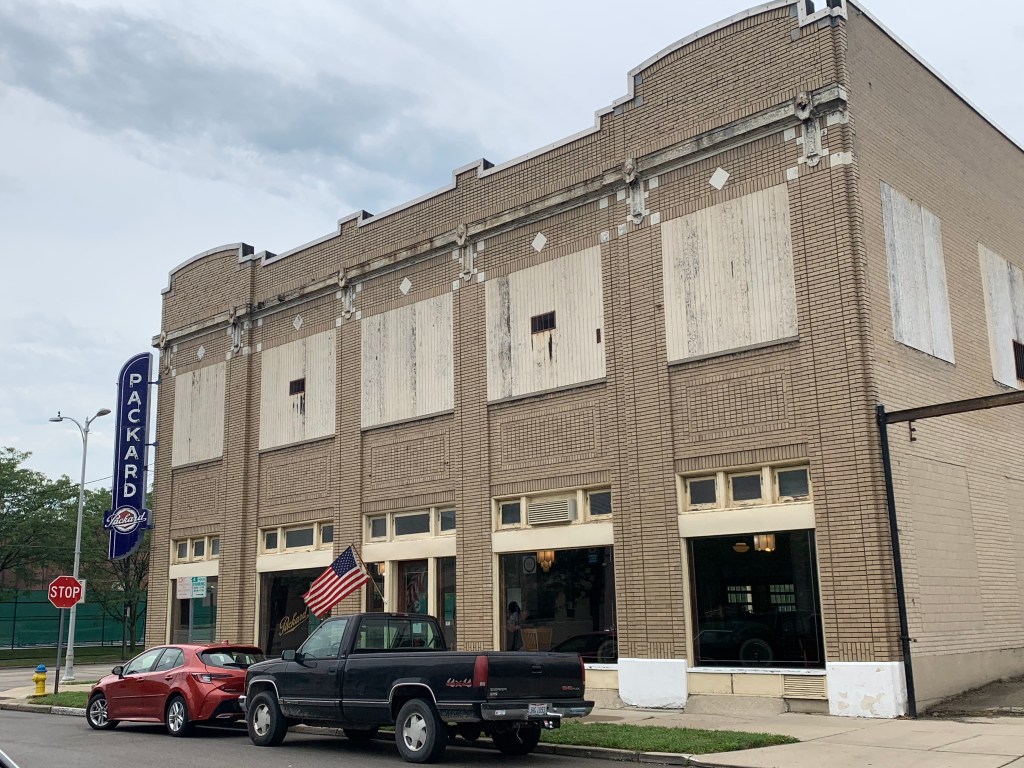
America’s Packard Museum

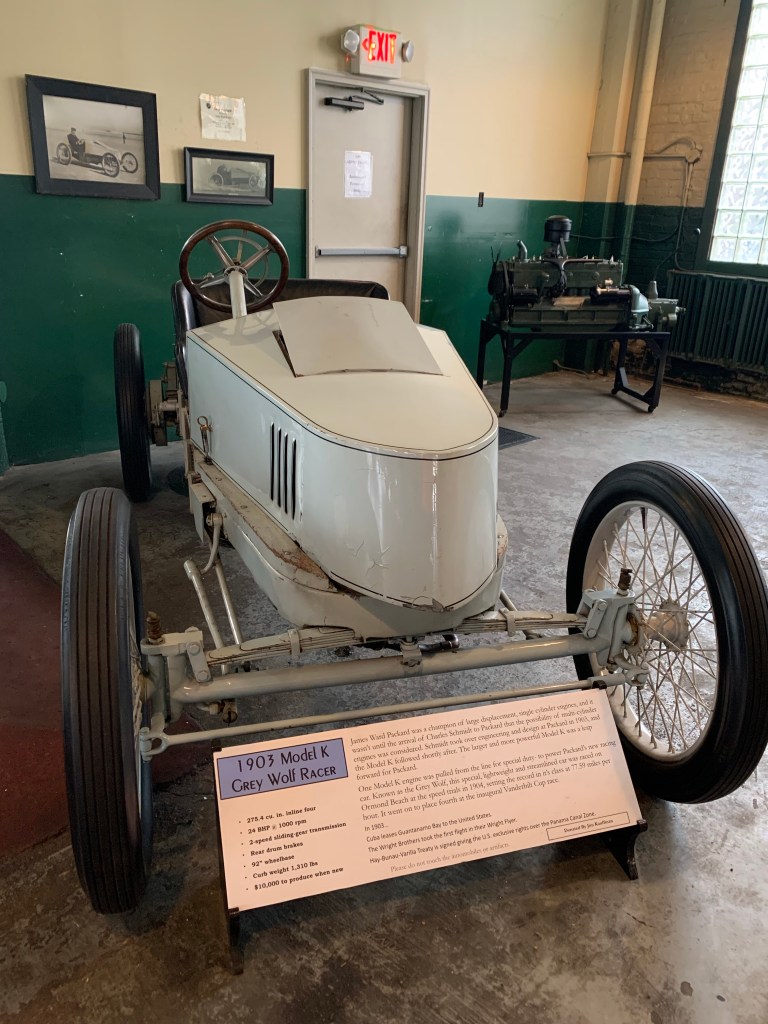
In Dayton, Ohio, in the original Packard dealership building constructed in 1917, there is a remarkable collection of restored Packard automobiles dating from 1903 to 1956 still maintained in driving condition, and in exquisite restoration.

For the first half of the 20th century, Packard was an American luxury automobile, and a favorite with European Royalty and Hollywood celebrities. Packard also played an important part in the war effort, getting valuable contracts from the government for everything from jeeps designed for the desert to jet engines. However, after World War II, with considerable competition from the three major autombile companies in Detroit, in particular General Motors, their image was seen as old-fashioned and unappealing to younger customers. The company finally died a natural death in 1959.

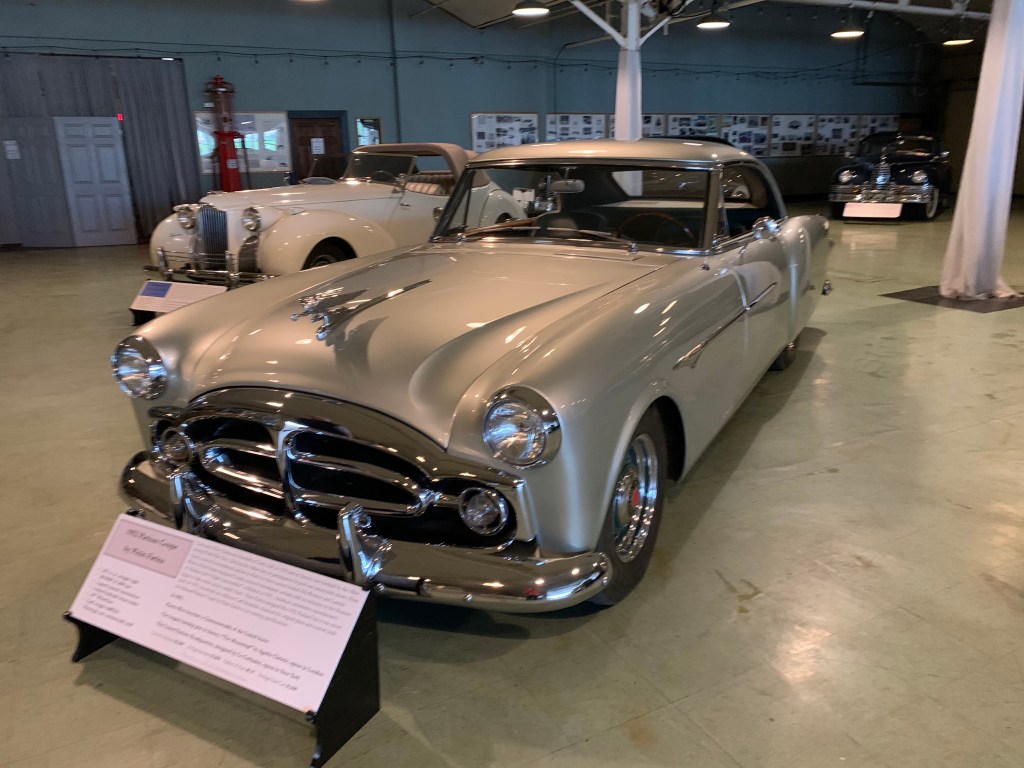
Below are several of their more unique models.

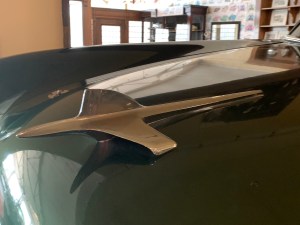
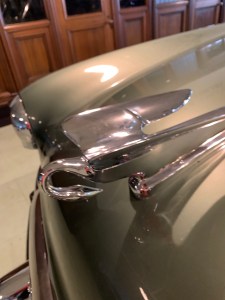
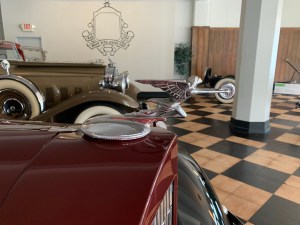
I was especially interested in the various hood ornament styles they created over the years….

In this museum it was especially poignant to see things that I remember seeing new as a child now considered historical artifacts to be appreciated because they are maintained in good shape and can still run.

Ohio’s American Indian Mounds

Our first night of camping was at a campground near Chillicothe, Ohio. We discovered that only a short distance away was one of many sites where Aerican Indians had built dozens of monumental mounds and earthen enclosures nearly 2000 years ago. They were used for feasts, funerals, rituals and rites of passage associated with their religious beliefs. Today, this is what they look like.

What you see in this image is only a small section of the entire set of mounds in what is now called the Hopewell Culture National Historical Park. See if you can find where these mounds fit in the image below.

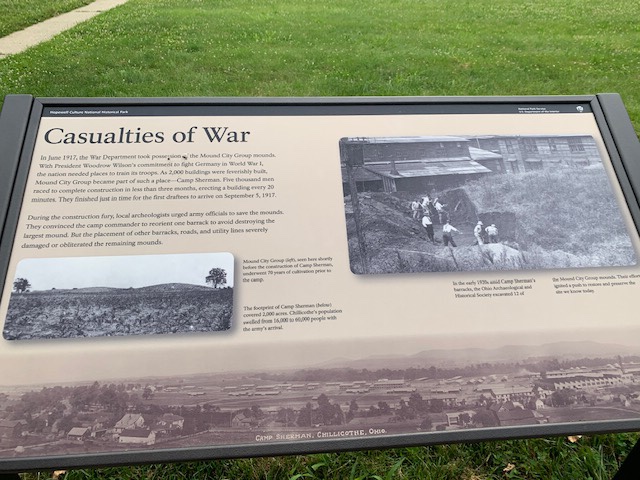
Unfortunately progress and war took their toll on the original mounds. Agriculture became a priority over history and when land became scarce for growing crops, the mounds were leveled and cultivated. Then during World War I, the area was turned into Camp Sherman almost overnight. The camp which you can see in the bottom of the image below was built by 5000 men within a few months, with buildings being constructed every 20 minutes.

Fortunately, the mounds were restored when their historical significance was appreciated by the local community and the federal government, and today is is part of the National Park System.

It was a brief stop for us with a lot of impact for me. We spend a lot of time in the west visiting important sites of the Native American culture there, but this is the first we’ve seen as far east as Ohio.

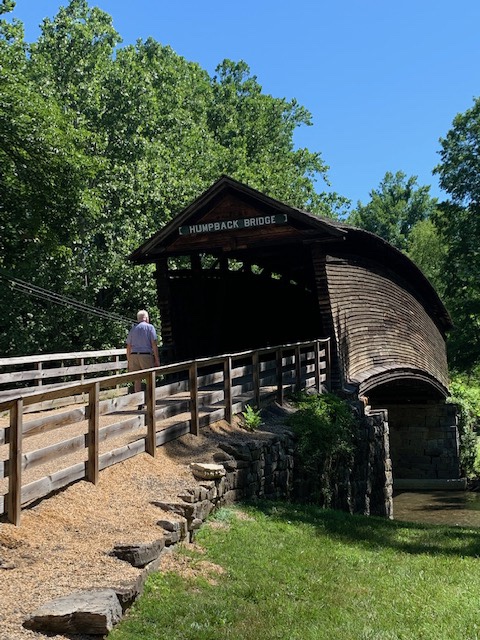
Humpback Bridge

When I was child traveling the US with my parents, my mother’s gold standard for the perfect place to stop for a lunch break was a lovely shaded site with a babbling brook alongside. Not a rushing river, or a lake or an oceanside view, only babbling would meet with her approval.

How I wish she had been with us on the Thursday when we found by accident the Humpback Bridge, located near the city of Covington, VA. It is one of the few remaining covered bridges in the US that was built higher in the middle than on either end, hence the name “humpback.” It was built in 1857 and is also the oldest remaining covered bridge in Virginia. It spans Dunlap Creek for a distance of 109 feet and is four feet higher in the center than at either end. AND it had the requisite amount of babbling. Lunch was perfect.

It is also notable for being a LOVEwork, part of a campaign to promote Virginia tourism. Each of the materials in the picture below was chosen for its significance in the heritage of the Alleghany Highlands.

The “L” was created with historic bricks from the area.

The “O” is a gear from one of the retired paper machines at MeadWestvaco representing the history of manufacturing in the area.

The “V” is the natural feature created by a tree in the creek bank.

The “E” was created with railroad ties representing the history of the railroad to the community.

On the Road AGAIN!

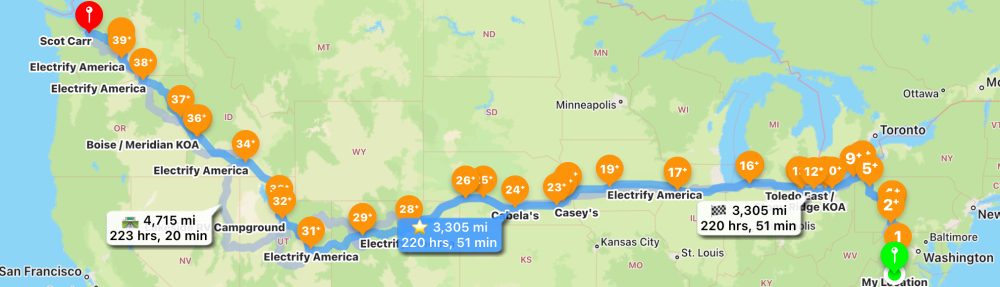
The GO is ready to go, and so will we be this coming Thursday. I’m hoping that our lessons learned from last time will make this a more streamlined and relaxed trip, now that we have the mechanics of setting up and taking down the GO well in hand. Our first destination is to head to Elkhart Lake’s RoadAmerica to see the next Indycar Race, passing through Chicago and Milwaukee on the way. In Milwaukee we’re looking forward to visiting the Harley Davidson Museum. Just hitting the road is enough for me right now, with an open road and a car-and-camper headed west. We welcome you to travel along with us.