Lessons Learned

As happens with most trips, our last few days were dedicated to driving a straight line (as much as mountains permit) directly towards Virginia, with that magnetic force of the our home growing stronger with every mile. So there isn’t much to report of interest during those last days other than that the Interstates worked fine, our rig held up beautifully throughout, it was relatively smoke free and we arrived home safely on Monday afternoon, September 21, very aware and appreciative of the clear blue skies above us.

That said, I spent much of those last days pondering everything we’d learned on this trip, which had been a unique adventure for us in that we had an entirely new camping set-up to learn. By the end of the trip we had settled somewhat comfortably into our respective jobs. Surprisingly one of mine ended up being cranking up the top of the tent which at first was quite a daunting task. It takes 48 rotations to get it all the way up; I managed to get up to about 30 before needing to take a break. Great exercise! Roger handled all of the taking down and putting up of the tent and also putting down the stabilizer feet on each of the four corners, as well as the connection to the hitch. On the last day we never disconnected the tent from the car and learned that all we really needed was the cooler by the door to the tent.

We also learned how much stuff we brought that we didn’t need. Along the way we downloaded, among other things, a folding table, a collapsible water bucket, extra silverware, a set of mixing bowls, and an outdoor privacy tent. I had packed nearly all the camping gear we’ve collected over the years, and at least we’ve weeded out the stuff that’s no longer useful, but that first leg of the trip was a real exercise in frustration with an over-stuffed car. Never again!

One of the best lessons I learned was to carry in a place easily accessible both in the car or in the tent what we called Carol’s Kitchen. This is something I’m going to take on every trip I take going forward because it proved to be so handy. This is what it looks like:
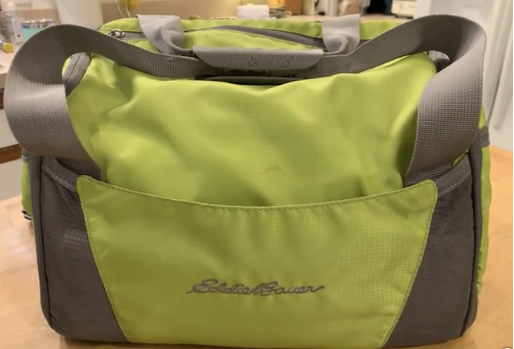
Carol’s Portable Kitchen

It contains in one fairly light bag every utensil needed to make a cup of tea or coffee, breakfast oatmeal, soup or sandwich, to open cans, or slice fruit or cheese. I usually tucked in a package of crackers and a small jar of peanut butter, but there is plenty of room for more small portions of snacks. With the food carried in a cooler, we could manage just about every meal, and I could always have a “cuppa” whenever I needed one. (I also carried hot water in thermos that stayed hot until the end of the day which was always there for a second cup, or for just washing hands with.) We also learned that carrying a plastic jug of water with some foam soap in the back of the car was a big help for a quick wash-up.

We’re not sure just when our next adventure will take place, but clearly it will be next year after we’ve gotten through the winter. Thanks for joining us on this one!
Golden Spike National Historical Park

At long last we have something more interesting to report than how smoky it is out West! After spending several days trying to decipher the shadows in the haze around our car, we finally reached Utah where the air was clear, the sky was blue, and there we went to a place everything important happened a long time ago. At the end of the 19th century, one of the greatest technological achievements of our country took place: the completion of the transcontinental railroad. Envisioned and supported by Lincoln even as he was dealing with the Civil War, it finally came to completion on a specific date, May 10, 1869, with a ceremony held at their joining at Promontory Summit in Utah. At that ceremony a “golden” spike was used to complete the last link of the transcontinental railroad.

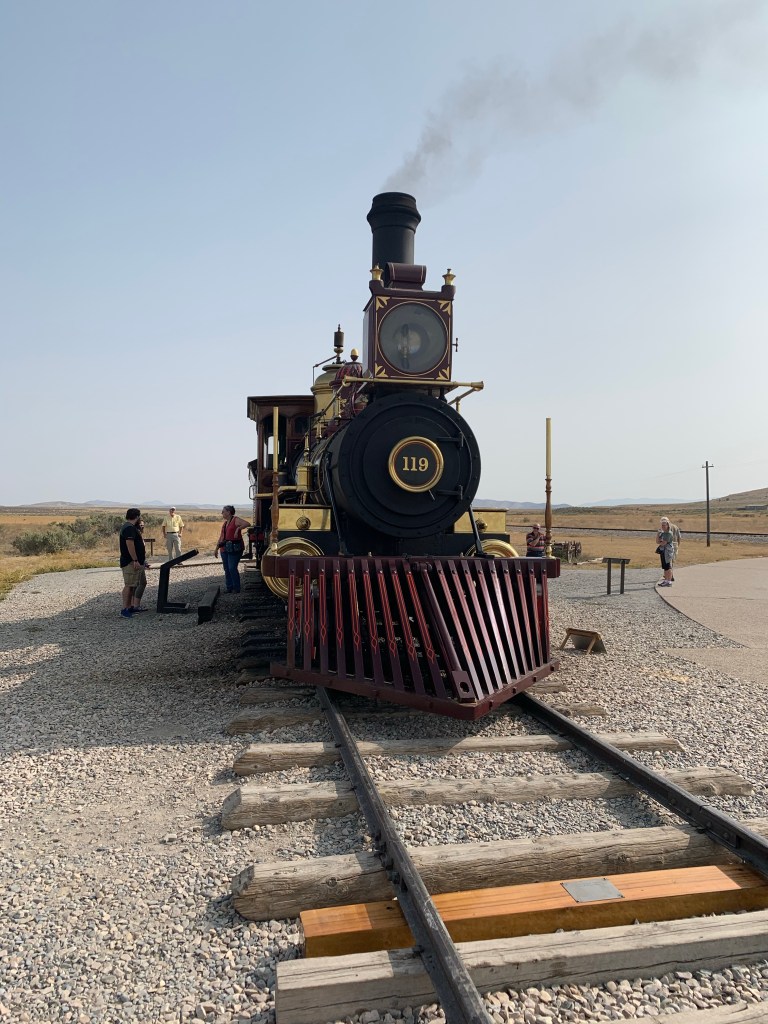
Today there is a National Park Visitor Center to mark the spot, which also boasts working replicas of the original locomotives that participated in that ceremony, the Union Pacific 119 and the Central Pacific’s Jupiter. They are lovingly tended by park staff and volunteers, and reenactments occur periodically. Although we did not see a reenactment, it was well worth out time to travel many miles into a very desolate part of Utah to visit this site.

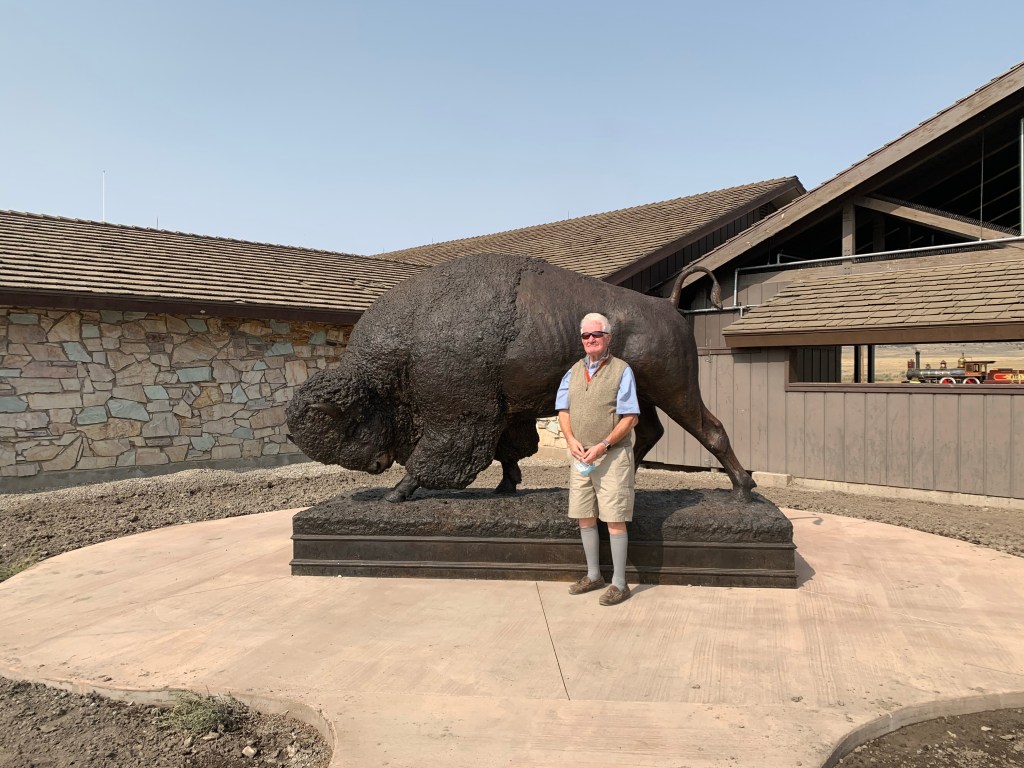
Bison statue in front of the Visitor Center. Like most National Park Visitor Centers, it was closed for exhibits with only the book store open. However this park had many rangers outdoors to answer questions about the many outdoor exhibits.
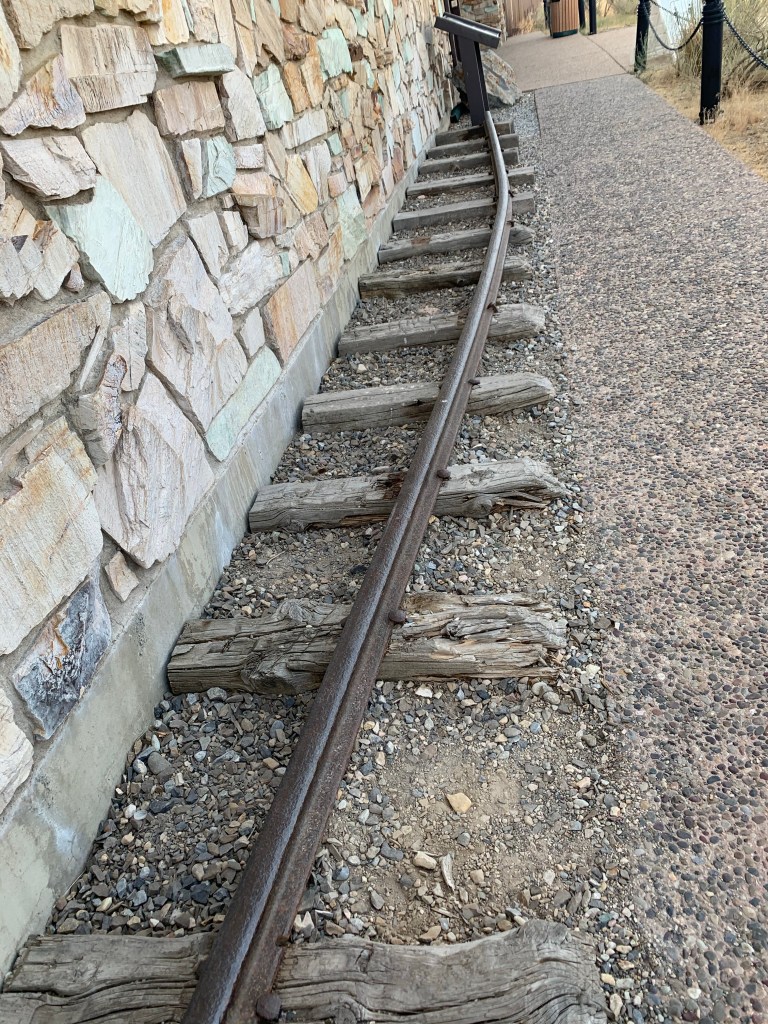
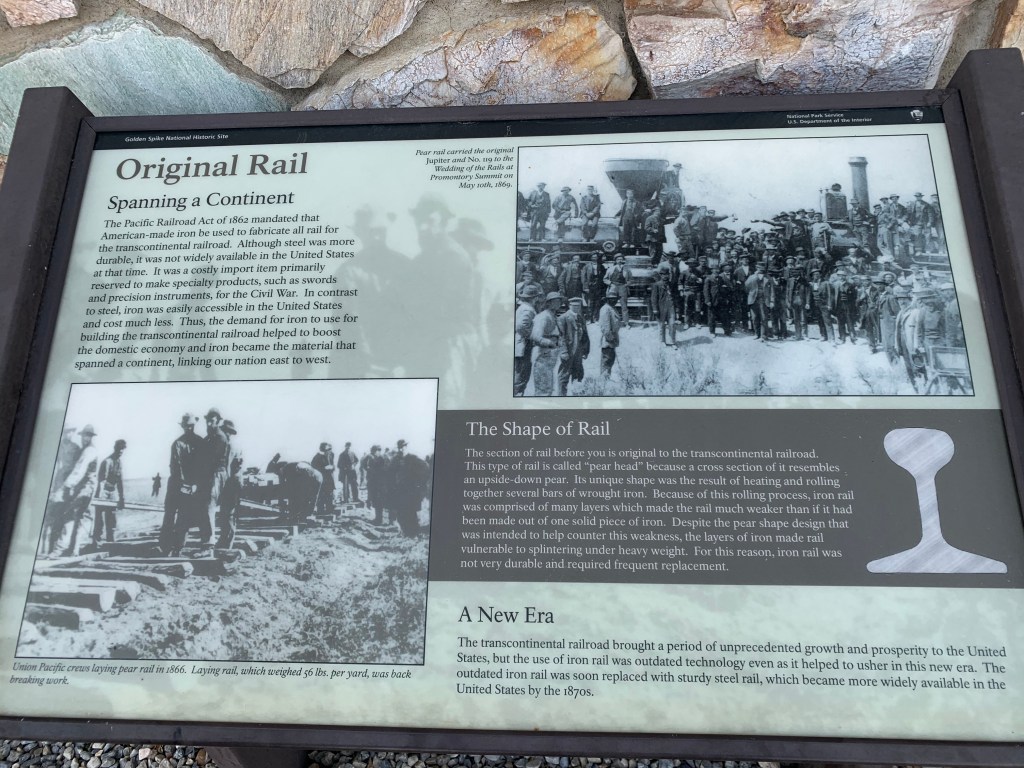
A section of the original rail
They have reconstructed several miles of the original railroad for their reenactment. The original materials were torn up when the usefulness of this railroad diminished and the metal was used to support the WW2 war effort.
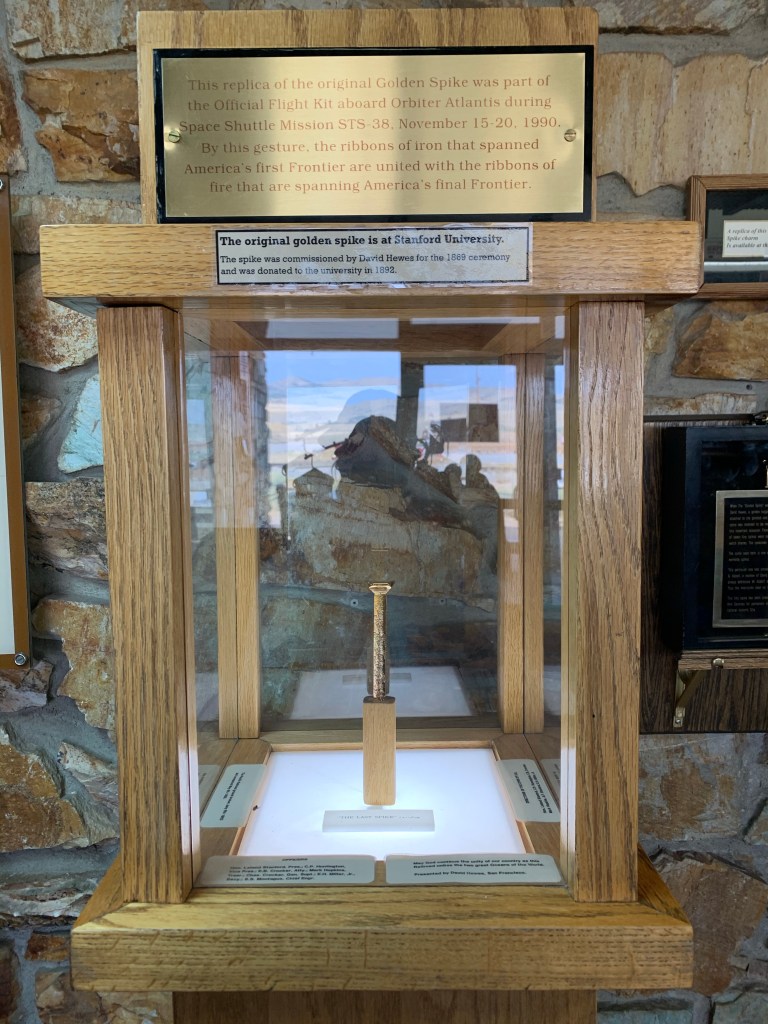
This is a replica of the final tie

While Leland Stanford and Thomas Durant, major proponents and supporters of the railroad, attended the ceremony and were given the honor of driving the spike, both missed with their blows, which greatly amused the rag-tag crowd which attended, many of them workers on the railroad. It was ultimately completed by one of the supervisors of the project, which seemed most fitting to me.

The Czech Capital of Kansas

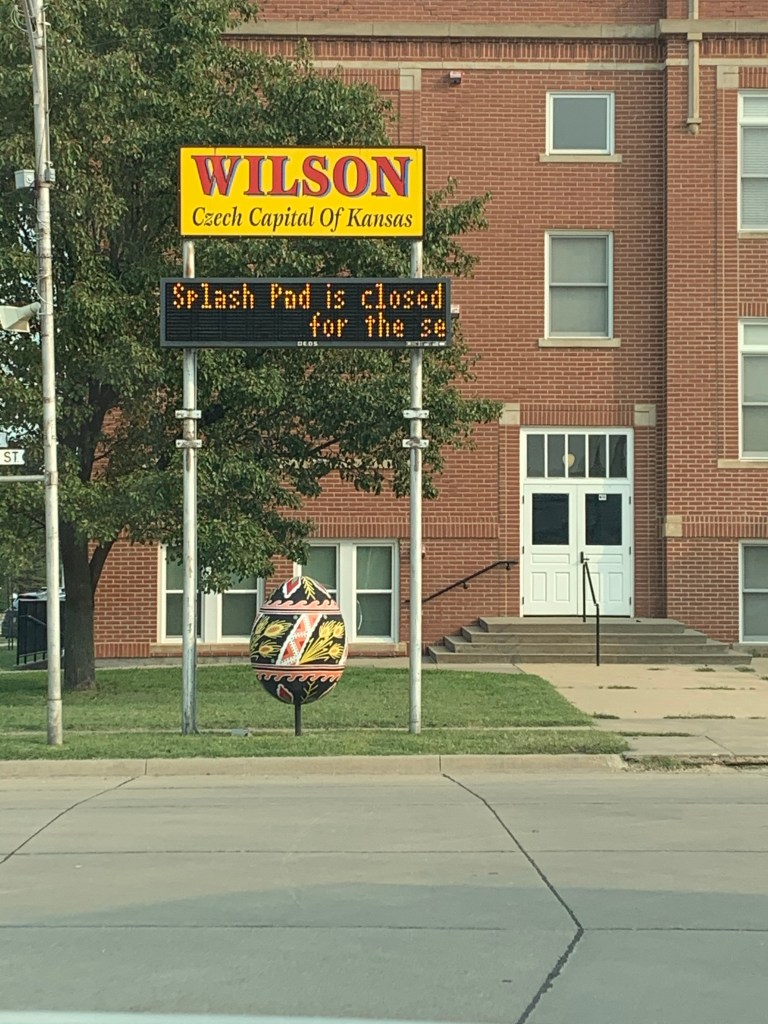
As we headed east for home, I was determined to find something interesting each day on the road to alleviate the inherent boredom of hundreds of miles of I-70. One of these was Wilson KS which has been dubbed the Czech Capital of Kansas. It was established in 1871 near a Kansas Pacific Railway station, and one of its first settlers was Francis J Swehla who arrived in 1874 and used the Czech-language newspapers across the US to spread word of a Czech settlement offering cheap land, rich soil, access to water, and building stone (note no mention of abundant wood.) Bohemians soon flocked to Wilson, anxious for an opportunity to maintain their Old World culture in their new homeland.

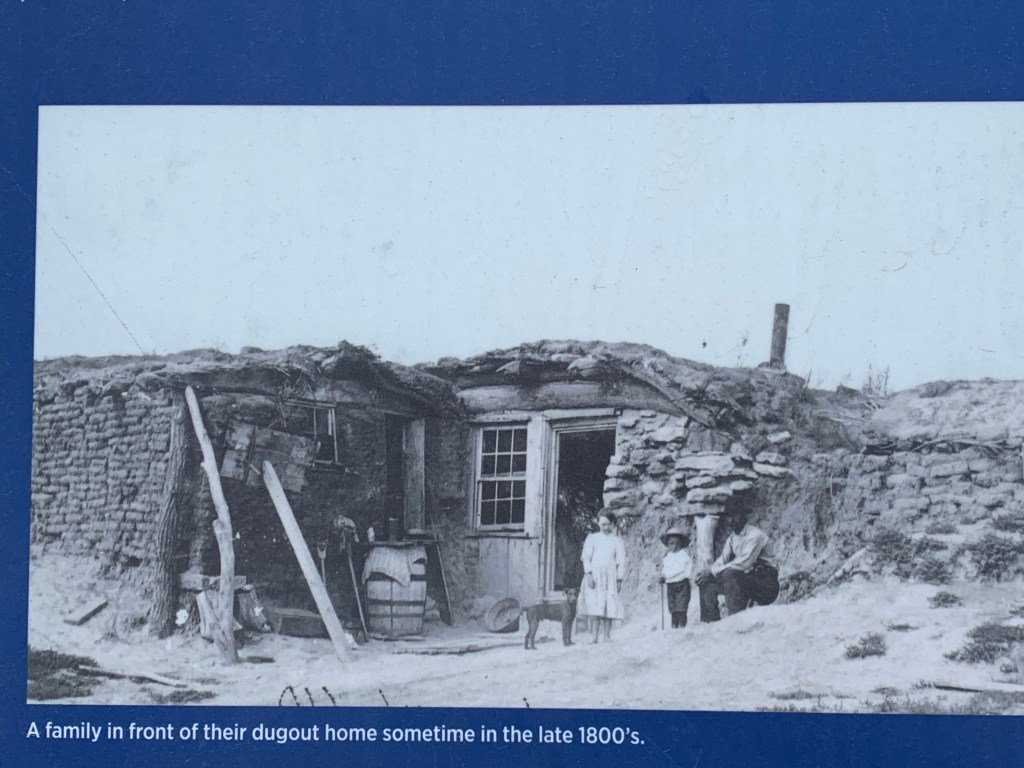
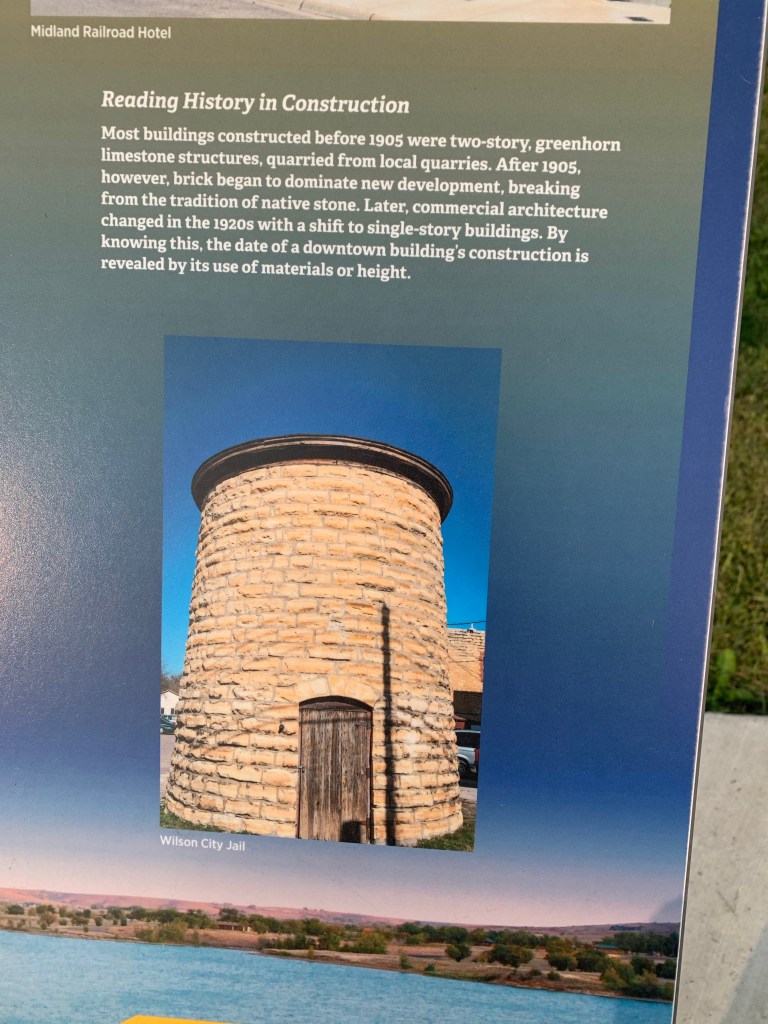
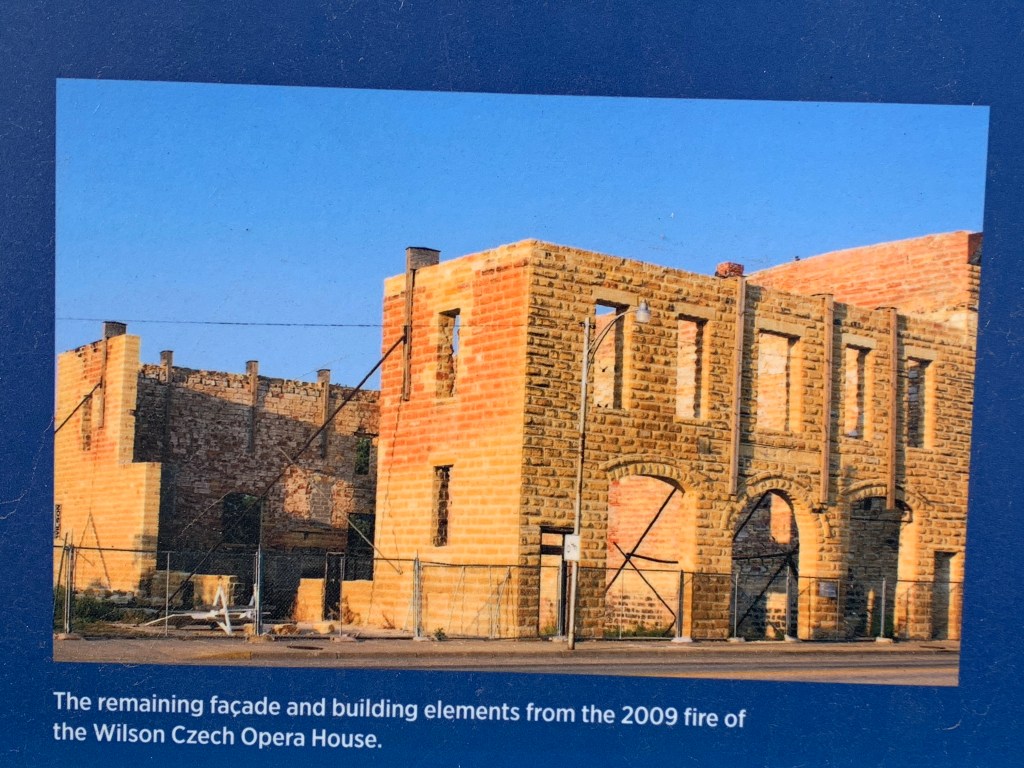
Because of a lack of wood in the area, the Bohemian settlers often lived in dugouts or huts made from bricks of sod until they could build their homes from the readily available limestone. Many of these original limestone buildings are still intact.

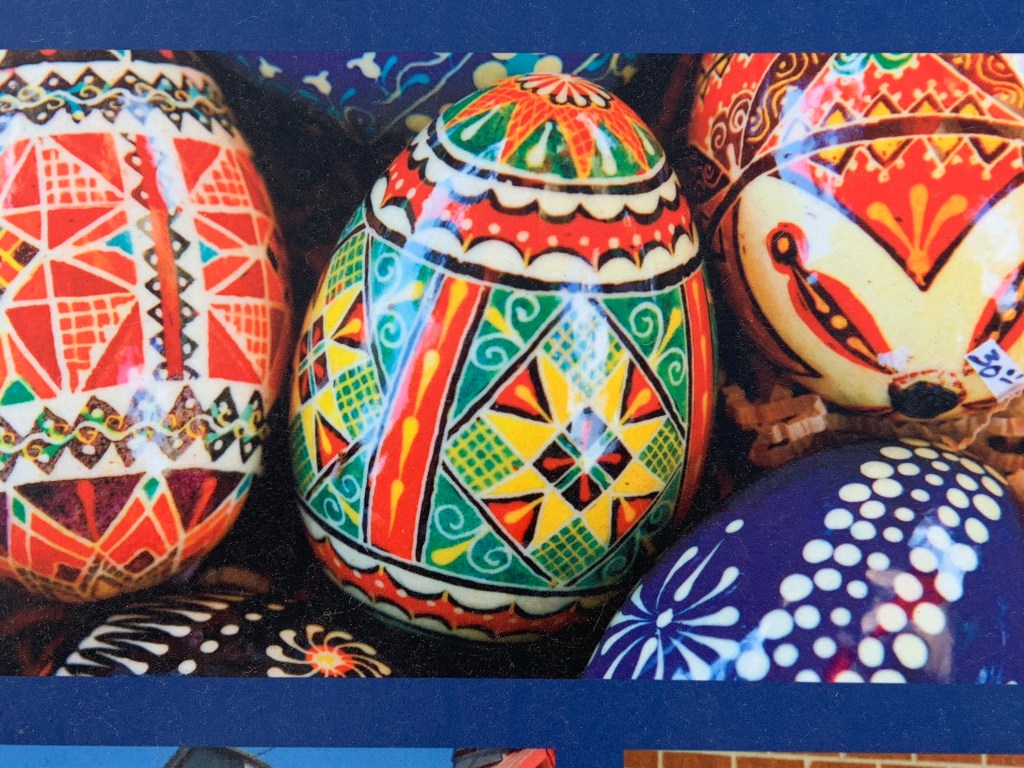
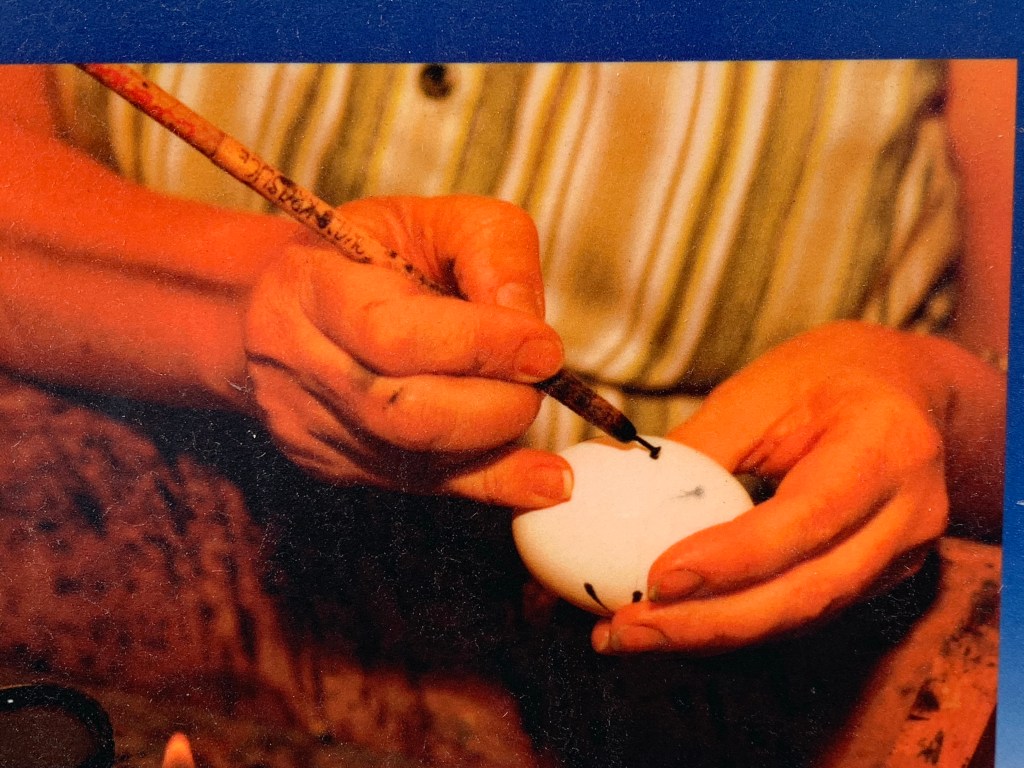
A famous expression of the Czech culture is the art of Kraslice, the Czech technique of egg decorating, used to create the beautifully decorated eggs above. This art is performed with a wax relief method that is meticulous and unforgiving. It requires great skill which has been maintained by the Czech artists of Wilson.

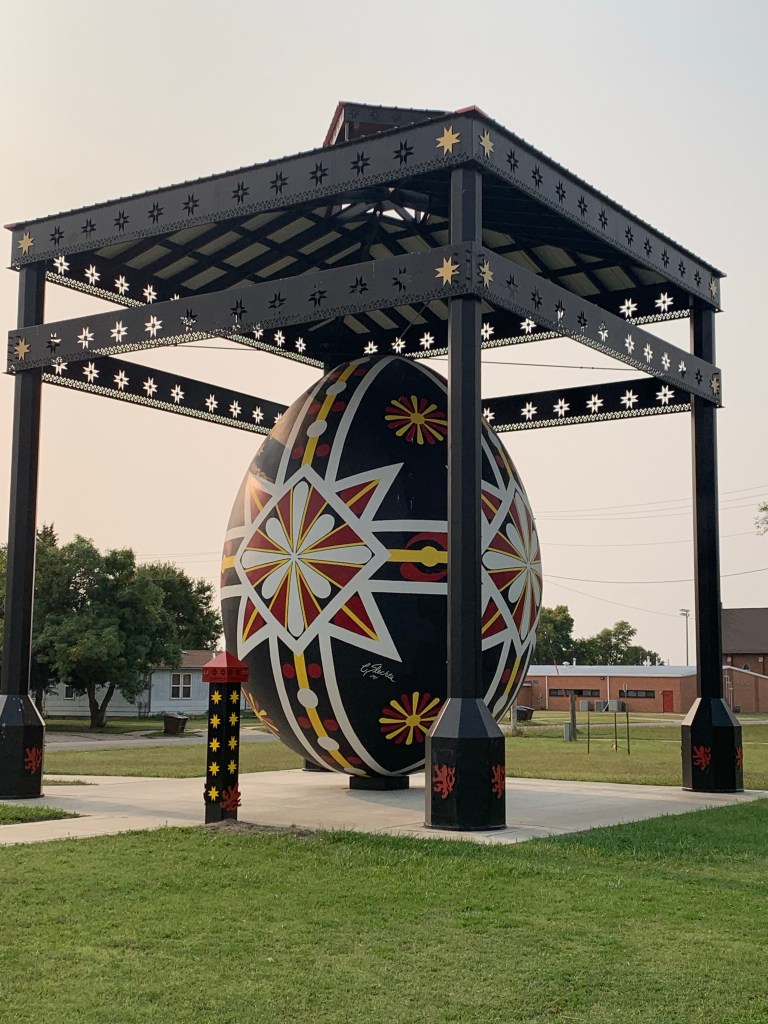
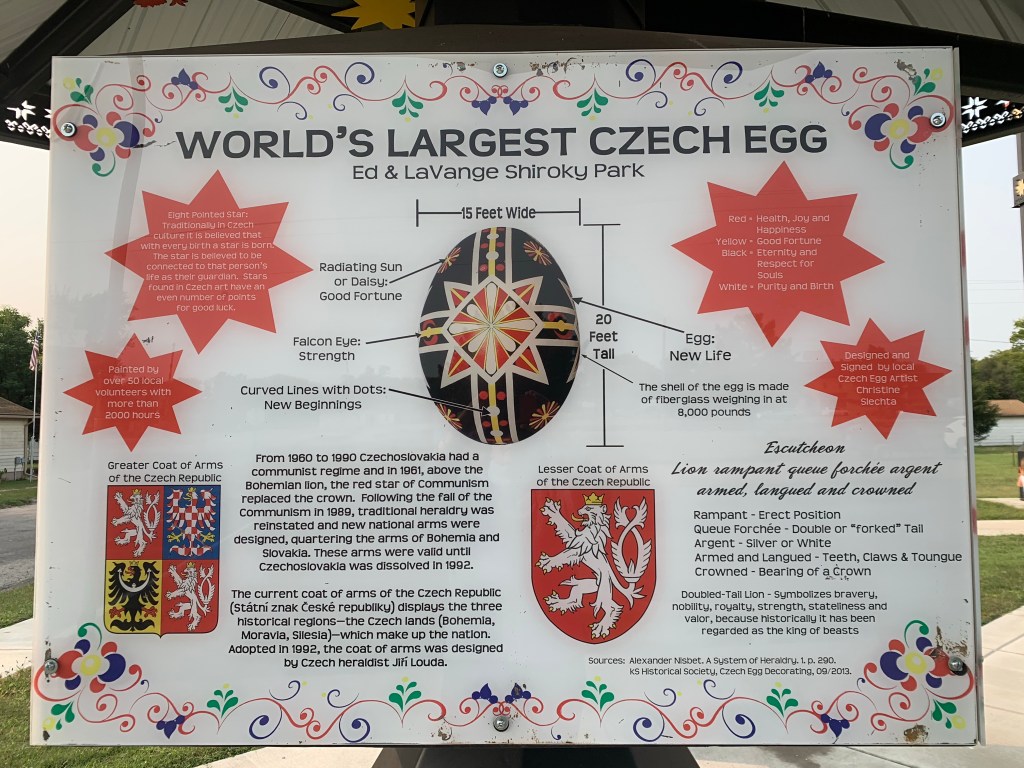
Wilson is now the location of the World’s Largest Hand-Painted Czech Egg. Beginning in 2003, efforts began with local artists to build the 20-foot-tall and 15 foot wide fiberglass egg. Fundraising took several years, including funds from the Czech Republic embassy. A description of the meaning of the symbols and designs on the egg is found in the picture below the egg.

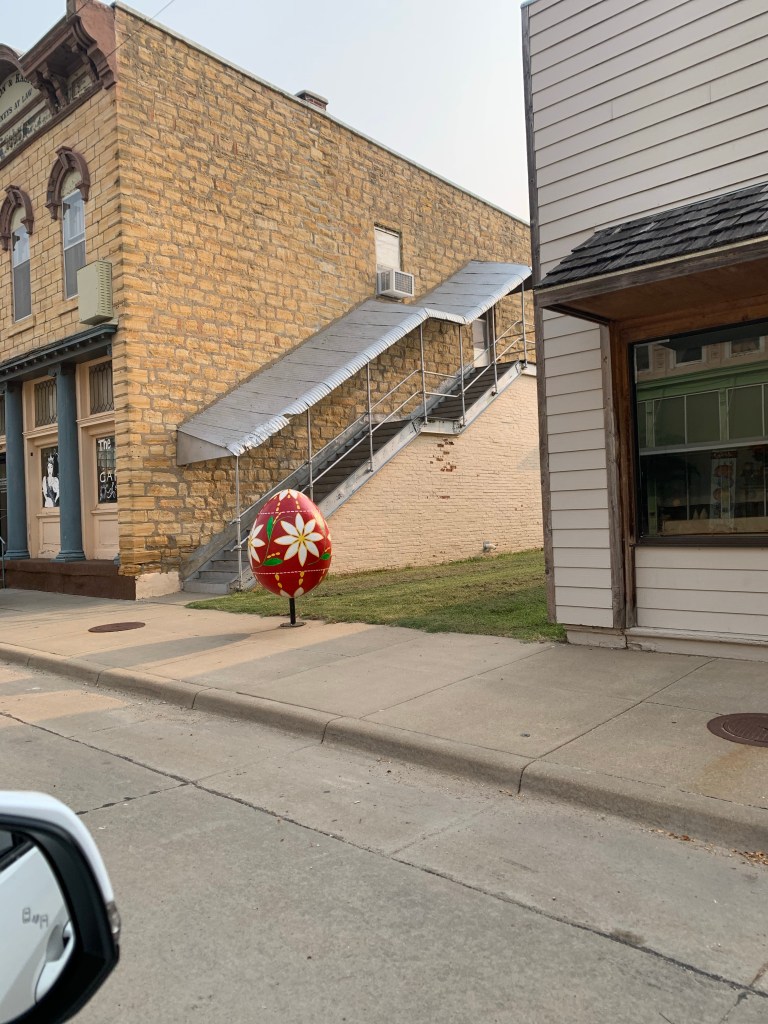
The town has carried this theme further with much smaller eggs peppered around the town. A delightful stop for us that made my day!

We’re Off!

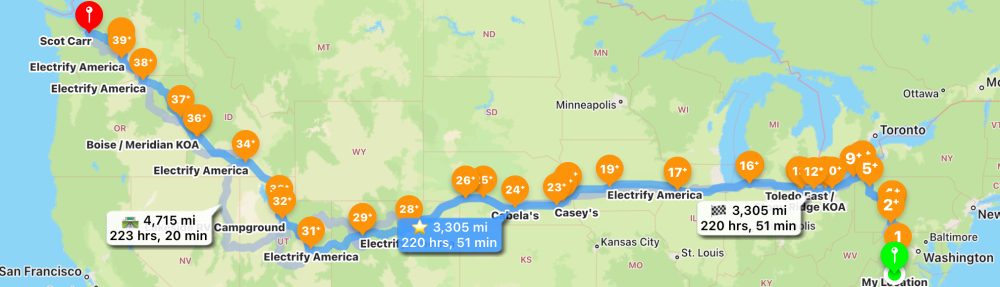
Taking off tomorrow morning at 10:00AM, with a first night’s destination of Ashland, Kentucky. The big adventure begins and the following is a rough idea of our itinerary for the first leg of the trip:

Day 1: Home to Ashland KY, a travel day

Day 2: Ashland, KY to Cahokia, IL, another travel day

Day 3: Cahokia, IL to Williamsburg, KS, with a stop to visit the Missouri State Capitol

Day 4: Williamsburg, KS to Colby KS, viewing Monument Rocks along the way

Day 5: Colby KS to Colorado Springs, CO with a stop to visit the United States Air Force Academy

Day 6: Colorado Springs CO to Towaoc CO, stopping to see Pikes Peak

Day 7: Towaoc, CO to Kanab, UT, visiting the Four Corners and Glen Canyon

Day 8: Kanab, UT to Virgin, UT, with stops at the North Rim of the Grand Canyon and the Kolob Canyons part of Zion National Park

Day 9: Virgin, UT to Lone Pines, CA while passing through parts of Death Valley

Day 10: Lone Pines, CA to San Rafael, hoping to dodge any wildfires along the way. If all goes as planned, we will have arrived at our first family stop.

Taking 10 days to cross the United States is a gift for us; normally we’ve done it in 8 days, and 400-500 mile days can be wearing. This will be much more leisurely than we’ve done before. We’re hoping the weather will be easy on us too. We welcome you to follow along!

We’re Heading West Again!

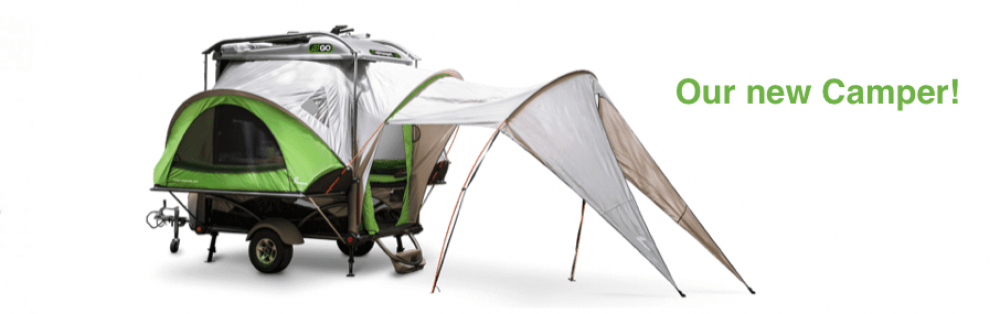
With social distancing our new norm, and as our normal travel routine is predominantly socially distanced anyways, we’ve decided to literally take our show on the road for the remaining weeks of this summer and head West to visit family. Our “show” this time is a new camper: a Sylvansport GO, which we have dubbed our CarrGO. As I tend to describe it as a turtle on wheels, and that generally doesn’t give the best impression, the best thing to do is to check out the Sylvansport GO website at https://www.sylvansport.com/go/ where you can see a number of photos that show its versatility. This is the basic idea:

With a hybrid RAV4 to tow it, we’re ready to take on the West. Once we’ve settled on an itinerary, I’ll post that shortly. We hope you’ll journey along with us!