The Magnetic Pull of Home

It’s hard to describe the feeling when your vehicle is headed in the direction of home, and your thoughts grow increasingly of the comforts of your own bed and your own refrigerator, and being back in the land of the familiar. It happens with every trip, when we find ourselves foregoing a side trip or some attraction in the interest of being at home again. Perhaps one of the blessings of the electric car is that it makes you stop more often, take more time to ponder where you’re at and note the differences of the various states and towns we’re in. On the other hand, access to charging stations also dictates the route one can take, and in our case, we decided that I-70 was the best road for our trip home. The route below is fairly close to the one we followed.
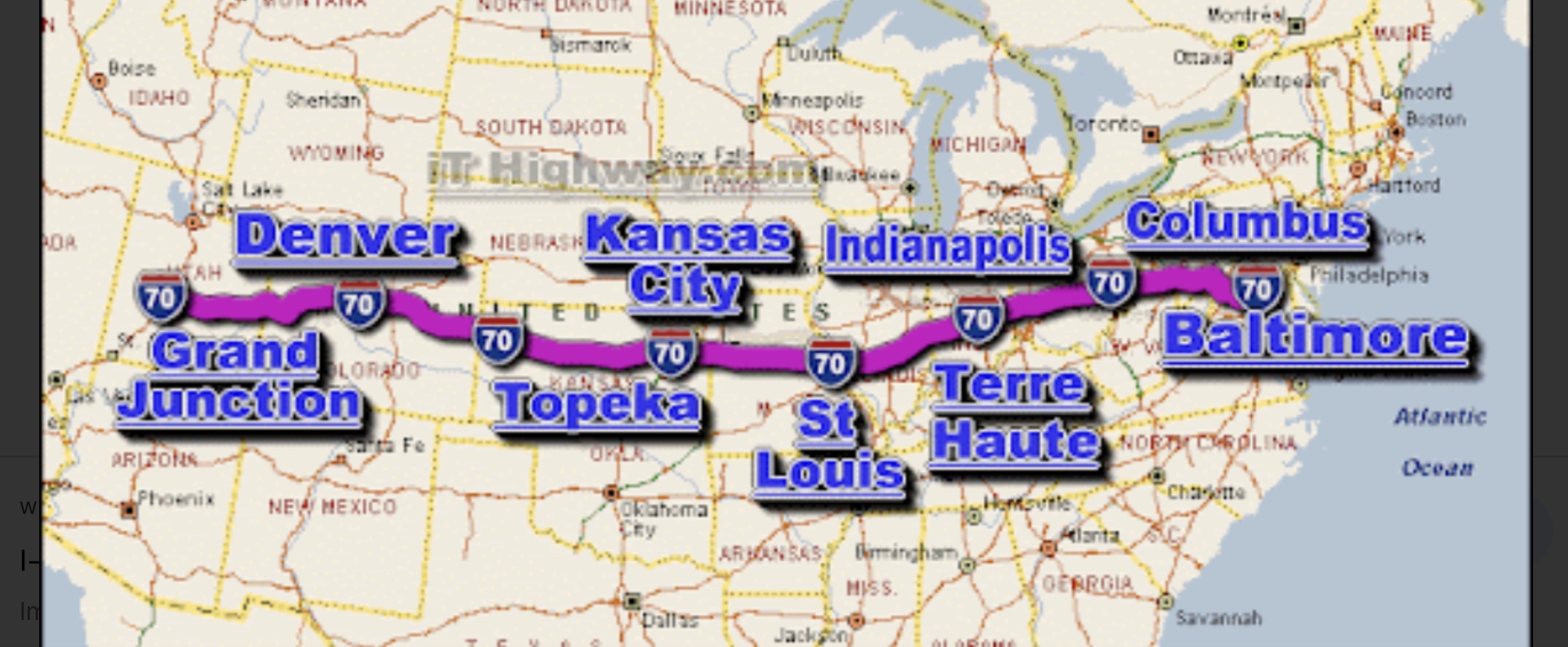
Our Route Home (except for Baltimore)

So after leaving Washington, we first aimed for the Anaconda Smoke Stack State Park in Montana, headed southeast to Salt Lake City, and then picked up I-70 around Green River and stayed on it into Pennsylvania. Below are some of the landscapes we were treated to along the way.

Quincy, Washington Landscape
Columbia River near Quincy, WA
Wild Horses Monument

This is a sculpture created by the Chewelah sculptor David Govedare that is on a hill overlooking the Columbia River, entitled Grandfather Cuts Loose the Ponies. (Grandfather is a Symbol of the Great Spirit.) Originally he envisioned a 36-ft tall woven basket made of steel, tipped on its side to allow the horses to run free. The 15 galloping horses are life-size.

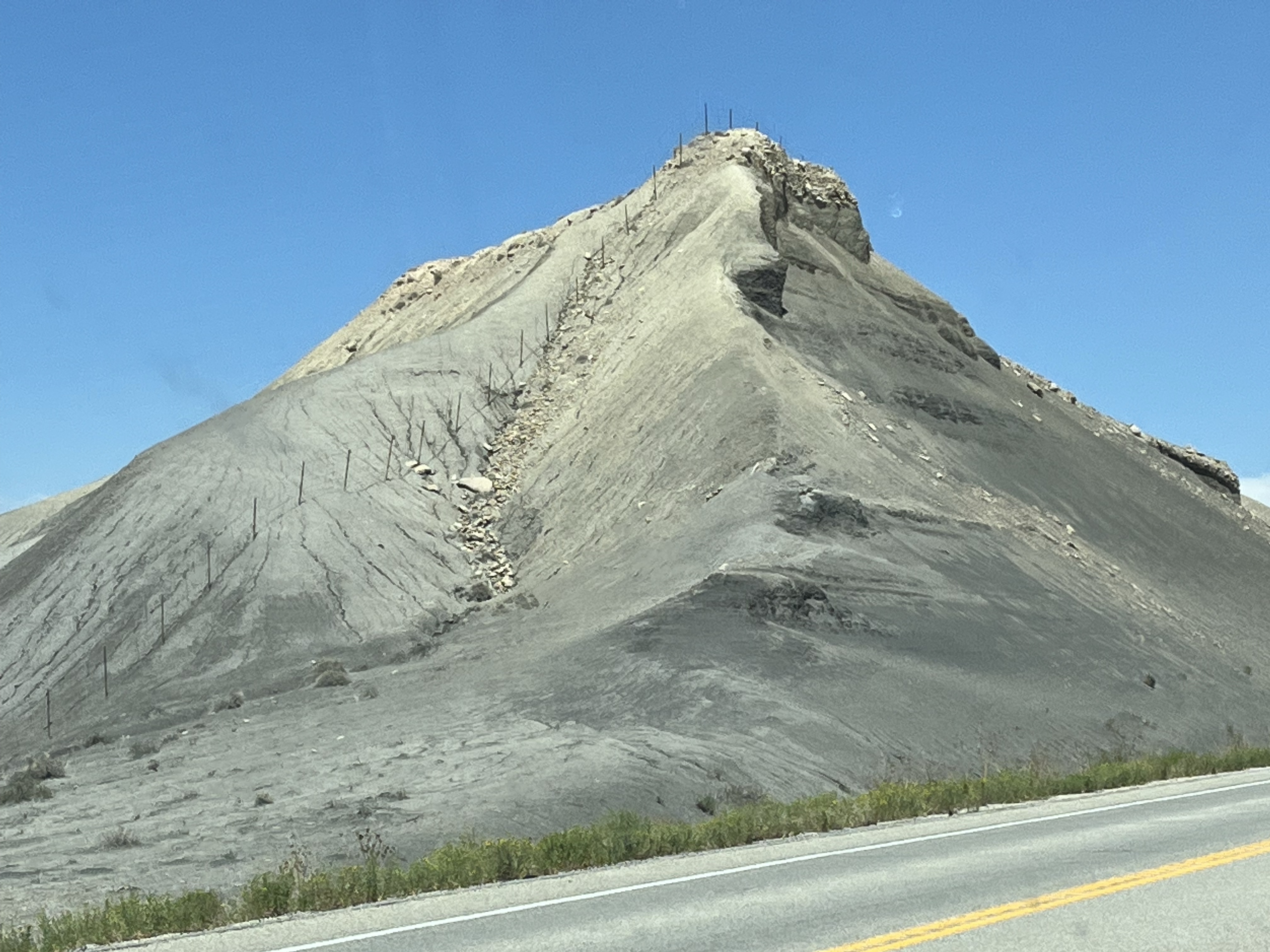
Green River UT Landscape
Rte 6 south of Salt Lake City on the way to I-70
I-70 near Gypsum, CO, west of Denver
View from a charging station near Glenwood Meadows, CO
The St. Louis Arch on the Mississippi River

East of St. Louis, the landscape became primarily one of corn, wheat, and soy fields until we reached the hills and mountains of the Appalachian Mountains. We also met with a lot of rain in that part of the country, sometimes very heavy; we didn’t realize until after we had reached home and heard news of the flooding of St. Louis and other places we traveled through that we were driving just ahead of the terrible weather that did so much damage to the Midwest.

Home never looked better when we pulled into our driveway, and I gave a special greeting to our Sylvansport GO waiting patiently in the garage, now that we’ve experienced again the challenges of tent camping. We hope to have many more adventures with it. Thanks for sharing this one with us!
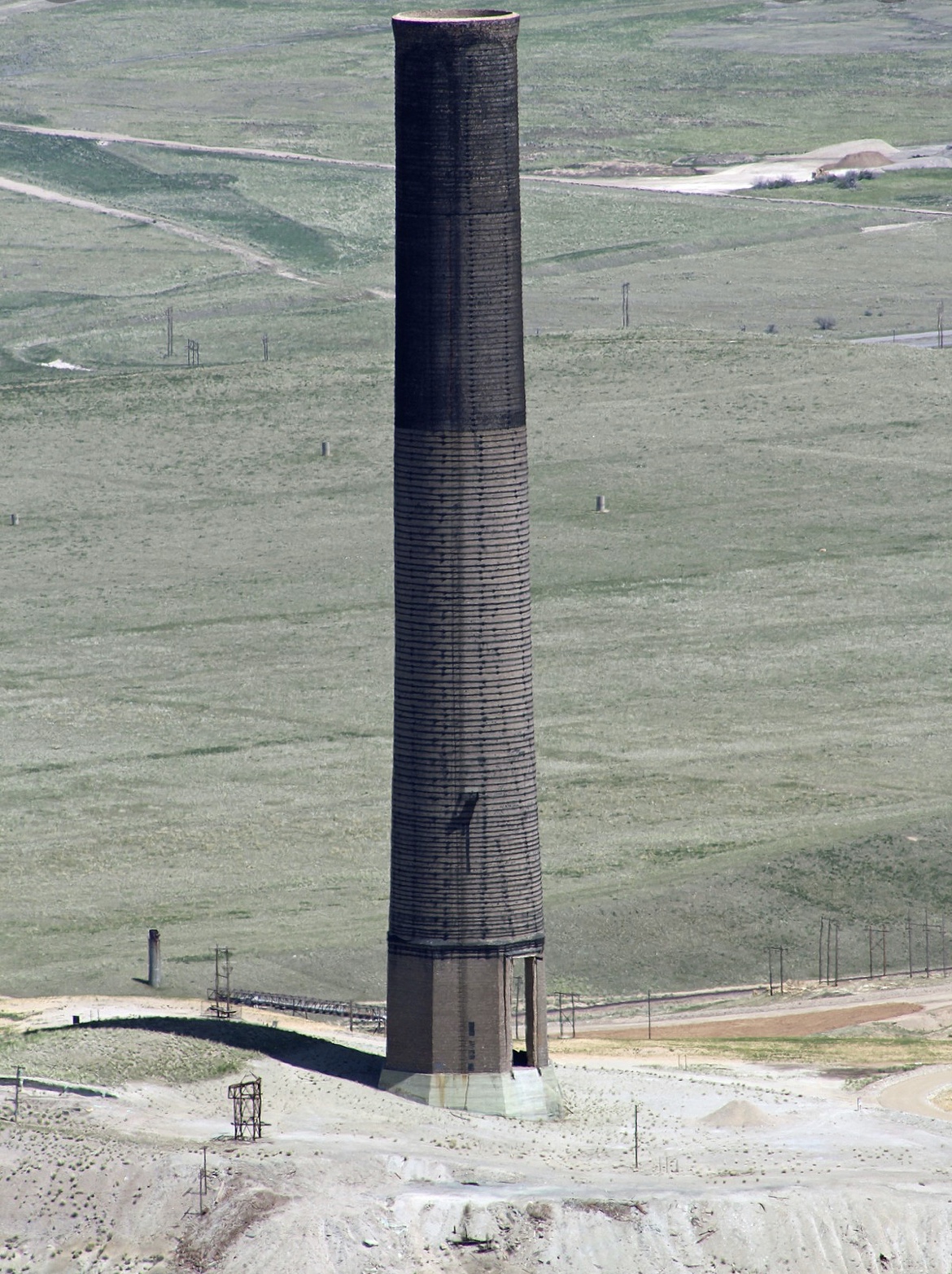
Anaconda Smelter Stack

Montana has an unusual monument that captures a unique history: the smelter of the Anaconda Copper Company. It is one of the tallest free-standing brick structures in the world. It is 585 feet tall and was completed 1919. The inside diameter is 75 feet at the bottom, tapering to 60 feet at the top.

The stack dominates the landscape just like the company once dominated the area’s economic life. Since the smelter closed in 1980, the stack has become a symbol of the challenges that face communities dependent on finite resources.

A memorial monument has been recently built by the community to honor all the people in the community who worked at the smelter. The outer wall is the same diameter as the base of the smokestack.

One of the smoke stack’s claim to fame is that the Washington Monument would fit inside the stack’s brick portion (except for their lowest 100 feet where an overlap of as much as one foot at each corner would occur.)

The Anaconda Smoke Stack has been something that we have tried to fit into our route whenever we are in this part of Montana, but we’ve always missed it. One less item now on our bucket list!
Serenity Near Seattle

Nature can do without man, but man cannot do without nature.

Prentice Bloedel

After ten days of sometimes hectic traffic, winds strong enough to blow your house away, and all the other challenges a cross-country trip entails, it was a special gift for our family to take us to the Bloedel Reserve on Bainbridge Island.

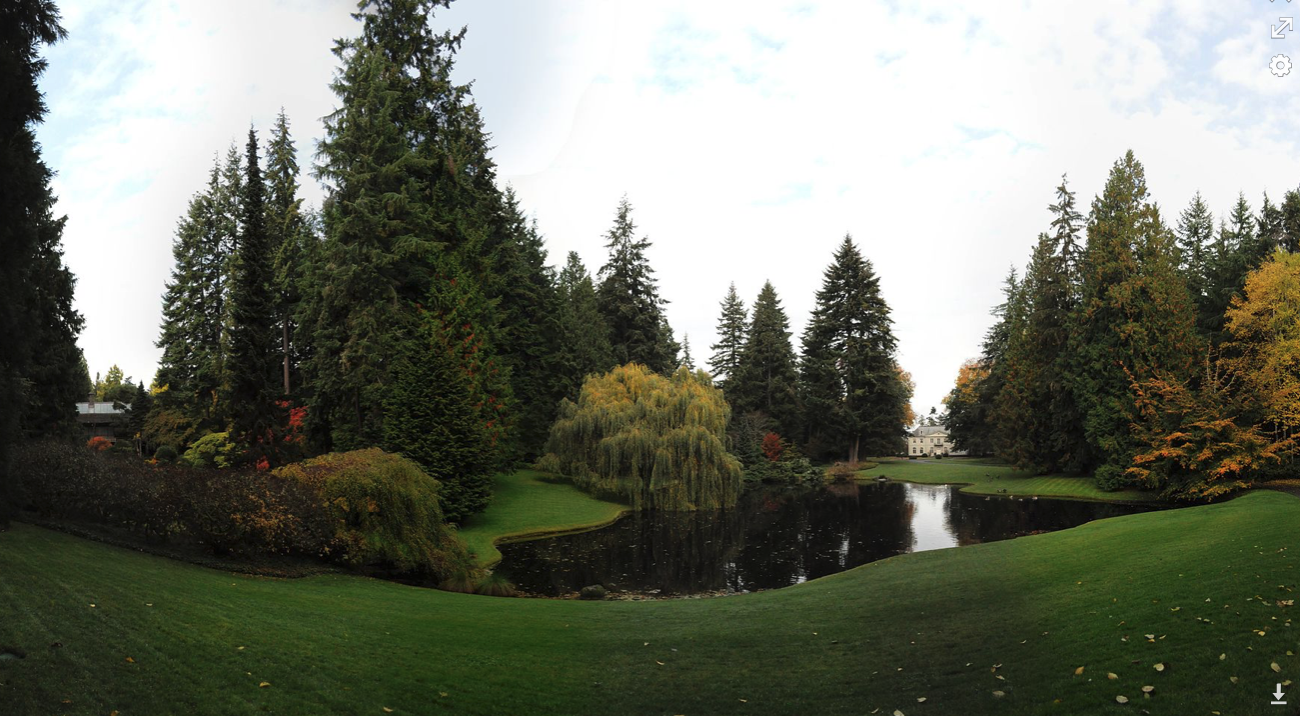
Panoramic View of the Manor House and Japanese Guest House of the Bloedel Reserve

The Bloedel Reserve is a 150-acre forest garden created by Virginia and Prentice Bloedel. Bloedel was the vice-chairman of the lumber company Macmillan Bloedel Ltd, and he and his wife were strongly influenced by the conservation movement and Asian philosophy. They wished to capture the essence of the Japanese garden—the qualities of naturalness, subtlety, reverence, tranquility—and construct a Western expression of it.

Manor House at Bloedel Reserve

The Bloedels lived in the Manor House for approximately 30 years before opening the Reserve to the public in 1988 as a family run foundation.

Although the Reserve includes a traditional Japanese garden, the Bloedels’ approach for the rest of the property stands in contrast to that of ‘Japanese gardens’ which achieve their effects through the use of ornament. The Bloedel Reserve has both natural and highly landscaped lakes, immaculate lawns, woods, a stone garden, a moss garden, a rhododendron glen, and a reflection garden. The Bloedels’ French Chateau-style home, including many original furnishings, is preserved as a visitor center.

Japanese Guest House
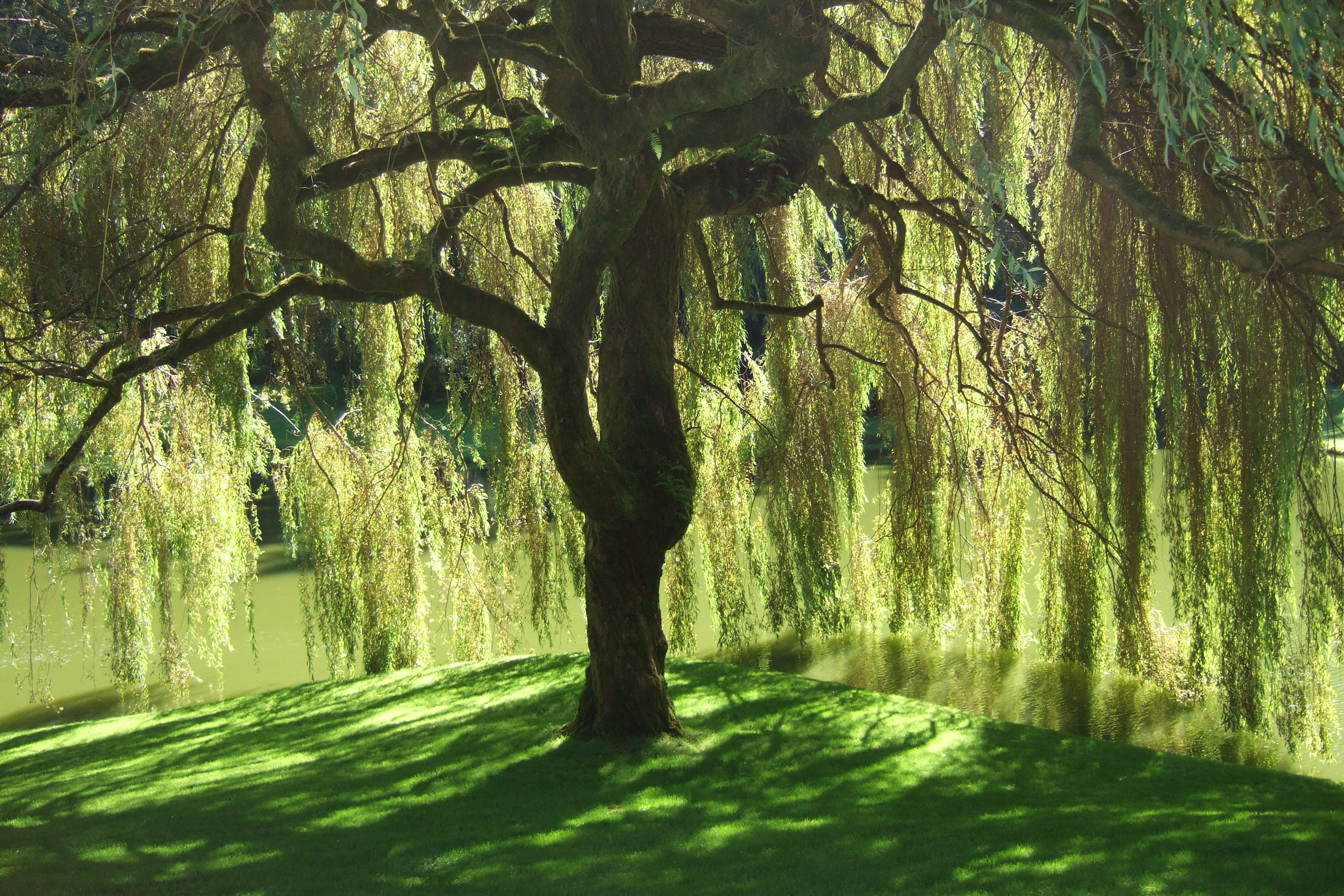
Weeping Willow
Walkway Near the Japanese Guest House
One of the many walkways around the Reserve
Moss Garden
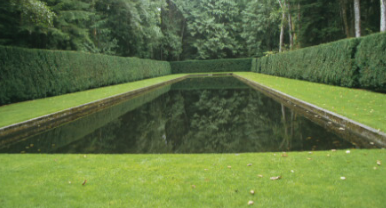
Reflecting Pool

We spent about two hours wandering along the many paths throughout the Reserve. It was a beautiful day to see the gardens, and for us it was a great gift of tranquility and peace, especially to enjoy it with family.

Homeless in Seattle

Well, not exactly.

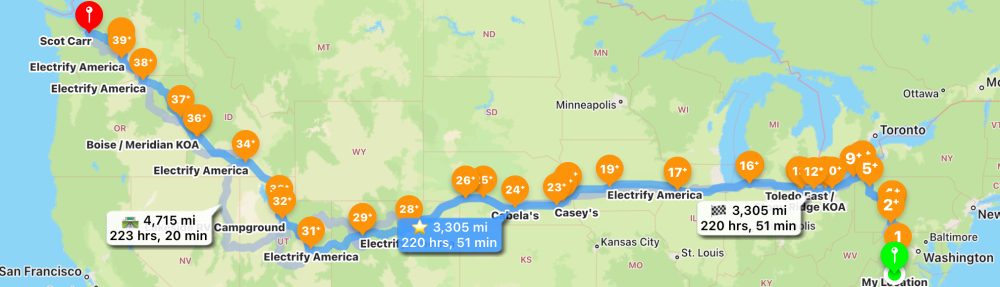
As I write this, we are currently in Seattle living in a luxurious home that belongs to a family member, with a beautiful view of Lake Washington and Mount Rainier from the backyard, solar-heated swimming pool, and a lovely new kitchen from which incredible meals are turned out every evening. Definitely worth driving 3,000 miles across the United States for!

However, after our last night’s experience with the instability of our tent in very windy weather, we decided to give up the idea of tent camping our way back home. Instead, we have returned our tent and several other pieces of camping equipment we won’t be needing anymore, thanks to Amazon’s and REI’s generous return policies, and instead we’re doing something quite novel for us: we will stay in motels on our return trip. I’m hoping that we’ll be able to find some suitable old-fashioned motor inns where we can park our car right in front of our door, and forego the lobby/elevator/endless corridors to get to your room that you find in most of the big chains. A bit of 50’s decor would be nice too.

So, even though we no longer own our “tent” home, we are grateful that we still have our Sylvansport GO camper waiting for us back at out Lake Monticello home. After our experience with putting up and taking down a tent (that didn’t always want to stay up), setting up our GO is now going to feel like a walk in the park. And we’re optimistic that by next summer there will be a much larger network of charging stations across the country so that it will be easier for us to take the GO without worrying about finding a charging station when needed.

Blown Away by the Columbia River

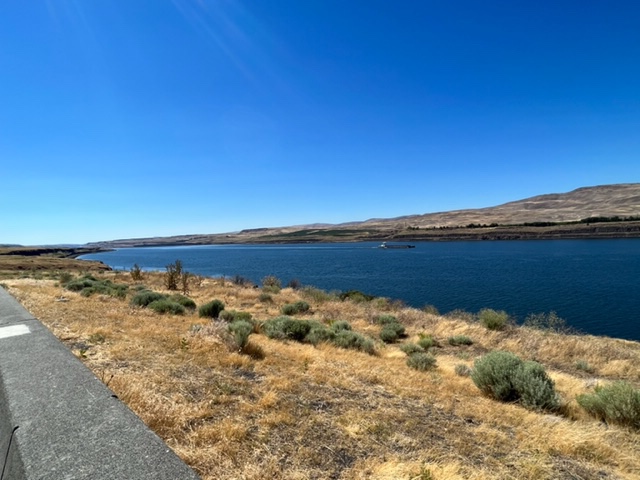
Columbia River

The first view of the Columbia River is always a blow-away moment for me. The expanse of it is one aspect that is awe-inspiring, as well as the remarkable blue of its water. But in a larger sense, I always feel like I’m looking at a major artery of the magnificent river system of the West that has done so much to define its geography.

Barge Traffic on the Columbia River

There was plenty of river traffic, and we saw all kinds, including many wind surfers closer to the coast.

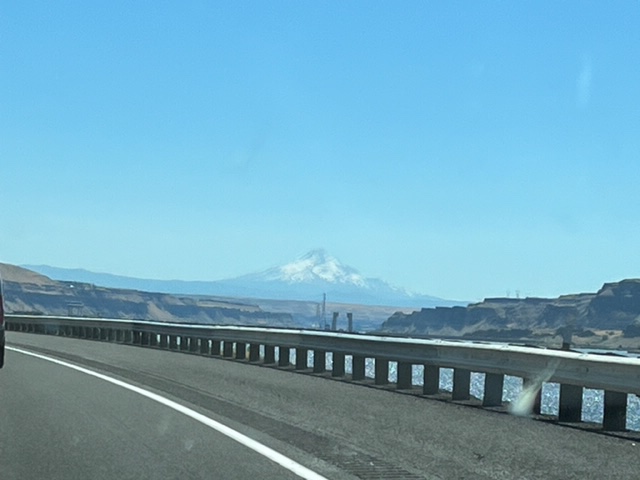
Mount Hood

The first glimpse of Mount Hood is also a breathtaking moment.

On the way to Hood River
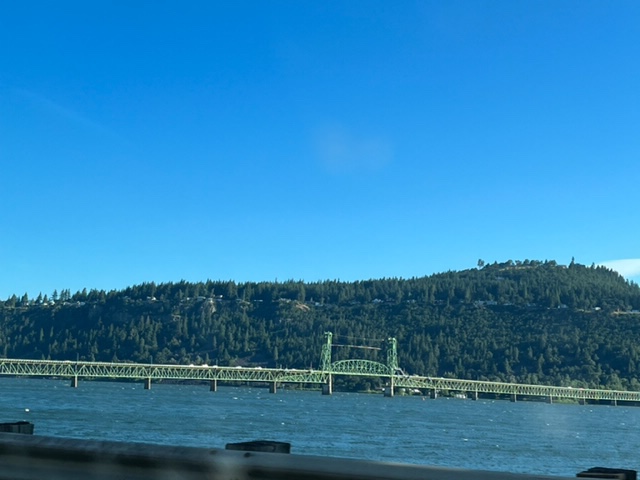
Hood River Bridge

The Hood River Bridge is an intimidating structure. I’ve been over it in a motorcycle and an RV, and both times I was very grateful to reach the other side in one piece. That said, it’s impossible not to stare at the water moving rapidly below, and if you’re brave enough to look through the grating in the center of the bridgelift, it’s truly awesome. For a better sense of what I’m talking about, you can check out my essay, Finding Religion on the Road, at https://wordpress.com/page/caroltracycarr.com/49.

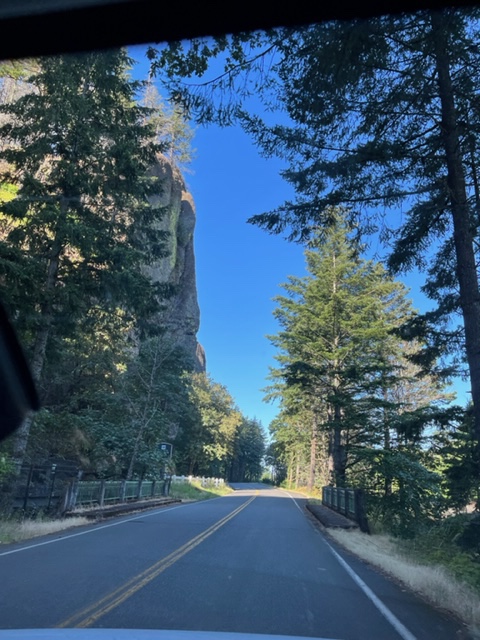
The Road to Multnomah Falls
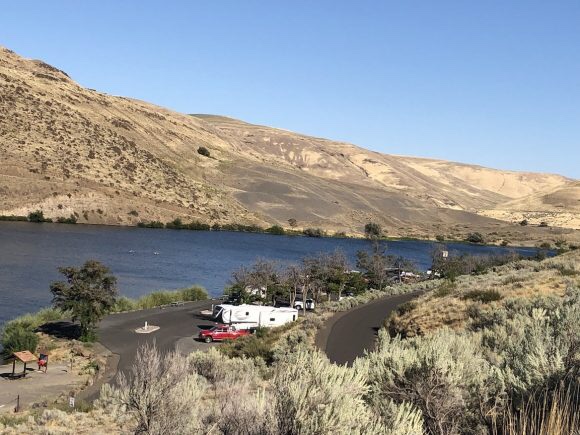
Campground at John Day River

We spent the night on the John Day River, a tributary of the Columbia River, and that’s where we experienced the real forces of nature engendered by it. The winds surrounding the river are incredible, as evidenced by its high popularity among windsurfers, and this extends to the John Day as well. We set up our tent just a short ways up the road across from the site of the large white RV in the above photo and our camp was situated at the base of a hill that rose at a steep angle behind us. Shortly after the setting of the sun, the evening breezes began pouring down the hill, providing welcome relief from the 100 degree temperatures we’d endured for most of the day. But by the middle of the night, those breezes turned into a gale. As our tent was designed on the “umbrella” concept, it continually tried to close down on top of us for most of the night. By 4:30AM, as the sun began to rise, we gave up the fight. We folded our tent and took off, hoping to find a breakfast cafe where we could find enough coffee to make up for our lost sleep.

Traveling East to West

It’s a challenge to summarize several days of traveling across the United States when the changes in the landscape are both subtle and dramatic, passing from wide open prairies and plains, to crop-filled fields in various stages of agriculture, and ultimately to the dramatic scenes of the mountains and rivers of the far west. I enjoy the slow evolution of the landscape and find it one of the most peaceful experiences I know to be the passive recipient of all this novelty and beauty. For there is beauty in even the scrubbiest landscape when one considers it supports life in some form, even if we can’t see it.

These are just examples of the slow progression we experienced over the last four days before we reached our destination in Seattle.

Our First View of the Rockies
Driving Through the Rockies
Following the Colorado River
Driving Through Utah
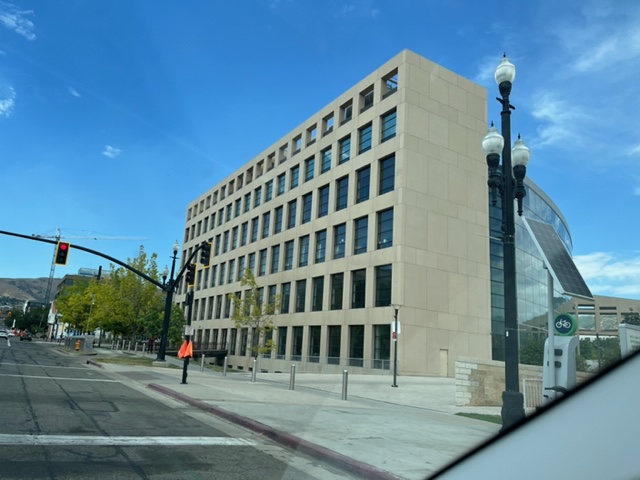
Salt Lake City Public Library – front view
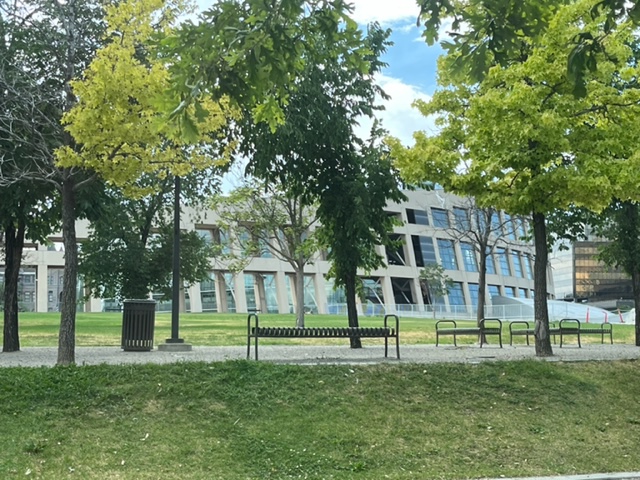
Salt Lake City Public Library – back view
Sunset View from Campground in Brigham City, Utah

What’s In a Name?

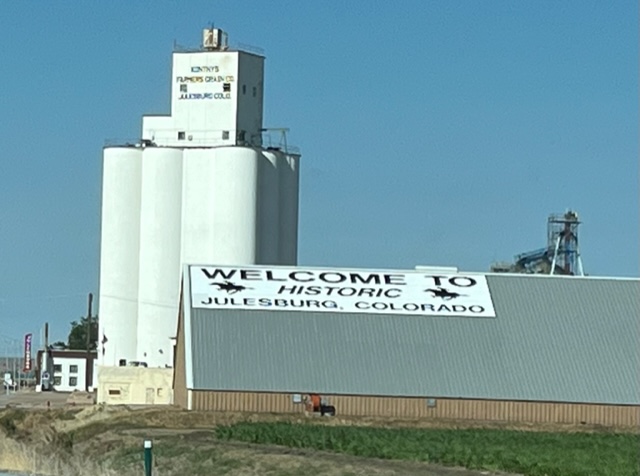
Towns are generally named after admirable citizens who’ve made a major contribution to the founding or the economic or political development of a community. Not so with Julesburg, a sleepy little town in Colorado, close to the Nebraska border. The grain elevator (above) is the tallest building in town.

The original trading post was named for Jules Beni, who was on the Pony Express route from Missouri to California. How he got the town named after him is a mystery when one considers his history. Because the Pony Express required a LOT of horses, with a fresh horse being provided a rider every ten miles, it was ripe for horse thieving, and Jules Beni was one of them. When one of the superintendents for the Central overland California and Pikes Peak Express Company, Jack Slade, came looking for him, Beni shot him five times. Thinking he was dead, the townsfolk chased Beni out of Julesburg, but when they returned they discovered Slade had miraculously recovered. This didn’t stop Beni’s horse thievery, and Slade made it personal, vowing to hunt him down. When he finally captured Beni, Slade took justice into his own hands and, in a rather spectacular manner, made certain that Beni was very dead by the time he was finished. It’s the sort of story of the old west that provided content for movies and TV series in the 1950’s.

Apparently there was no move to change the name of the town to a more respectable citizen, or perhaps they were too busy farming.

A note about grain elevators: it has always intrigued me that some grain elevators (and I’ve seen hundreds over the course of 25 years of travel in the west) have what appears to be a box on the top. City girl that I am, I’ve always thought it served as an office space for the people running the grain elevator. Not so. It apparently contains some of the mechanics required to run the grain elevator in a space called the headhouse. See the diagram below.

How a Grain Elevator Works

Traveling Cross Country with an Electric Car

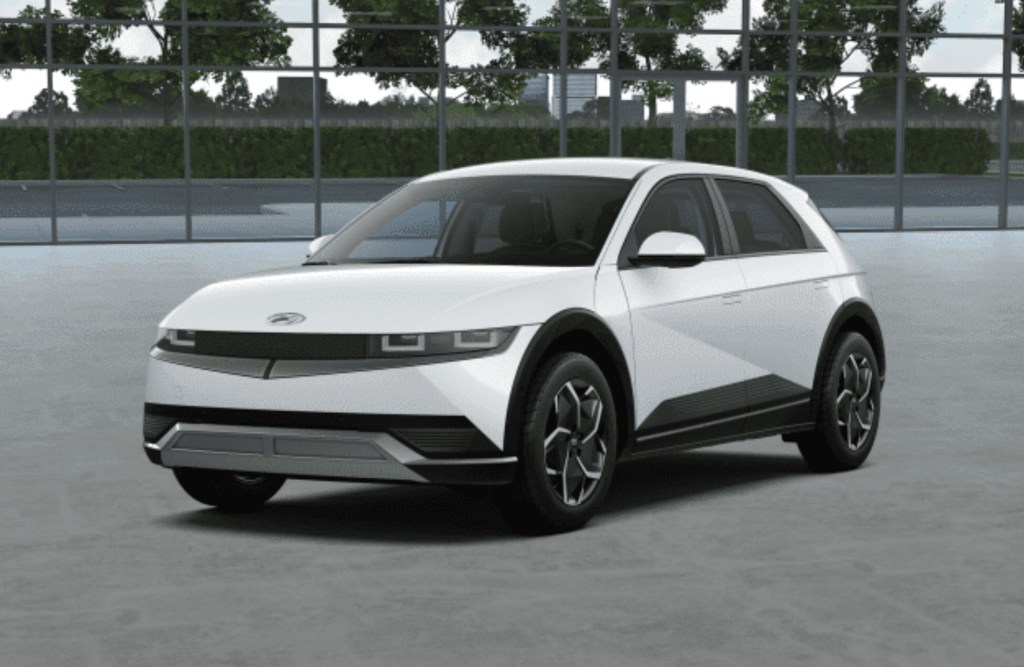
Accomplishing a cross-country trip with his new electric car, a Hyundai Ioniq 5, was a challenge Roger took on with relish. Many people have asked us along the way of our recent travels what it’s like. We’ve met several drivers who own the same car (well, maybe different color), and we’ve had some great conversations with them, which have always ended with an agreement that everyone enjoys their new car. But for many, taking an electric car on a long trip raises a lot of questions and concerns. So here’s the answer to some of those.

Hyundai Ioniq 5

First, you need to have a charging station, and they don’t grow on every city corner the way gas stations do. Because we have a two years of free charging from Electrify America, those are the chargers we aim for, and they look like this:

Electrify America Charging Station

Generally there are four chargers, but sometimes there are more, and they’re usually situated around Walmarts or mall shopping centers, although they’re increasingly showing up at many diverse locations. So, unlike going to a gas station, there is always some uncertainty about whether there will be a charging station available to use when you want to use it. And if they are all unavailable, you either wait in line or go to find another charger. This is not as easy as finding another gas station. Even large cities may have only one charging station available.

That said, in all our travels thus far, we have only once found ourselves in a situation where there was no charger available in the near future and we were forced to move on to another. Fortunately, we were traveling on the East Coast, where it’s relatively easy to find one nearby.

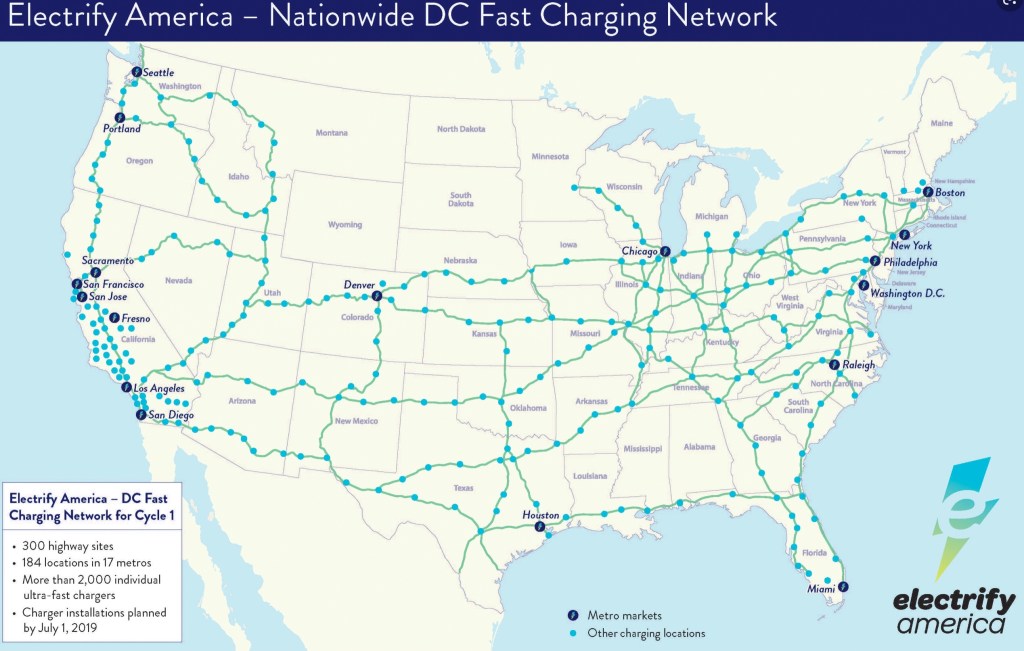
Map of Electrify America Charging Stations
and Possible Cross-Country Routes.

Which leads to the next concern, which is how do you get across the United States being dependent on the availability of charging stations? Well, from the map above, it’s clear that you’d better steer clear of the Dakotas, Montana, and Wyoming, and even West Virginia might be chancy. We’re optimistic that in time, hopefully by next year, this will not be a problem, but for our travels on this trip, while following I-80 much of the way, we needed to swing down down towards Denver, and we’re now working our way back up in a northwesterly direction towards Seattle. It’s all beautiful country, so this is really no problem.

On that point, we did have a bit of trepidation as we grew close to our crossing the Rocky Mountains, which we did through I-70 at the Loveland Pass, as we had not yet tested the Hyundai on any mountains higher than Rockfish Gap near Charlottesville (about 1850 ft.) Our fears were unfounded, as we discovered the regen capability of the electric motor (which puts electricity back into the battery) gave us plenty of extended battery life.

The other main difference with traveling in an electric car is that, unlike the kind of “hit and run” you do at a gas station, i.e., grab your gas and go, it’s a more leisurely endeavor. For my purposes, it’s a welcome break when I can get either some shopping accomplished, or some computer work done, while we wait generally no more than 30 minutes for the car to charge. After that, we’re free for another 230 miles or so, at which time we’re ready for a break anyway. So I find that part of the entire process quite enjoyable.

And there’s nothing like knowing that, for the next two years at least, our car travel costs are minimal. With today’s high fuel prices, it’s making this cross-country trip that would normally cost over a thousand dollars in fuel, very affordable.

One more thing — the car is a joy to drive! It’s solid on the road, has a very smooth run, has an incredible amount of safety features, and has plenty of power when needed. For us, it’s a winner.

Boys Town, Nebraska

Perhaps most of us might be familiar with Boys Town from the 1938 movie by that name which starred Spencer Tracy and Mickey Rooney in roles which won them and the picture Academy Awards. It’s the story of a compassionate priest who takes orphaned and at-risk boys and provides them with a home and, along the way, guidance towards living a better life than they’ve known. I highly recommend it, dated though it might be, if you haven’t seen it.

The real story of Boys Town merits its own awards, and the story continues to grow and keeps getting better and better. The original Boys Town was established by Father Flanagan in 1917 when he used a loan of $90 to rent a home in Omaha to care for five boys. Since then, it has gone from this…

…to this:

The campus that we drove through was every bit as beautiful as Notre Dame’s, although with far fewer buildings. At its peak, it housed up to 880 boys. Since then, their programs have evolved in many new directions, and it now includes girls.

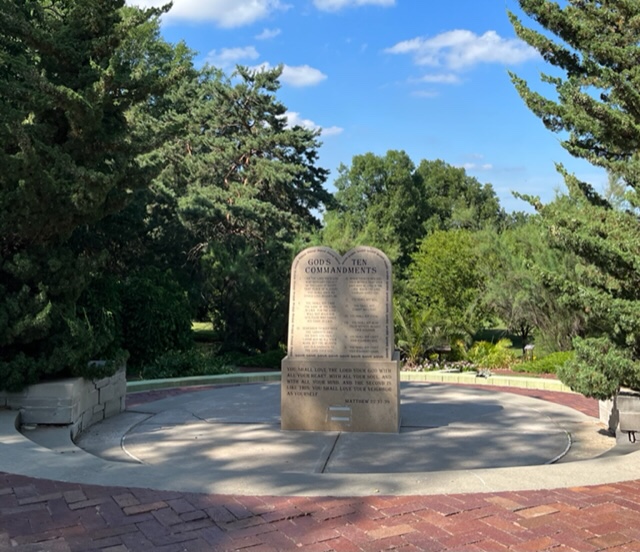
Ten Commandments Reflection Grotto
Campus Church

While the initial concept of Boys Town was to form a “City of Little Men,” Father Flanagan envisioned a developed community to be know as “The Village of Boys Town.” The boys elected their own government, including a mayor, counceil and comissioners, and eventually became designated as an official village in the state of Nebraska.

However, Boys Town’s story has grown far larger than Father Flanagan’s most ambitious imaginings. After his untimely death in 1948, new executive directors came along, and with them came expanded fund-raising for the organization that gave it financial security. It also developed the Boys Town Institute for Communication Disorders in Children, which has since been renamed the Boys Town National Research Hospital. The third executive director focused on pioneering new methods and directions of care for the boys he called “social orphans,” which led to the development of Family Home programs, and a Teaching-Family Model to develop community based, family-style, skill-oriented group home treatment foe disadvantaged and delinquent youth. Quite a large order!

And it has proven a successful one, there are now Boys Towns in Florida, Texas, Louisiana, Nevada, New York, New Jersey, Rhode Island, California, Washington DC, George, Pennsylvania and Illinois. The story of Boys Towns continues with many more achievements, much of which I was unaware of. In fact, until we visited Boys Town, my first thought was always of this image:

The Logo Created by Father Flanagan for Boys Town

Indiana — the Stadia State

Yes, I’m well aware that Indiana is called the Hoosier State, even though this name’s derivation is a bit murky, but I propose a far more appropriate name that comes with great justification: the Stadia State. I came to this conclusion after visiting the campus of the University of Notre Dame.*

The main campus of Notre Dame

The University of Notre Dame’s campus is considered by many to be one of the most beautiful university campuses around the world, and is noted for the Golden Dome, the Basilica, the Grotto and its many statues and museums. It has grown from the Old College, used as a residence, bakery, and classroom, into a campus of 1,250 acres that includes 170 buildings and athletic fields.

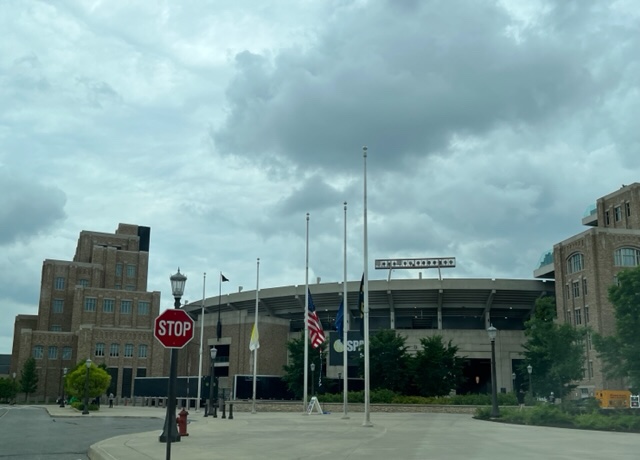
The Notre Dame Stadium

But you have to drive quite a distance to find the oldest part of the campus. As you approach the campus, all that you see are the various stadia that now occupy the campus; the above is one of the biggest, where the Fighting Irish football team…well, fights. (Actually, all of the unversity’s athletic teams are know collectively as the Fighting Irish.) There are several more stadia.

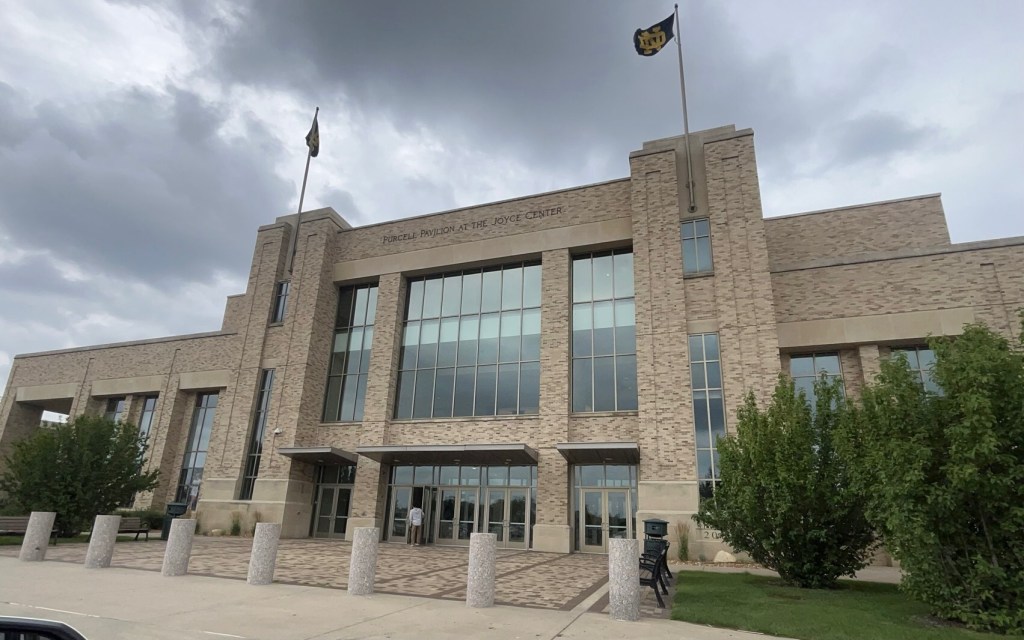
The Joyce Center, home to the Fighting Irish basketball and volleyball teams.
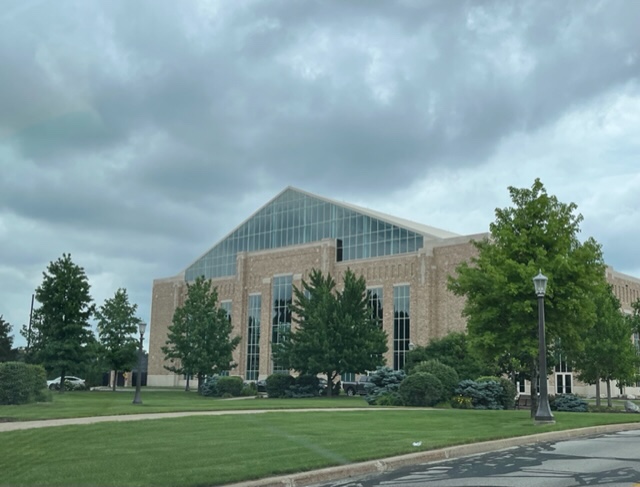
The Irish Athletics Center
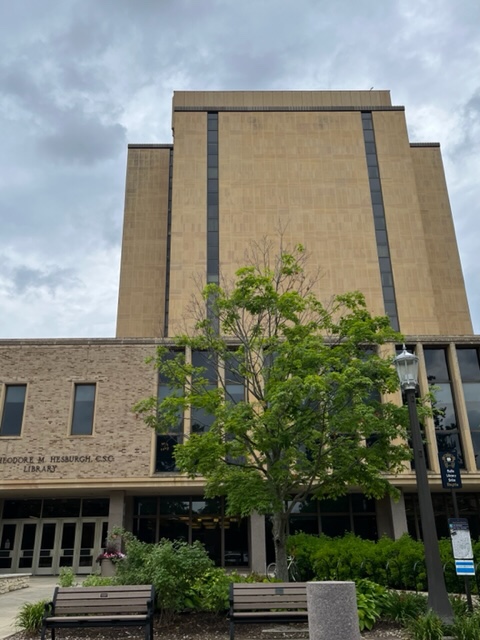
Notre Dame’s academic standing has to come from somewhere, and I suspect much of it is from here in the Theodore M. Hesbergh Library.

At the end of our drive through the Notre Dame campus, I was impressed at its beauty, but moreso at how remarkable that a university can be recognized as one of the top universities in the United States, and also gained such prominence in the athletic world. To name just a few: 7 Heisman Trophy winnders, 13 athletics in the Pro Hall of Fame, and 17 national chamionships in various sports.

So with all this input, and also realizing there are many more Indiana schools that have proven excellence in their athletics, I believe Stadia State is most appropriate.

*”Hoosier” is the official name for the People of Indiana, but its origin is debatable. It was in general use by the 1840’s, having been popularized by John Finley’s 1833 poem, “The Hoosier’s Nest.” There is an entire body of scholarship surrounding its etymology. If you’re interested, check out https://en.m.wikipedia.org/wiki/Hoosier.