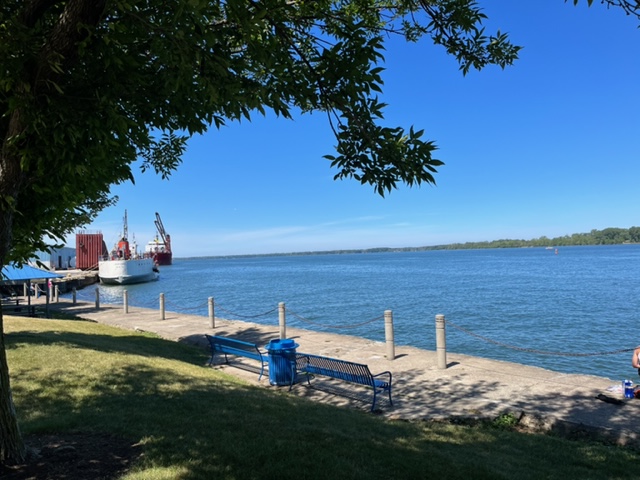
Beach at Erie, PA looking out towards Presque Isle
No…not in a boat. Although there were many on the lake, ranging from the small sailboats darting around in a swift breeze to these shipping vessels moored along the shore of Erie, PA. We were cruising along US 6 from Erie to just before Sandusky; it was a very slow, slog taking the closest road to the lake, but it was well worth it. The beauty of the lake and the charming villages along the way made our day.
Having grown up with a family cottage on the north side of Lake Erie (just outside Kingsville, Ontario, Canada, I had spent many moments wondering what was on the other side of the lake, impossible to see from our vantage point. Now I know!
Conneaut BeachConneaut Beach Lighthouse
Once we left the shore just east of Sandusky, we entered that stretch of the US where farms provided the predominant scenery, and I lack the words to make infinite fields of corn and soybean sound interesting, other than that, after only a very short history of having my own vegetable garden, I am very aware of the tremendous amount of work hours it takes to create the huge and highly productive farms we pass on our roads west.
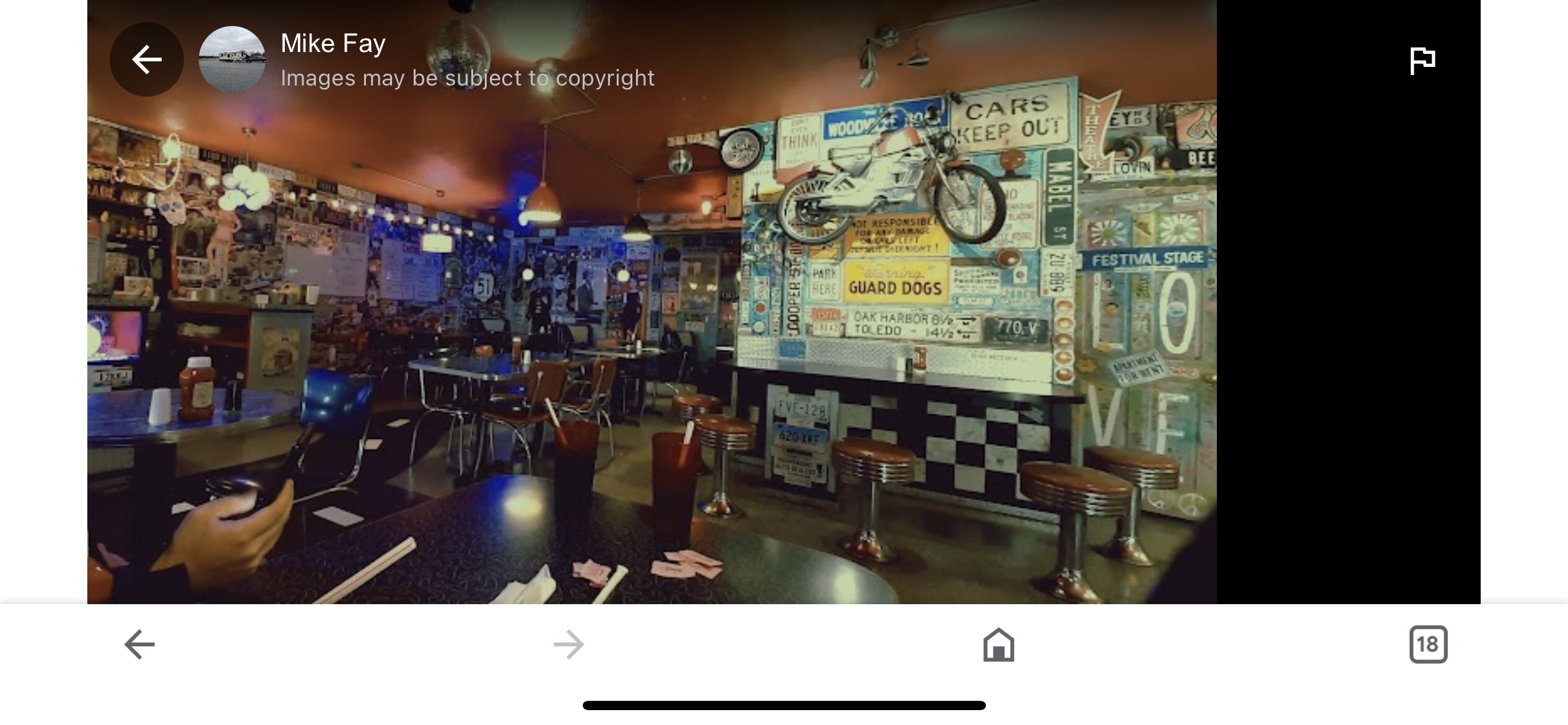
We ended our second day with dinner at the Speedtrap Diner, an enthusiastic restaurant that celebrates the 50’s by providing what they call funkadelic ambiance.
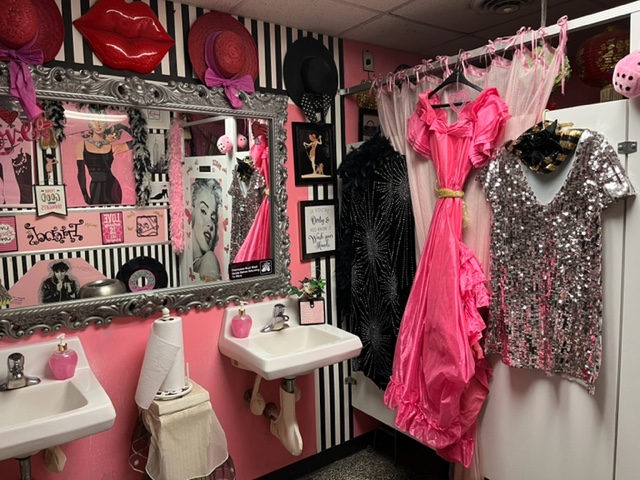
Speedtrap Diner, Woodville, OHThe Ladies room is decorated as Marilyn Monroe’s dressing room.People have donated all kinds of 50’s paraphernalia to decorate the walls. Old license plates, photos, guitars, there is even an old police car tucked in someplace.
The food was delicious and the service was excellent. We recommend it!
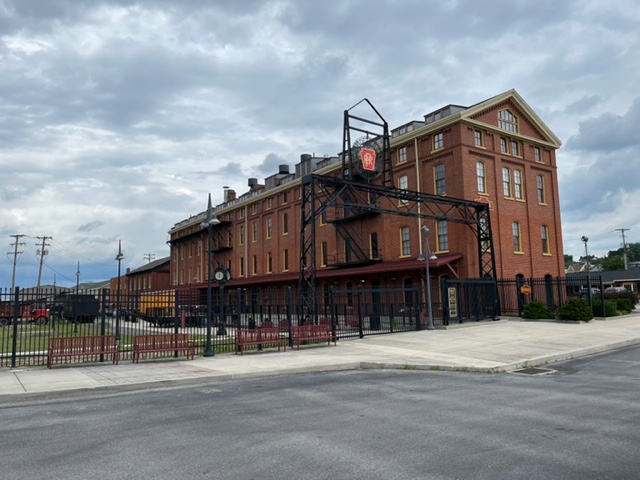
Travel for us is a kind of jigsaw puzzle now, where we are filling in bits of pieces of the bigger picture of the United States that we’ve been creating during the twenty-five years of our marriage and our travels together. Altoona is one of those pieces. Despite Roger attending university about a hundred miles away, and Carol living for a year in Johnstown just a few miles away, neither of us had been there. So we decided to make it a destination and take in the Railroaders Memorial Museum, which is a celebration of Altoona’s role in developing the railroad industry in that area in the early 1800’s and what that meant for the city. At that time the railroad WAS Altoona. The Pennsylvania Railroad brought workers from all over the country and together they built the town up to a population at one time of 38,000. Exhibits showed how the engineer, the conductor, the brakeman, the coal stoker and signalman all had to work together as a team to make it all work; some of those jobs were very dangerous. Severed fingers were a common injury for the men in charge of linking the cars together, and the coal man often shoveled up to 2 tons of coal per trip from, for example, Pittsburgh to Harrisburg. Tough work but they were glad to have it.
Railroaders Memorial Museum, Altoona PA
We were greeted in the front lobby of the museum by the Spirit of Altoona, which is currently being restored in the roundhouse of the museum. It is an iconic seam locomotive: the K4s Class engine is a masterwork of technology born of Altoona, Pennsylvania’s engineering and innovation. These mammoth engines propelled a growing nation through two world wars, the Great Depression, and a booming postwar America. Today, only two of these locomotives survive.
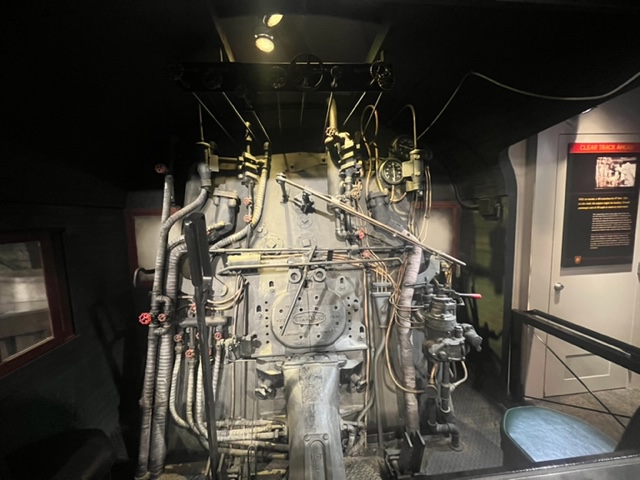
Another exhibit showed the inside the engineer’s “cockpit.” It appeared to me like taking multi-tasking to the extreme. Note in the picture below the seat in the bottom right corner. He had to stay out of the way of the coal stoker who who shoveling coal into the door in the middle. And his job was very important because any lowering of the temperature could cause the boiler to explode.
The next piece of our jigsaw puzzle fell into place when the town of Punxsatawney, PA appeared on the road before us. Our stop there wasn’t intentional, but it seemed a good spot for lunch, and we learned some interesting things from the locals while we were there. First, Groundhog Day was NOT filmed in Punxsatawney, which I consider a mistake because it is a very photogenic town and proud of it’s heritage as the Weather Capital of the World. It is in beautiful shape for the large influx of people who come to celebrate Groundhog Day on February 2, when Punxsatawney Phil either sees or doesn’t see his shadow to predict whether there will be six more weeks of winter.
Second, there is a real Punxatawney Phil, who lives in a large glass cage in the town library and is open for visitors. (I had always thought they just found the nearest groundhog available and gave him one day of fame. Not so.) Phil lives there with his companion/wife/significant other named Phyllis, and while we didn’t go to visit them (next time!), I was told they were quite a happy couple.
The real Punxatawney Phil
That said, it really isn’t all that necessary to visit Phil, as there is are many Phils all over town on many of the corners of town and in the parks. Here are a few….
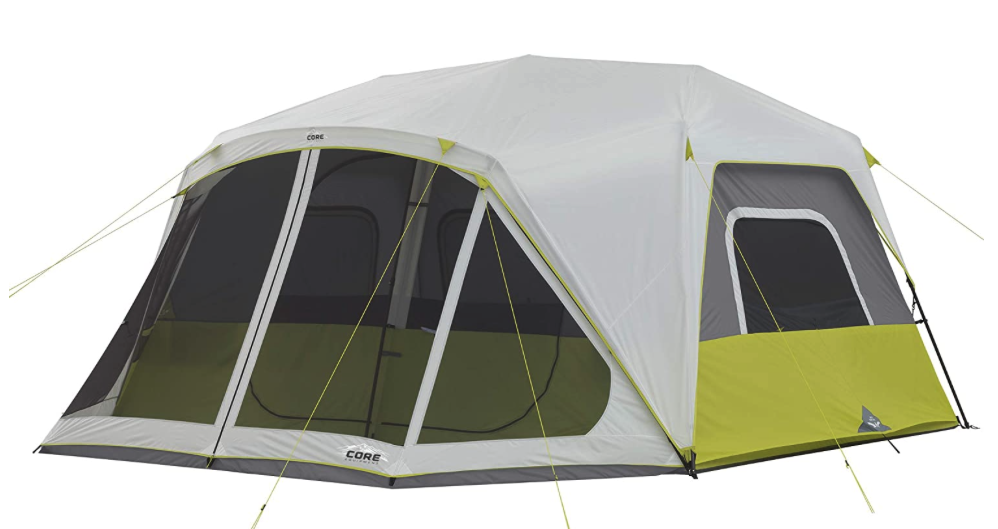
Yes, the Carrs are heading west again. There is just something about the West Coast that beckons every summer, and we follow. This trip poses some unique challenges. We have now downsized enough to be totally out of the RV-owners community and have gone back to our roots of tent camping, however with a few concessions to age and creaking bones. Needing cots for beds and chairs and a table inside the tent for what we consider civilized camping, we need a tent large enough to accommodate these. Below is our latest tent purchase:
CORE 10 Person Instant Cabin Tent with Screen Room
With a spacious 10×14 sq. ft. interior, and another 4 ft. of screened in front porch, we’re excited to give it a workout on this trip. Perhaps one of its finest attributes is the ease of putting it up.
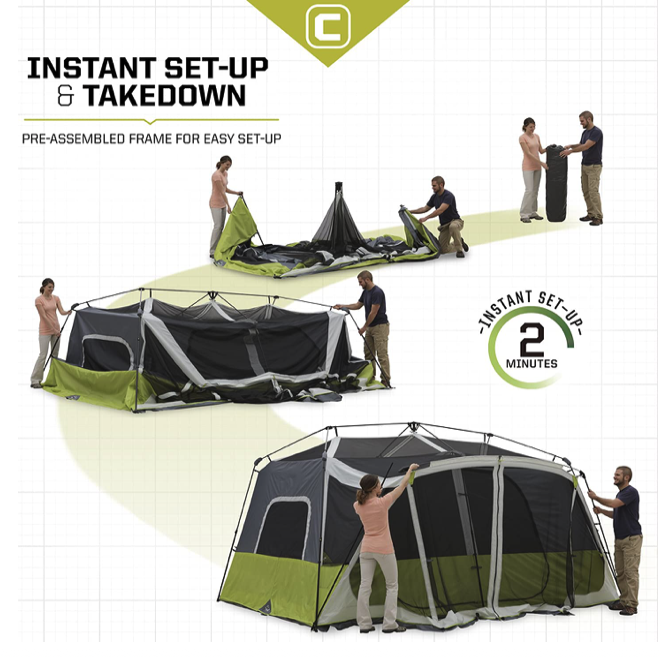
While they tease you with a 2 minute setup, our first attempt (which includes reading directions and puzzling out diagrams) took more like 20. However, we now have a strategy that we can polish up as we travel along. When we get really efficient, it will be like watching a (very big) spider grow legs and stand up. Who would have thought that someone would take the technology behind an umbrella and turn it into a tent?
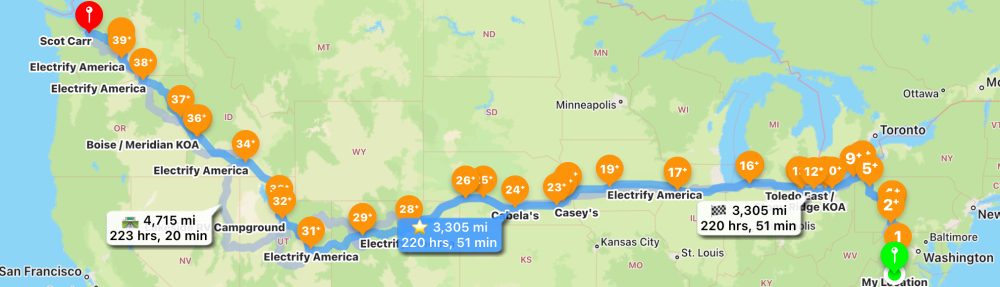
The second challenge we face with this trip is to do a cross-country trek in our new electric Hyundai Ioniq 5. As charging stations are predominantly on the two coasts but somewhat skimpier in distribution in the middle of the United States, it’s going to take some careful consideration of our route (see the picture at the top of this page) in view of our cruising range of approximately 230 miles per complete charge. Fortunately, the interstates are proving to be fairly reliable for charging stations, but we will miss all the off-route, down a new path adventures that often make our travels so interesting. Perhaps next year.
Driving the road along the Snake River through Hell’s Canyon has been on our wish list for many years, but for as many reasons it was something we were unable to fit into our travels. This was our year to do it, and it didn’t disappoint. For one thing, Hell’s Canyon is North America’s deepest river gorge at 7,993 feet, deeper than even the Grand Canyon.
The canyon was carved by the waters of the Snake River which flows more than one mile below the canyon’s west rim on the Oregon side and 7,400 feet below the peaks of Idaho’s Seven Devils Mountains to the east. Most of it is inaccessible by road, and to really see the canyon it’s best to do it by boat. Next time!
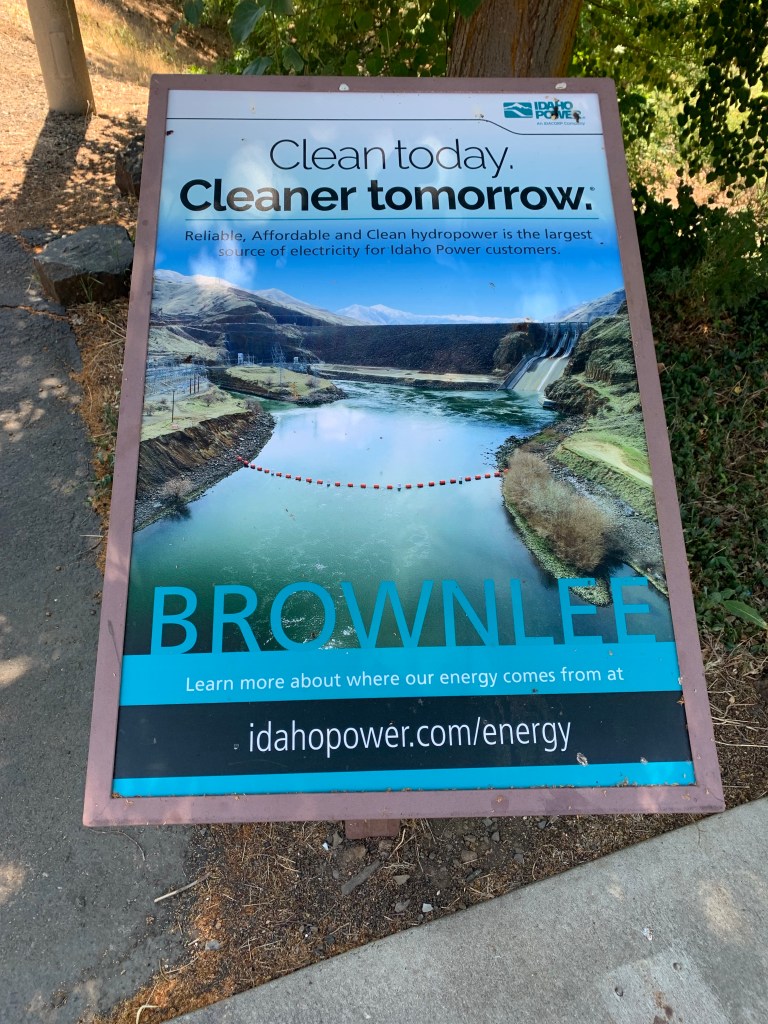
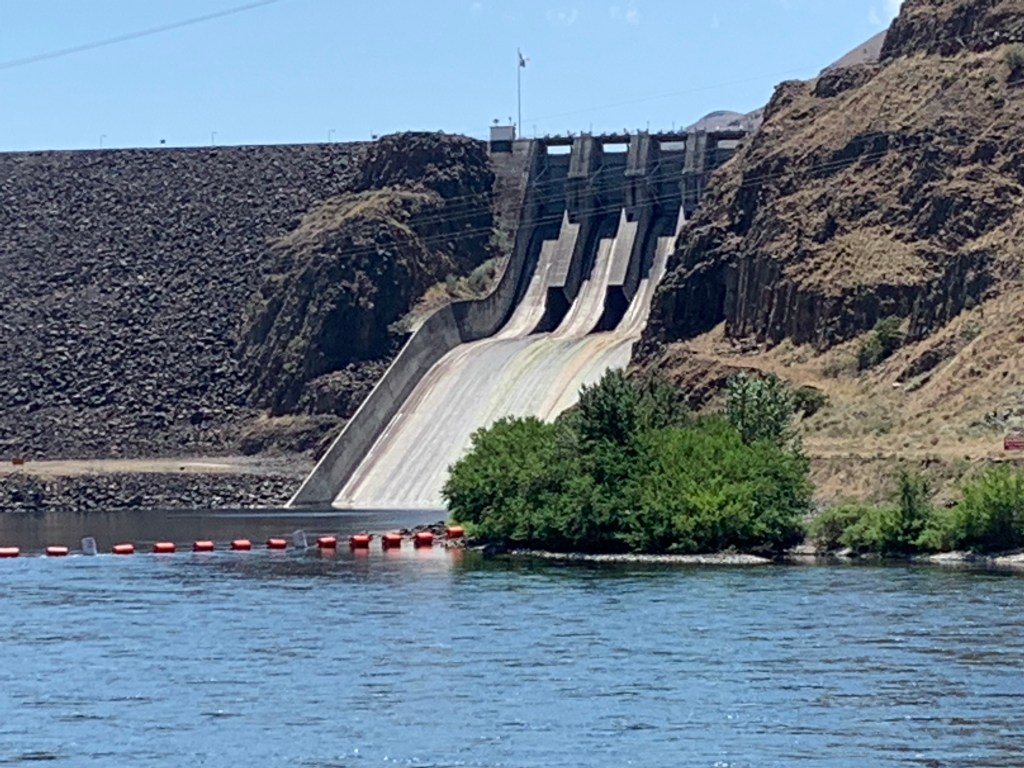
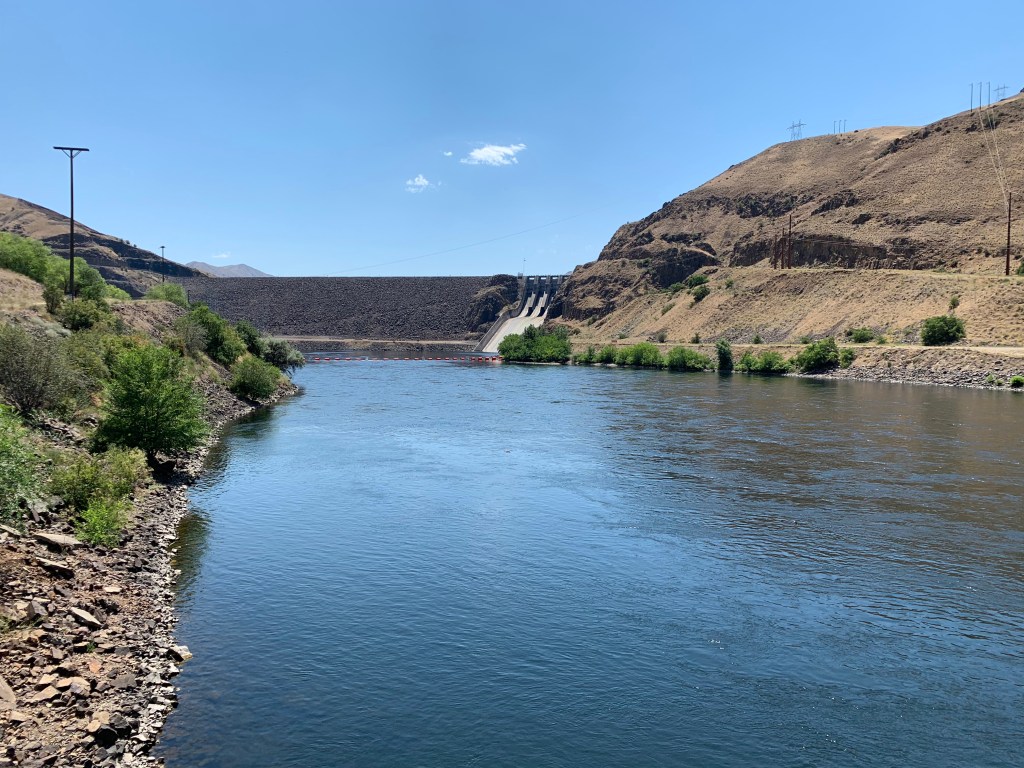
During the mid 1900’s when hydroelectric power was being heavily developed in the west, three dams were built to harness the power of the Snake River. Our route took us past the Brownlee Dam and the Oxbow Dam.
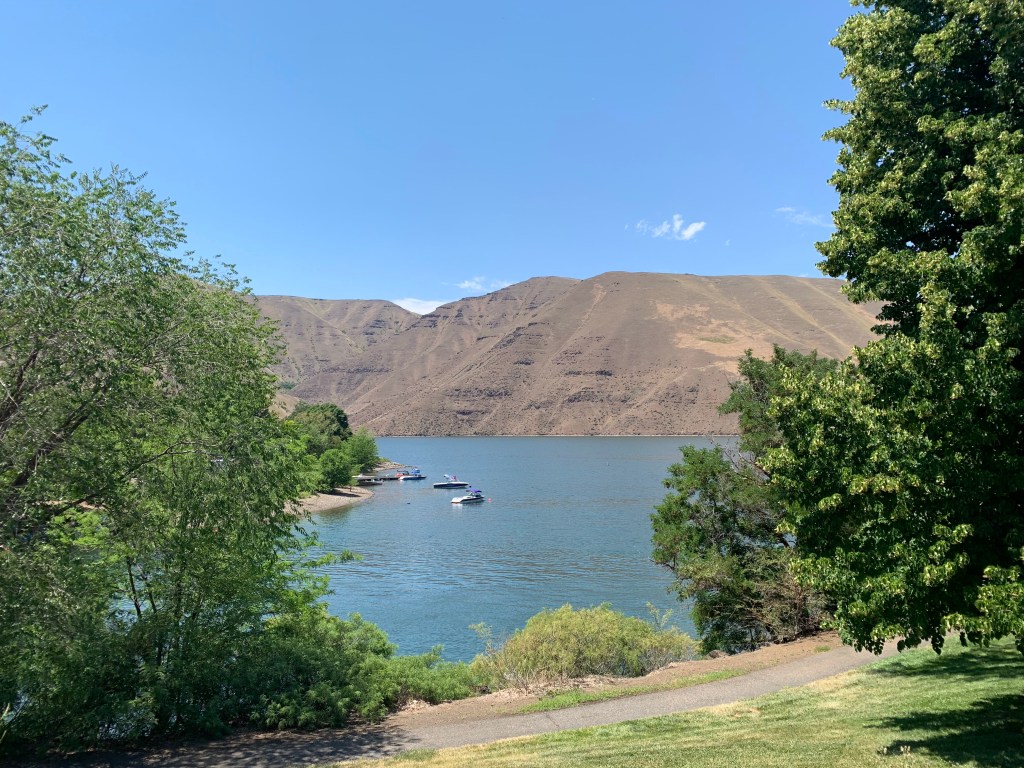
When you see what irrigation has done for Idaho to turn barren farmland into rich fields, it is easy to understand the enthusiasm for companies like IdahoPower. That said, there is current discussion about removing some of the dams to preserve the dwindling salmon population.Brownlee ReservoirOxbow DamOxbow Reservoir
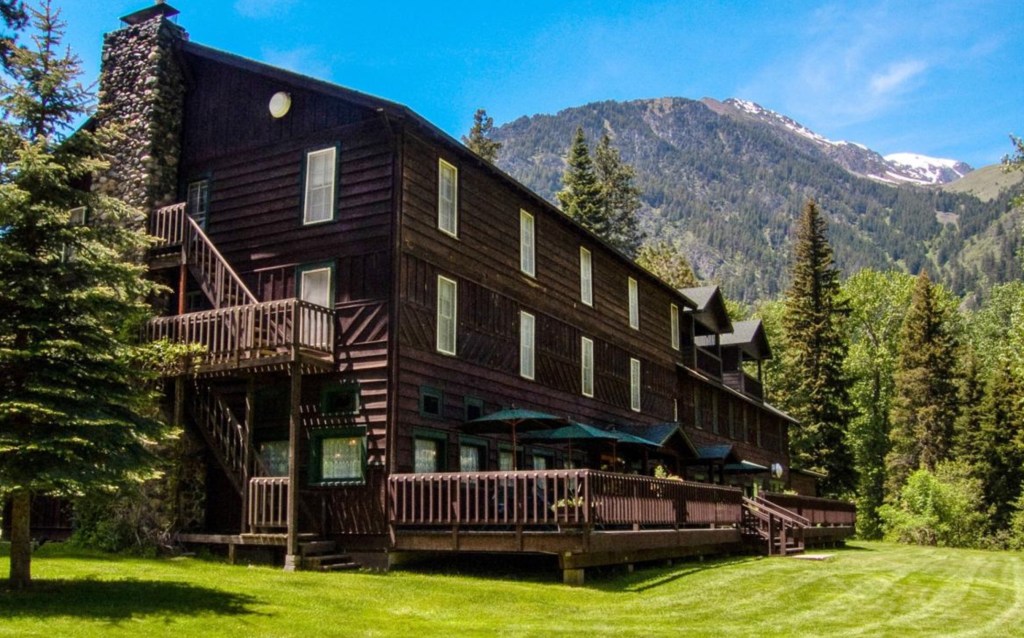
We ended our day in the charming town of Joseph, Oregon and stayed at the Wallowa Lake Lodge (our first night in a real bed for what felt like a very long time!) This lodge was originally built in 1923 and was owned by several families who each added value over their tenure until it went up for public aution in 2015. This inspired a local community push to keep it from ending up in the hands of a large hotel chain, and today there are over 100 investors who plan to keep the historic values of the lodge alive and well. We highly recommend it. Their dining room is also excellent and we enjoyed a delicious German meal that evening.
Wallowa Lake LodgeBreakfast was a treat at this little restaurant in Joseph, The Blythe Cricket, that served the largest and most delicious breakfast English muffins I’ve ever had. I hope to return sometime to try another.Mine was not as exotic as this one, but it gives you the idea.
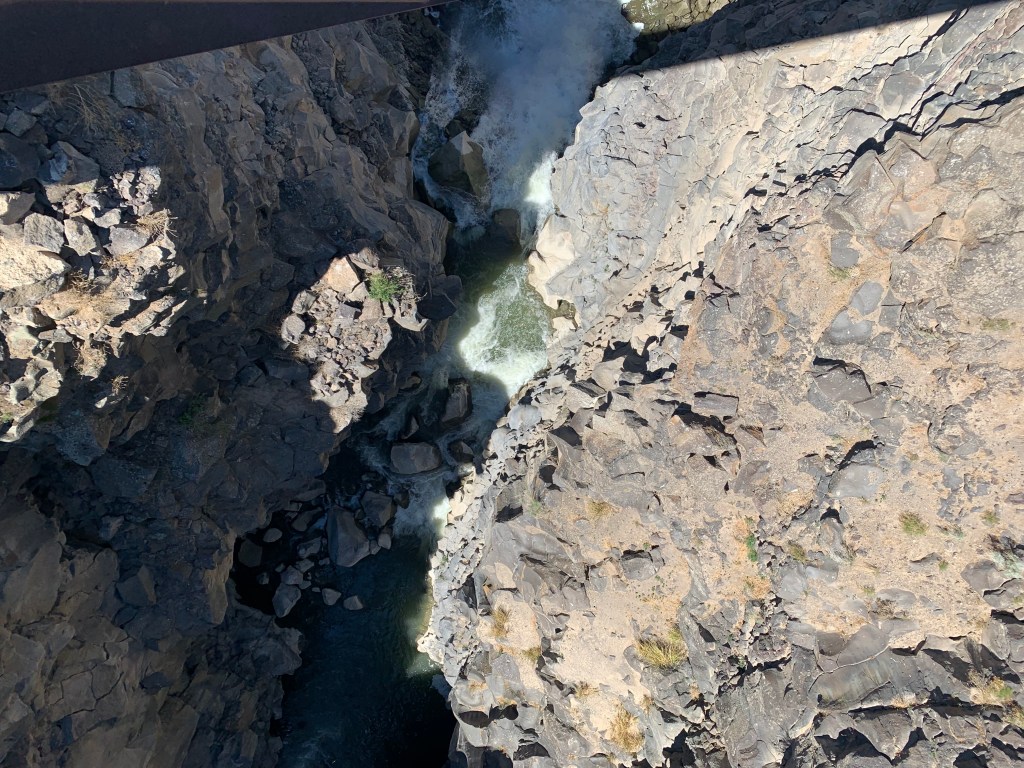
One of the land formations that Roger and I discovered in a video of various sites worth seeing in Idaho is the Malad Gorge. This is found along the Malad River which feeds into the Snake River. One of the gorge’s most dramatic features is the Devil’s Washbowl. We viewed it from a very sturdy metal footbridge that enabled us to stand on top of the Devil’s Washbowl.
Footbridge crossing Malad GorgeDevil’s Washbowl (the photo doesn’t capture the loud churning of the water)The view from the other side of the bridge: the Malad River continuing on toward the Snake.
The remarkable thing about this site is that we have have crossed over Malad Gorge several times on our various trips across the west, but had no idea it was there, as there is no way to see this view from the highway, (which is to the right of the footbridge in the top image.) I have become very grateful to all the folk who post videos of their travels or make documentaries for Netflix of all there is to see in our country, as we wouldn’t have otherwise realized it was there.
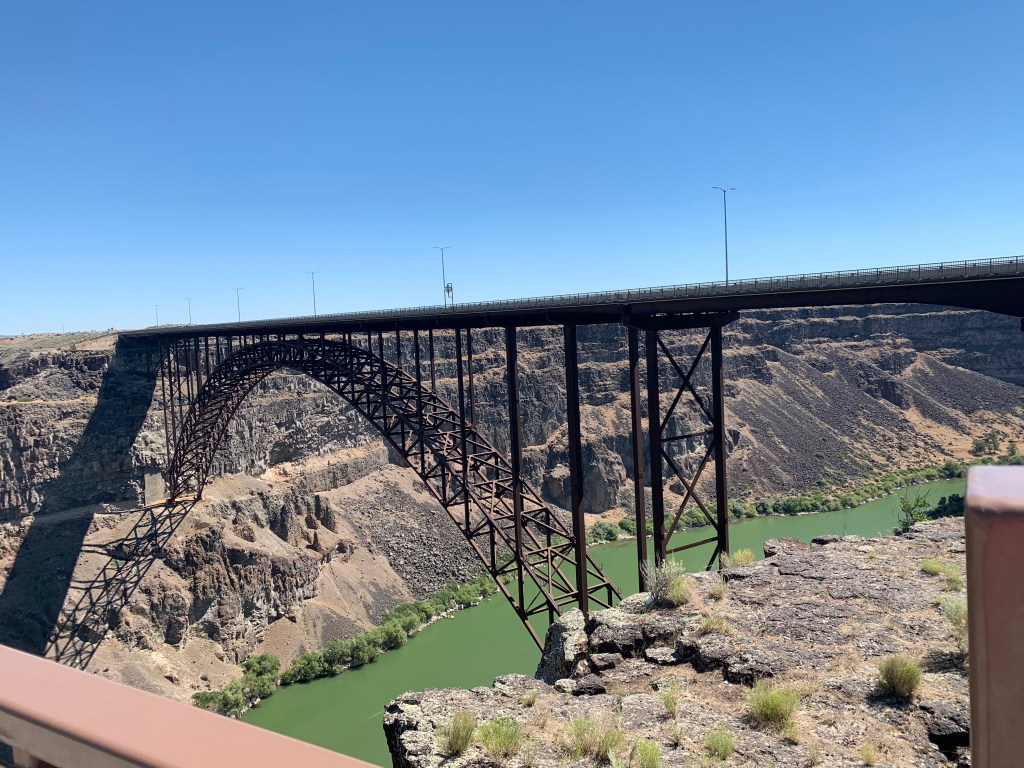
If you’re so inclined, Twin Falls Idaho is for you. It has one of the few bridges that has been officially qualified for BASE jumping without a permit. For those not into this sport, “BASE” is an acronymn for four categories of fixed objects from which one can jump: buildings, antennae (referring to radio masts), spans (bridges), and earth (cliffs.) The Perrine Bridge located next to the Twin Falls Visitor Center spans the Snake River, and from the top looks pretty formidable.
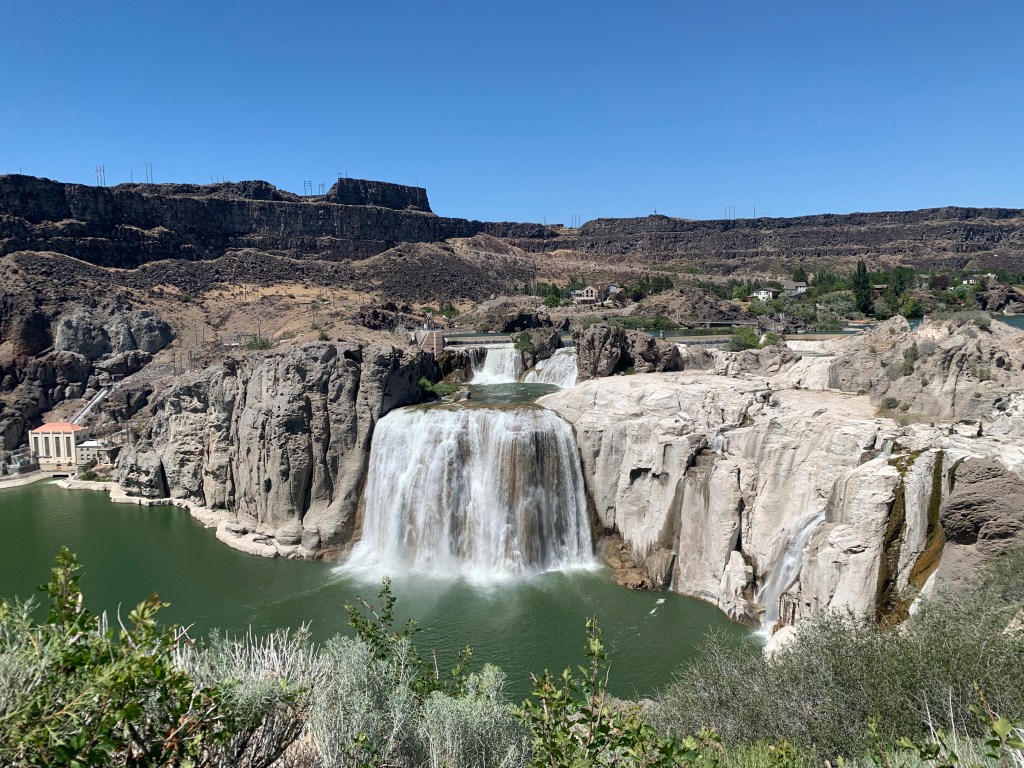
Snake River from the bridge, heading towards Shoshone Falls.Shoshone Falls
We drove to Shoshone Falls where just east of the falls is located the site where Evel Knievel attempted his Snake River Canyon jump on his Skycycle X-2 in September 1974 (remember that?) The jump failed because of a parachute malfunction, and the ramp where he made the leap now sits on private property. In the picture below, find the narrowest gap across the river, and we believe that is the where the jump was attempted.
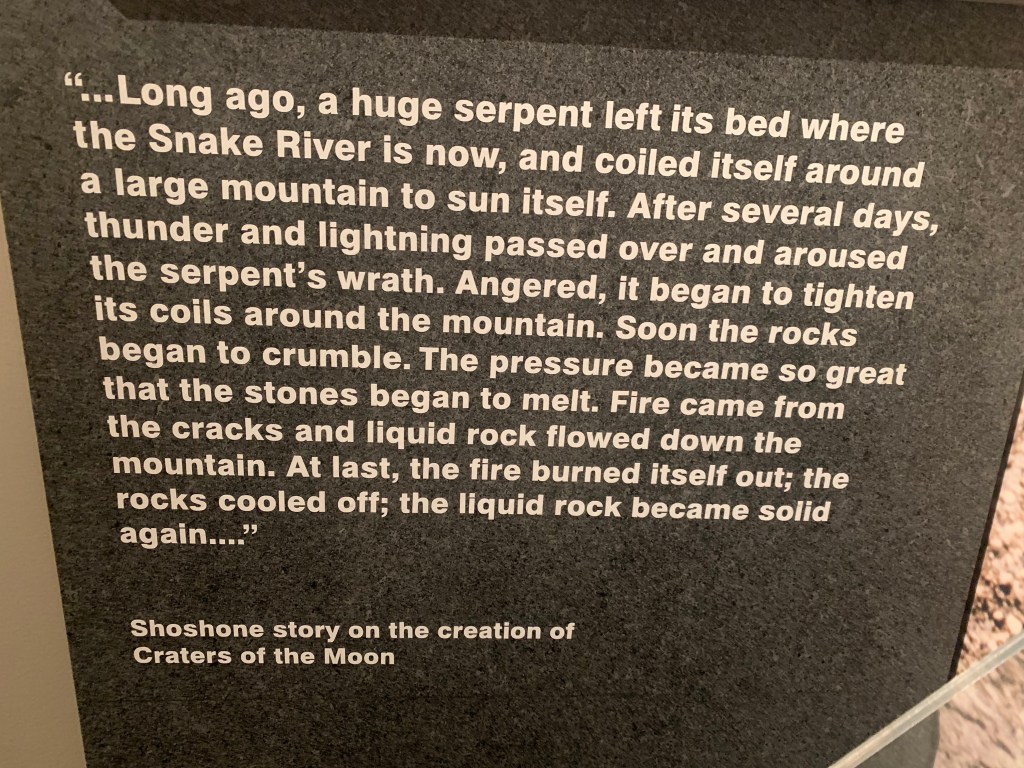
We visited Craters of the Moon on our first trip west 25 years ago, and I was anxious to return to have my chance to walk to the top of an extinct volcano as Roger had done back then. It is a surreal place, nearly as barren as a desert but covered with volcanic rock and ash instead of sand. This is how is was interpreted by the Native Americans:
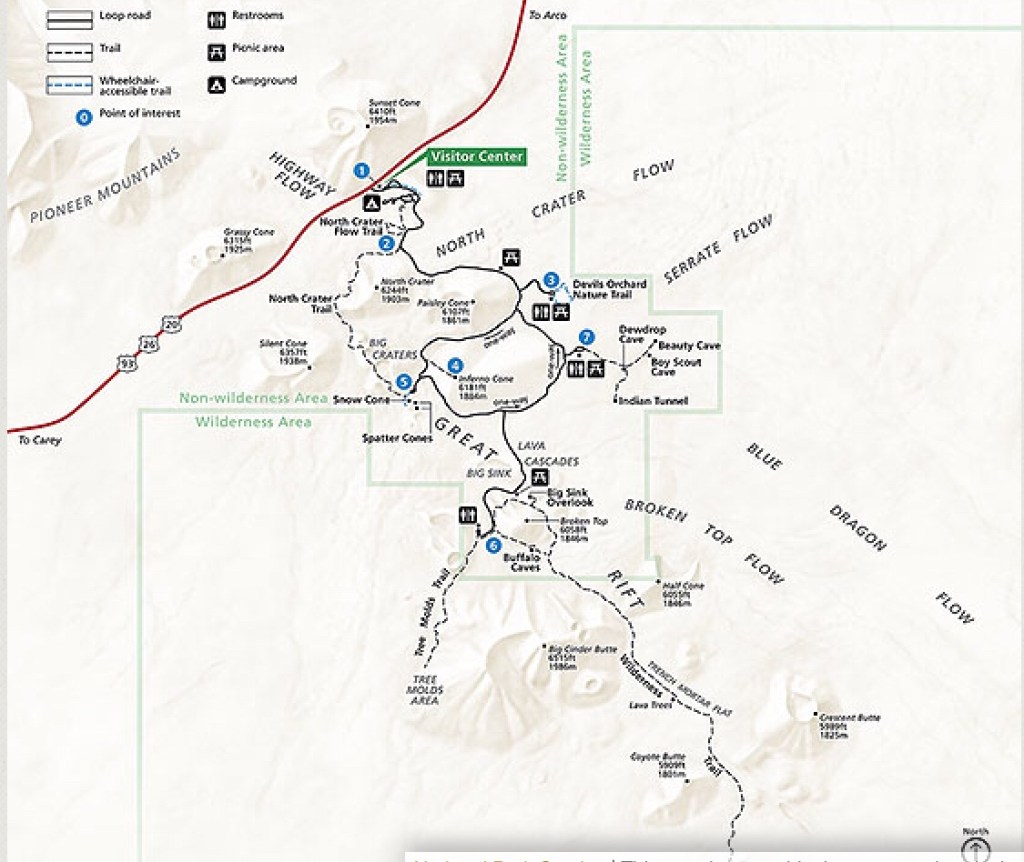
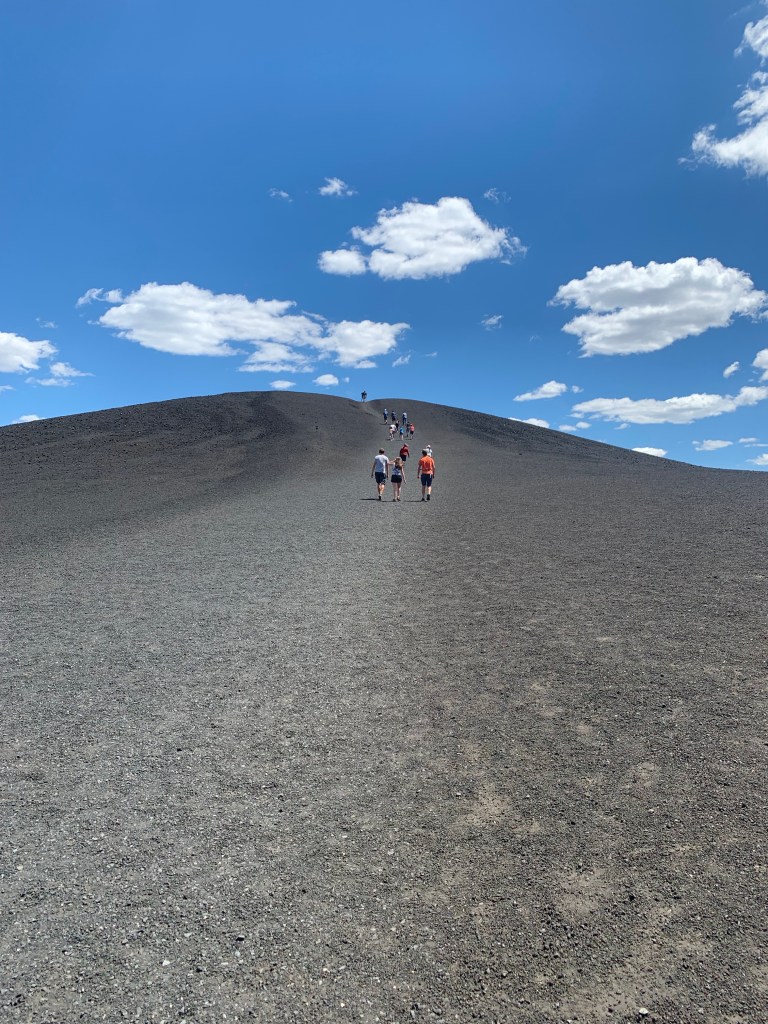
There is about a six mile loop that takes you through all the sites on the map. Our destination was the Inferno Cone at 4 where you can walk to the top on a gentle but then increasingly steep path.
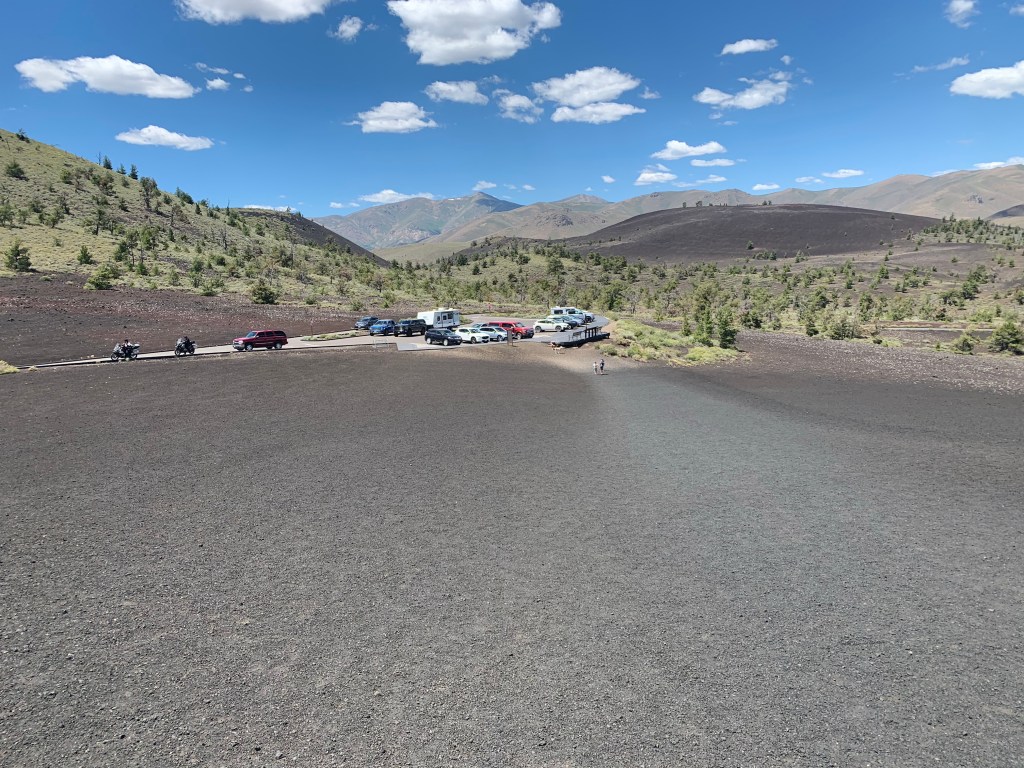
A view from the top (or as far as I got), It was very hot!It’s not completely barren, as the cones are all of varying ages. They are caused by a “hot spot” deep in the earth that is slowly (like as much as a fingernail grows in a year) moving eastward.
I love these wide open and somewhat barren landscapes, like Death Valley and the Badlands. Unlike the pressures we experience in our usual lives, the pressures here are quite simple: get enough water and find or create shade wherever you can. It is not a kind environment, but it is breathtaking.
It wasn’t until we reached Idaho that we realized that the theme of our outbound trip was to be the Snake River. This incredible body of water winds itself throughout several states starting in Wyoming, and passing through Idaho, Oregon and Washington to end in the Columbia River.
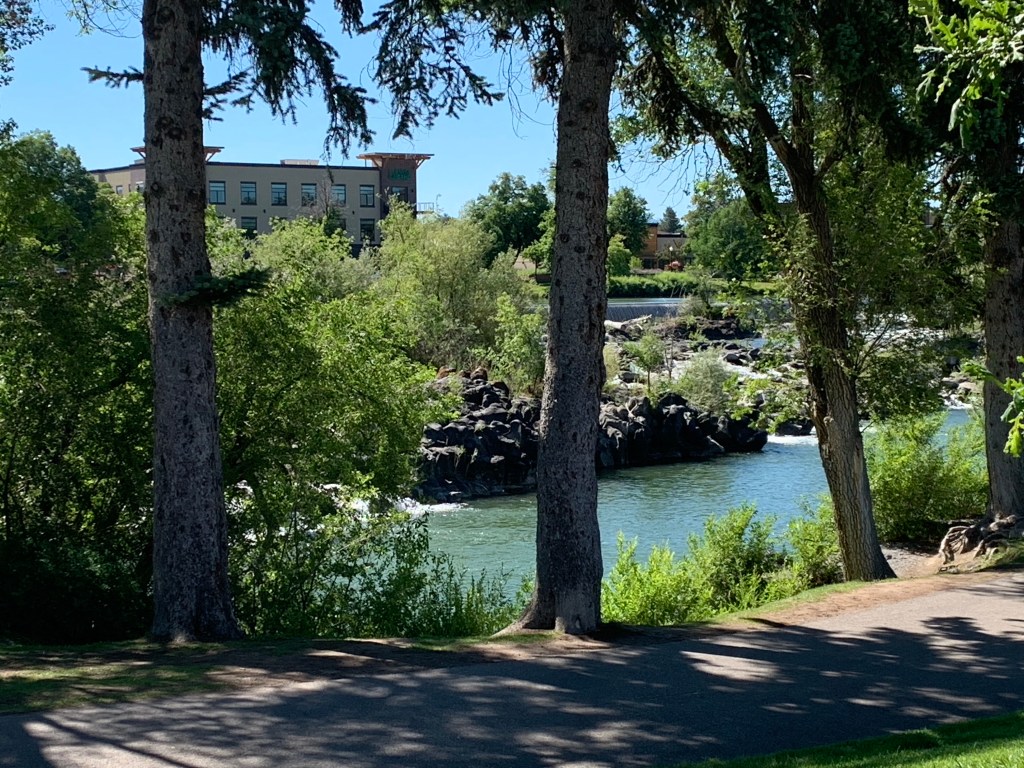
We began our close association with the Snake River in Idaho Falls and after a good night camping discovered one of the best reasons to live in Idaho Falls as we shared one of the loveliest parks I’ve ever seen with the residents of IF on a perfect Sunday morning.
Not my photo, but an example of how the falls make this park so special.
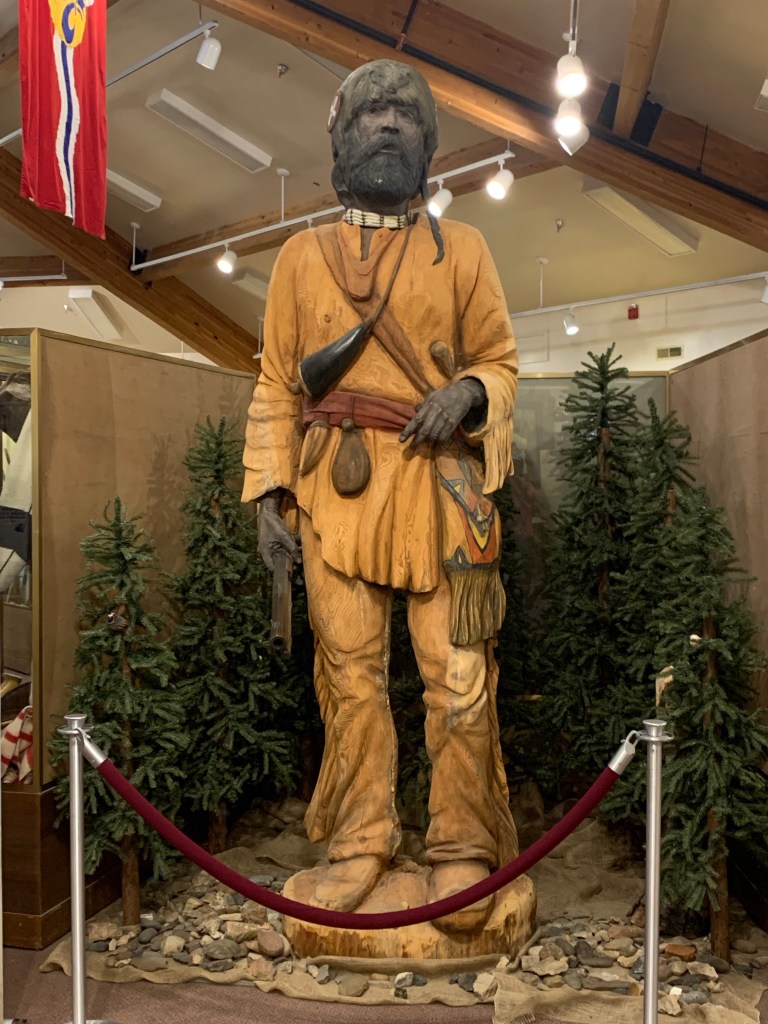
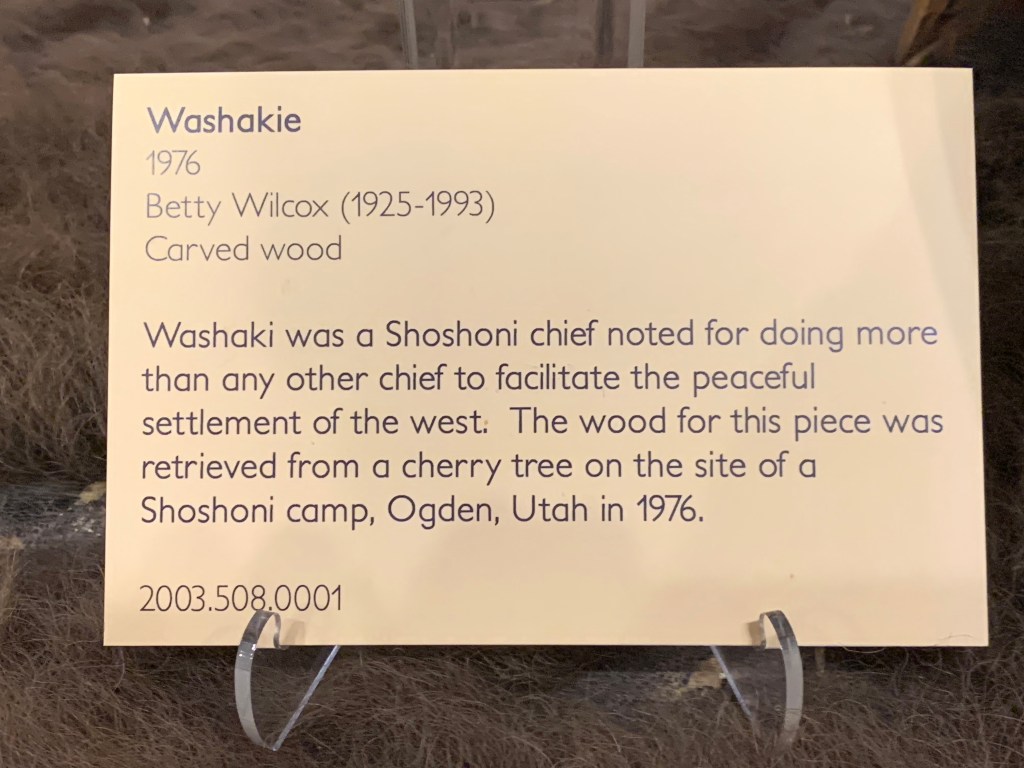
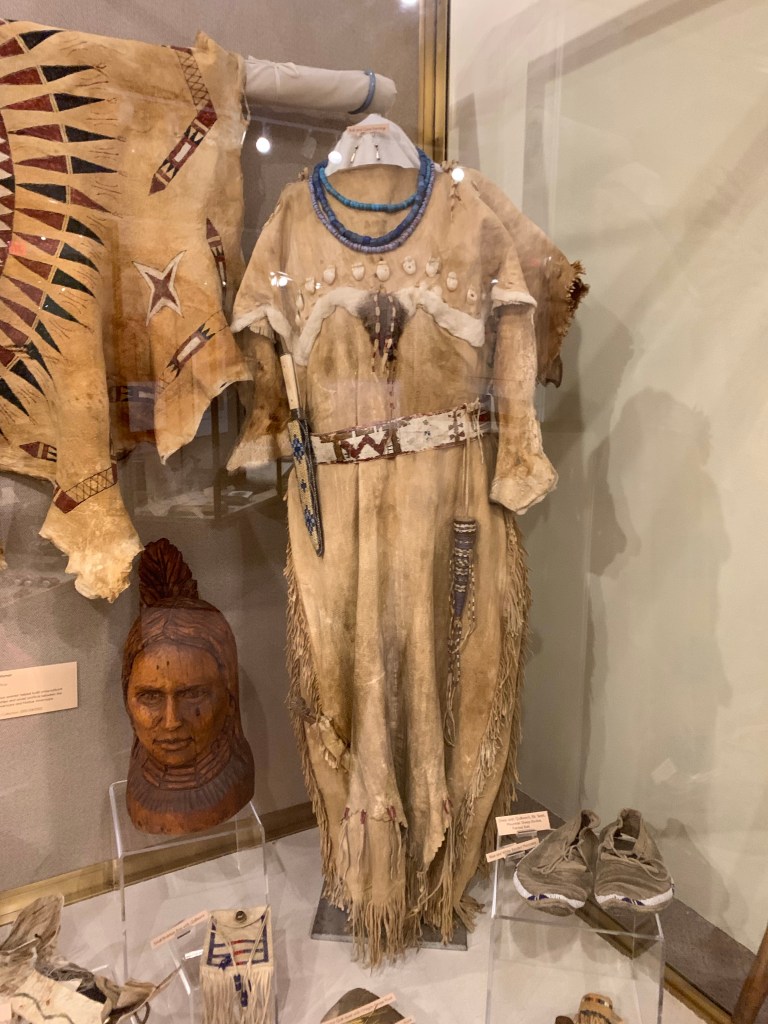
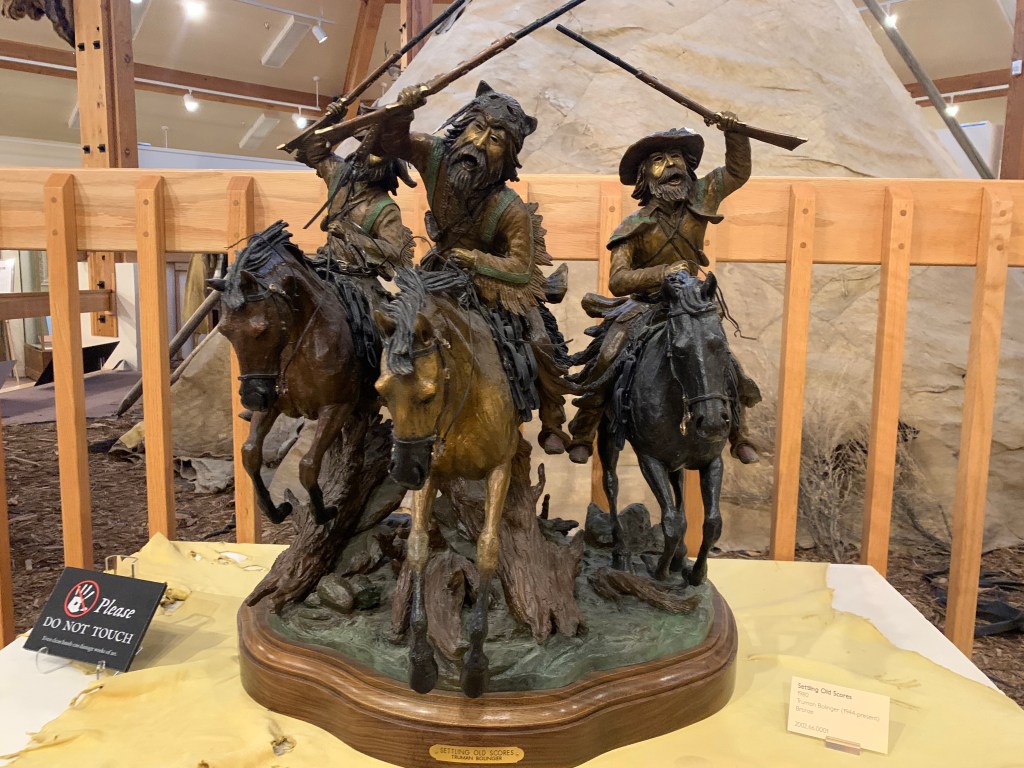
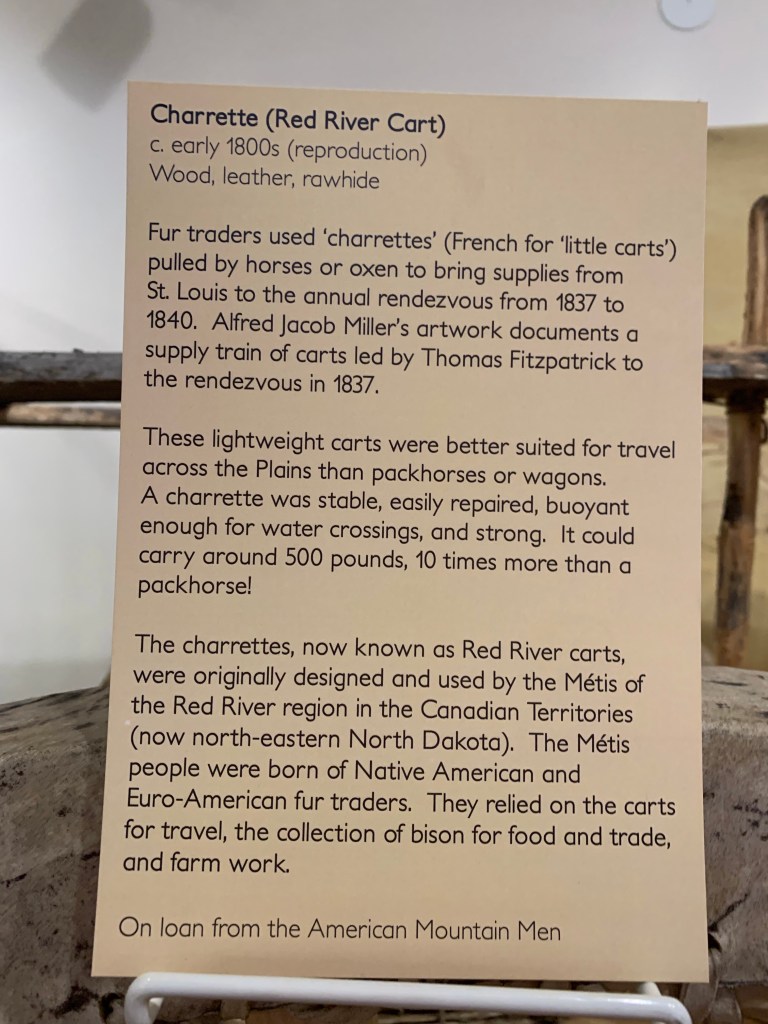
We found a jewel of a museum tucked away in the very small town of Pinedale in Sublette County, Wyoming, dedicated to the local history of the fur trade in that area. It is filled with artifacts or representations from the era of the mountain men who explored the region in the early to middle part of the 19th century.
As the oldest Historical Seociety in Wyoming, the Sublette County Historical society was originally established in 1935 for the preservation of historic sites of the fur trade and rendezvous (annual market for trading furs for goods with local Native Americans, fur traders, and fur trading companies.) This museum was built in an unusual way: very slowly, and only with funds they had in hand. Much of the construction was contributed by local folk, and the entire community supports it. Once again, the schools have created some excellent exhibits for the museum, and the artwork they have collected for it captures well the spirit of the times.
Mountain Man — independent, fearless, prepared for anything
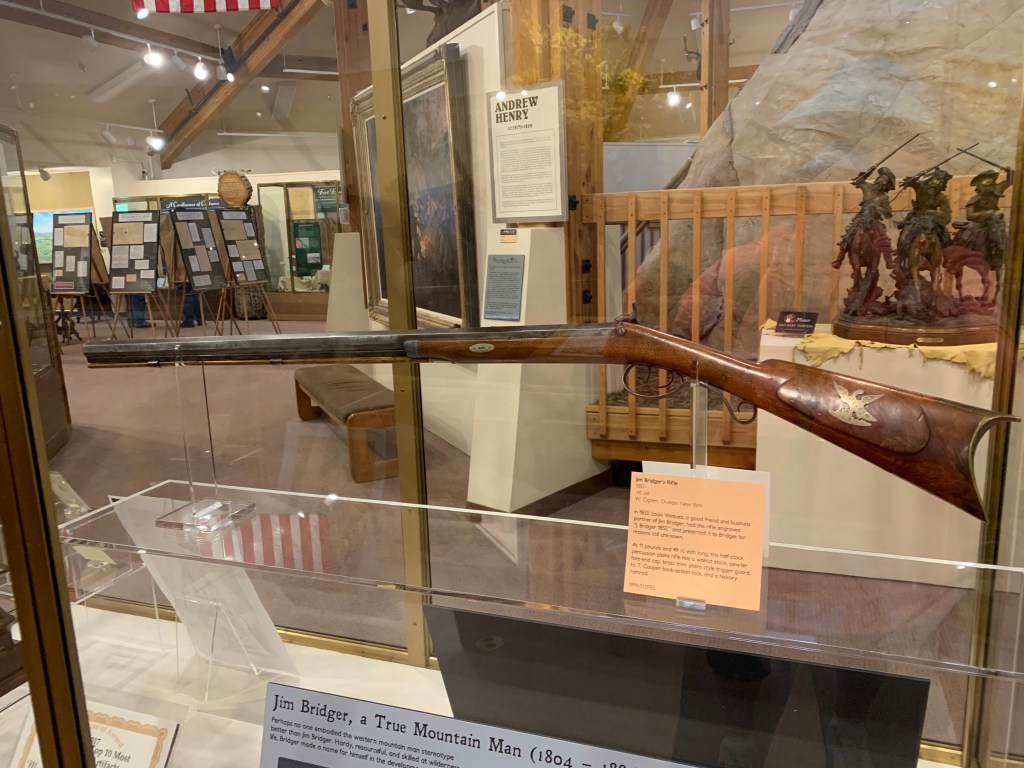
While there were many men who made a name for themselves as trappers and guides during that era, Jim Bridger is one of most well known. He was part of the second genertion of American mountain men and pathfinders that followed the Lewis and Clark Expedition and became well known for his numerous expeditions into the western interor, and well as serving as a mediator between Native American tribes and the westward-migrating European-American settlers. It helped that he had conversational knowledge of French, Spanis and several indigenous languages. He was among the first to explore Yellowstone and the Great Salt Lake region.
Jim Bridger’s rifle, considered one of the most important artifacts in the museum.The elegance of the Native American woman’s dress always impresses me, what they can do with the natural materials of the time.A great piece of contemporary sculpture entitled, « Settling Old Scores. »This was an ad to recruit men to work for one of the earliest fur companies. Many applied, but it took a special man to succeed.
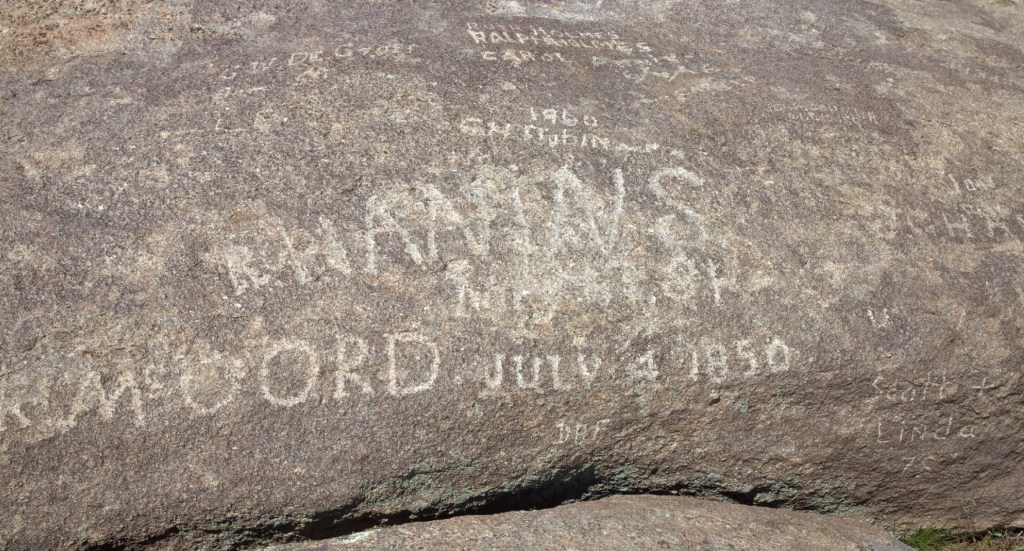
Roger and I passed by Independence Rock on our first trip west, 25 years ago, and it hasn’t changed much since. It’s one of those remarkable land features that you don’t really see it until you’re right on top of it.
The writings have been weathered greatly over the past hundred plus years, so they are very subtle, but they are powerful evidence of the people who made the marks.
Independence Rock is one of those sites where you can really feel the spirits of the people who made that long trek across the country to reach what they hoped was a better life. Many of them walked most of the way alongside their wagons. I’m sure some were just getting the sense that much bigger rocks (like mountains) were still ahead of them.
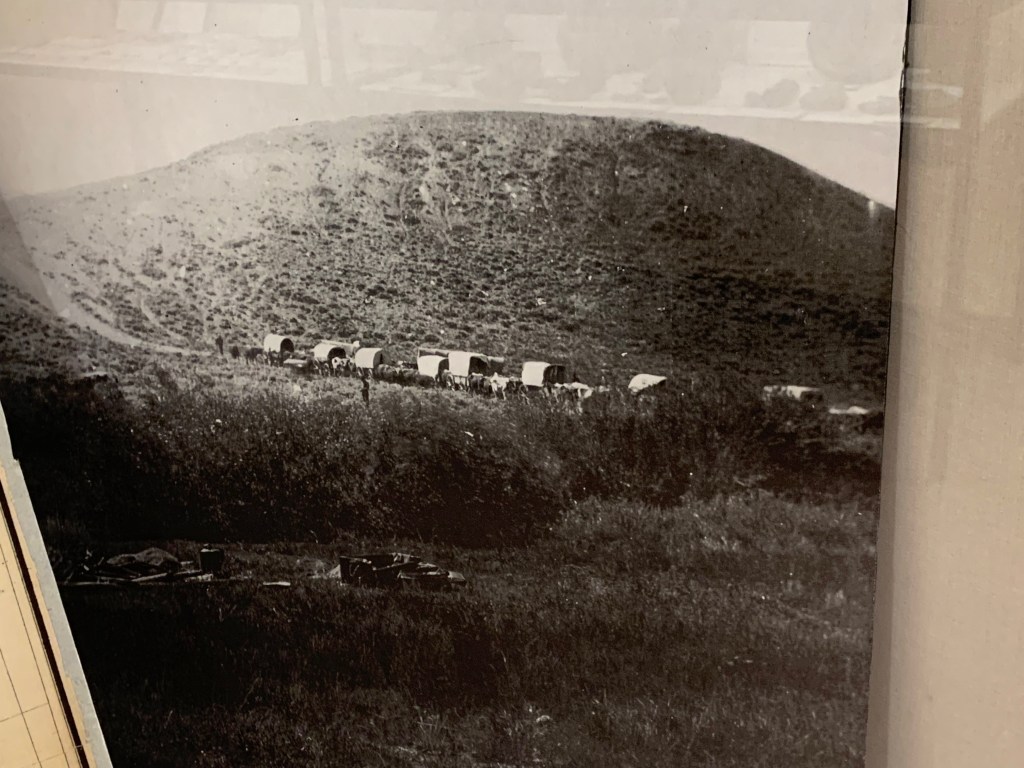
An image of an emigrant train found in The Mountain Man Museum.





















 On the Road Again