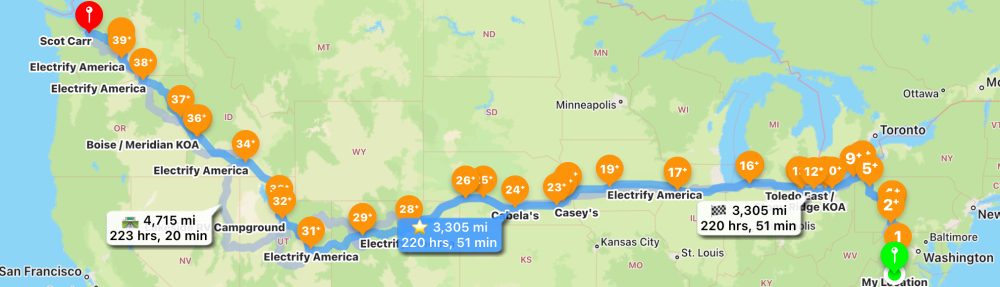
Traveling through Wildfire Country

As we headed into California, we knew that we getting close to the wildfires that have plagued the West Coast for the past weeks, but we hadn’t realized that they would be close enough for us to see and smell. In San Rafael, we stayed fairly close to home, heading to the coastal towns to find some cooler weather than the unseasonably hot 100+ degrees they were experiencing. Sometimes we could see the smoke billowing from hills several miles away. Every trip was made with awareness as to where the fires were now and to the air quality. Smoke came and went…and we got on with our lives.

That said, I was rather stunned to learn that our family that was hosting us were fully prepared to evacuate if necessary. Their computers, mementos, photos were all within instant reach to throw into their cars. It made me think of the times I’ve stood in the middle of battlefields and thought about what it would feel like to know there was an enemy just over the hill that wanted to destroy everything and everyone on the other side. That really makes you establish your priorities as you consider your response.

So what is it like to travel through wildfire country?

1) You’re constantly referencing websites and apps that give you (you hope) the latest on where the fires are burning, so you can avoid the roads.

2) Campgrounds may be filled with evacuees. In San Rafael, we saw one tent city in a park with people who’d had to leave their homes.

3) The skies tell a story of their own, with the winds bringing in smoke that changes the color of the skies.

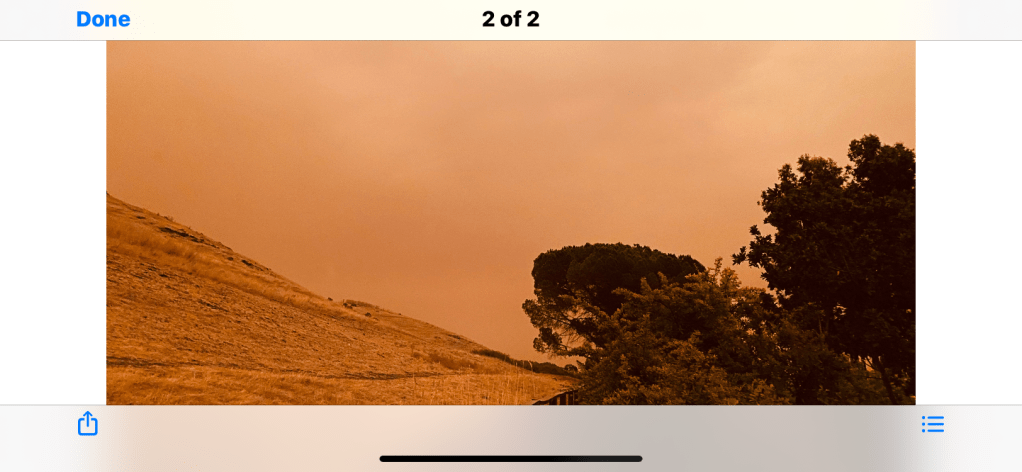
The morning sun in San Rafael
An evening sunset in San Rafael

One of our more harrowing moments was in southern Oregon, where a small billowing white cloud became a large billowing white cloud before our eyes, with periodic moments of darkness close to the earth that I could envision being red.
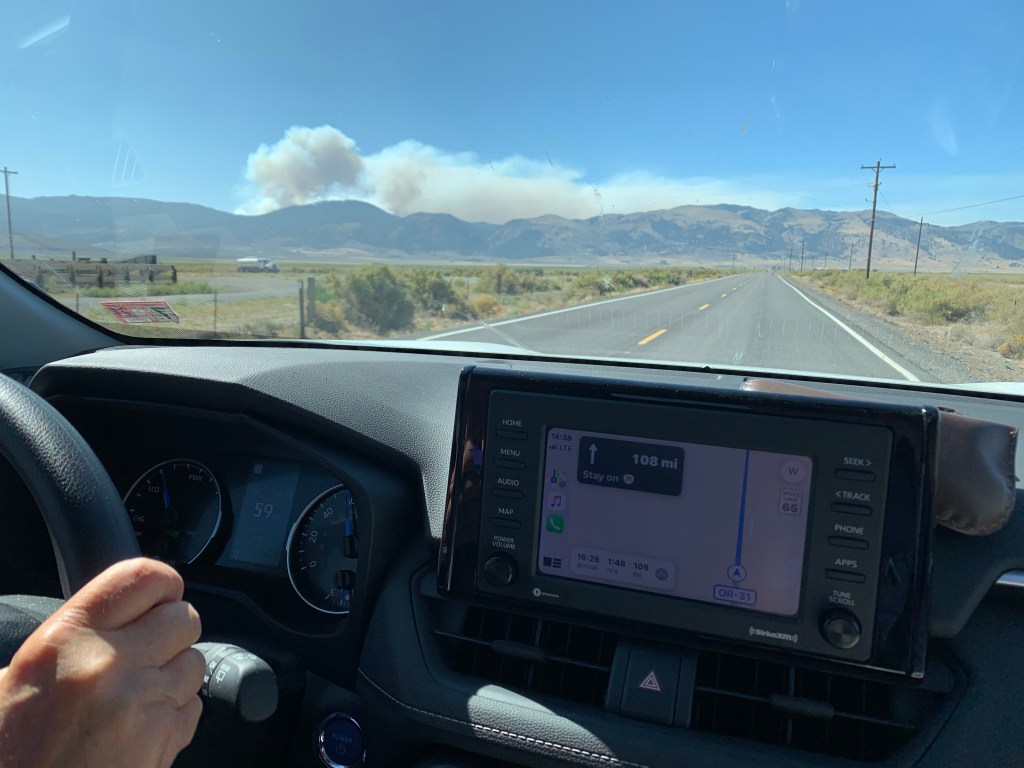
We were driving ON OR 31 straight towards this fire on US 97; fortunately the road turned away from the fire.
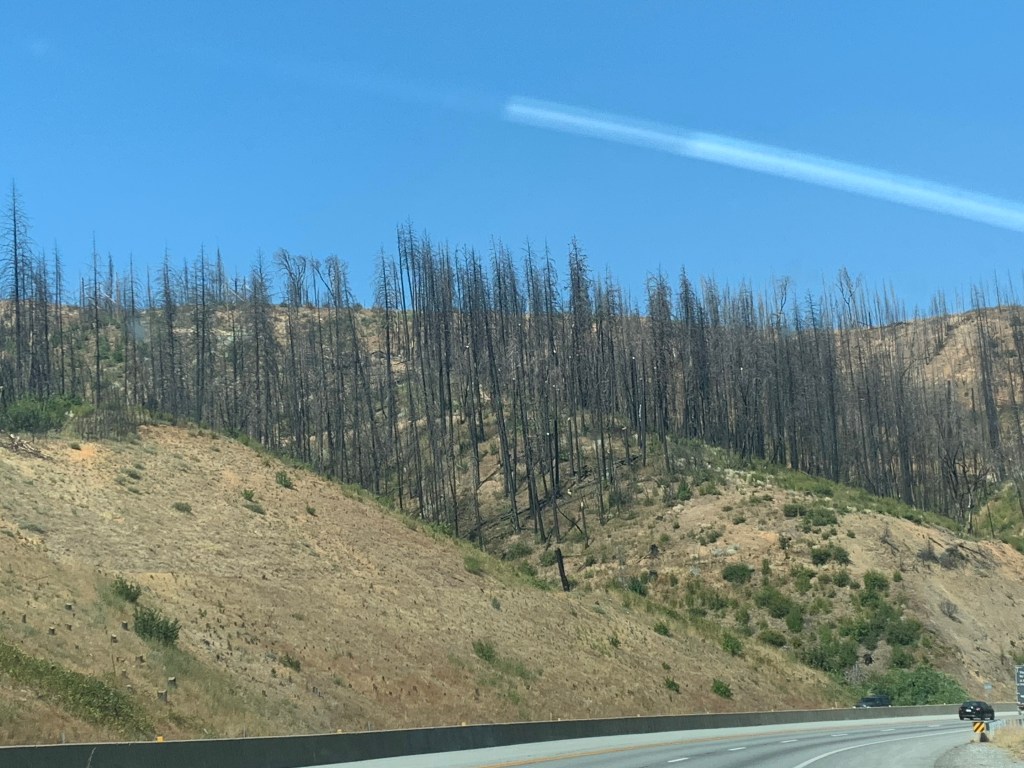
We saw plenty of these former burns along the road. Amazingly, the forest begins to regenerate very quickly, although it still takes many years to recover.

I will admit that I’m not used to the discomfort of being surrounded by real or potential wildfires, or with the first thought of the day being “where is it burning now?” Yet everyone was getting on with their lives and none of our plans were defeated by the fires, so I’m grateful for that. Where we live now in Virginia, we have the threat of earthquakes, floods, tornadoes, and even some fires. So I wonder why I’m more comfortable there than here?
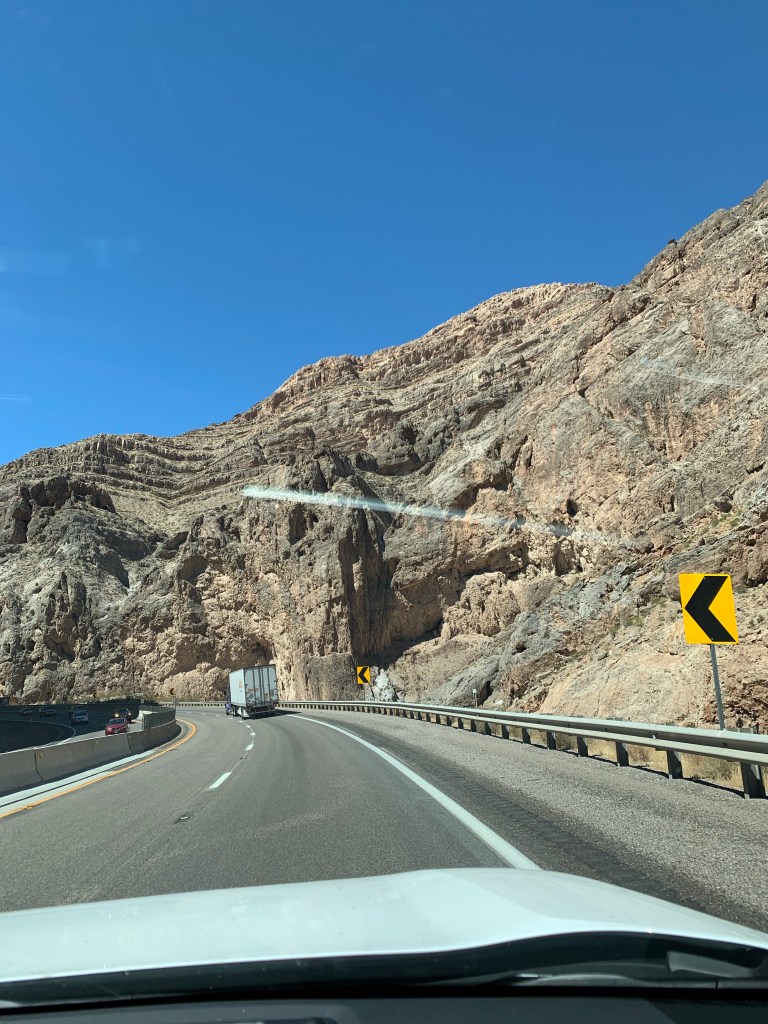
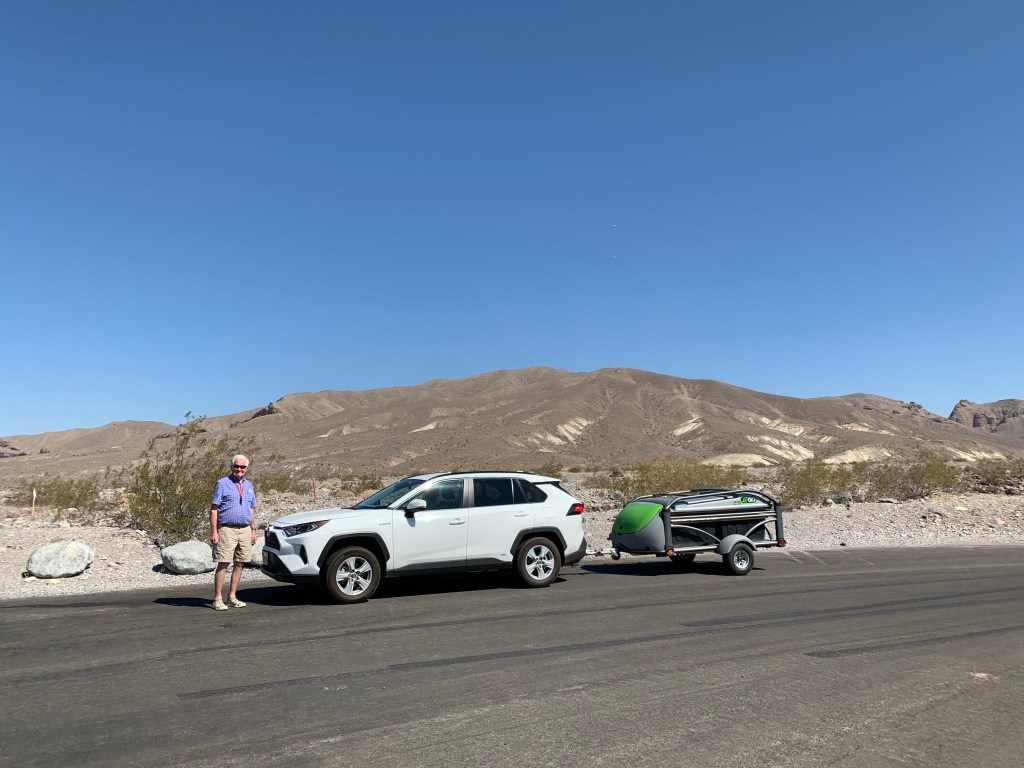
Death Valley

Death Valley has always been an intriguing place that we have wanted to explore. With names like Hell’s Gate, Dante’s View, Desolation Canyon and Badwater Basin, how much more appealing could it get? We realized that we were taking on a special challenge when we saw all the warnings as we approached the park: carry water, have a full tank of case, carry more water, don’t rely on cell phones or GPS, drink the water you’ve brought, don’t approach wildlife, avoid canyons during rain storms, keep out of mines, and be sure you have enough water and stay hydrated.
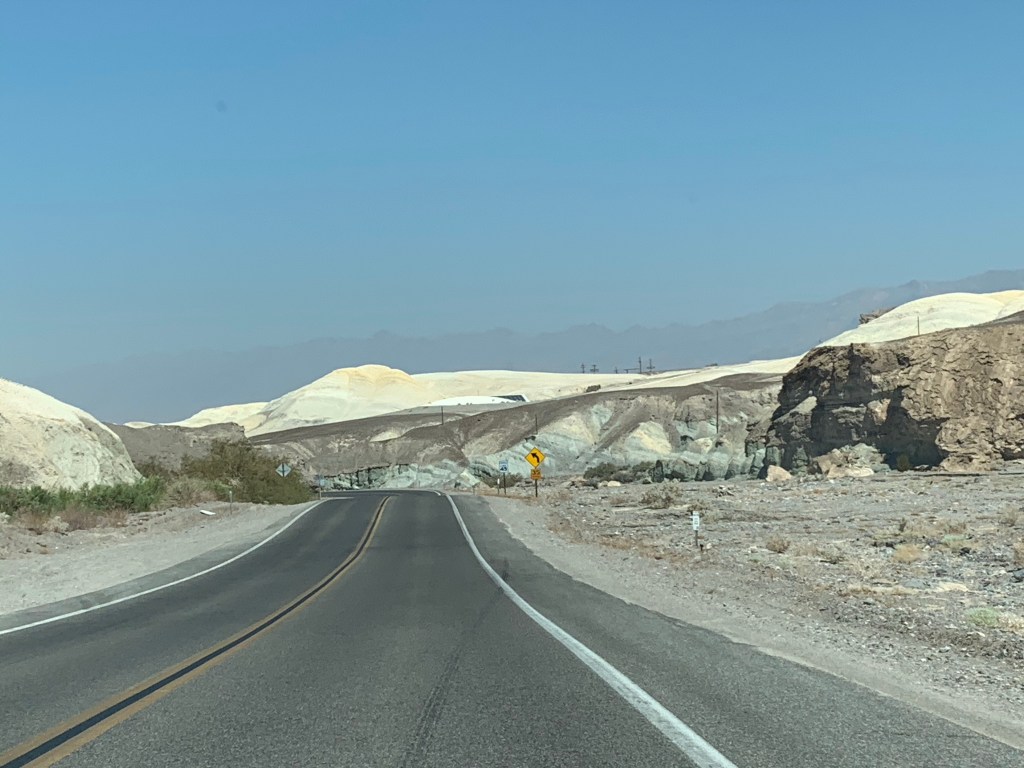
We did all of the above, and for extra good measure we stayed inside our air-conditioned car 99% of the time, because our first foray out of the car proved to us that the heat was quickly debilitating. We reached a high of 111 degrees, with 109 about the average during the few hours we spent in the Valley. You truly are isolated because there is no wireless signal, and even the helpful navigator on our iPhone was out to lunch for the majority of our trip. Fortunately there are few roads and we had a pretty clear idea as to how we would traverse the Valley. What we didn’t realize that once through the valley we would still be driving for hours through some of the most desolate parts of California. It was one of those experiences you (or we, at least) do once in your life, and we’re glad we did, socially distanced to the max!

Approaching Death Valley.
Taking a break. 5 minutes at 100 degrees + can be very draining.
Some of the borax fields found near Twenty Mule Team Canyon.
Heading out of the desolation of Death Valley
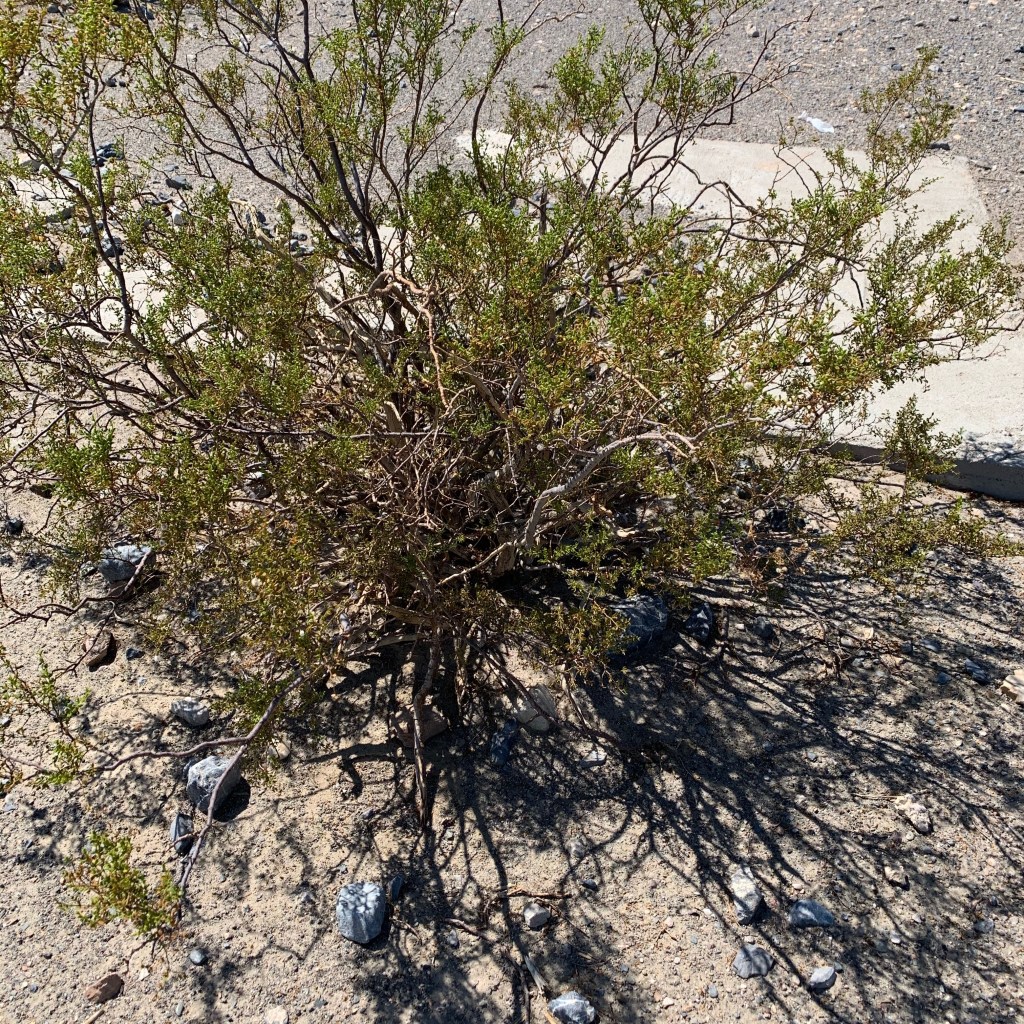
One of the few plants we found in abundance in the desert.
Our Trust GOCarr and CarrGO got us through alive and well. Quite an experience!

All this is the music of waters.

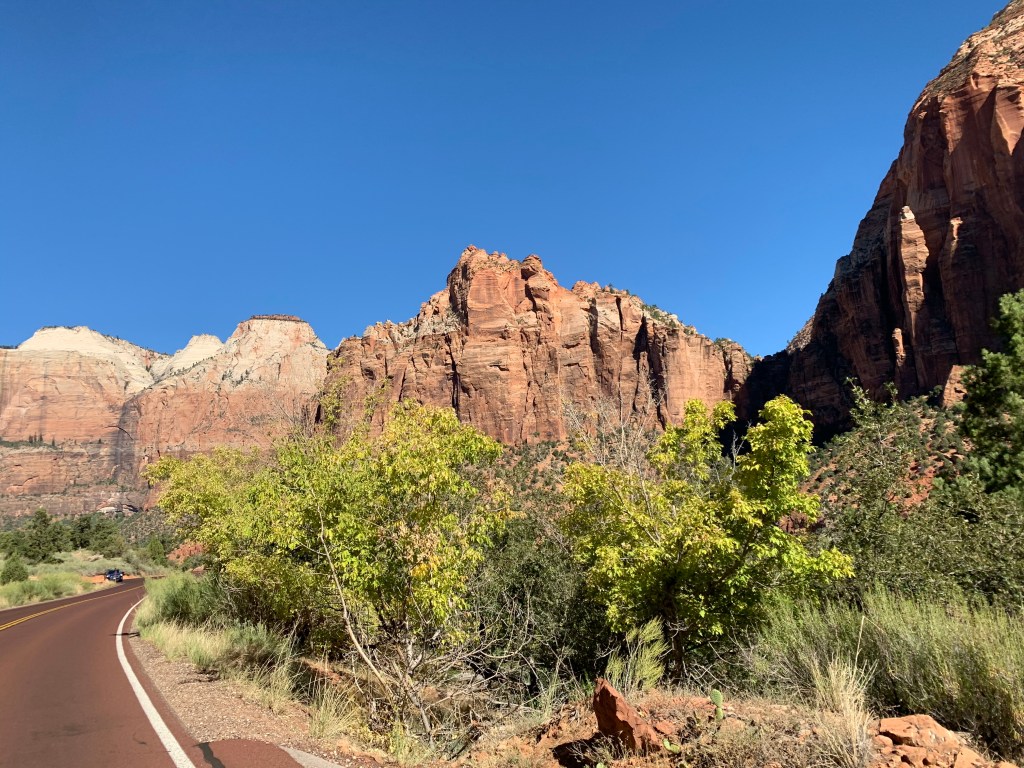
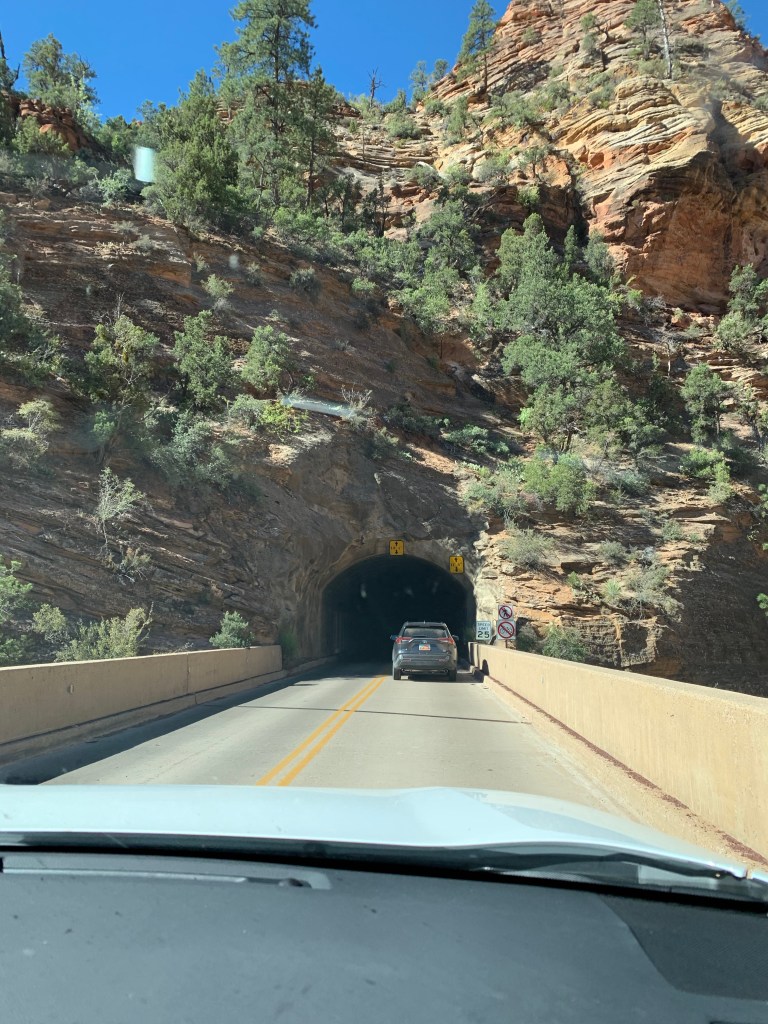
The above is an 1895 quote from John Wesley Powell, one of the early explorers of this region of Utah. Zion National Park is a remarkably beautiful mixture of soaring mountains and richly colored canyons, all forged over thousands of years by the Virgin River. The river is now a trickle, but the mountains and canyons are still there with plenty to be viewed from a winding road through the park that includes an awesome tunnel built when the park was created in the early 1900’s. This tunnel has openings that give you a unique glimpse of the mountains up close and was one of the highlights of our trip.

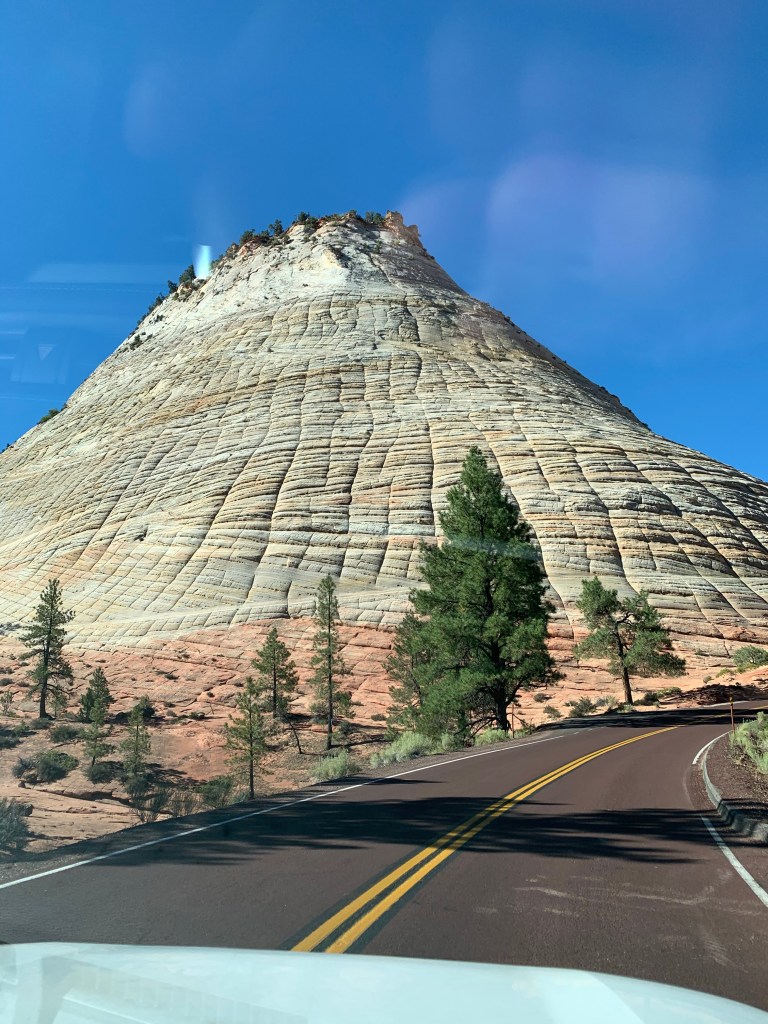
Checkerboard Mesa
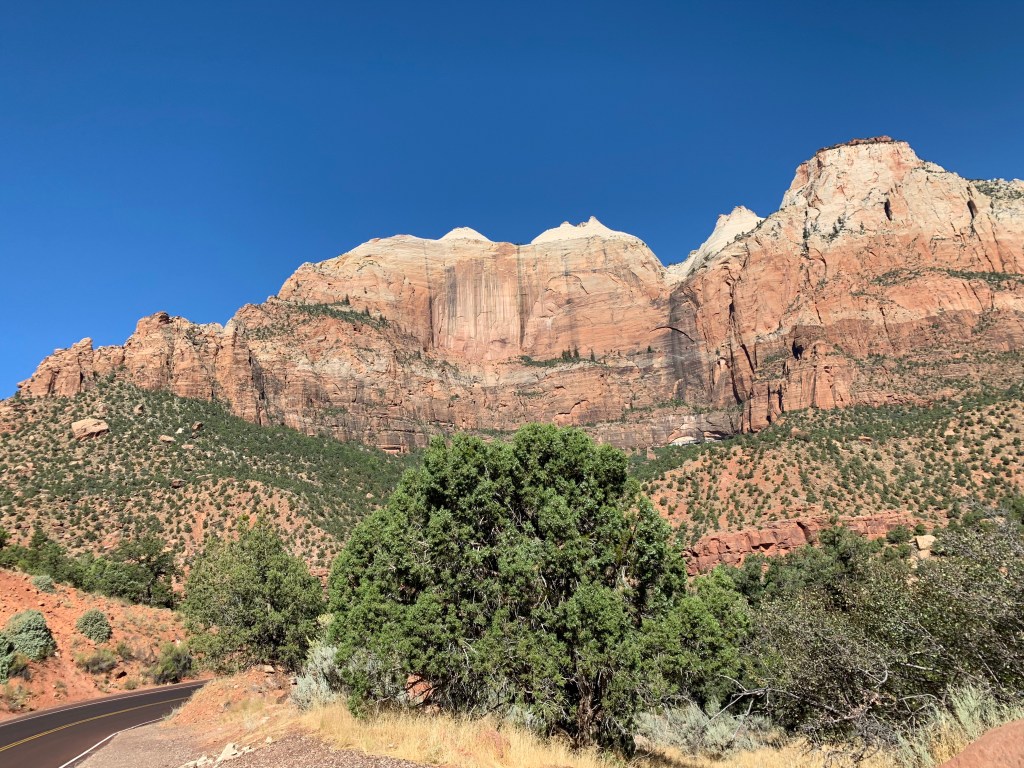
Every turn of the road brings a new view of the mountains and canyons.
Zion-Mt. Carmel Tunnel is 1.1 miles long and has about half a dozen cut-outs that give you a unique view of the mountains.
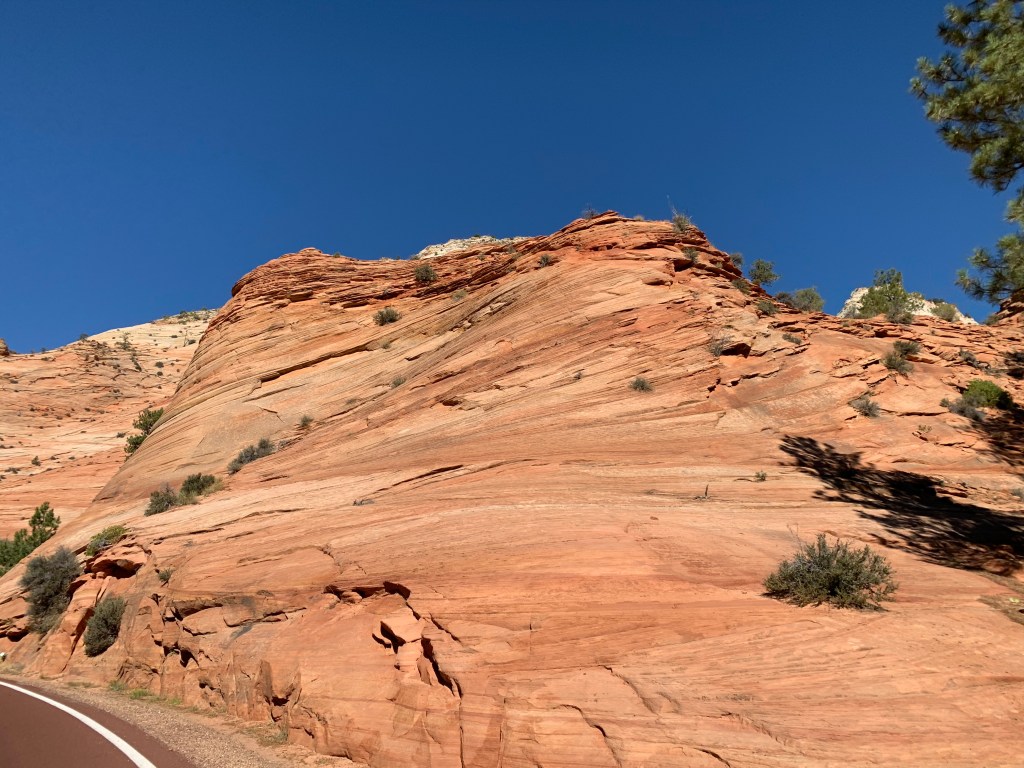
Swirling patterns show clear evidence of water sculpting of the rocks.
Zion is a geologist’s dream, with so much history to be seen in the many striations of rock.
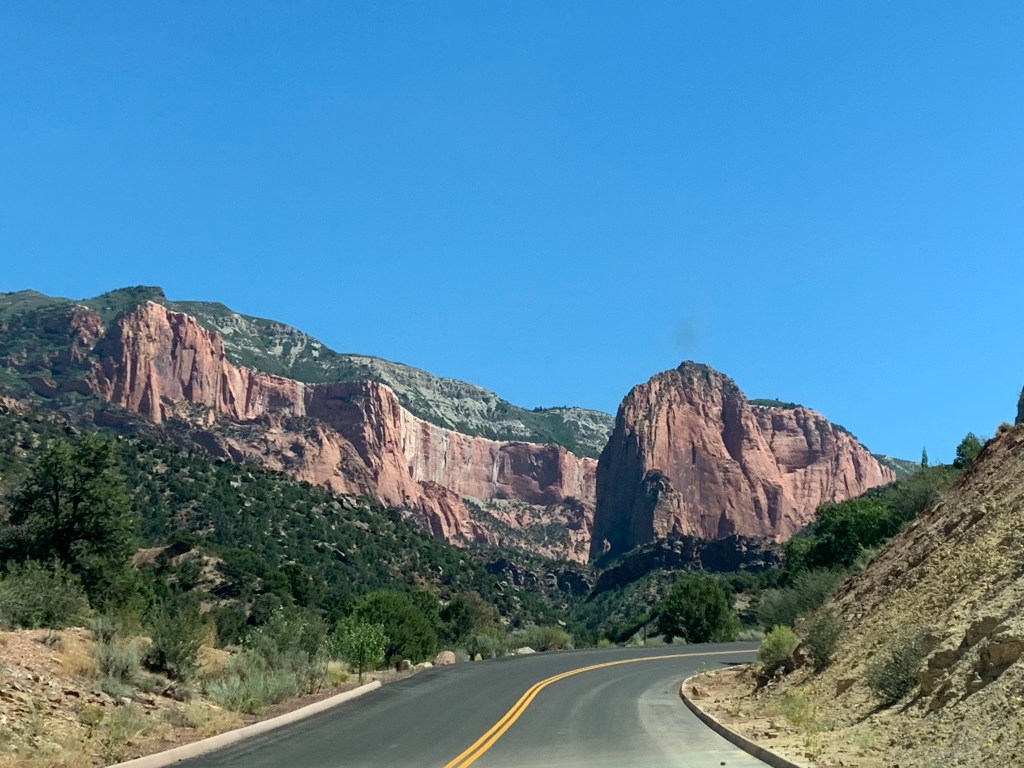
Kolob Canyon is a smaller section of Zion National Park about 20 miles northwest of the main park. There is a a 10 mile winding road to the top of a viewpoint where we ate lunch in the only shady spot around (with a million bees for company.) By this time, the temperature was already in the high 90’s, very hot and dry.
Kolob Canyon is famous for this Kolob Arch, which requires hiking into the canyon which we didn’t do. This photo is thanks to some generous person who shared their photos online. Thank you!

While Native Americans lived here for many years before it was discovered by the pioneers, it was named Zion by the Mormons who came to settle nearby because it meant “promised land” and “sanctuary.” It is very easy to feel the peace of time standing still for a few moments when you’re surrounded by so much beauty, but in reality time is steadily moving forward with all the forces of nature moving very slowly but steadily to continue to change the terrain.

“Long before today’s landscape even appeared, streams, oceans, deserts and volcanos deposited thousands of feet of mud, lime, sand, and ash. The immense pressure and heat of acccumulating sediments turned lower layers to stone. Later underground forces uplifted the Colorado Plateau, a 130,000-square-mile mass of rock, over 10,000 feet above sea level. Rain’s watery fingers then worked the Plateau’s minute cracks, loosening grains and widening fractures—and eroding today’s mighty canyons. These processes continue: rivers still deposit sediments that turn to stone, earthquakes still punctuate the Plateau’s upward journey, and erosion pries rockfalls from Zion’s seemingly immutable cliffs. Eventually this beautiful canyon will melt away and others will form. All it takes is time.” Excerpt from NPS Brochure

Traversing the West

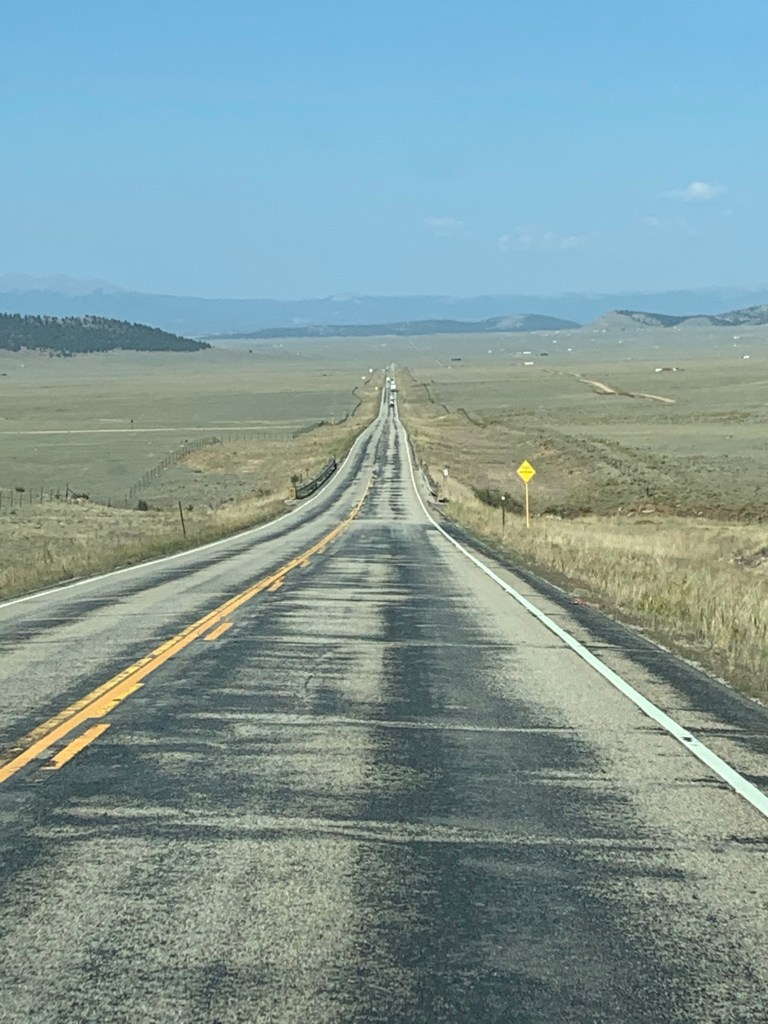
From the plains to the mountains…

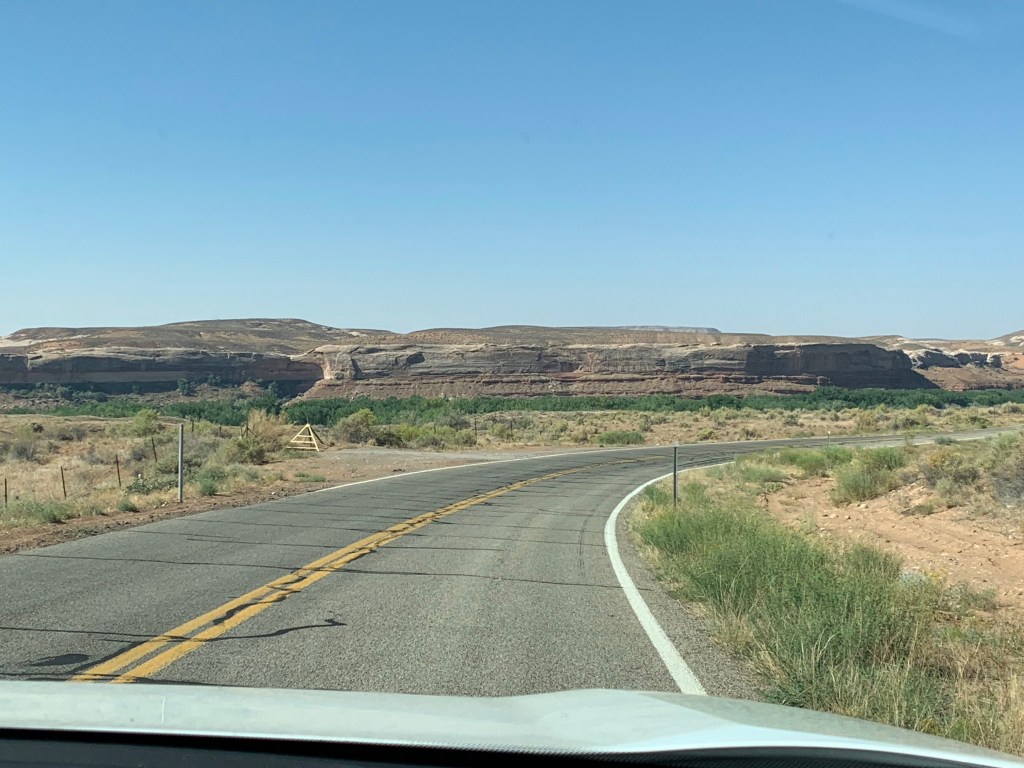
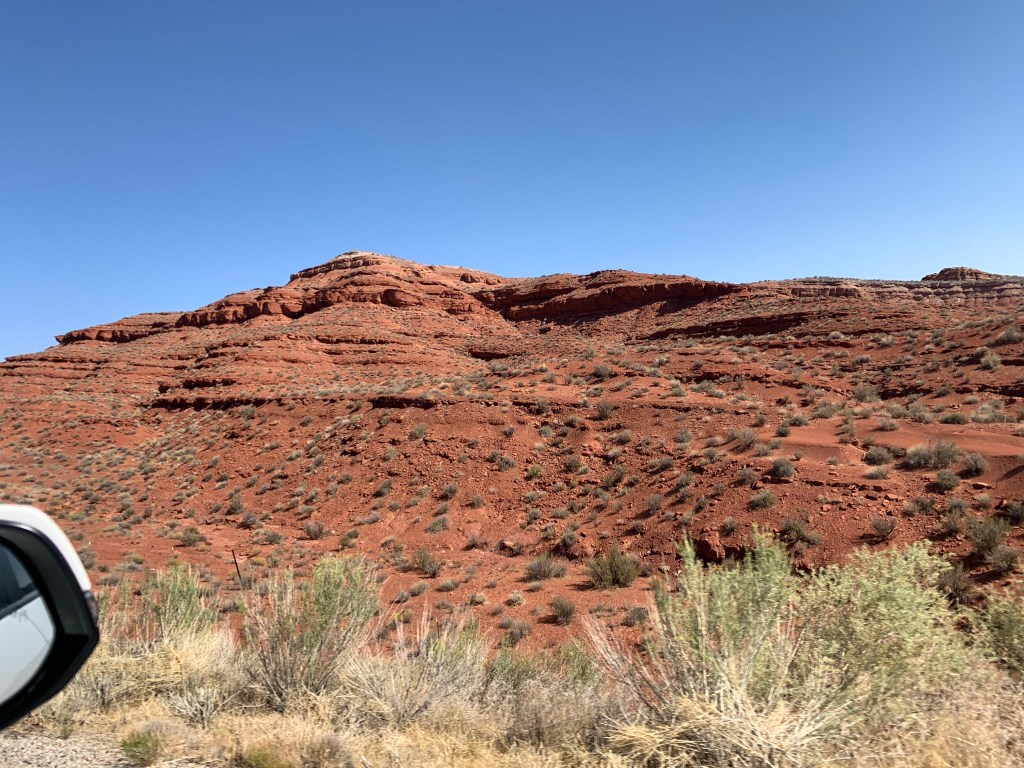
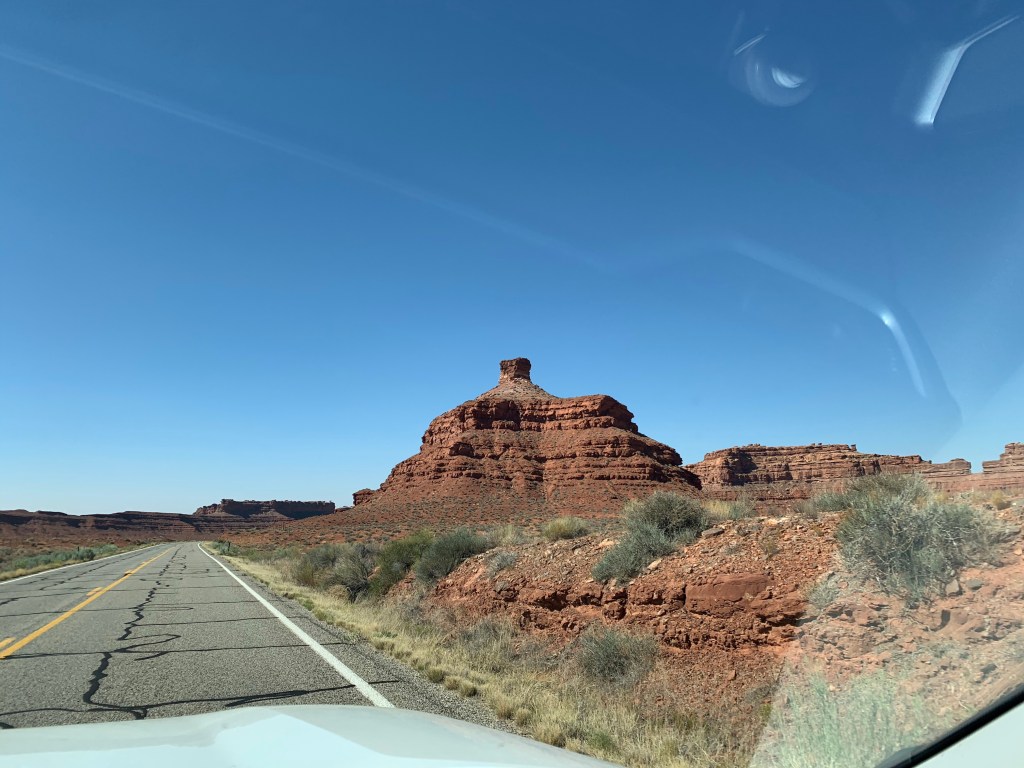
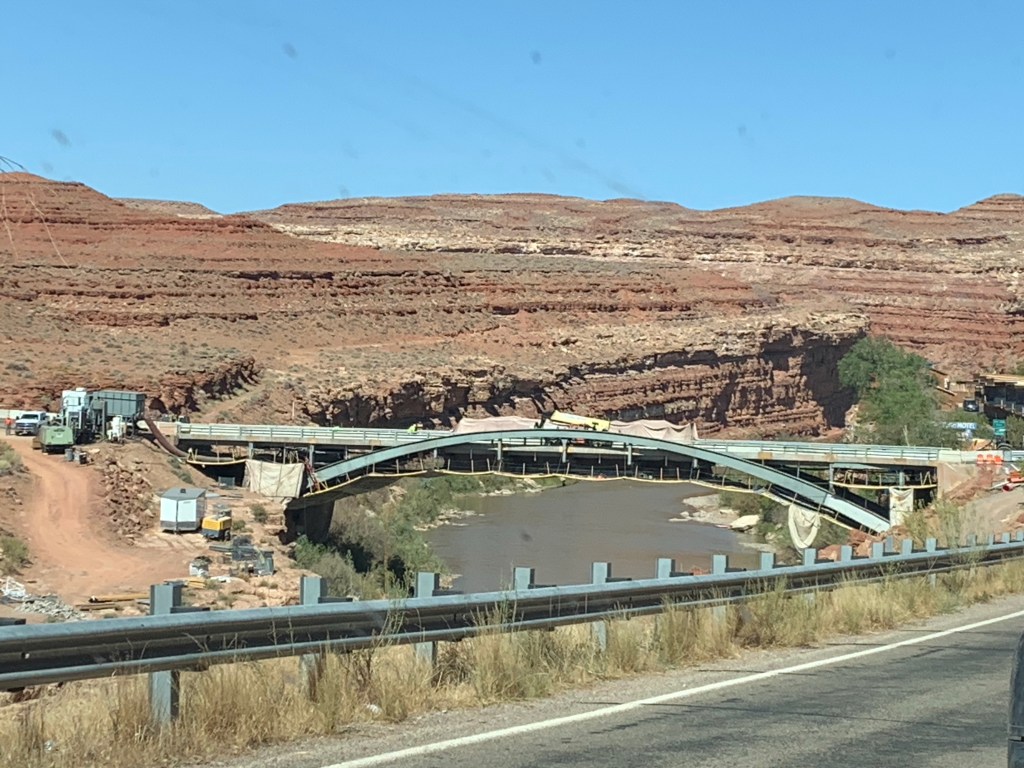
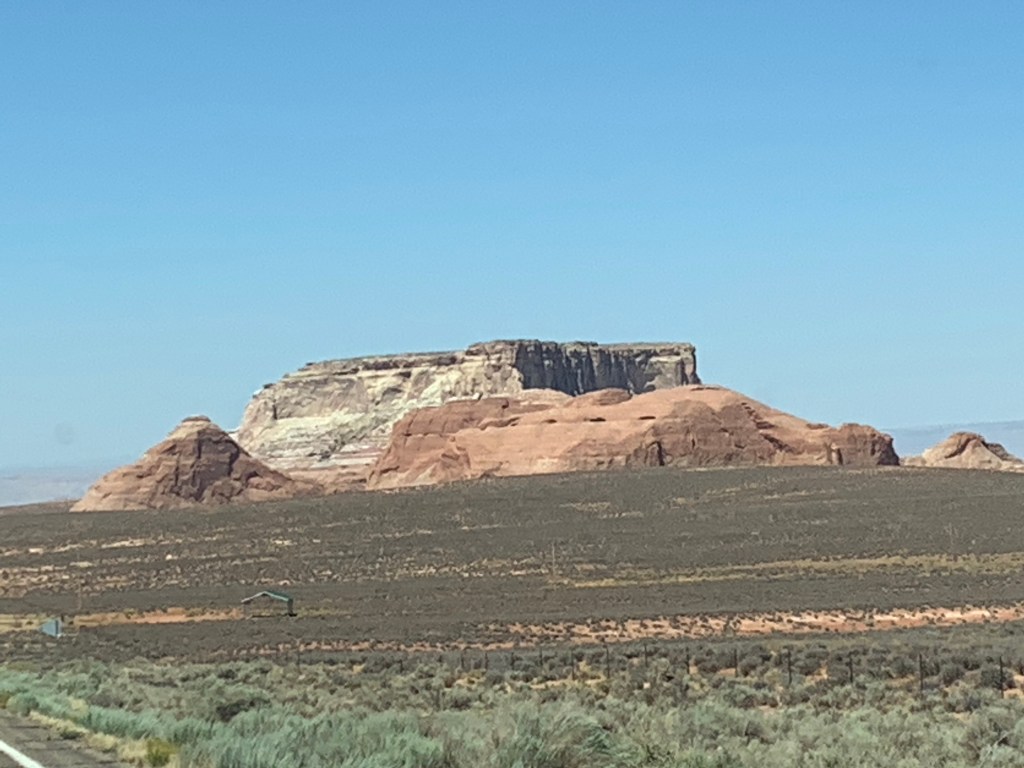
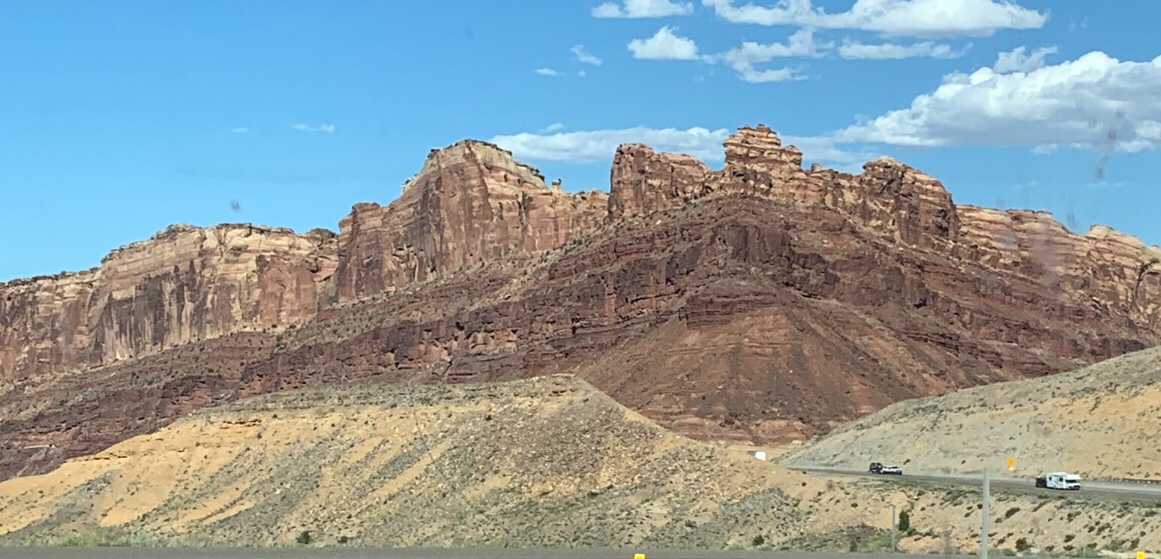
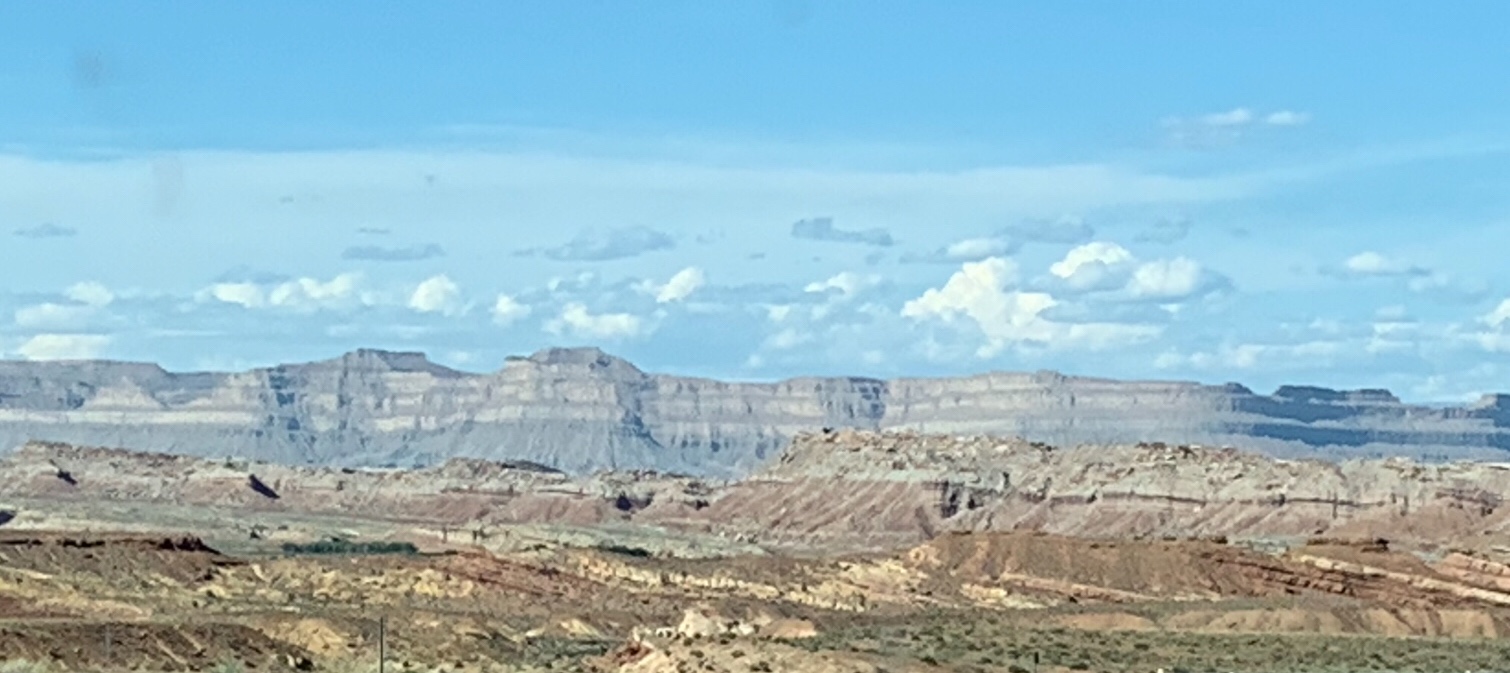
Because of our intentional self-distancing, much of the middle of our trip cross country has been spent in the car driving and looking out the window at all the scenery passing by. After Kansas we headed into Colorado, Utah, and Arizona, and back into Utah. Our route took us through so many different types of land formations that every turn in the road brought something new and different. Below are some of the best pictures I could take from our car windows.

The mountains come on gradually…from bumps in the road ahead to…
…roads that are bounded by tall rock structures…
…of all different colors.
Mexican Hat Rock
Glen Canyon Dam
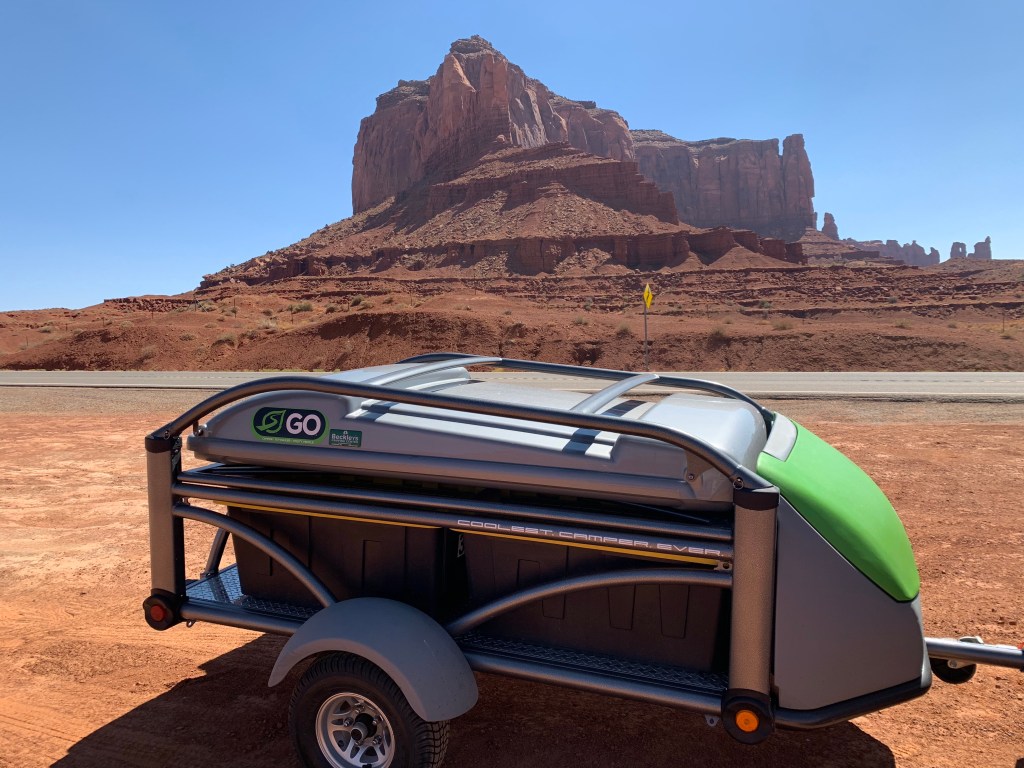
Stopping for a snack in the middle of Monument Valley
More Monument Valley
Lake Powell in the distance, substantially lower than normal, and has been for years.

There are many more photos I could include, but you get the idea. It is an other-worldly place, one where all the politics and problems of the lives we’ve left behind have disappeared, your mind can wander in all kinds of directions. There is a great peace about land that might be considered wilderness by some, but for me is a land of great opportunity for the imagination. There is no place on earth like it, and it’s well worth driving across the country to see.

The GO on the Road

As we were preparing to set off on this new adventure, some of you were probably wondering how life would be with our new GO camper on the road. We were too! In retrospect we realize it’s a bit daunting to take on a 25 day journey without having tried our new rig out for at least one night at a campground closer to home first. If we had we would have quickly learned we didn’t need to bring so much stuff. So we’ve been identifying with the pioneers who headed west in the 1800’s and have been slowly dropping things off along the way to lighten our load. That said, we still have things we hope to give away to our families on the West coast. We will definitely lose weight on this trip!

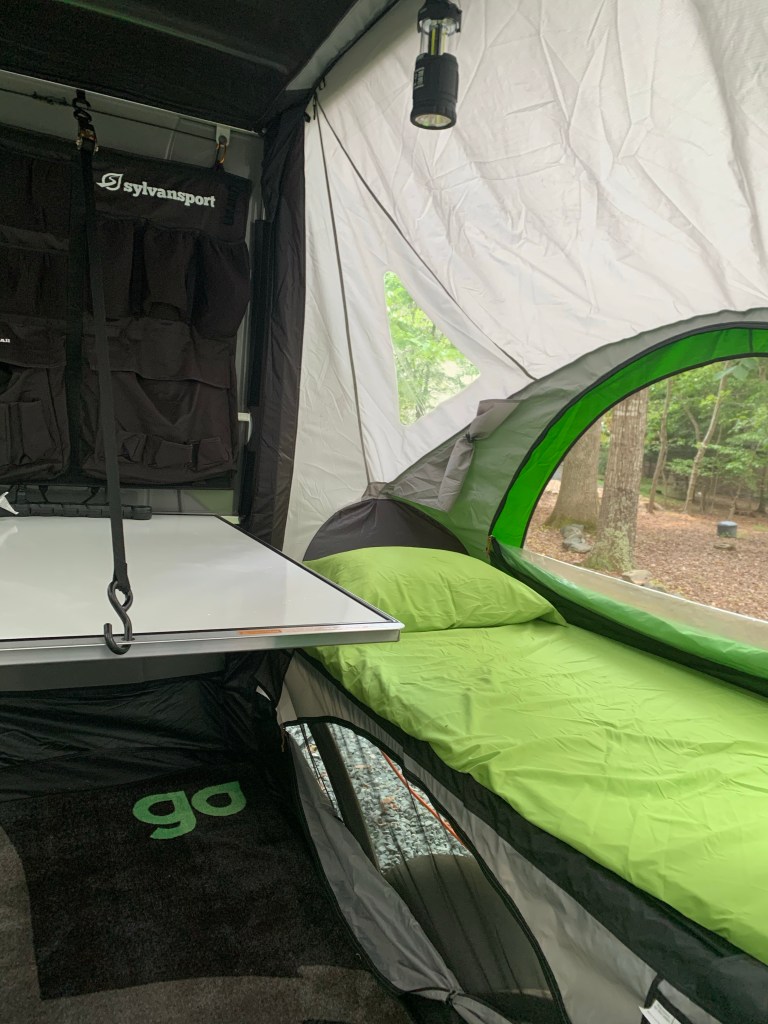
But as for the GO, it is performing exactly as promised, (although we do have a few design suggestions for SylvanSport.) IMHO, the rig is the most civilized way possible to do tent camping, in that you’re sleeping off the floor on a reasonably sized “bed”, and the fact that you have a table suspended in the middle of the camper enables you to dine, work, play games, and do a lot of things we do comfortably at home. With a carpeted floor you can go barefoot and the bed creates a very luxurious sofa if you want to lean back with your feet up. We’ve rigged it with a power cord in the side wall, so we can easily plug in all our devices, lamps, and even an electric kettle for tea and coffee. The windows are designed to allow as much cross-ventilation or privacy as you may want, but the tent structure has enough give to it so that when the wind blows or the rain falls you get that great cozy feeling of being protected inside.

The biggest challenge for us has been learning new rules of teamwork for this rig. In our previous RV, our job descriptions were fairly well defined over the 15 years we owned it. This one has a number of separate tasks, some of which are best handled by one person, but plenty that require coordination between 2 people. It has enough elements of tent camping like inserting collapsible rods to create the infrastructure or setting up the beds where two can do it more easily than one, so we’ve had a bit of a learning curve. But every set-up and take-down have gotten more streamlined with each day on the road.

The GO on the road is fantastic; you barely know it’s behind you when you’re driving, and when I do see it there, it reminds me of a very loyal puppy who follows you everywhere and just wants to please. (The perfect pet — it doesn’t eat or poop!) It’s only decreasedthe mpg of our RAV4 a bit: we should be getting 40 and we’re now getting 33.

So overall we’re very happy with our GO both on and off the road. We have yet to see another one in our travels, so a few people have been intrigued enough to come over and ask about it. But in general the campgrounds we’ve stayed at have not been crowded, and mask-wearing is definitely the norm wherever we’ve ventured indoors. We’ve also been taking a lot of backroads where the traffic is minimal and social distancing is a given. We’re staying safe and life is good.

The Monument Rocks of Kansas

Several months ago we were watching a PBS documentary on the origins of the earth that featured a collection of large chalk formations found in Kansas remarkably rich in fossils. They can reach a height of 70 ft and have unusual structures such as buttes and arches. Geologists estimate that the were likely formed 80 million years ago.

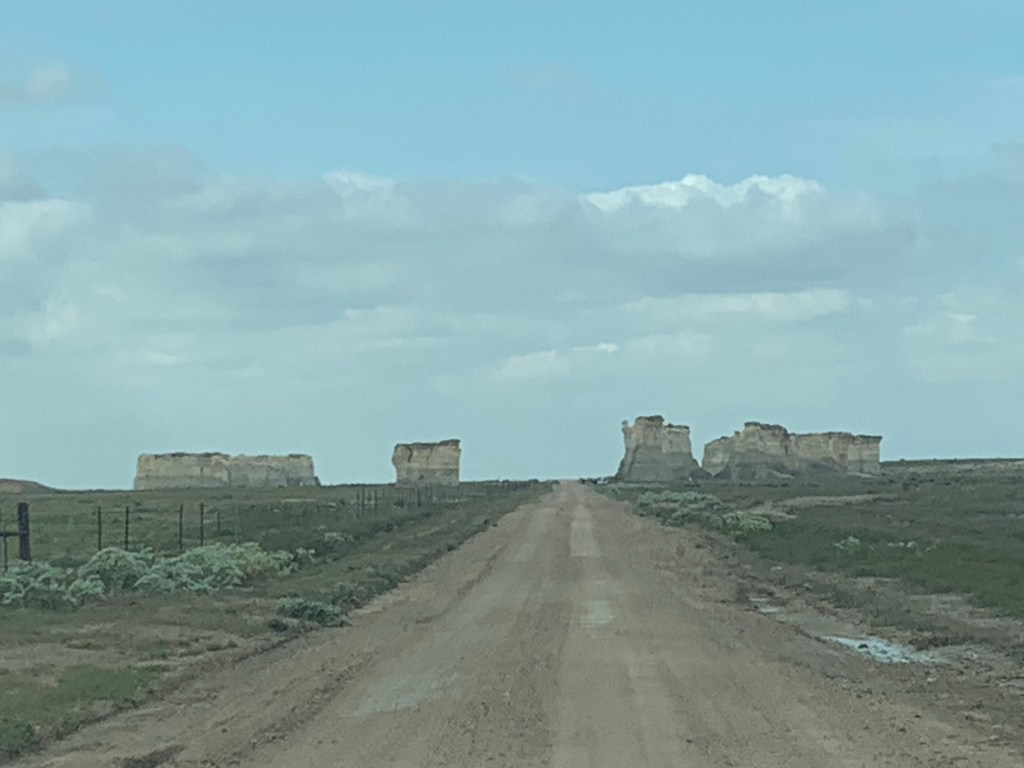
So we made them a highpoint of our western travels which took us down many highways in Kansas we’d never seen before, and then down about 30 miles of dirt road off the beaten path to reach them. We were clearly socially distanced! This is what we found:

You take a curve in the road, and up they pop in the distance.
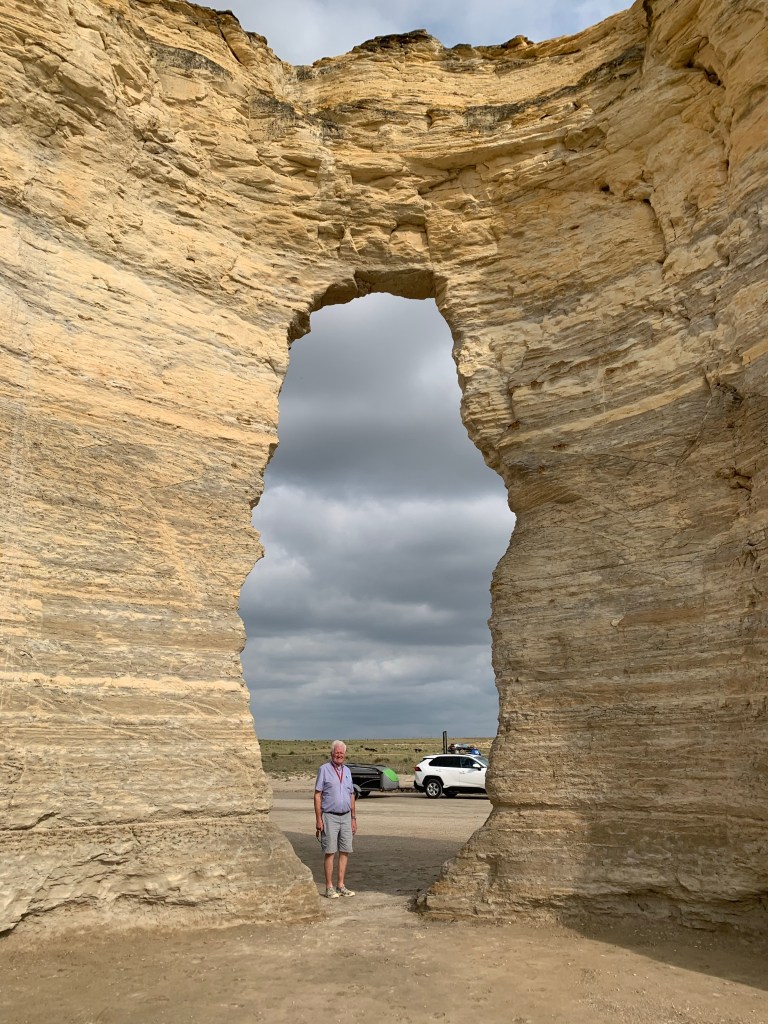
There are two major sites; this is the first. It is remarkable that people are permitted to walk amongst them, although climbing is not permitted.
This is the second major formation which was featured in the PBS documentary.
Our pilot and his rig
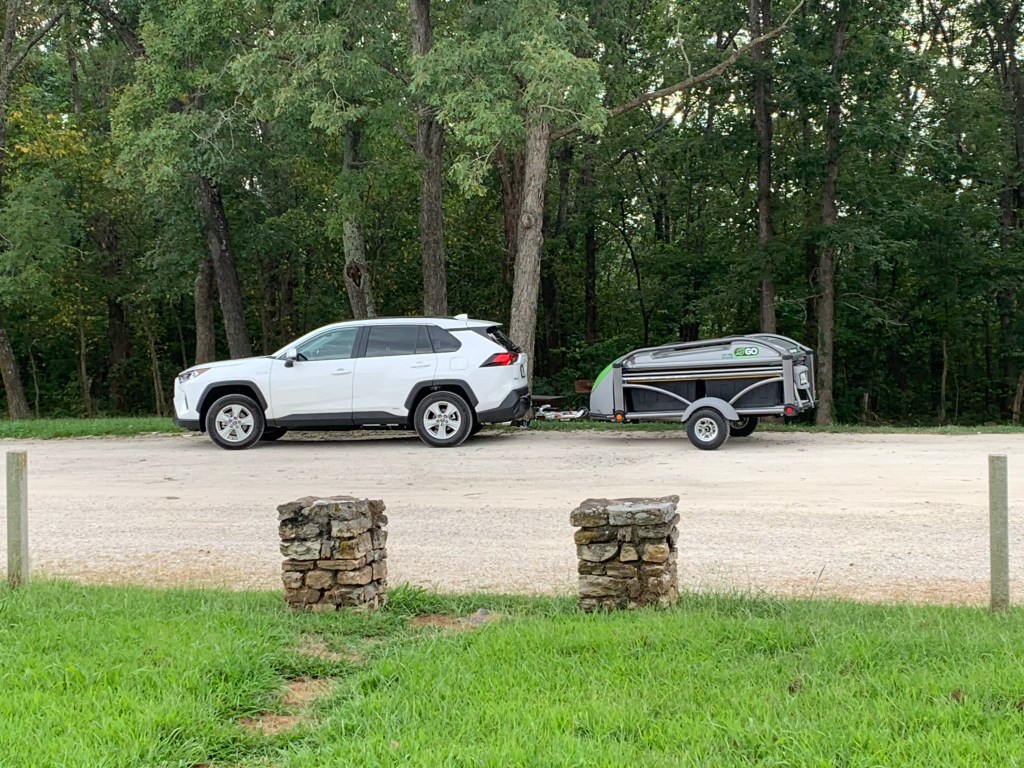
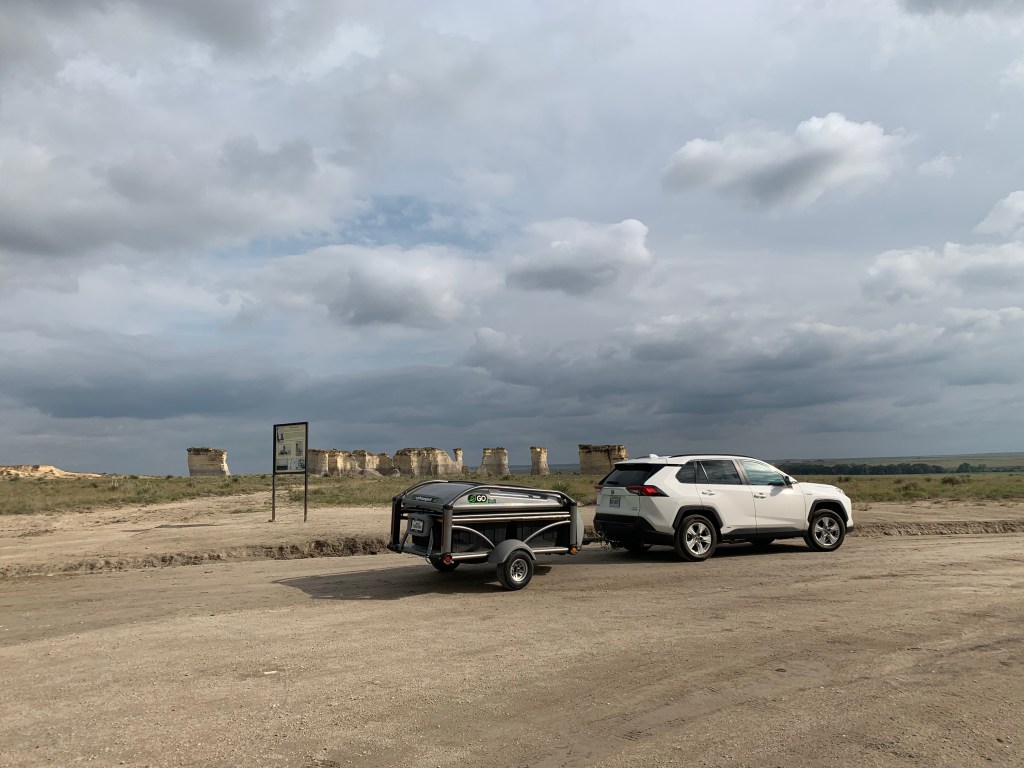
Our CarrGO and GOCarr

Remarkably, these Monument Rocks are privately owned, and the people who own them are very generous with allowing the public to come on their property. They only request that people not climb on them or destroy them in any way, and also to please not honk your horns at the cattle which frightens them. It felt like we were visiting someplace that in a few years would likely be turned into something more commercial. I’m glad we saw them when we did.

On to Colorado!

Missouri State Capital

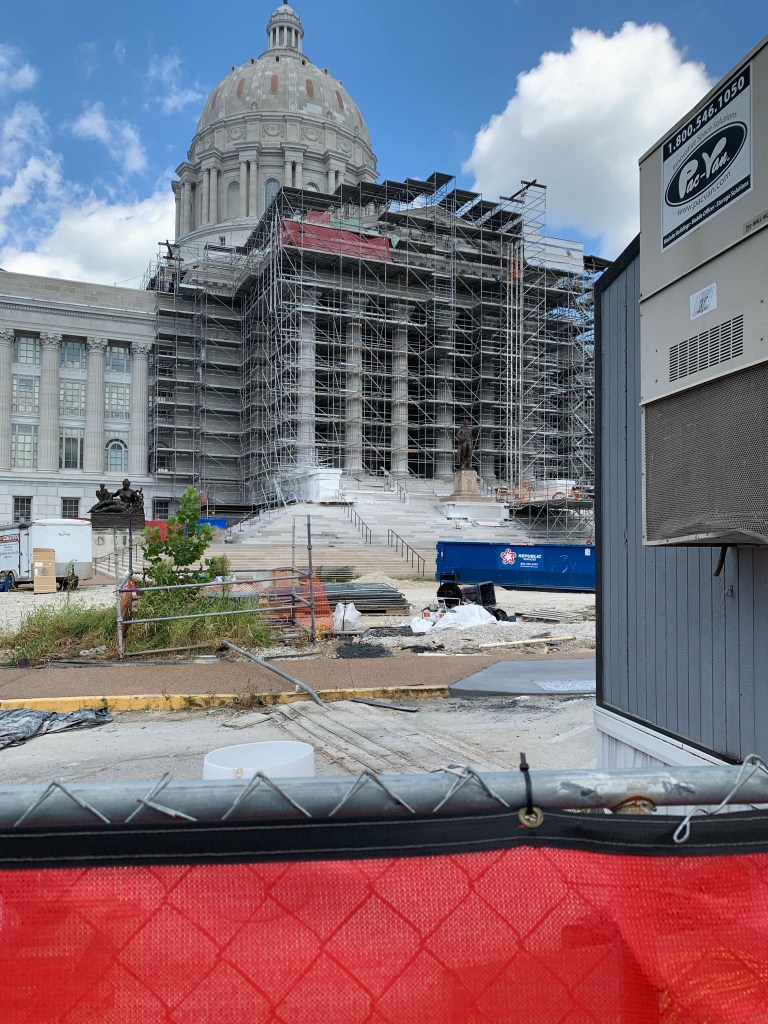
It took us a solid three days of driving through what I call “the sea of land” that separates us from all of the places where we really want to be, and our first real attraction (after seeing miles and miles of lovely valleys, corn fields, soy fields, lovely hills, a few mountains and rivers…you get the idea) was one of the capitals that somehow we’ve missed as we’ve criss-crossed the country visiting at least 40 of the state capitals. The Missouri State Capital in Jefferson City is currently in a state of major renovation, so while it is supposed to look like this…

Missouri State Capital

….it currently looks like this:

Missouri State Capital under major renovation in 2020

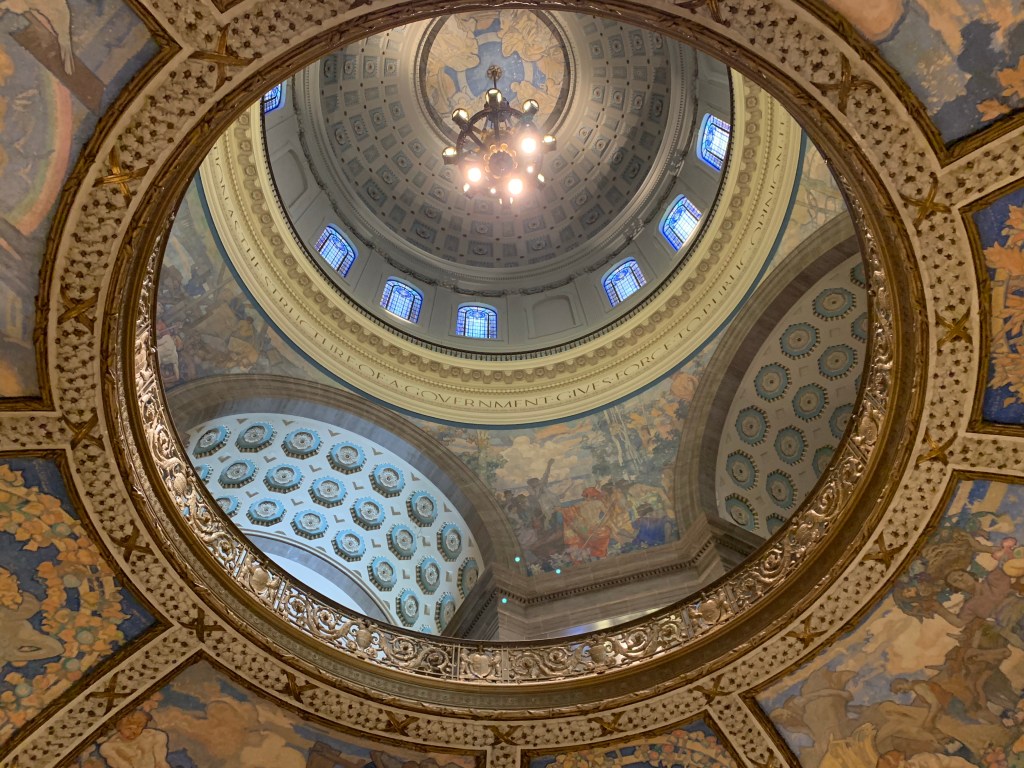
It took us a while to find an entrance, but it was indeed open, despite the appearance. And as a classically designed state capital, it has a stunning interior with an unusual double dome.

It also has the piano setting of my dreams, tucked under a magnificent marble staircase. The acoustics must be stunning.

Every state capital celebrates the important people of its state, and Missouri is no different. It has quite a few! With Scot Joplin, Carrie Nation and General Omar Bradley as examples, Missouri considers its citizens its most valuable resource.

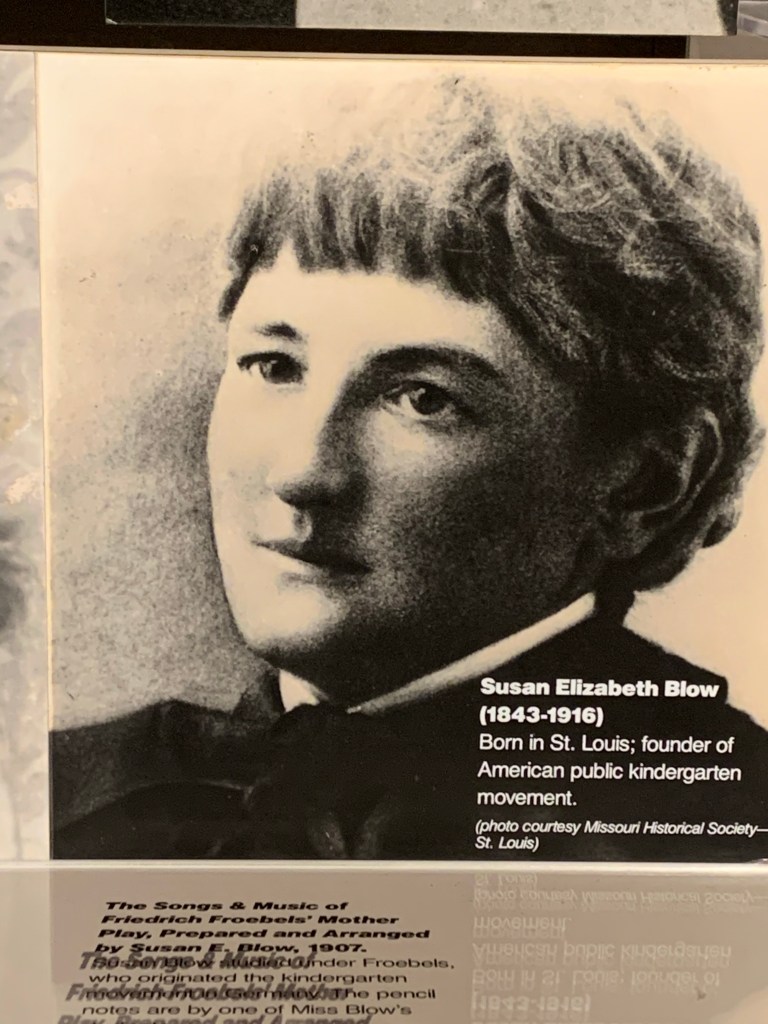
Of all of these folk, I was most intrigued by someone I didn’t know. I’d never heard of Susan Elizabeth Blow, but I consider her work as founder of the American kindergarten movement one of the most important contributions ever made to education in the United States.

On to Kansas, and Monument Rocks, recently named one of the 8 Natural Wonders of Kansas!

Rain, Rain, Go Away

As we wrap up our trip, you might have noticed that the itinerary I outlined in my first entry for this trip isn’t what we’ve been doing ever since we headed east. As it turned out, Route 120 leaving the San Francisco area was still snowed in and closed to traffic, which forced us to take a more northern route home. While this negated our seeing some exciting national parks, we saw some other beautiful landscapes, especially following I-70 through Utah.

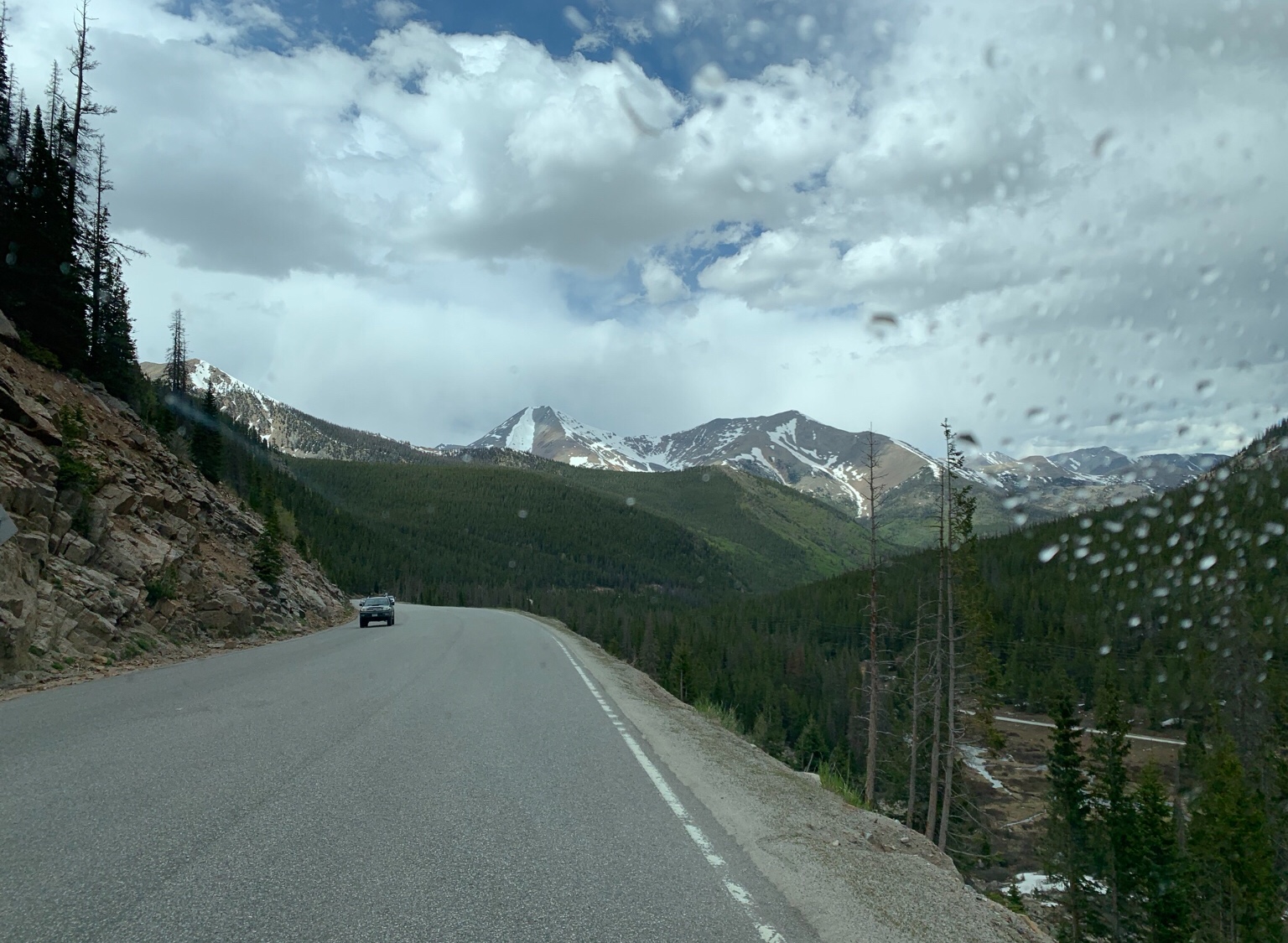
And it was exciting to go over Monarch Pass again, although that was the beginning of our wet weather.

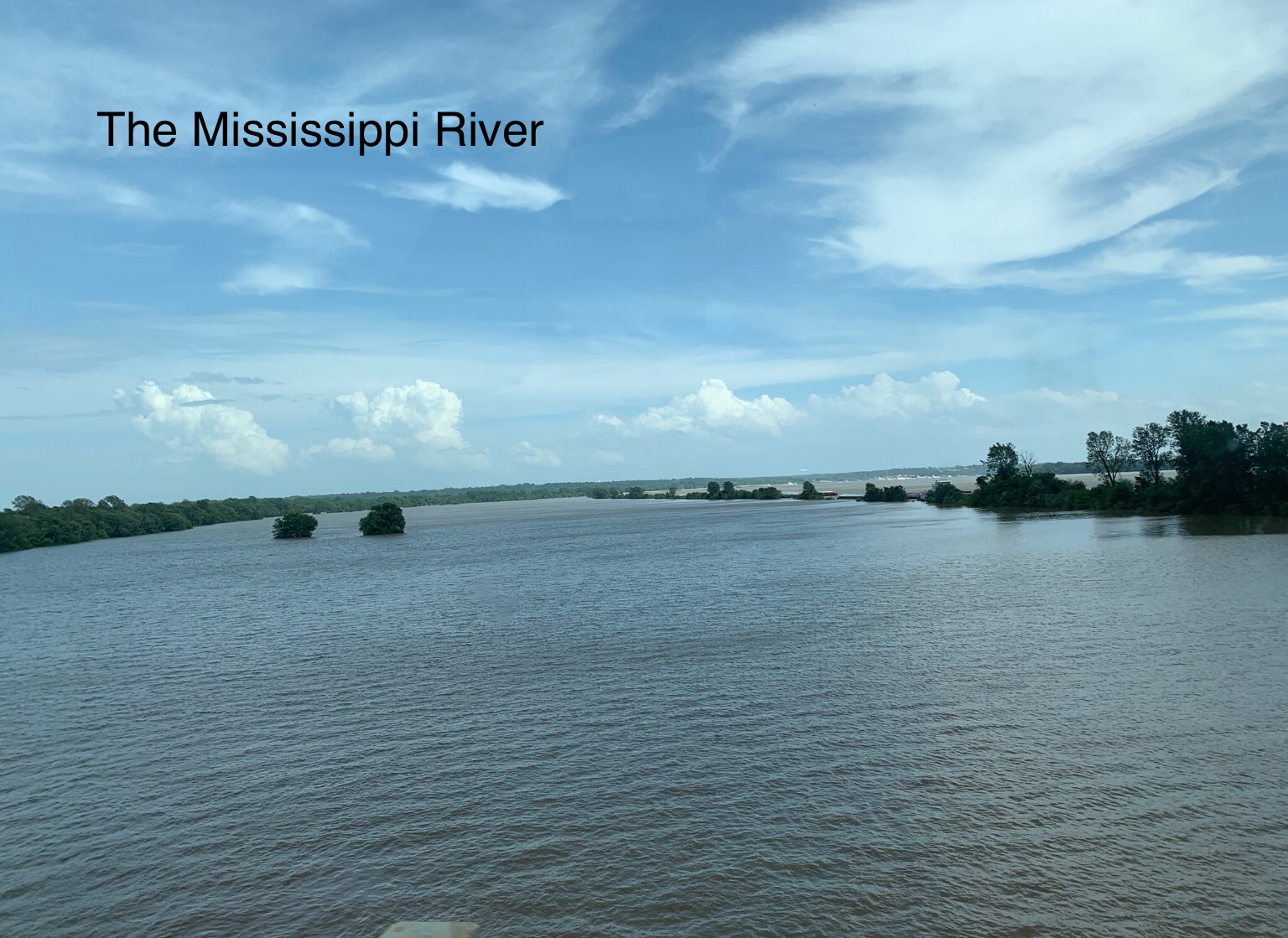
Since that time rain has been a force to be reckoned with, starting with a nagging presence that spattered the windshield when cars and trucks passed to flooded rivers…

…to flooded rivers that forced us to detour…

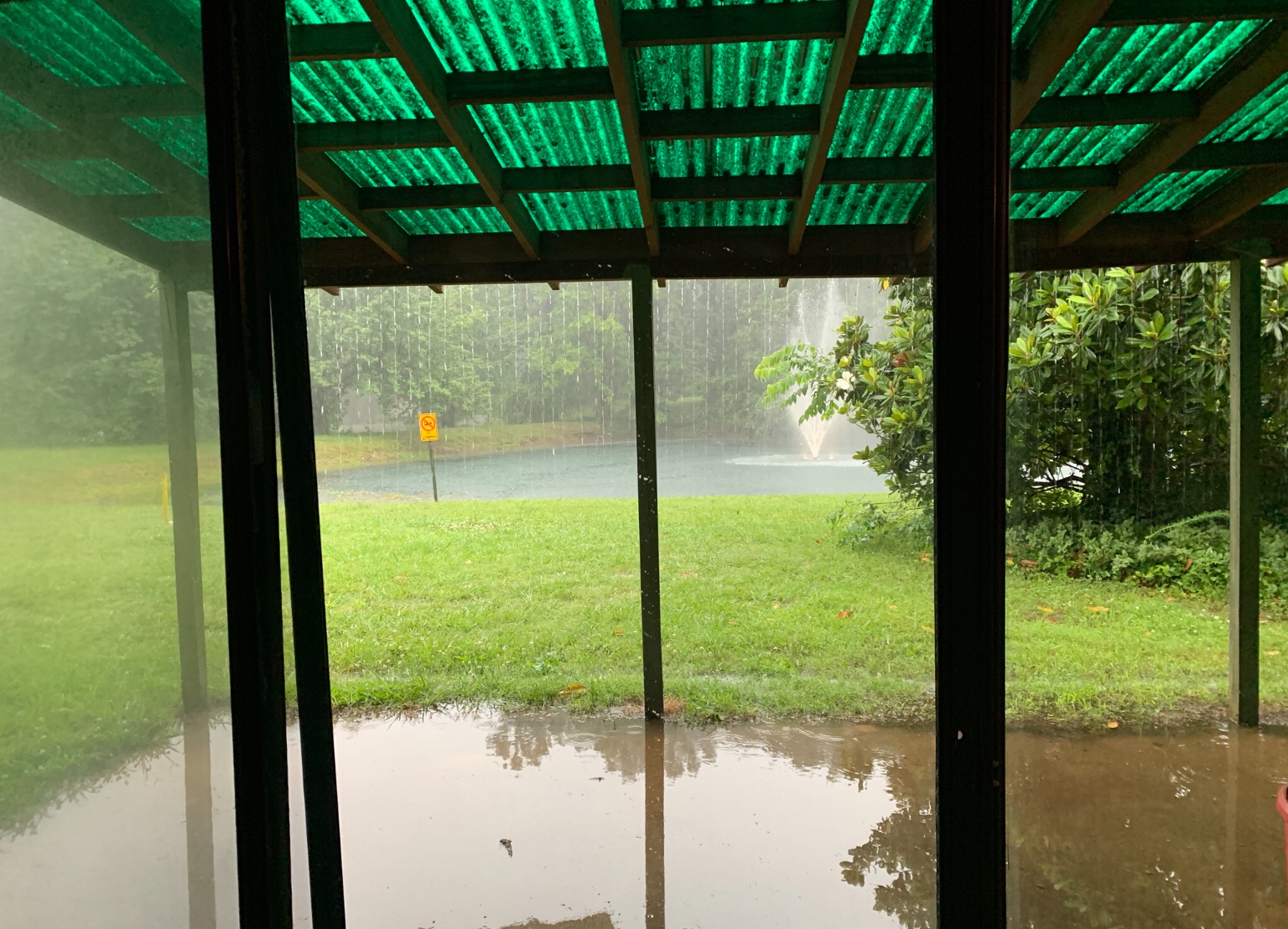
… to dodging major wind and downpours in Kentucky for an entire day, only to find ourselves hovering in the basement of our campground office building that evening as a tornado warning was in effect. The picture below doesn’t capture the heavy winds, driving rain we all watched, hoping the house wouldn’t be blown away—or us!

Nevertheless it’s been a wonderful trip. We’ll be home tomorrow and we’re ready to return to our normal routines, to our family and friends and to our music. Thanks for all your comments along the way. It’s been great fun sharing it all with you.

China Camp

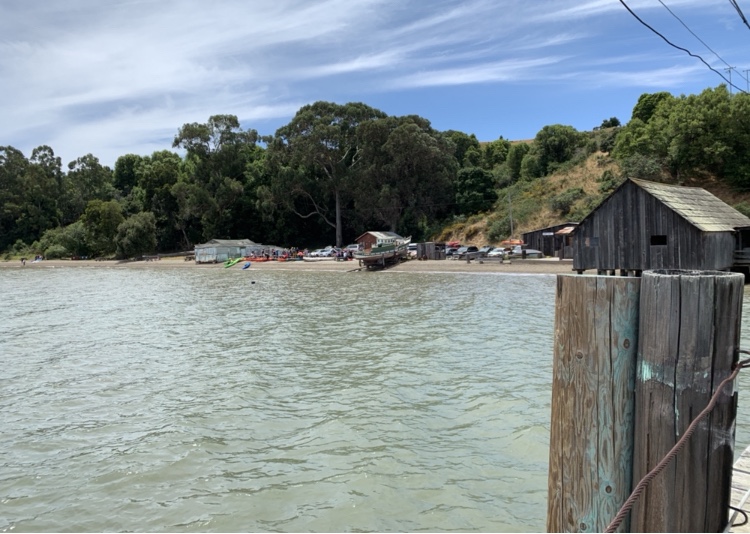
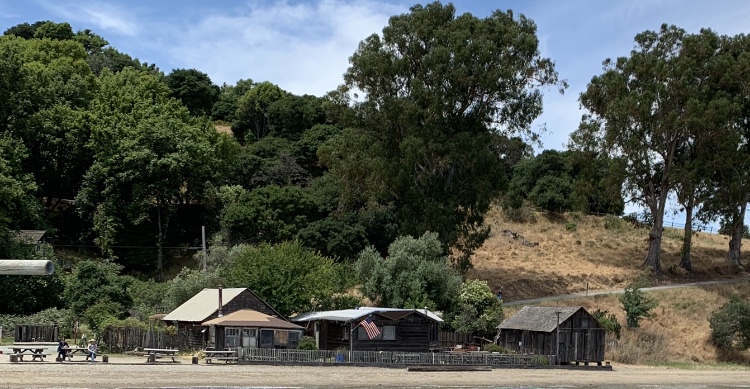
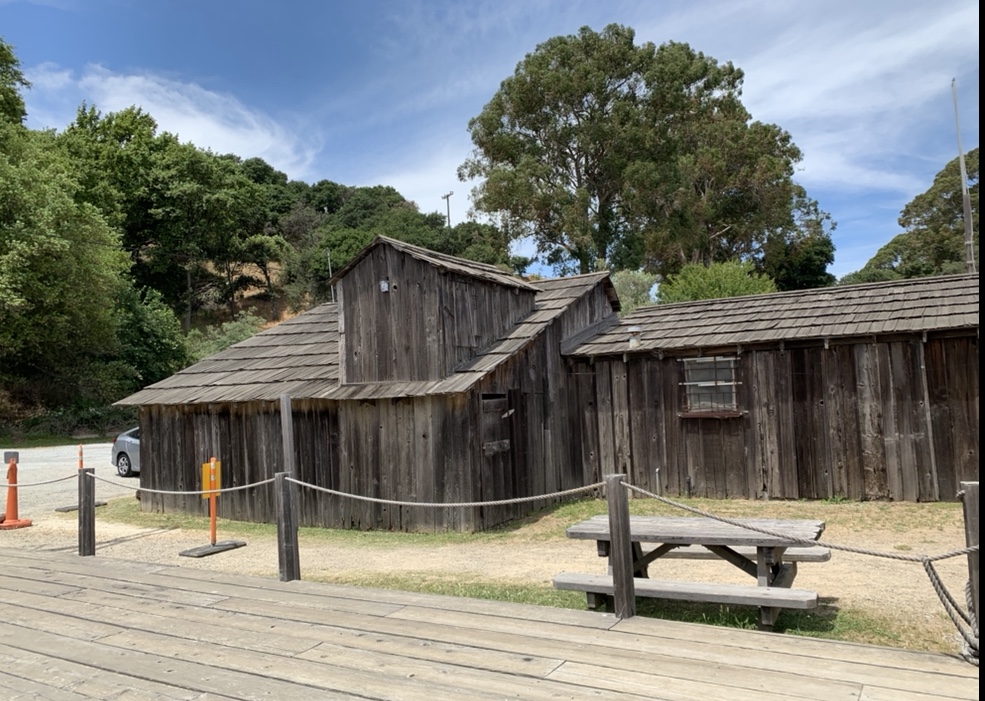
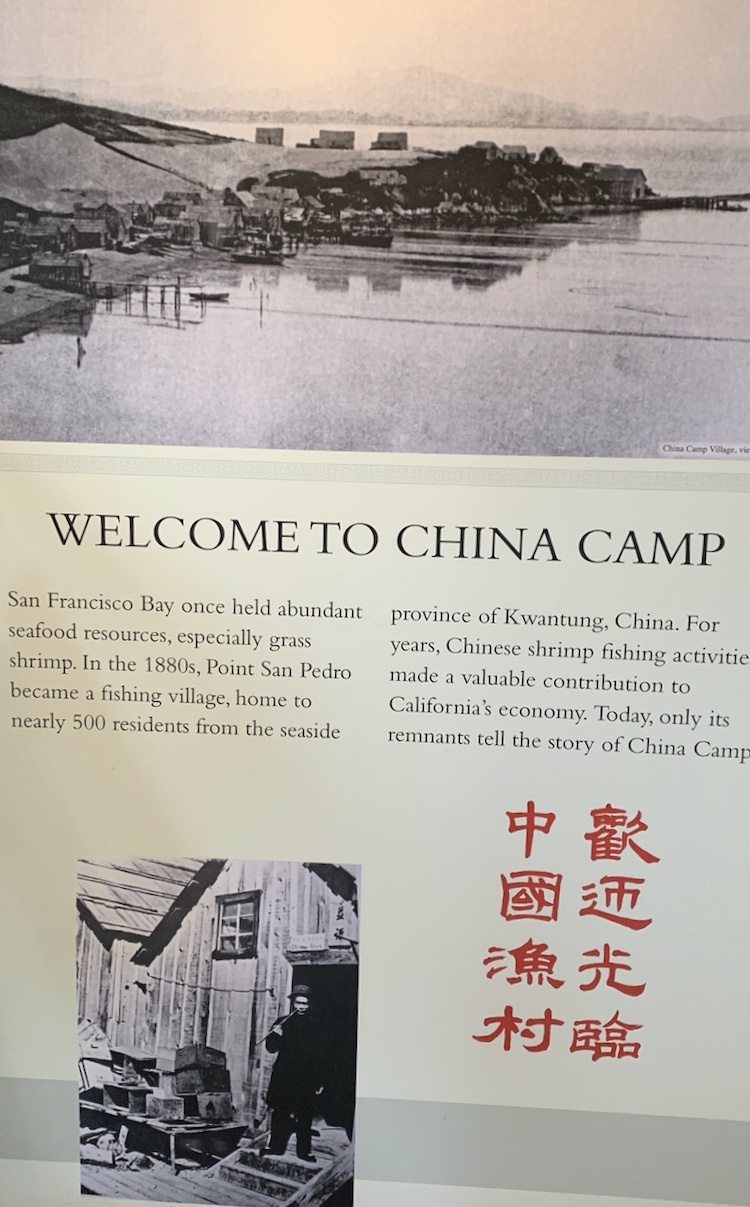
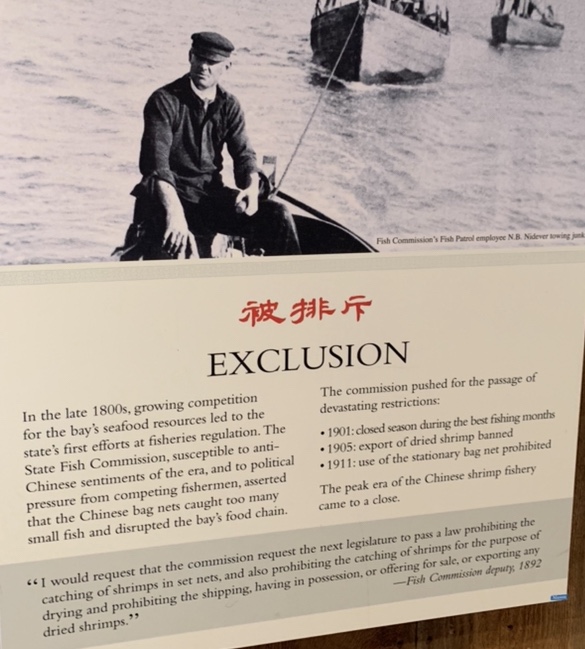
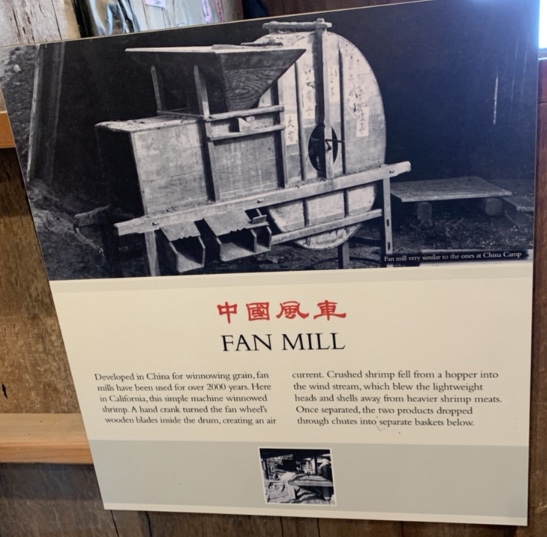
Before leaving San Rafael, our family took us to visit China Camp State Park, a favorite place of theirs for running and biking. This park captures the history of a group of Chinese Americans who supported themselves primarily by shrimp fishing in San Pablo Bay. In its heyday in the 1880s, about 500 Chinese Americans lived in the the village which had three general stores, a marine supply store and a barber shop. China Camp was one of approximately 26 such shrimp-fishing villages established along the coast by Chinese Americans, many of whom had moved from San Francisco to escape racial prejudice and persecution. Below is what remains of China Camp.

In the late 1800s, the Chinese American fishermen of China Camp would catch 3 million pounds of shrimp per year, much of which was exported to China and Hawaii. However, the economy of the village was severely harmed by the passage of laws in the early 1900s that outlawed the export of shrimp, closed the height of the shrimping season, and prohibited shrimping with bag nets which were the main method of catching shrimp. As a result, the population of China Camp greatly declined, leaving only one family — the Quans — carrying on shrimp fishing.

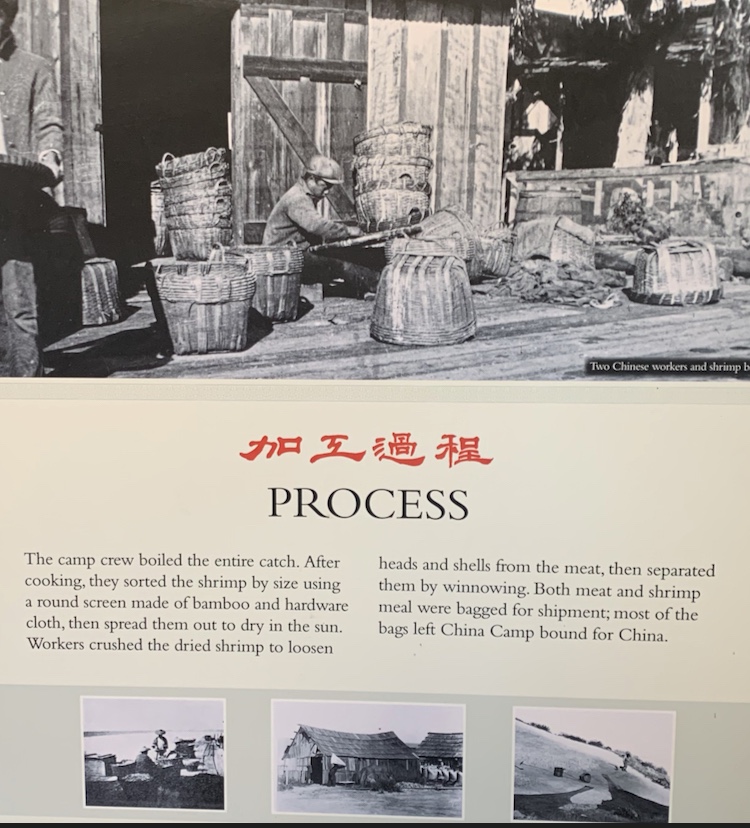
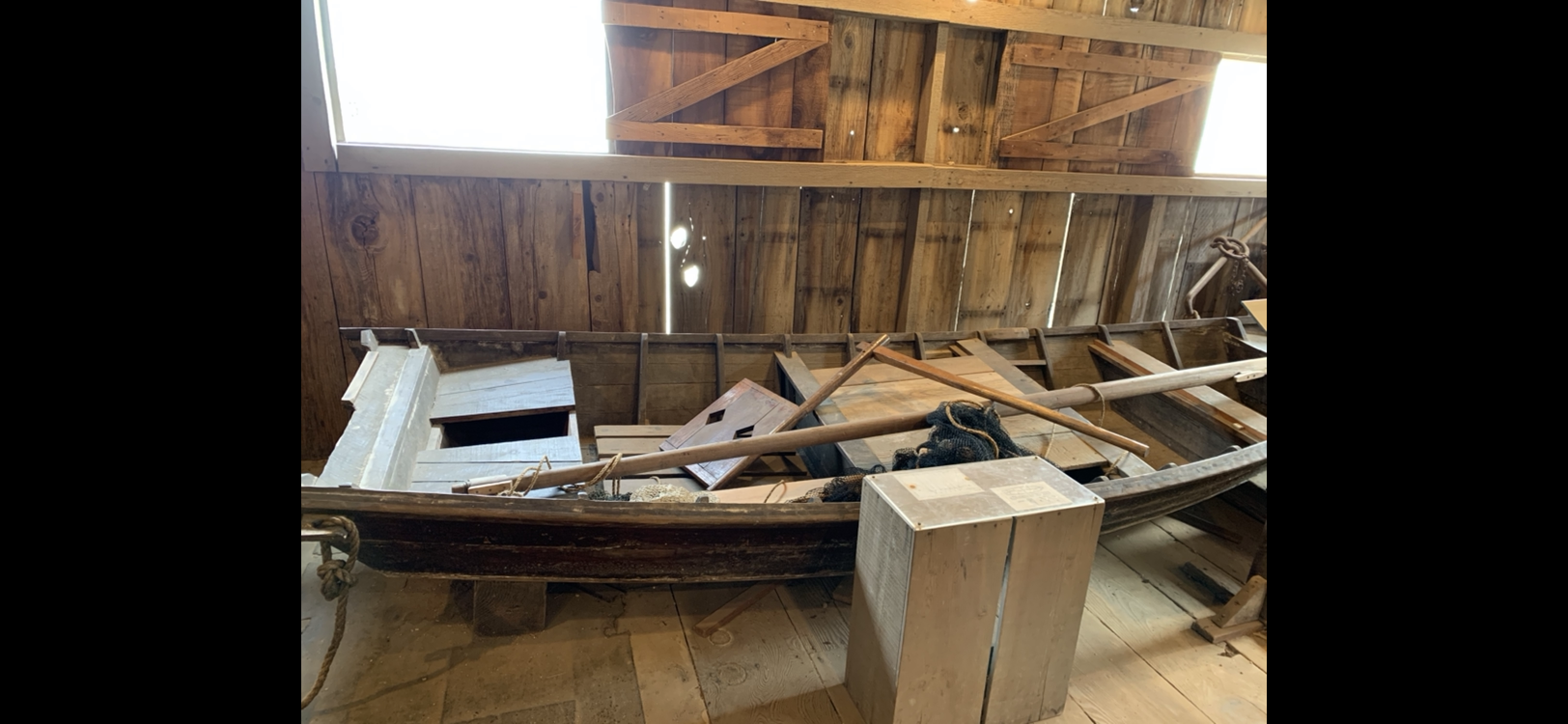
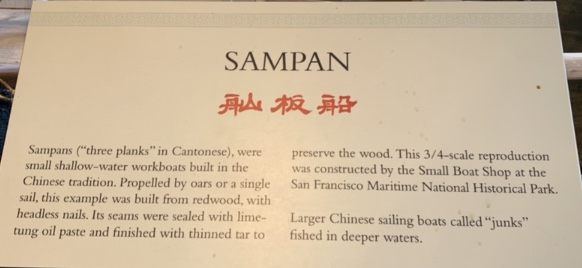
One of the buildings holds a museum which has a number of exhibits about this remarkable and nearly forgotten history.

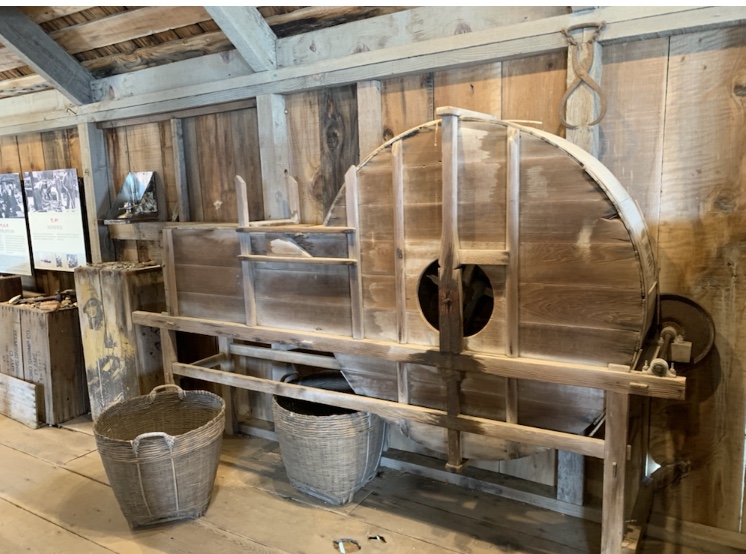
A huge oven for drying the shrimp also remains.

Fortunately, in 1914 a new net, the trawl, was invented, which made it possible for the Quans to resume their commercial shrimp fishing enterprise and process 5,000 pounds of shrimp per day. The Quan family has remained since and a member of the family recently did in 20 16 at the age of 90.

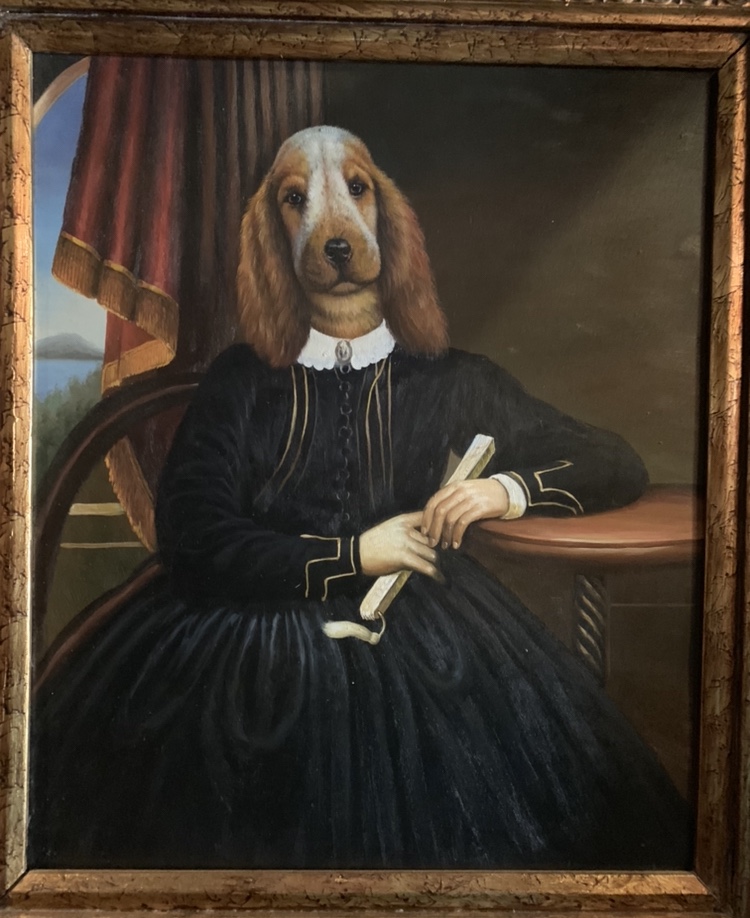
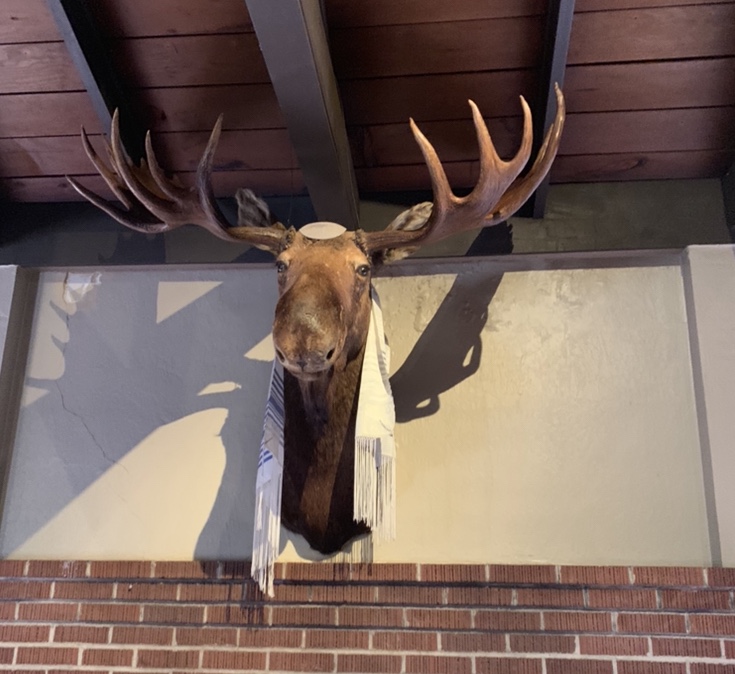
It was a beautiful day for visiting the park and bay, and on our way back home we stopped at a Pub whose owner (or decorator) had a delightful sense of humor. Great day!

How the Movie Industry Saved the Trains in Nevada

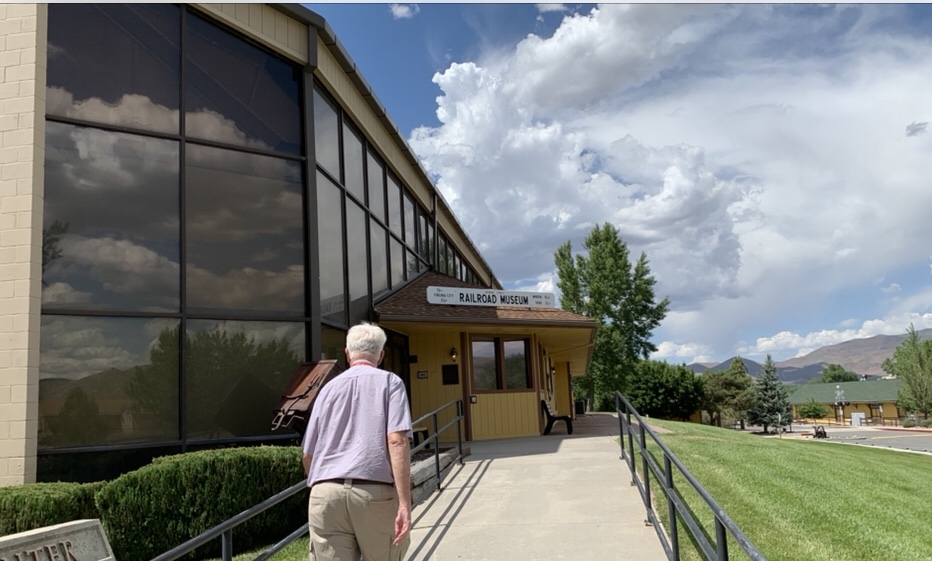
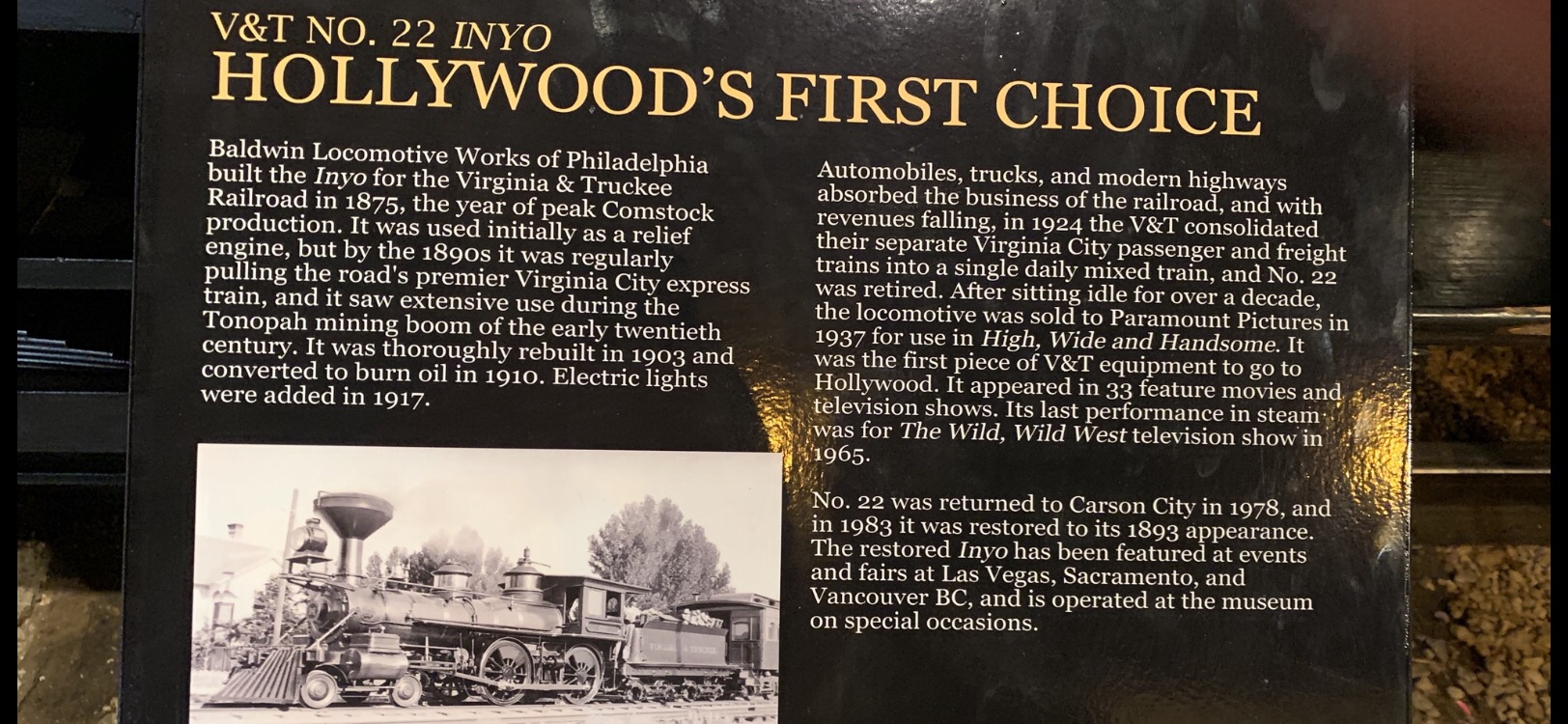
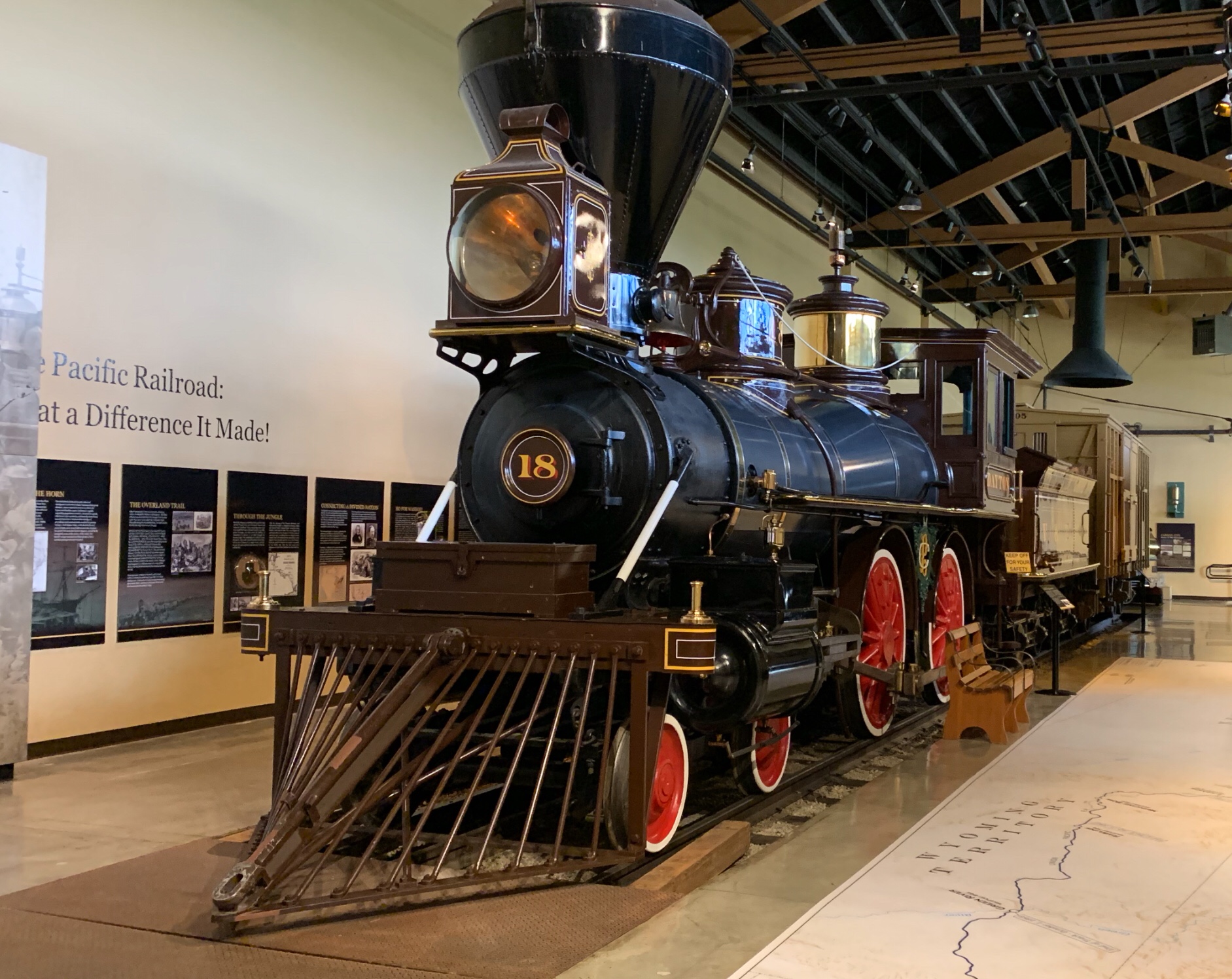
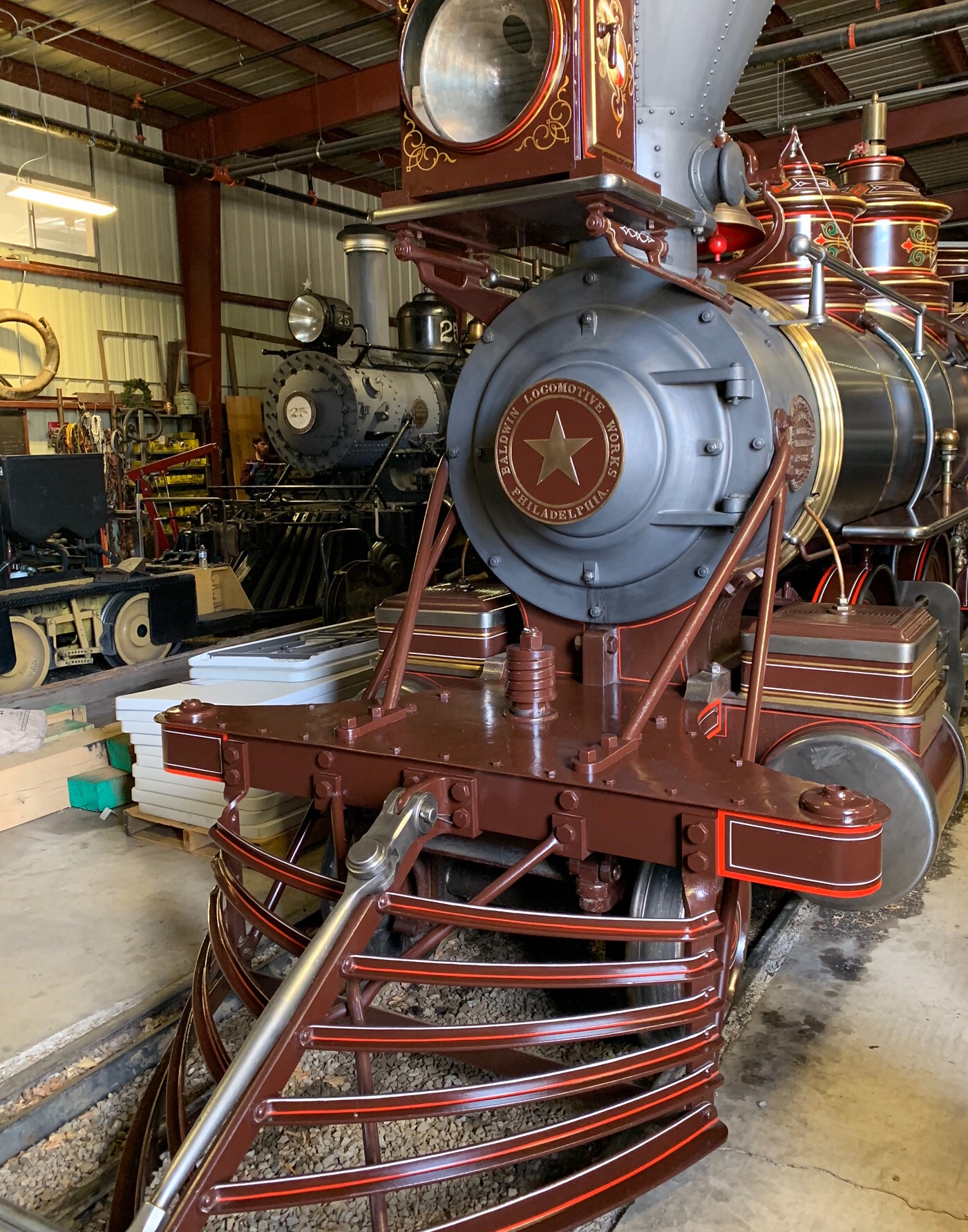
Visiting the Nevada State Railroad Museum, we discovered that Nevada had a major boom in the building of railroads throughout the state in the mid 1800’s, along with the engines and cars that traveled the tracks. But with the development of the automobile industry, the golden age of railroads rapidly came to an end, and many of these railroad cars fell into disrepair. So when the Western film craze took off in the mid 1900’s, a few of these found new life in Hollywood films. One of them is beautifully restored and in a place of honor in this museum in Carson City, Nevada.

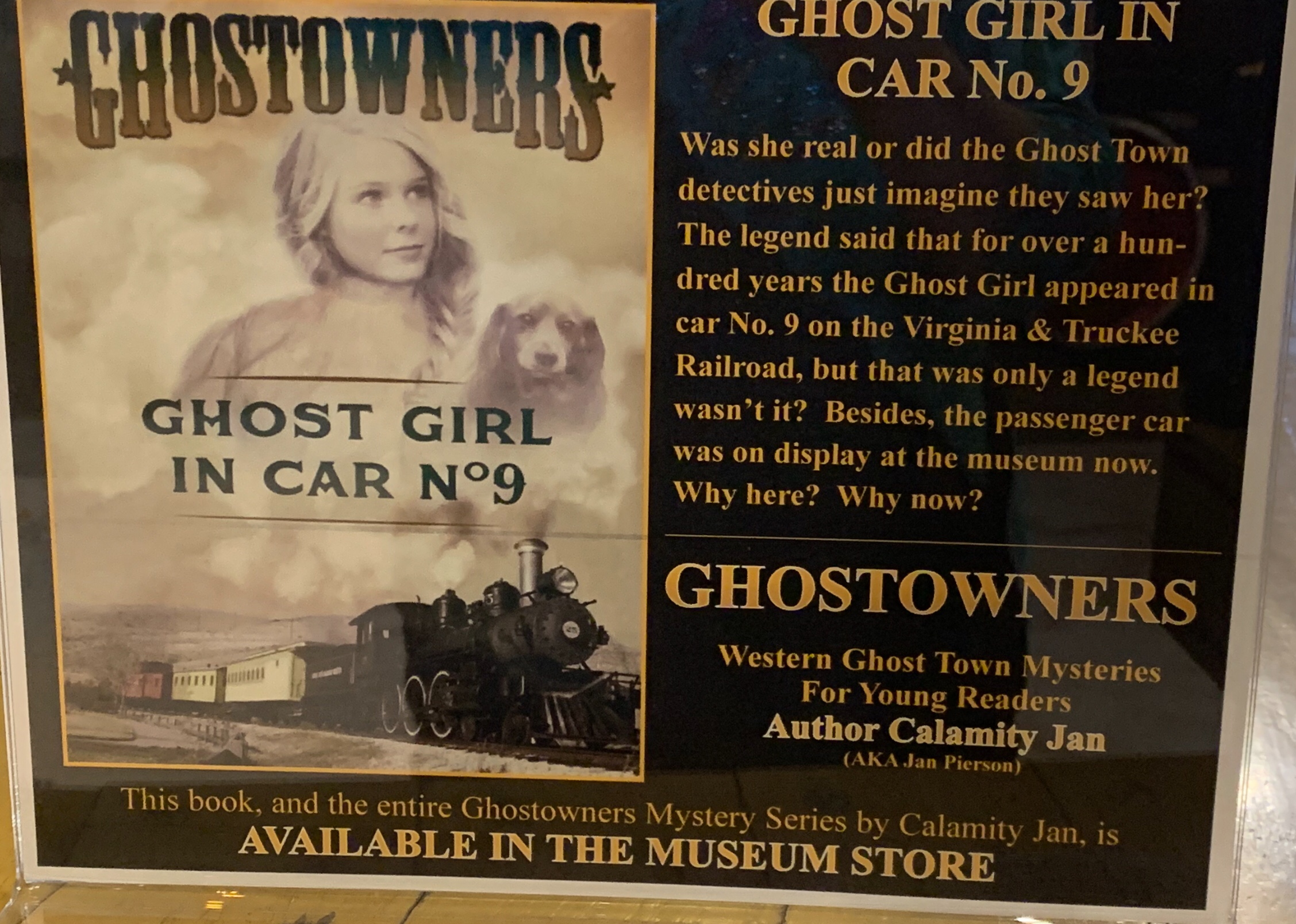
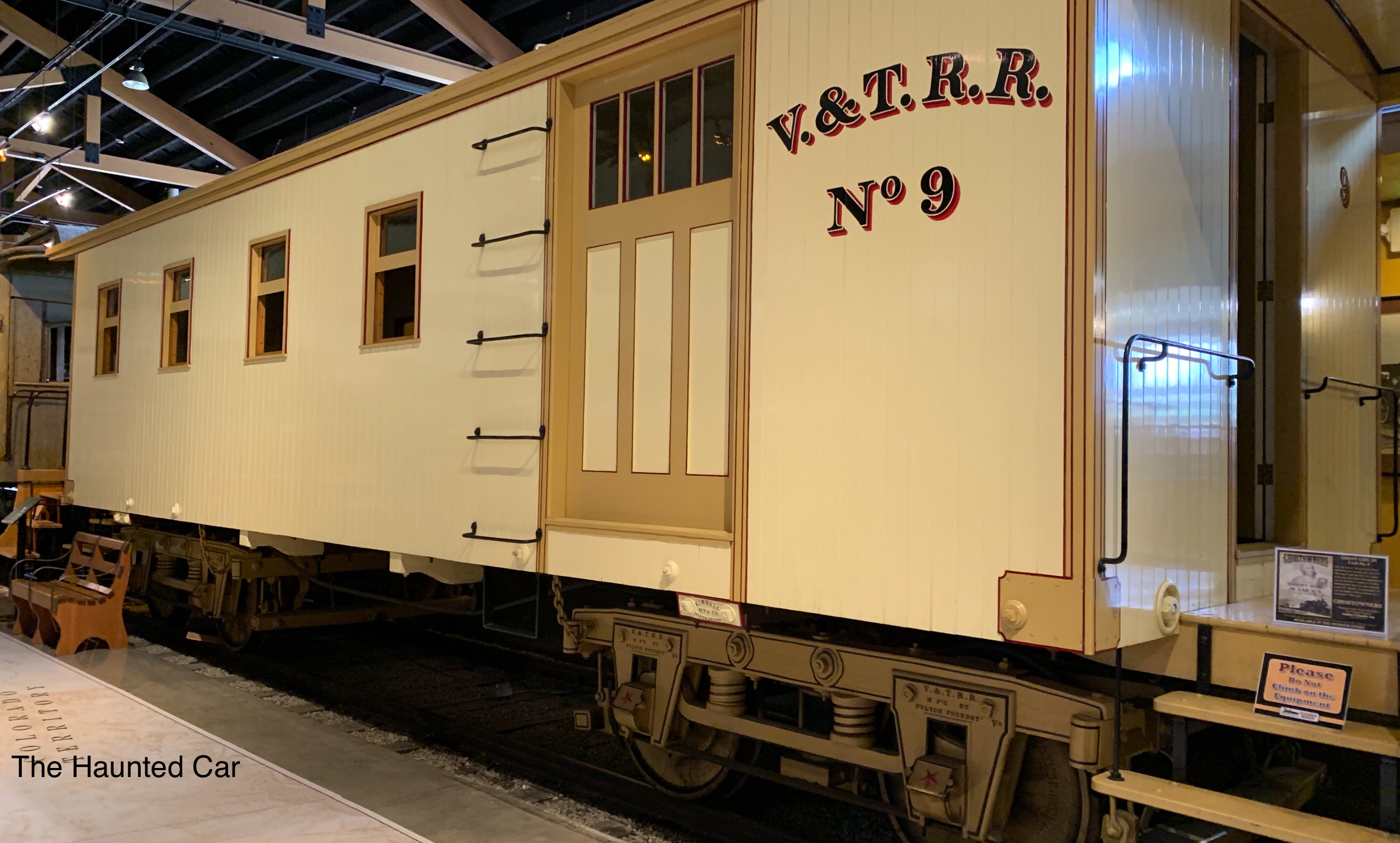
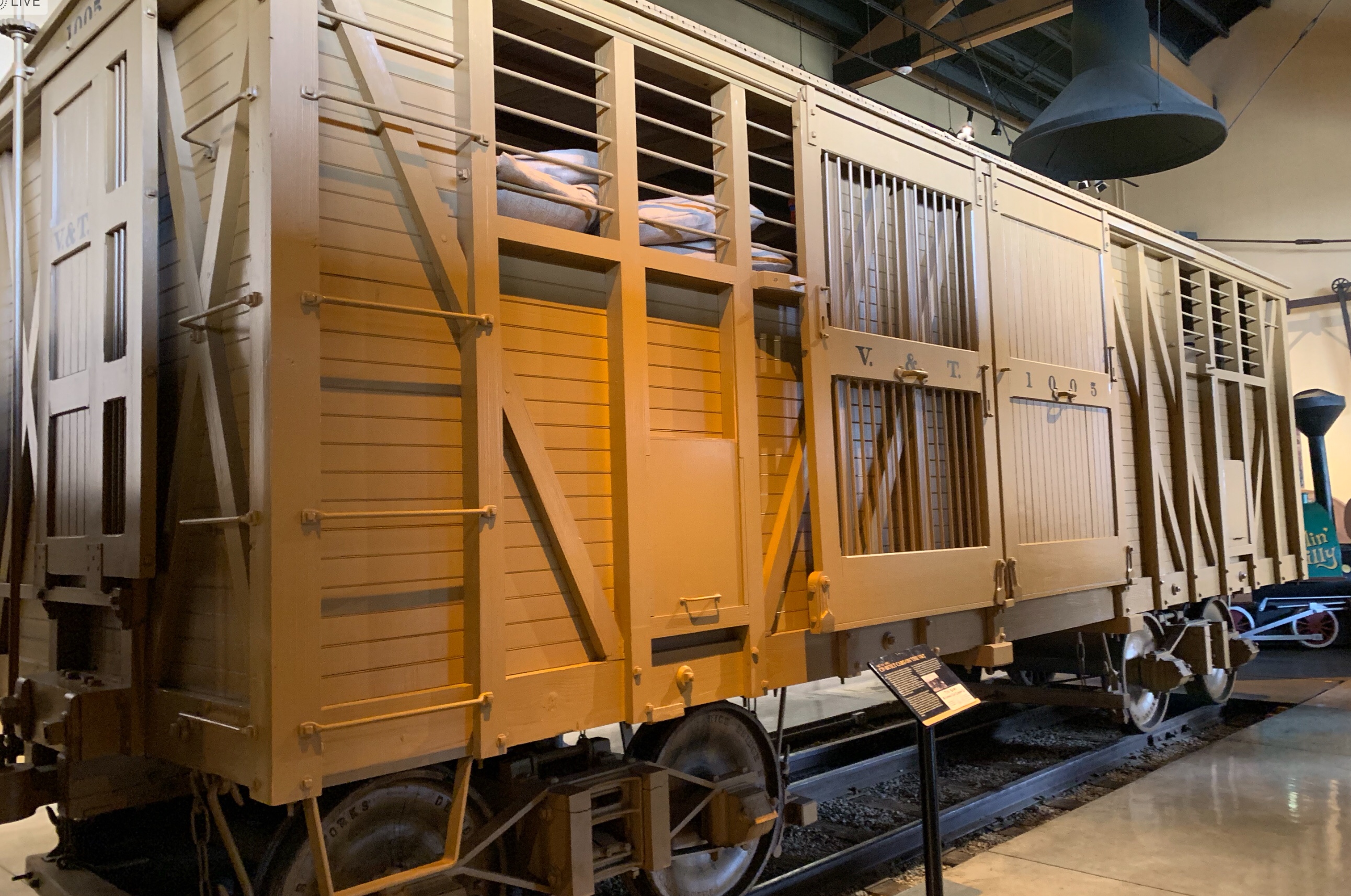
Next to it is a railroad car with a legacy (fictional or not?) of being haunted.

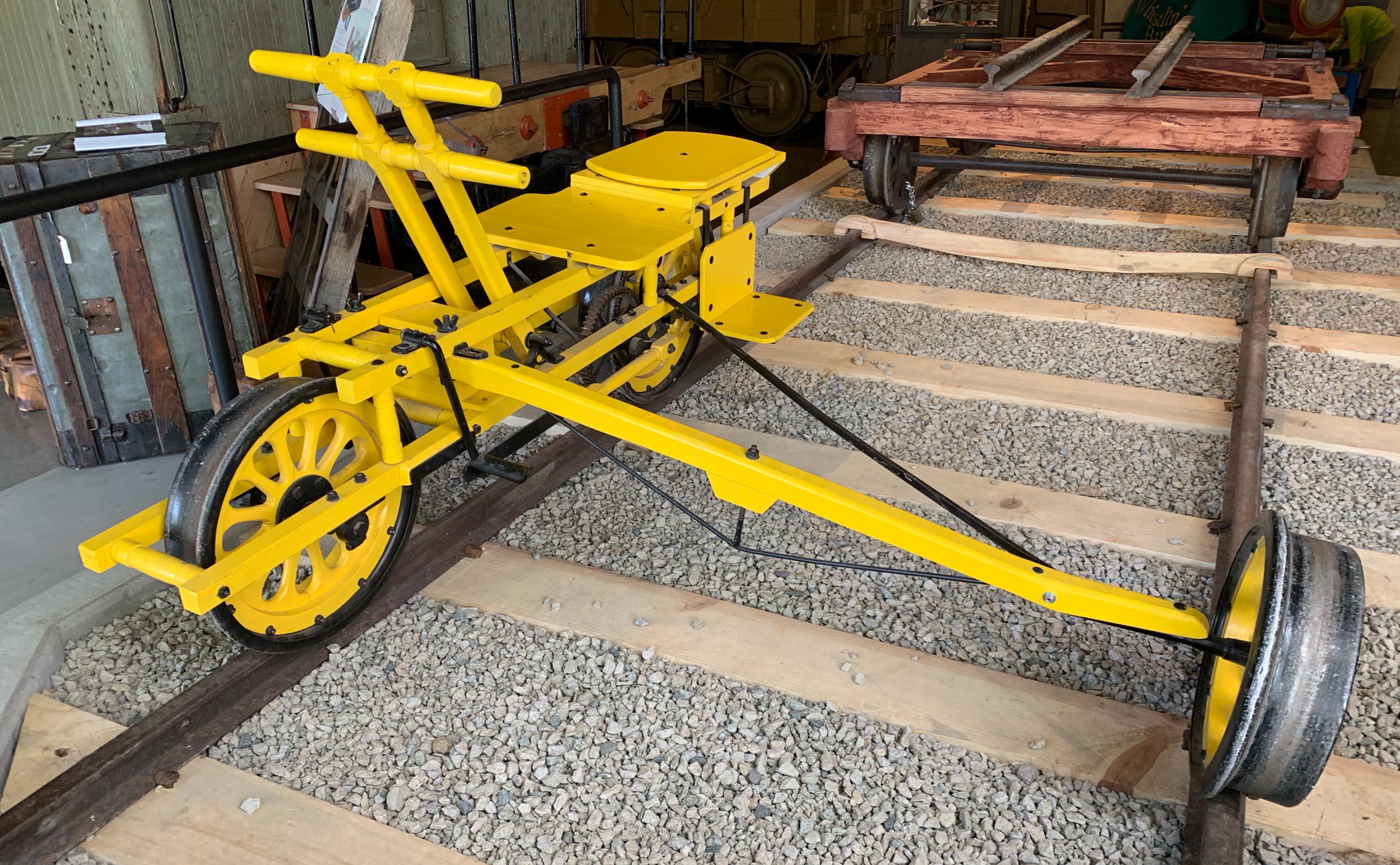
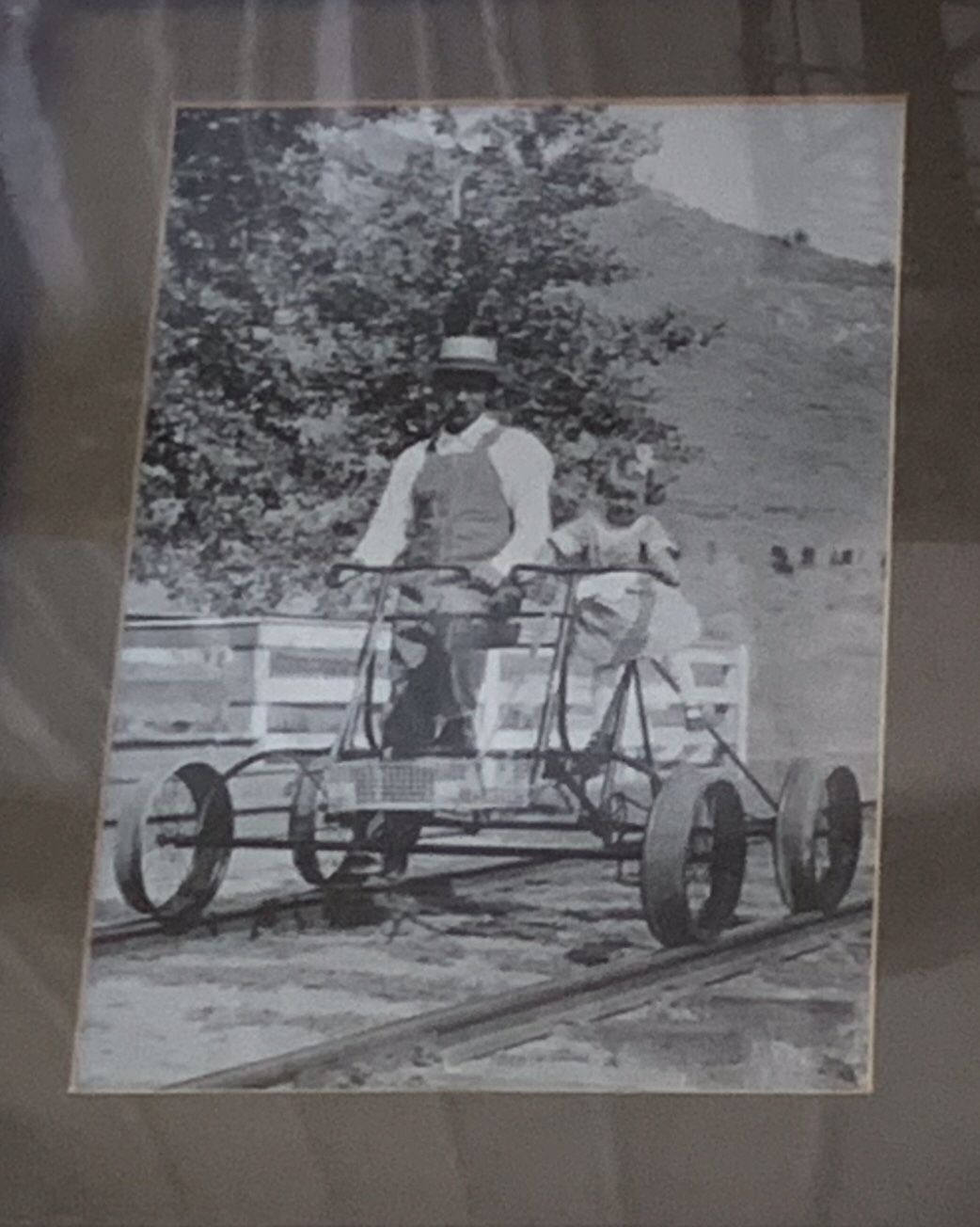
Other unique vehicles are on display in this museum.

And there were many others which represented the wide variety of railroad cars that were used and the high quality of their construction. It was a glimpse into a very different time. Amtrak, please take notice!