Monster Montreal Molasses

Despite the fact that Canada is known for its maple sugar and maple syrup, the title of this post does NOT refer to our sweet experiences in Montreal but instead to its traffic. It is monstrously congested and it moves like molasses. After negotiating Ottawa with relative ease by motorcycle and managing to find some robustly scenic routes, we had high hopes for Montreal. Wrong.

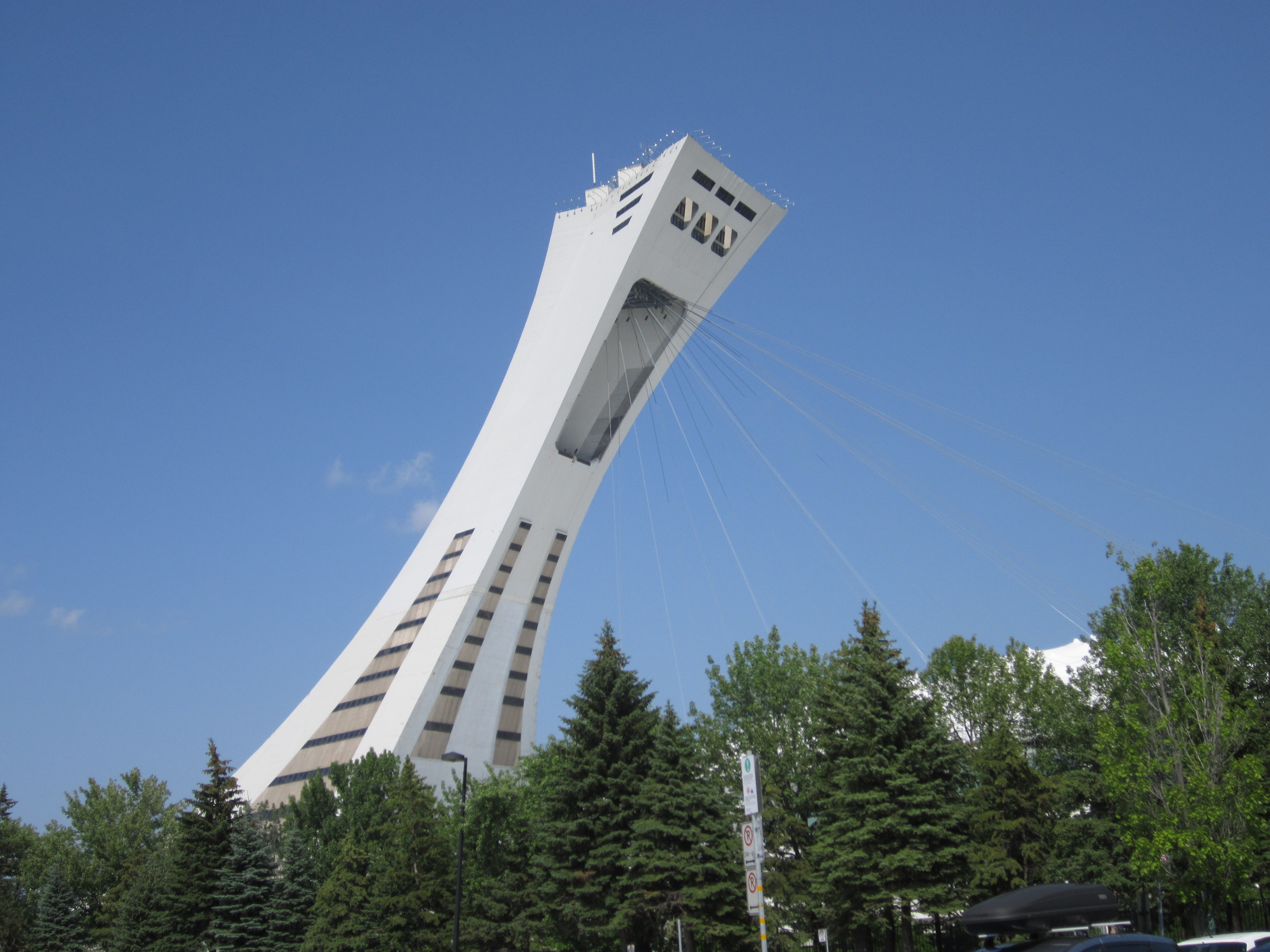
Our afternoon tour of the city began well enough with a fairly rapid entry to the east side of town, aiming for the 1967 Olympic Village. It’s impossible to miss miles away even across the St. Lawrence River, with its massive stadium rooftop removing Montreal Tower (see below) hovering over the huge park that encompasses what was once part of the Olympic Village. It is the world’s tallest inclined tower at 574 feet.
IMG_2192

The tower is impressive, even if it’s performance has been less than stellar. For me, it highlights that Montreal, aside from being a major center of commerce and culture for Canada, as well as home to several highly-regarded universities, is consummately a city designed for athletic endeavors. Aside from the Olympic Games, it hosts marathons and triathlons on its lovely winding roadways, as well as international and national road races on a world-class race track. Its streets are covered with cyclists and runners, and it even has an island that appears to be dedicated to all these sports. If its traffic could move as fast as its cyclists or even its runners, it would really be a city on the move.

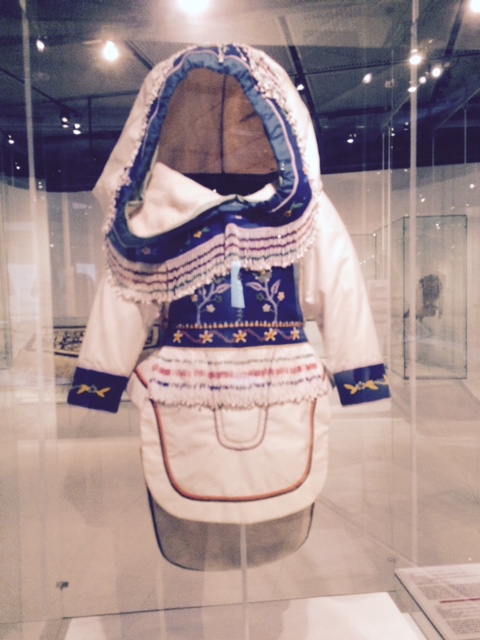
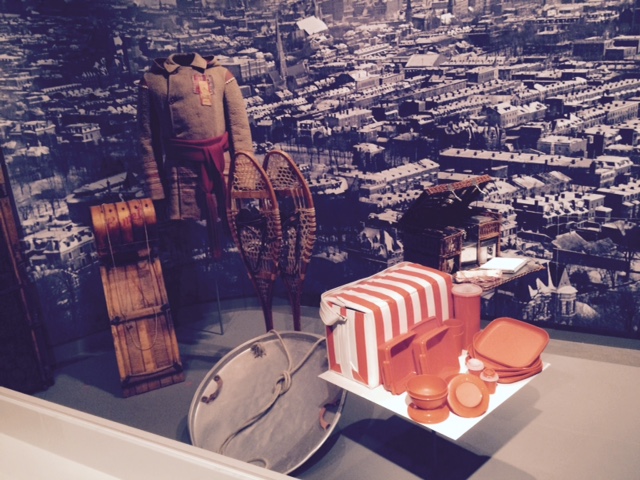
Instead, from the tower we crawled along Sherbrooke down into the center of town to find McGill University and the McCord Museum, a small museum that covers Montreal’s heritage and history, with equal attention paid to the First People’s contributions as well as its builders of commercial dominance. Throughout the museum, there was a theme of clothing that people wore throughout the different eras of Montreal’s history.
FullSizeRender-1

Representative items from Montreal’s history

FullSizeRender-4

1920’s Dress

FullSizeRender-2

Inuit Parka

FullSizeRender

Chief’s Ceremonial Dress

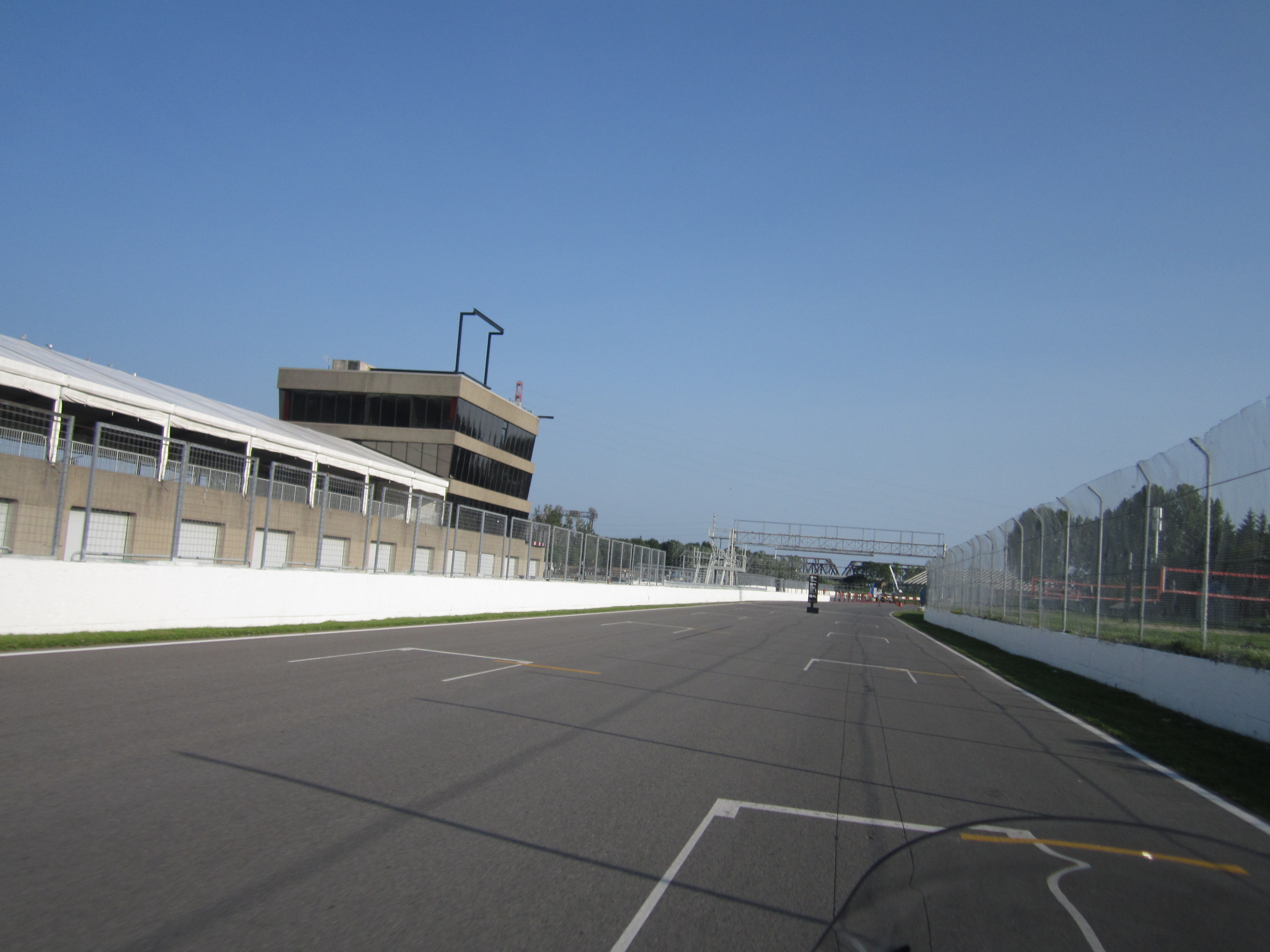
We emerged from the museum just in time to experience Montreal’s rush hour traffic, and spent the next half hour moving about a mile that finally brought us to Montreal’s racetrack island. The Circuit Gilles Villeneuve is located on Notre Dame Island and is most noted (for us) to be the Montreal home of the Formula One Canadian Grand Prix. This was Roger’s first opportunity to actually drive a vehicle around a racetrack course, and he enjoyed every minute of it. Fortunately, we were dodging other cyclists and skateboard riders (or perhaps they were dodging us) instead of little insect-looking cars going 200 mph. Even without the crowds and the obnoxiously loud muffler-less cars whizzing by, there was still a feeling excitement emanating from the road. It was a super natural high.
IMG_2206

After that, the detours and construction and missing signs that added about 30 km to our original trip home and the delays of crawling traffic sucked the joy out of Montreal. We were truly bedraggled when we got back to our campsite, whipped but at least in one piece. I think we forgot to eat dinner, but at least we slept well.
Ottawa-a Capital City

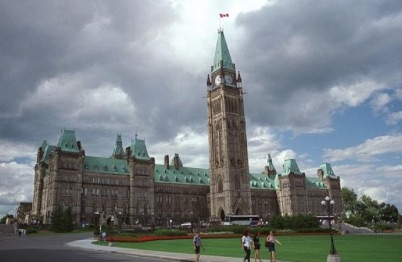
Fifteen years, we breezed through Ottawa on our way to my 55th birthday celebration with my family at Blaney Park, Michigan, where I’d celebrated my 5th birthday. We were on a two-wheel motorcycle then, and I remember how awesome the Parliameny building was, and how beautiful the gardens on the lawn extending down to the Ottawa River.

Ottawa Parliament

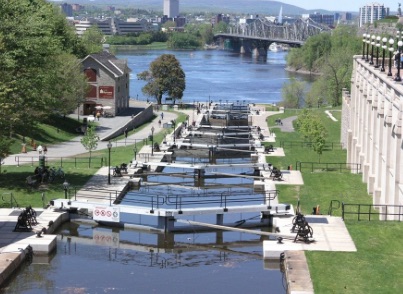
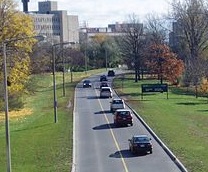
Today’s Ottawa was full of anticipation for the Pan-American Games that would start at the end of the week. We arrived in time to set up camp in Camp Hither Hills, about 12 km south of Ottawa, unloaded the Spyder and headed for Parliament Hill. The plaza in front of Parliament was filled with demonstrators and there was a strong police presence which slowed traffic to a crawl, so we headed to the next thing on our tour list, the Rideau Falls and Canal. Ottawa has maximized the beauty afforded by the canal that was built alongside the Rideau River on its way to the falls where it joins the Ottawa River by building parkways on either side of the canal and creating a lovely space for bikers, walkers, roller-bladers and a scenic motorcycle ride through lucious plantings. We started with a visit to the Rideau Falls and rode inland along Colonel By Parkway to the end of the canal near the University of Carleton where the Rideau River enters it. Unfortunately there were no parking areas along the parkway so that we could examine the locks, but the weather was perfect and the ride memorable.

IMG_2171

Rideau Falls

Rideau Canal

Rideau Canal

Colonel By Parkway

Colonel By Parkway

Afterwards we found a delightful Greek restaurant for a meal of lemon soup, Greek salad and spanokapita, just as good as any Greektown meal in Detroit. Canada has many ethnic groups represented in its population, especially its larger cities, and the dining options are awesome. We arrived back at the campground just before a rain storm moved in and enjoyed sleeping that night with the periodic patter of rain on the roof. By morning it was gone and we headed for Montreal under sunny skies.

Time Out For Lessons Learned

I know that some of you have been looking forward to a new post each day, which is generally my modus operandi on my US travels. I knew I would have a different challenge spending a solid two weeks in Canada, and I thought I had prepared for that by purchasing a temporary global plan for my cellphone account. Wrong.

The global plan I purchased provided 100 minutes and 100 text messages plus 100 mb of data for $15. While the minutes and texts are well beyond my normal use even while at home, the 100 mb of data lasted for about 100 minutes. By the end of that first day I’d already received a friendly text message from Verizon telling me that I’d gone over that limit and would be a charged another $10 for another 100 mb of data. And just about every day, I’ve received the same thoughtful reminder.

So this is what I’ve learned:

1) If you’re traveling outside the US, it’s a good time to try to go without cellular data. Nada. Zilch. Drop out of sight and off the planet. Alas, for me it was like cold turkey withdrawal from any addictive drug, and I sadly admit I find it impossible. Especially when you’re trying to keep up a daily blog. But if you want to try it, just go into Cellular Data in Settings and turn it off. Poof, you’re gone.

2) If you can’t withdraw (like me), you can diminish your use of your own cellular data, by turning off cellular data for all the apps you have permitted to use cellular data in the US, and only leave on for the critical minimum, like Mail and Google and Messages. Again, go into Cellular Data under Settings, and instead of turning Cellular Data off, scroll down and turn off individually each of the apps you don’t want to be eating up your data. It takes a few minutes if you have a lot of apps, but it’s time well spent.

3) The next alternative is to use someone else’s data as much as possible. Both Starbucks and Tim Horton’s are pretty dependable for always having free wireless available. I’m sure there are others, and the concept is the same. The one place I thought I could depend on for a free wireless signal would be our campgrounds, but those prove to be the most chancy. They say they offer wireless (some even charge for it) but whether or not you can actually connect is a gamble. I’m writing this post sitting at a campground in Woodstock, New Brunswick, and I’m doubtful that it will really work long enough for me to publish this post when I’m finished. So scout our vendors that seem to be consistently available and patronize them. For us, it requires a shift in our travel style, i.e. to set aside time each day to sit in a Starbucks or Tim Horton’s, but we’re getting used to it (and drinking a lot more coffee.)

4) Last lesson learned: download as much as possible of the apps or books or documents you think you’ll need BEFORE leaving the country. When I called Verizon to try to figure out what I was doing wrong, I learned that ALL the data I was using were incurring roaming charges, which is why they’re so expensive. This afternoon we stopped in Edmundston, New Brunswick to look at Madawaska, Maine, across the St. John’s River. I stared longingly at that side of the river, knowing I still had a good 9 GB of data available to me there, all of it paid for. That’s like 9,000 MB, which at $10/100 MB…well, you do the math. Aaaargh!

I’ve made peace with the fact that I’ll likely incur close to $100 of data charges I hadn’t anticipated. And I’ve leaned not to check Google with EVERY question that arises as we travel along. Fortunately I bought a Michelin’s Canada before I left, and it’s amazing how much information it has. And I’ve also realized that I won’t necessarily be able to add posts to this blog as often as I’d like to. So if I’ve learned to be patient, I hope you can too. If you have a problem with that, you can always text me. I’ve still got at least 90 free texts that I’d like to use up.

Toronto

Leaving London, our first stop was one of the many helpful tourist information offices, identified by the huge white question mark on a blue sign. We were helped by a super-friendly young woman who, in addition to giving us a welcome “unity pin” showing the Canadian and US flags together, provided us with Ontario information, and also conveyed some of the high points of the local Brantford history. The most notable was the stilts used by Doug Hunt, a local resident, to set two world records for the most independent steps (29) taken on the tallest (50 ft, 9 in) and heaviest (137 pounds) stilts unaided by any safety lines. The picture below is hard to understand until you find the boots in the right side of the picture.  The stilts are hanging from the ceiling over the entrance corridor to the visitor center, and were constructed from sailboat masts. I was duly impressed.

IMG_0230 IMG_0238

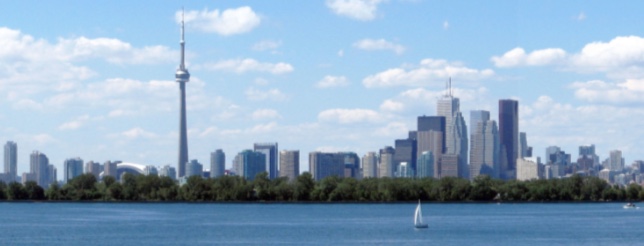
Our maps took us into Toronto, which is the largest city in Canada. With over 6 million people, it definitely had a New York City feeling to it, except that the huge skyscrapers were all quite new, so it reminded me also of cities like Dallas and Atlanta. It’s dominated by the CN Tower which, at 180 stories, is the tallest free-standing structure in North America. You can be “beamed up” in 58 seconds to the viewing deck in a glass elevator. We appreciated it from a distance.

Toronto Skyline

London on the Thames…in Ontario

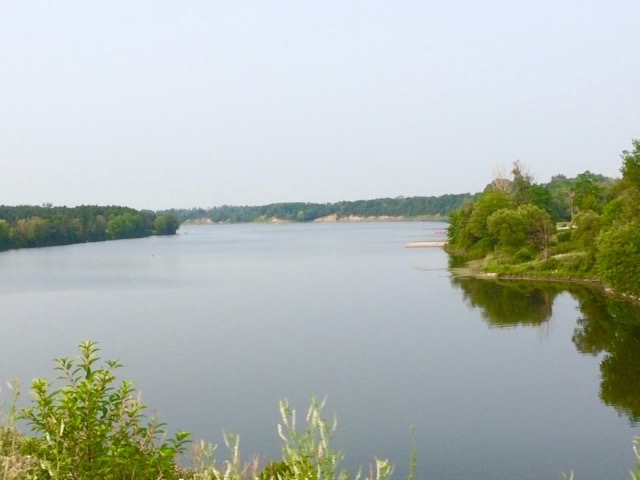
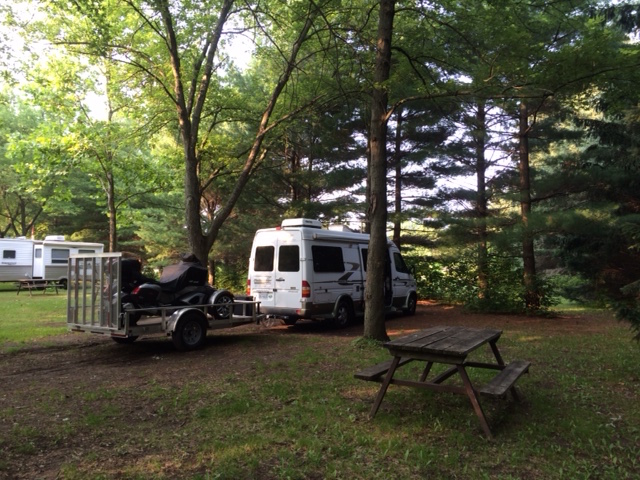
Sunday was primarily a travel day to traverse Michigan from Grand Rapids to Port Huron, cross the border into Canada at Sarnia, and then make our way to London. The border crossing was thankfully a non-event. With the high terrorist alerts because of the Fourth of July holiday, we weren’t certain what we would face, but a normal crawl in a queue of about 20 cars wasn’t bad, and the customs agent deemed us admittable in record time. By 5 p,m we were in London, passing over the winding Thames River any number of times. We drove through the University of Western Ontario, explored the Doentown and then settled into a charming secluded campsite at the Fanshawe Conservation Area, situated on Fanshawe Lake.

Thames (1)

London Campground

Grand Grand Rapids

Grand Rapids is a great city becoming grander all the time. With major support from wealthy families such as the Meijers and the De Vos, the city has become a major medical center for western Michigan as well as a remarkable number of tourist attractions, including the Grand Rapids Art Museum and the Meijer Gardens which we took in on our free day in GR.

Grand Rapids Art Museum

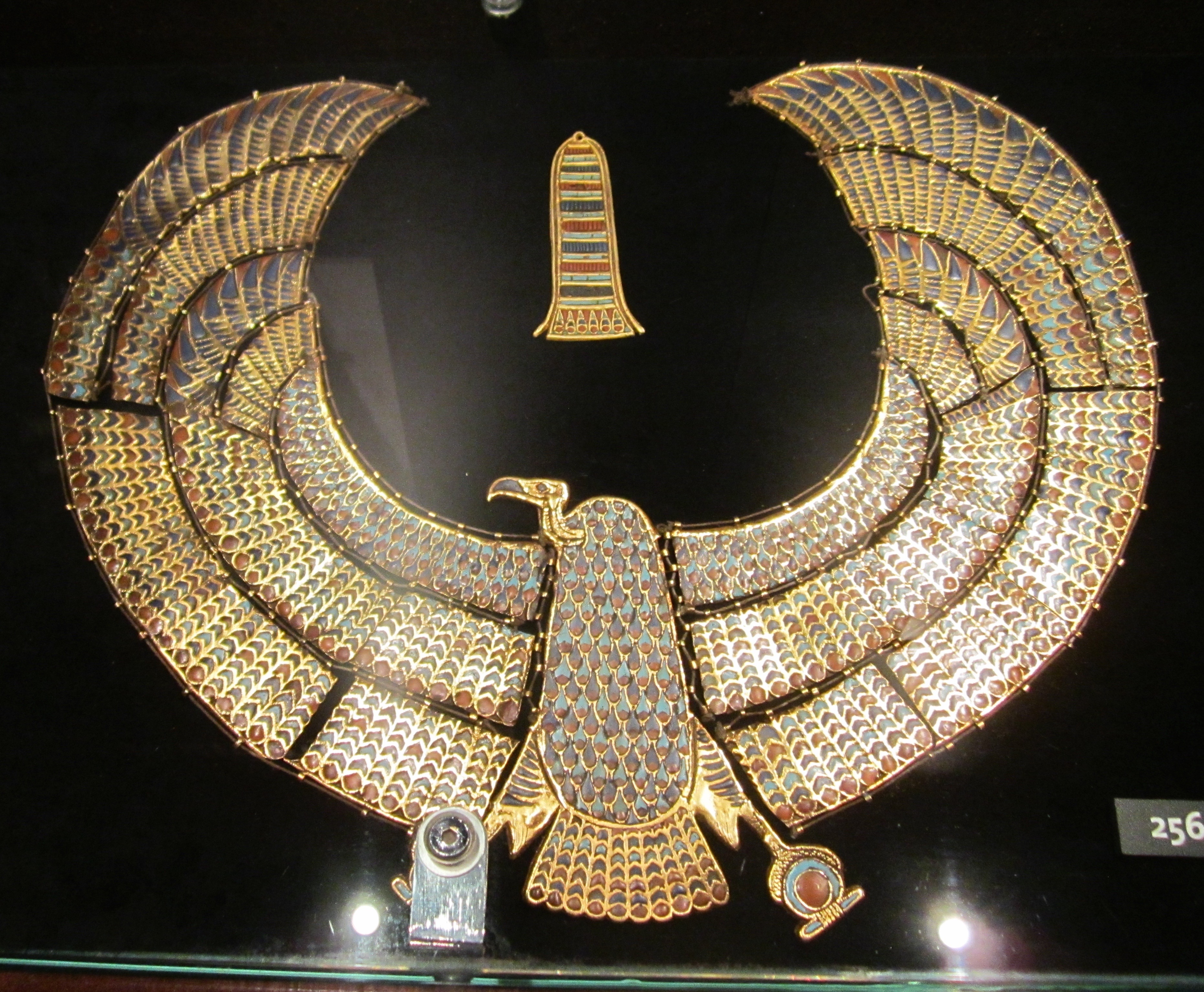
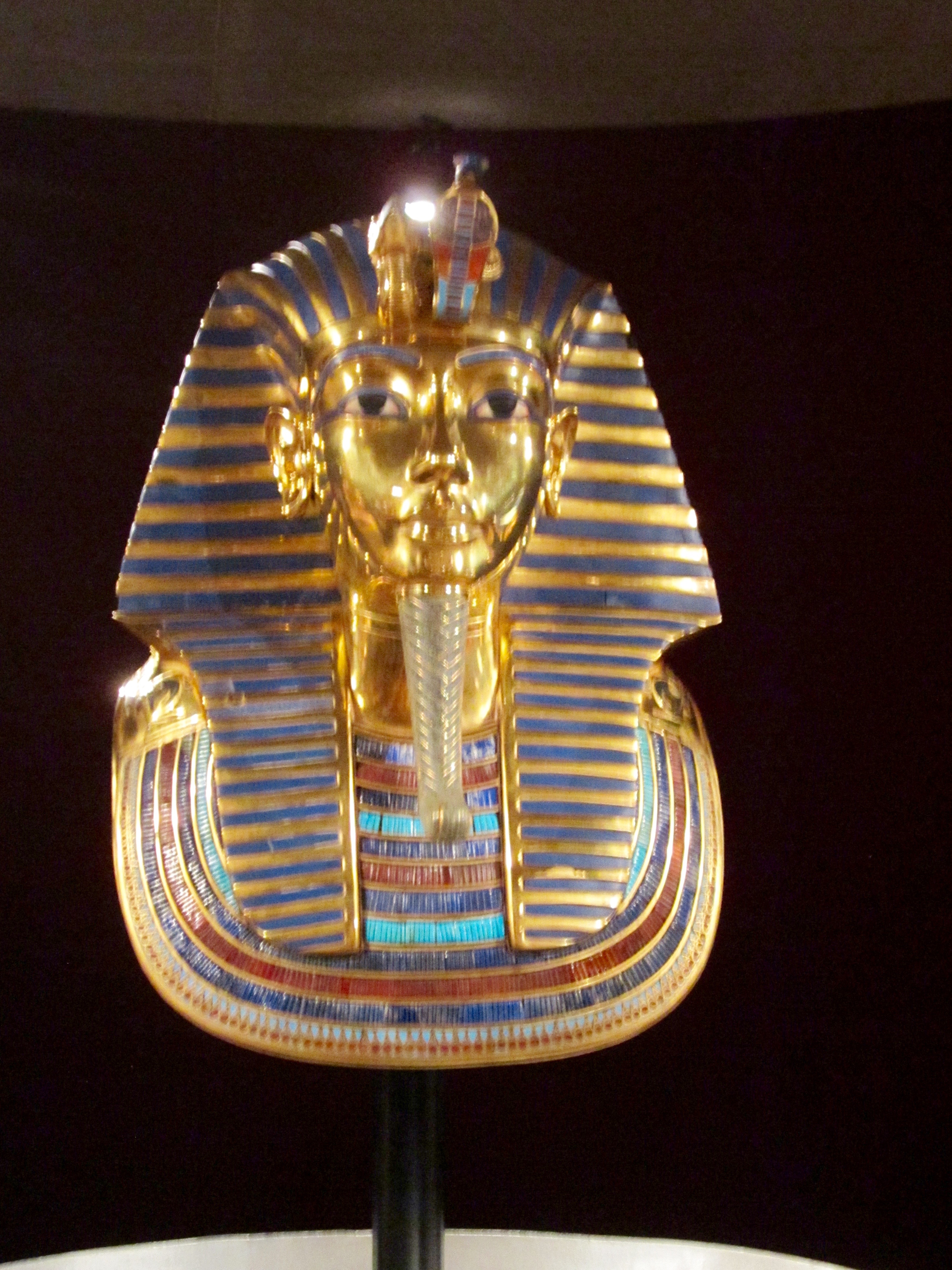
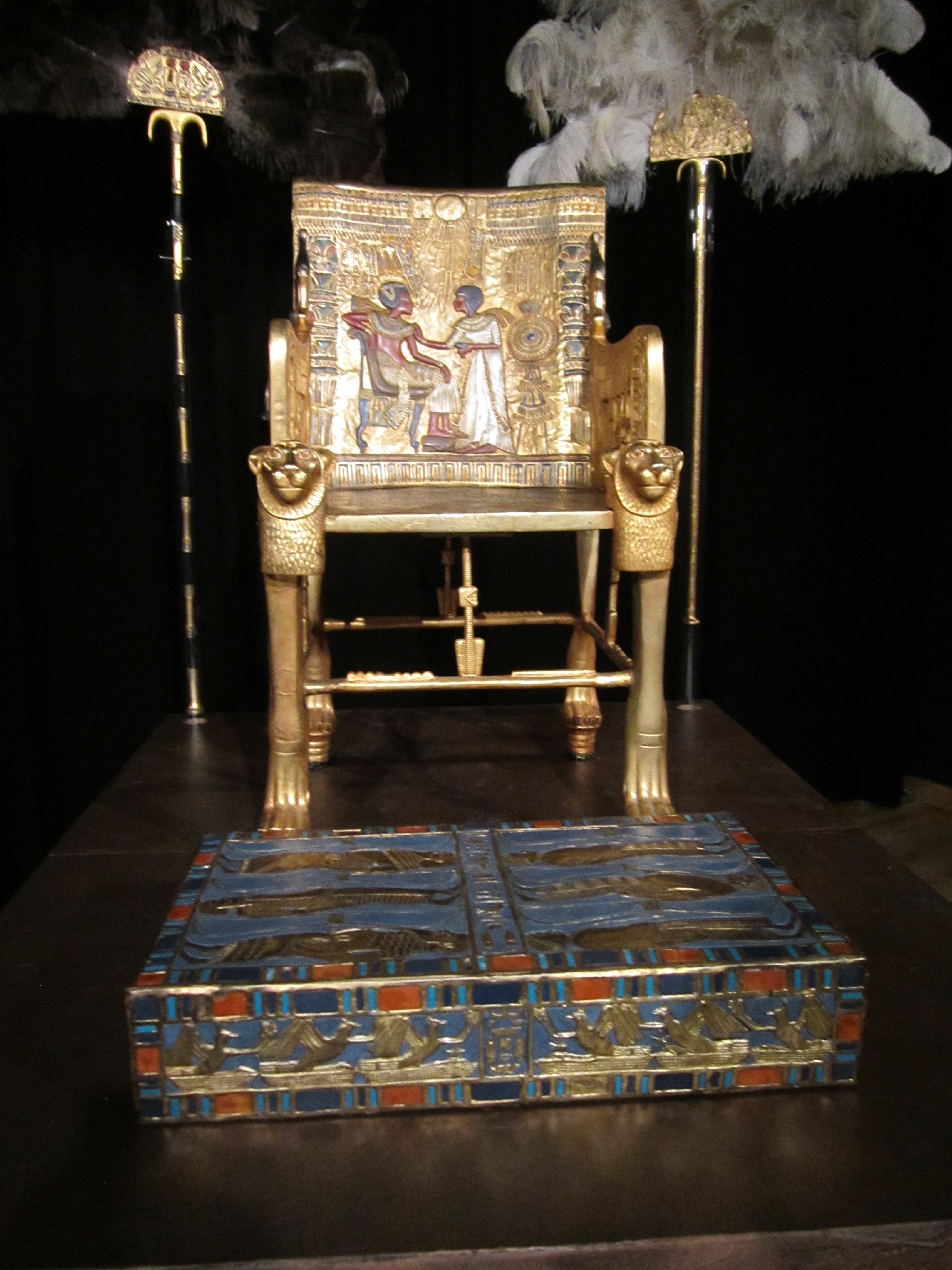
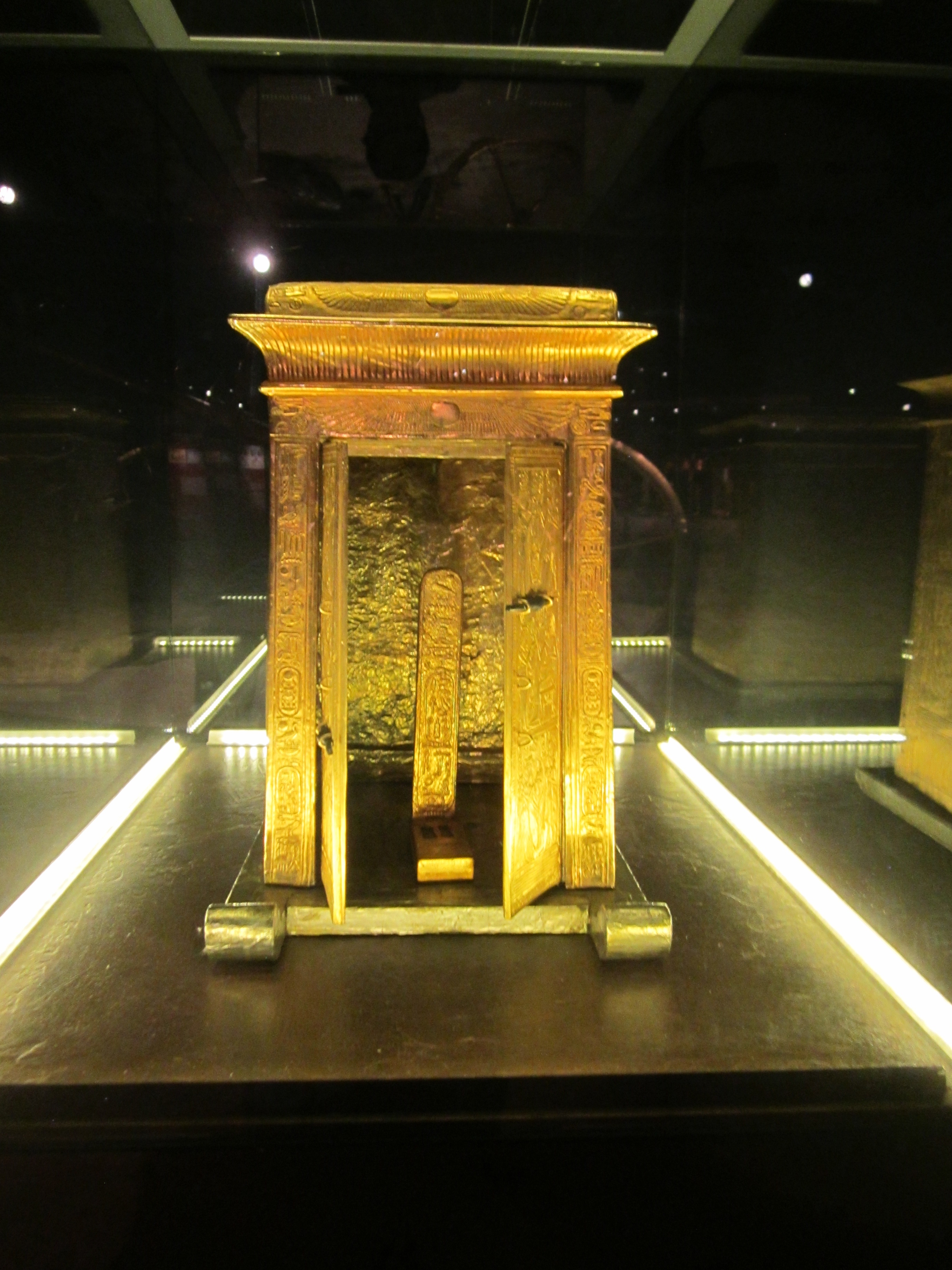
The Discovery of King Tut Exhibit was showing at the art museum, an exhibit focused on the story of how the tomb was found, and how the treasures were excavated. It was funded by Lord Carnarvon, who gave much if his fortune and, some would argue, his life to the project. When his canary was eaten by a cobra when the tomb was opened, the Egyptians believed there was a curse on the project and many refused to continue. Lord C wasn’t a believer, but he died from an infected mosquito bite at the age of 57. (No, I am not making this up; truth is always stranger than fiction.)

IMG_2104 IMG_2107 IMG_2112 IMG_2115

We saw GOLD. In statues, jewelry, funeral temples, caskets, caskets within caskets; if they could build it, they covered it with gold. The artisan’s craftsmanship was exquisite and imaginative, and sometimes very contemporary in appearance. And if you’re interested in how a body is mummified, there’s a video you can watch too. Though the majority of artifacts were reproductions, this exhibit still brings to life an era thousands of years old. If I lived in GR I’d visit at least once more to catch more of the details.

IMG_2139IMG_2134 IMG_2138IMG_2142

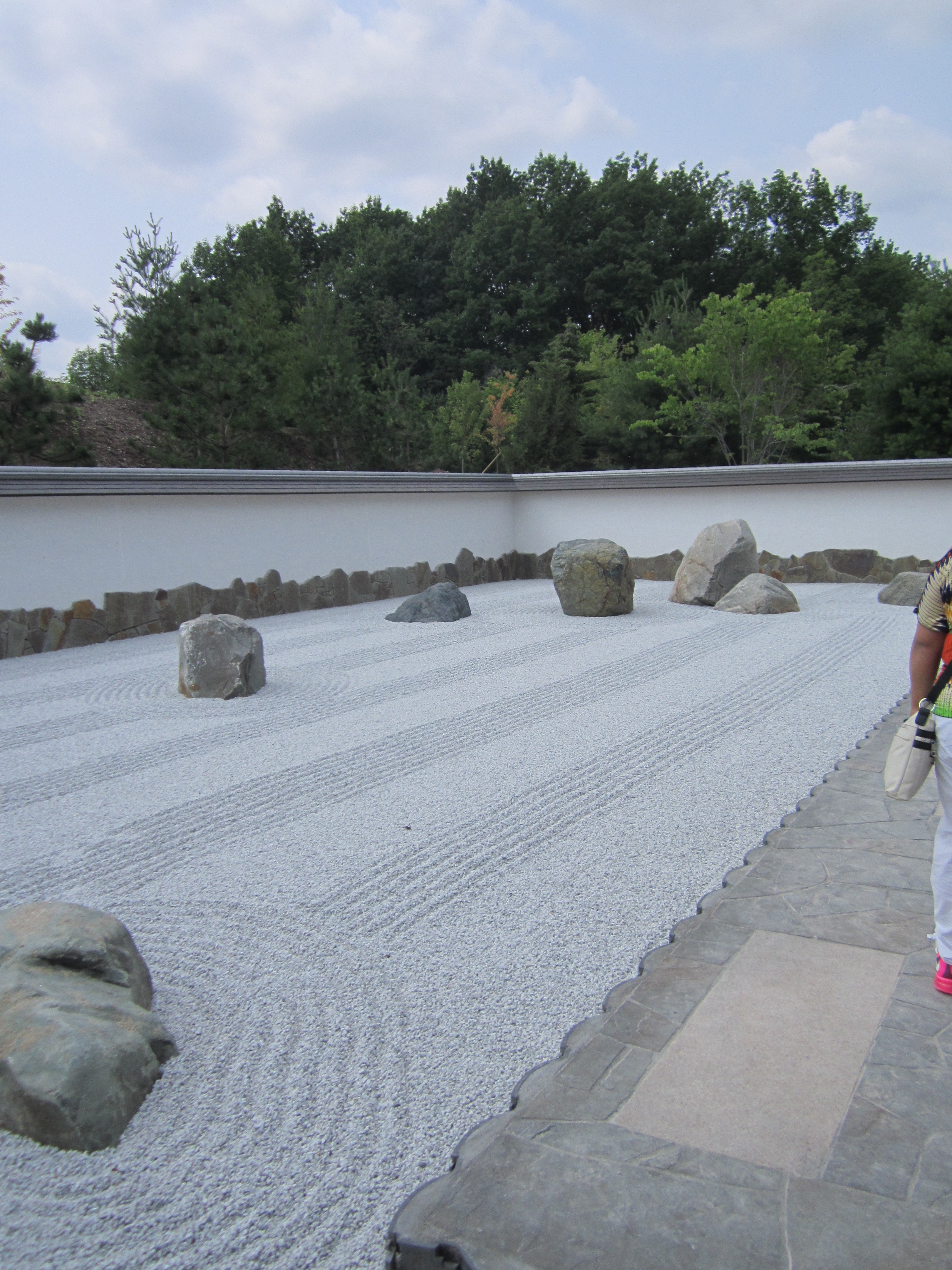
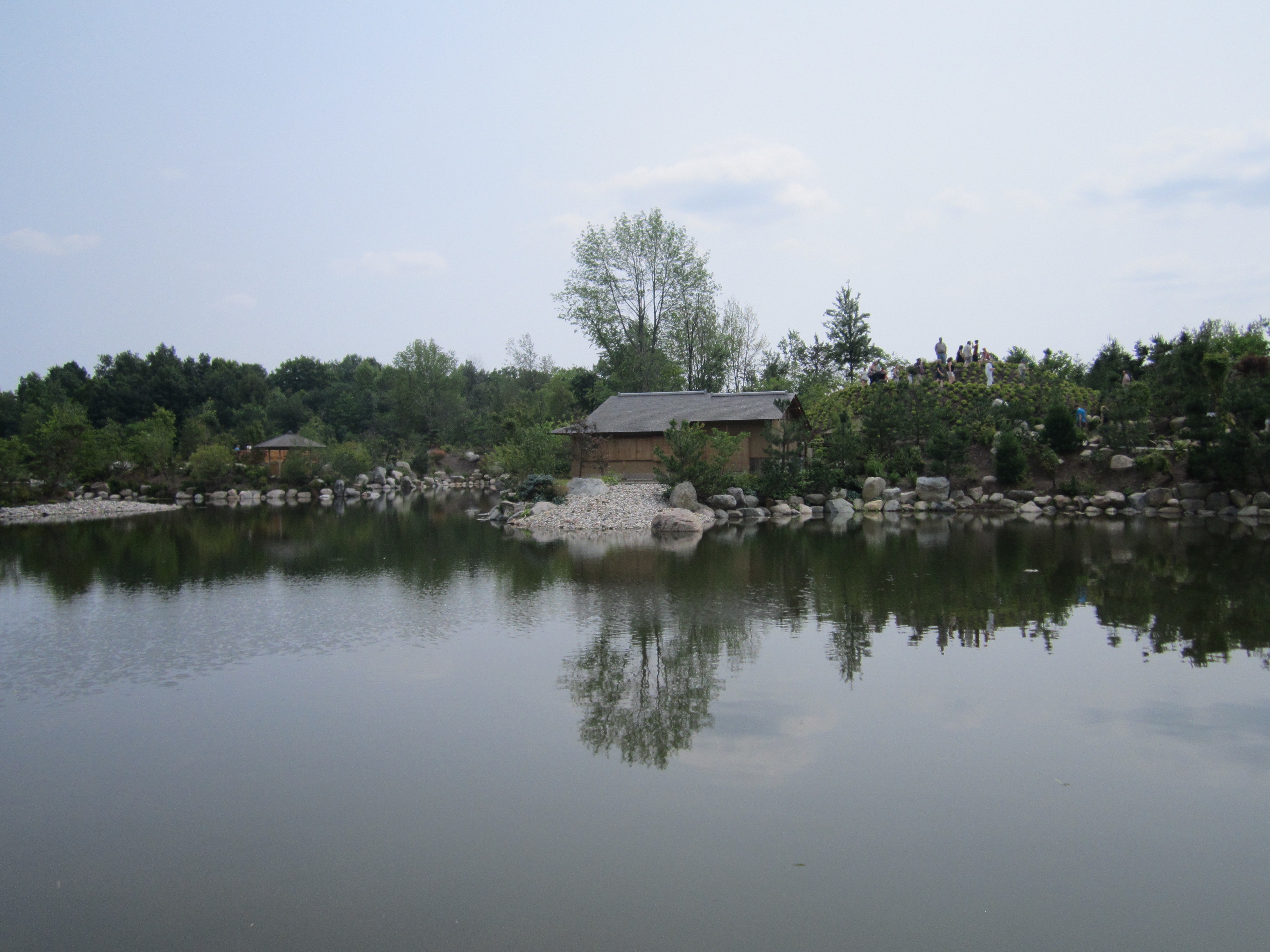
The Frederik Meijer Gardens and Sculpture Park is a 132 acre park that has been named one of the top “30 Must-See Museums.” In 1995, Frederik and Lena Meijers donated the land and their entire outdoor sculpture collection to establish a botanical garden and conservatory.

Trams drive throughout the park which contains waterfalls, seasonal plantings, and many unusual trees and shrubs, all peppered with unique bigger than life sculptures. The most notable is Leonardo Da Vinci American Horse, built from the plans of Leonardo Da Vinci by Nina Akuma. Everyone has to have their photograph taken at least once standing beneath it. But our destination this time was the newest addition to Meijer Gardens, the Japanese Gardens. Just opened a few months ago, it is a huge installation of winding paths centered around a lake, replete with koi and lily pads fed by a lovely waterfall. Though crowded, it still had an aura of tranquility that was hard to leave behind.

IMG_2128

Our other stop was the Downtown Market, a fabulous indoor market with dozens of merchants selling baked goods, candies, meats and seafood, cheeses, sushi and anything else edible. We gravitated to The Spice Merchant where I picked up some favorites, some “designer” olive oils (coconut and cherry flavored balsamic oil), and of course some fresh seeded baquettes (still warm.)

IMG_2129

Unsung Lansing

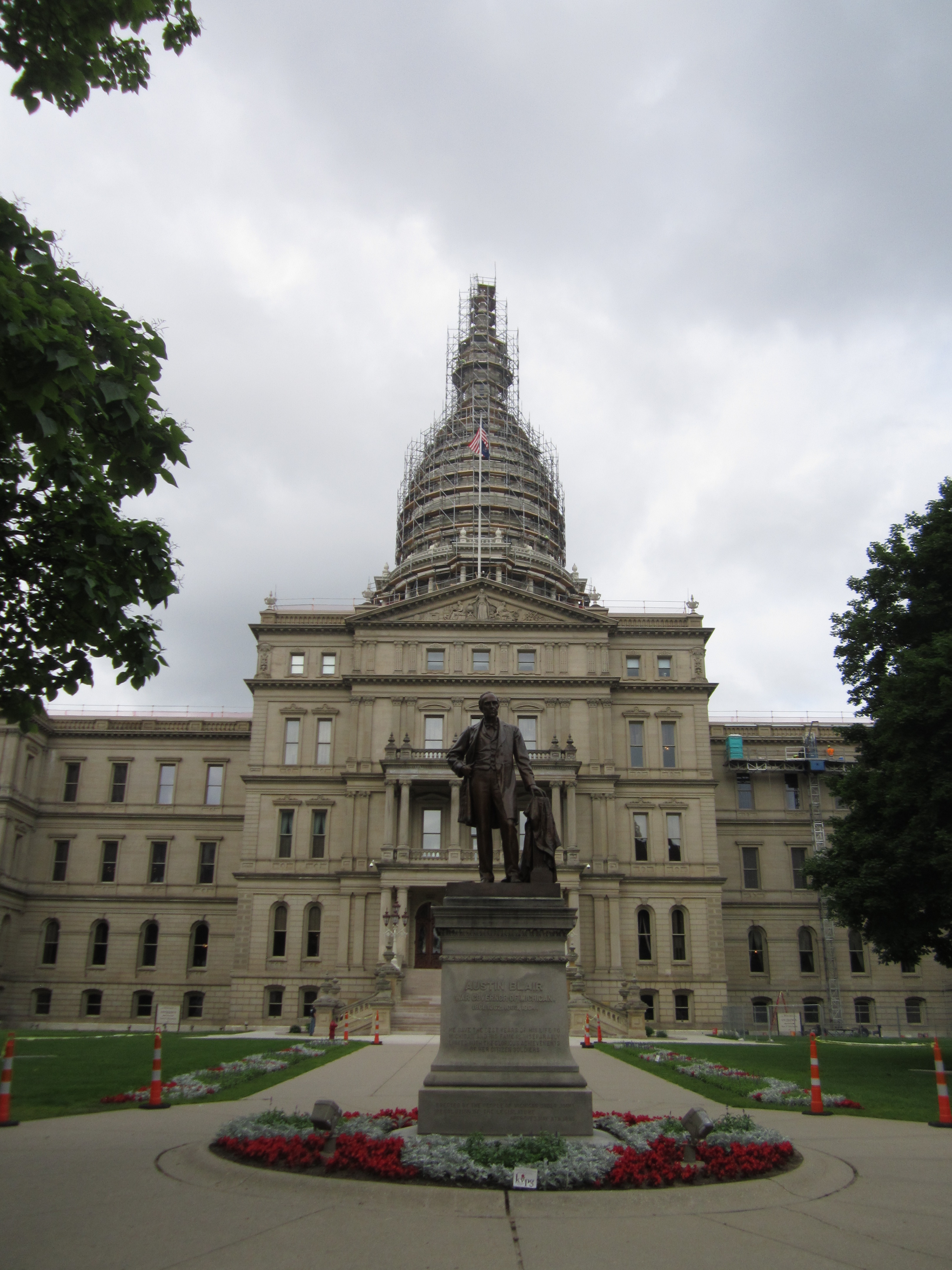
Michigan State Capitol

Michigan State Capitol

Lansing was an unusual choice for the capitol when the decision was made by the legislature to move it from Detroit to a more central location. For one thing, it’s hard to determine what is “central” in a state shaped like Michigan. It appears they more or less discarded the Upper Peninsula in the determination and made the population rather than land mass the predominant factor. There wasn’t much to Lansing before the Capitol moved in, and even today its business is primarily the government of Michigan. Most people consider Lansing a “non-destination” in Michigan, with so many other great aspects of Michigan to enjoy. However, we found it had several hidden treasures.

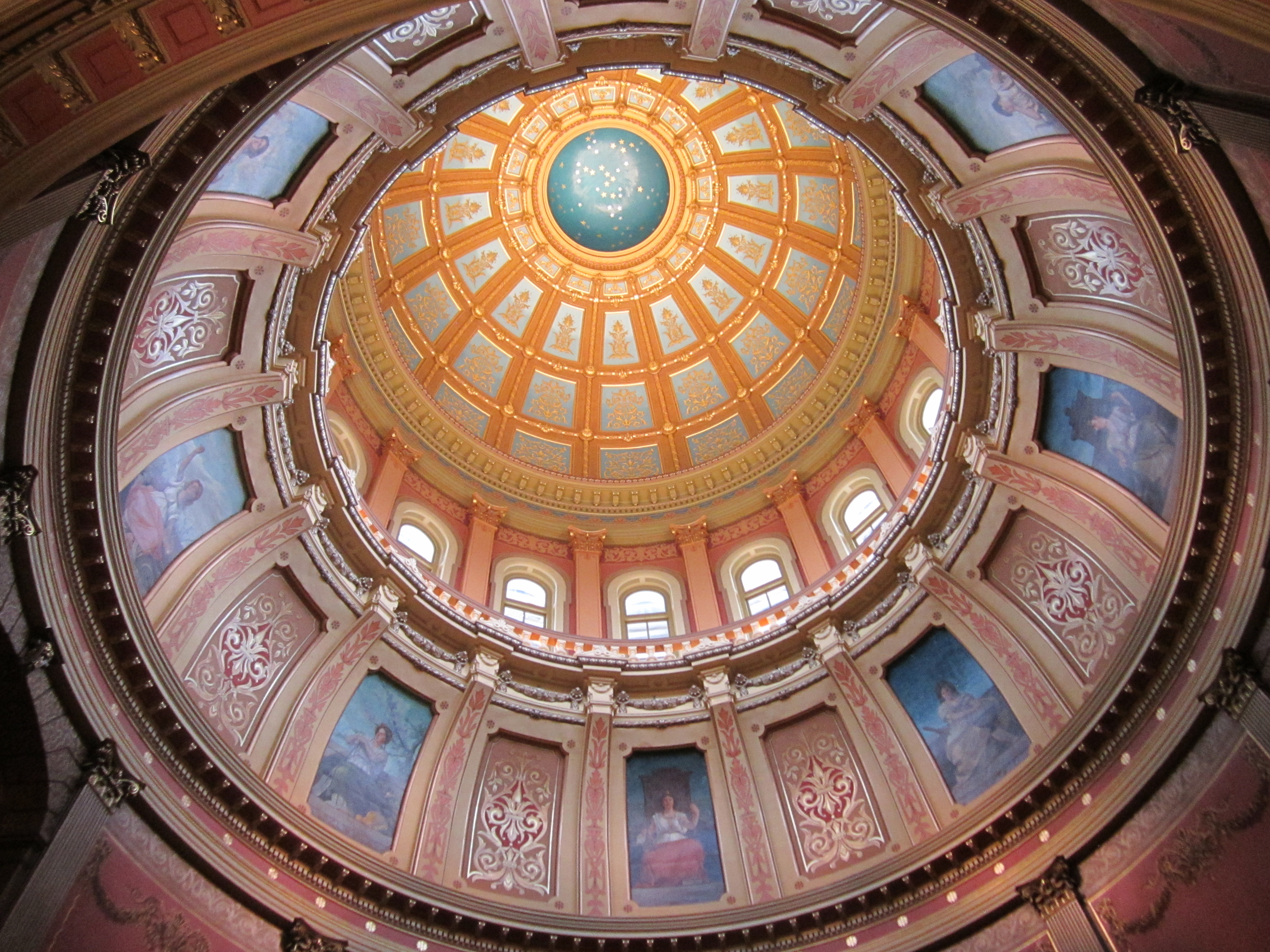
The building we toured was the third Capitol of Michigan; it was built in 1879, and its builders indulged in all the Victorian decorative splendor of the era. A little over a hundred years later, it was worn and shabby, and discussions began whether to tear it down and replace it with something modern or to renovate it. It took only one corridor being restored to its original Victorian deco  (and likely a hard look at the comparative costs) for the decision to be made. The Capitol you see today is as close as possible to the 1879 original, while still providing for modern elements like air conditioning and electronics. Like most capitols, it draws primarily from the state’s resources for building materials, in Michigan’s case, wood. However, Michigan pine has been stained and painted to mimic both walnut and marble and look remarkable real.

IMG_2057

IMG_2055

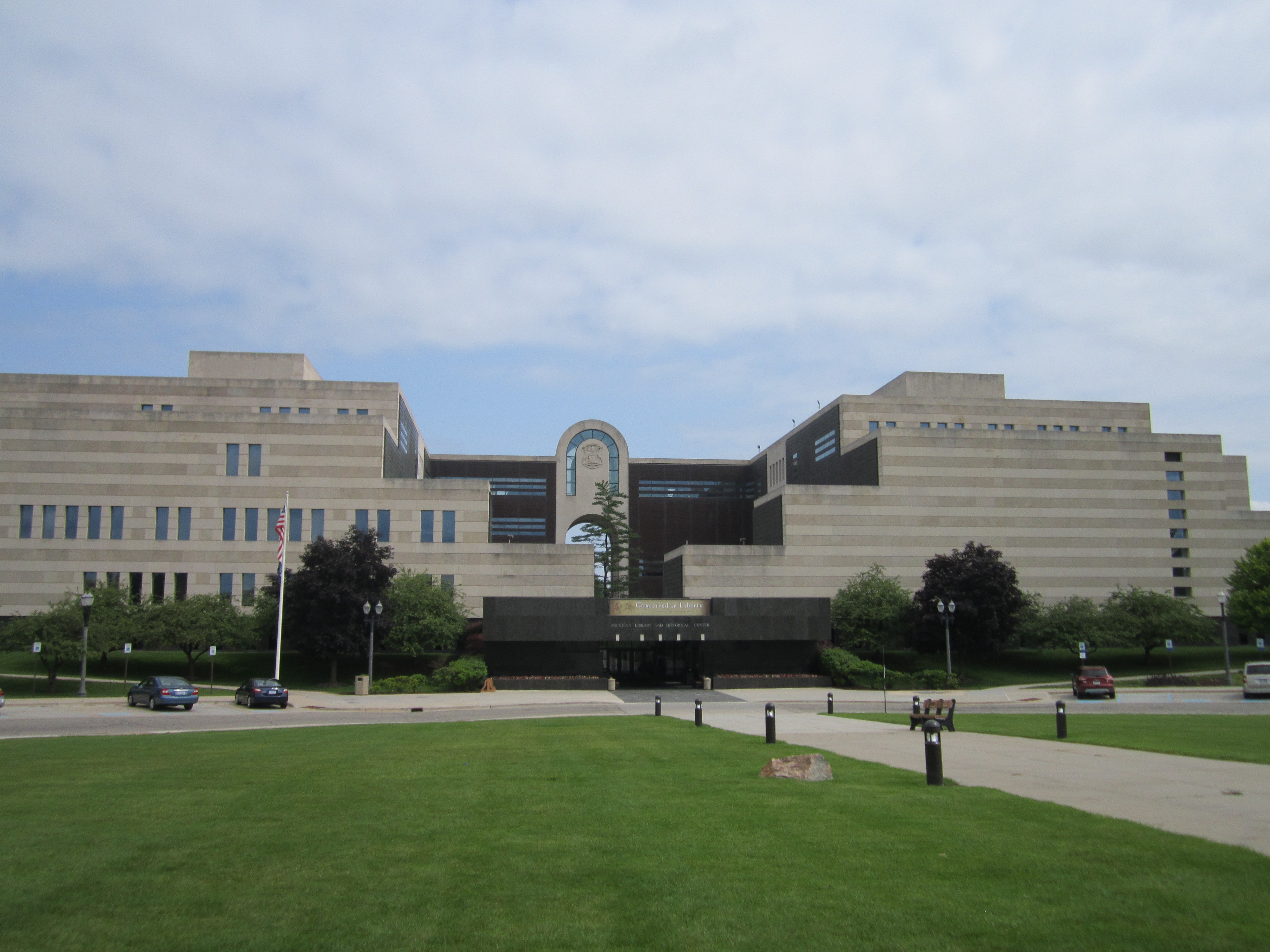
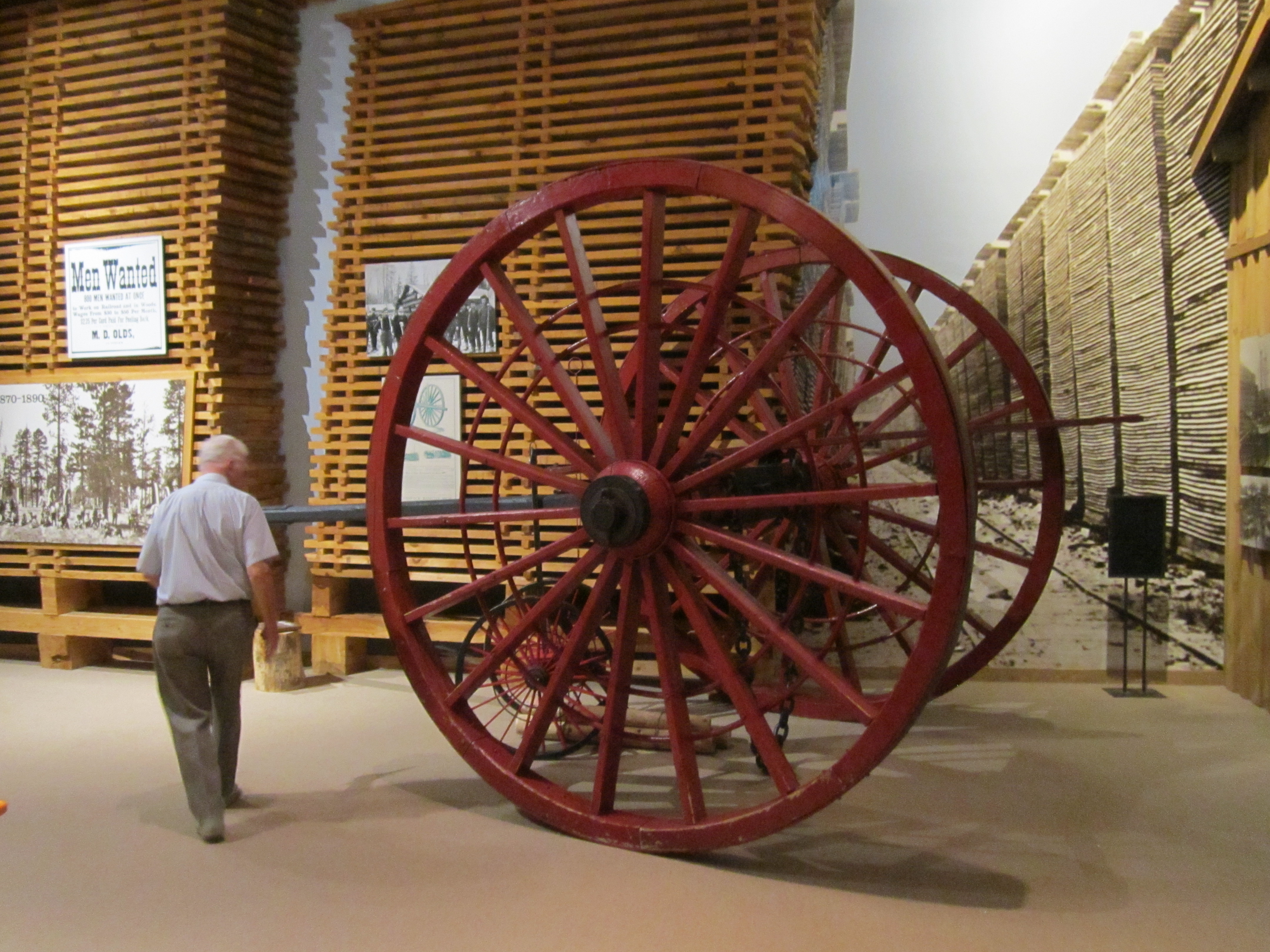
Next we toured the State Historical Museum, a massive building filled with artifacts ranging Native American history (lots of pelts from fur-trading times) to all the marvels of the automotive era. IMG_2059We enjoyed an excellent exhibit of the Civil War from the Michigan perspective; while many Michigan troops engaged in battle, Michigan’s principal contribution was its engineering expertise for the quick construction of pontoon bridges, roads, forts, and railroads. Mining displays also detailed the live of the miners who brought the copper, iron and salt out of the earth into the economy. There was way too much to take it in in one day; definitely this museum is worth a return trip.

IMG_2062

IMG_2074

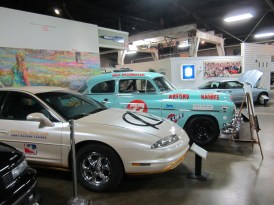
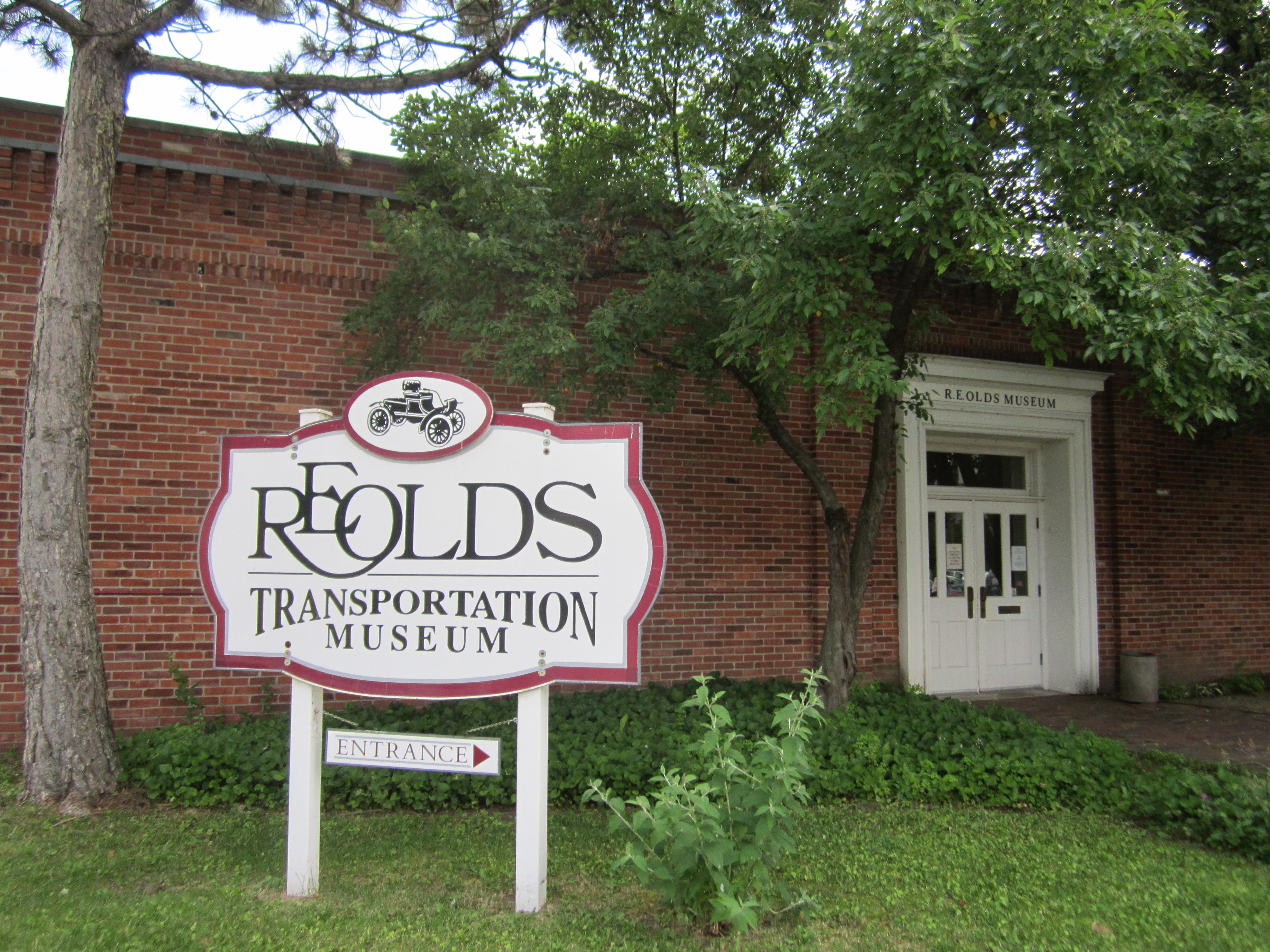
Finally, we couldn’t go through Lansing without taking in the R.E. Olds Museum, which is a kind of home-grown family museum dedicated to one man and his automotive creations. Ransom Olds originally designed stationary engines, and in the early 1900’s began designing trucks and then cars under the brand REO and the Curved Dash Oldsmobile. Eventually his company became part of General Motors and his original designs continued to be develop into the Oldsmobile line. This tiny museum is packed with several hundred vehicles of nearly every year of the REOs and the Oldsmobile. It is also peppered with little video stations where you can learn about all the many facets of R.E. Olds, a man who enjoyed his work, but enjoyed his time with family and friends even more. He and his wife Ursula were also major philanthropists in the Lansing area.IMG_2091

 IMG_2094

Traversing an Ocean of Land

First, the answer to the last post’s question (How cool is Coolville?) is “very.” So cool that we were inspired to buy a new comforter the next day to pick up the slack for the much thin fleece blanket we brought along. What were we thinking? Now we’re now properly armed for the even cooler Canadian nights in our future.

When I was a child living in Detroit, I felt that I lived in the middle of a dull ocean of land that needed to be traversed to get anyplace interesting. It didn’t matter which direction we were headed; there was this long period of watching flat, boring land pass by before we got to the good stuff. It took years of traveling the route from Detroit to Virginia to begin to appreciate the beauty of the land in southern Michigan and the bulk of Ohio. The major change took place when I had taken up some serious vegetable gardening in my own backyard and learned firsthand how much tending a little plot can require. I then viewed with awe the scope of the farmland that produces so much corn, soybeans and other crops. When I now travel the Ohio Turnpike, or come across diagonally as we did this time through thousands and thousands of cultivated acres, I see the hard labors of thousands of farmers and their ingenuity at making their land maximally productive. It’s pretty awesome what an enterprising farmer and the rich soil of a state like Ohio can achieve.

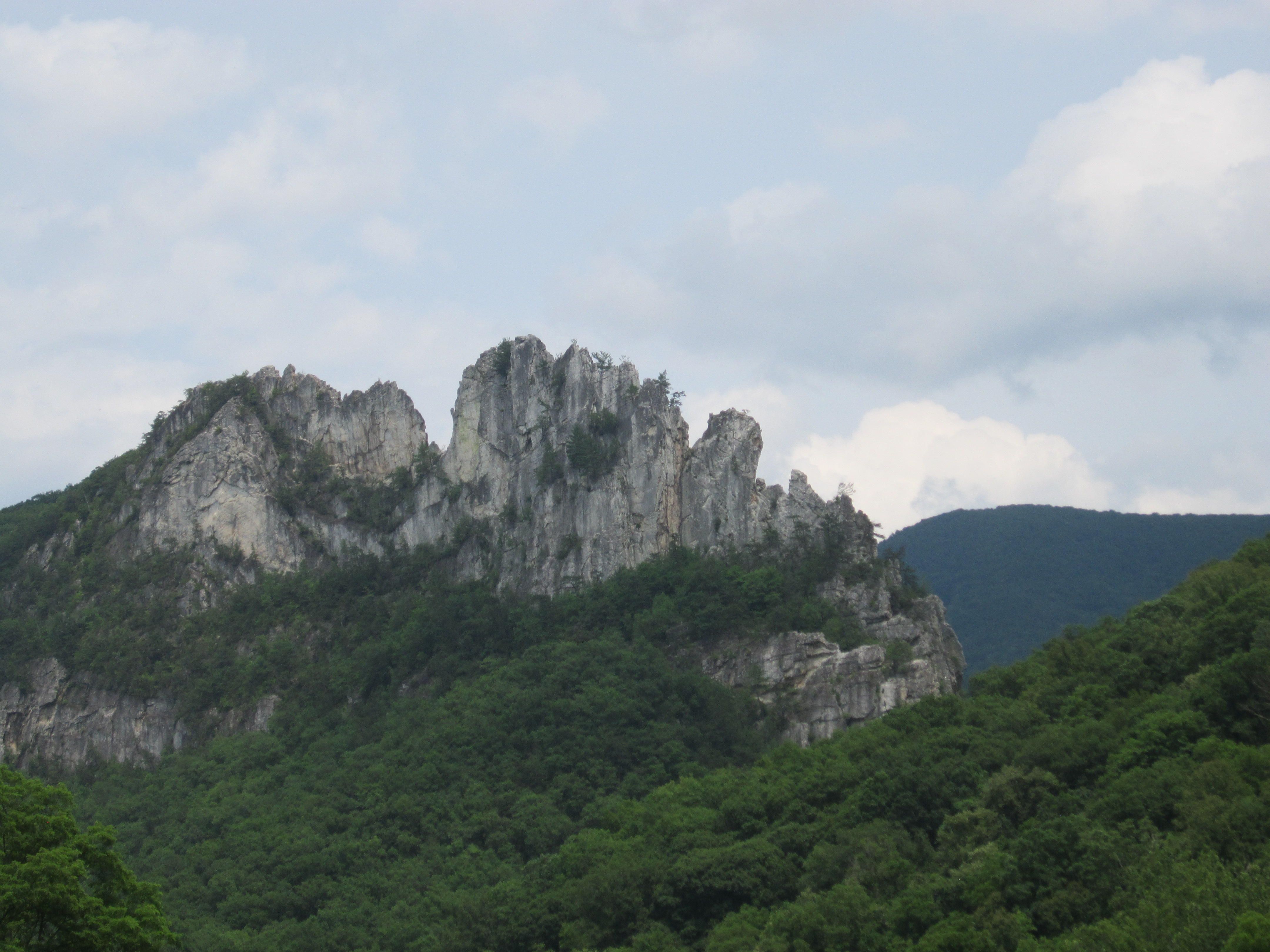
But photos of thousand of acres of farmland is less than exciting, so I will spare you. We did see a few spectacular sights during our last two days of steady driving to the Midwest. Seneca Rocks in West Virginia is a favorite site for rock climbers, in particular from the DC area.

Seneca Rocks in West Virginia

Seneca Rocks in West Virginia

We also drove by the State House in Columbus, Ohio, but found the parking impossible for the kind of rig we had. So we waved and promised ourselves we stop by another time when we weren’t encumbered with so many vehicles.

Ohio State House in Columbus, Ohio

Ohio State House in Columbus, Ohio

And on our way out of town, we drove through Ohio State University, a HUGE campus that spreads throughout the city. Like most research institutions, it is filled with many large research laboratories that have an industrial feeling about them, but the warm brown brick exteriors are in sync with the charm of the rest of Columbus.

IMG_2023 IMG_2011

How Cool is Coolville?

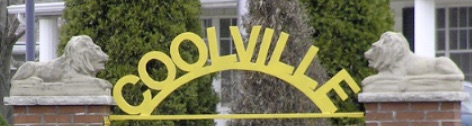
Coolville

We’re packed, RV full of our gear and trailer full of motorcycle and all its necessary gear, and tomorrow we’re on our way to cool Coolville in the southeast corner of Ohio. It may well be the smallest town I’ve ever stayed in–population of 496 as of 2010. Unless they’ve had a major baby boom in the past five years (and there’ve been some pretty cold winters in Ohio recently), I think it’s likely that the people leaving Coolville one way or another likely balance out those making it their new home. For a few hours we’ll make it 498.

There is some logic to the name. The town was platted by Simeon W. Cooley in 1818. By the 1830’s, it contained two stores, a gristmill and a sawmill. and historians have found it notable for being close to three other “hot/cold” communities: Torch, Frost and Snowville. I’ll settle for just being cool, cuddled in a blanket in the back of the RV. Then we’re on our way to Lansing and Grand Rapids and all the major cities of Eastern Canada. This may be our last time to savor the peace and quiet of small town living until we reach Cape Breton. I intend to enjoy it.

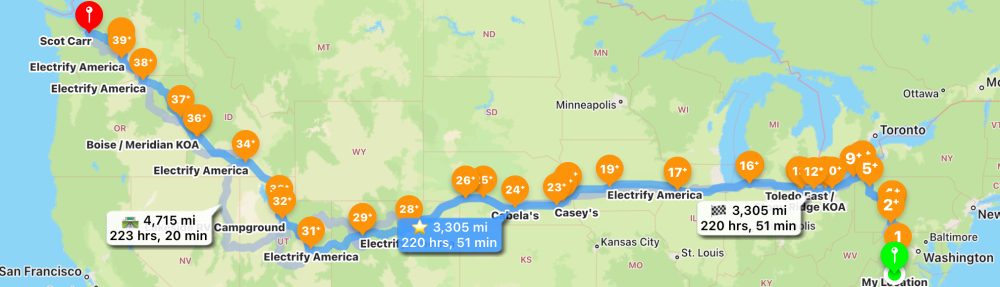
2015 Tour of Canada/Tour de Canada

It’s the East that’s calling to us this year, with an itinerary that will include London, Ontario, Toronto, Montreal and Quebec, ending at the far eastern tip of Nova Scotia in Cape Breton. I’m looking forward to the the prospect of lovely French meals, an abundance of fresh seafood, and miles of beautiful landscapes reaching down to the coastlines. Our return will be just as delectable, taking in sites along Maine, Vermont and New York, hitting the Roosevelt highlights of Campobello and Hyde Park, and the military fortresses at Ticonderoga and West Point.