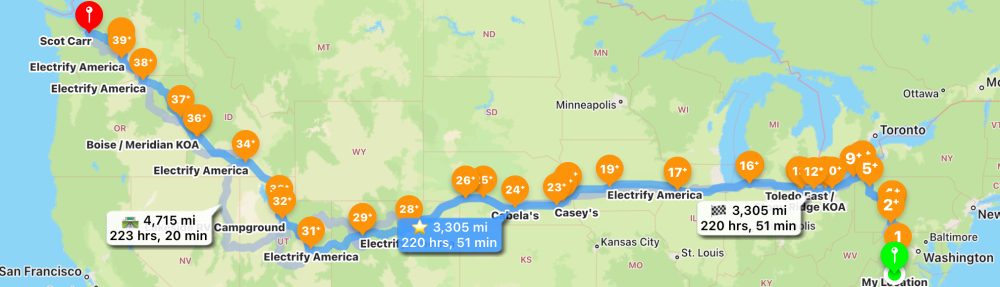
Day 1 Travel from home to Coolville, Ohio
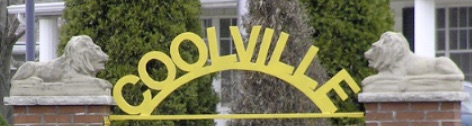
We’re packed, RV full of our gear and trailer full of motorcycle and all its necessary gear, and tomorrow we’re on our way to cool Coolville in the southeast corner of Ohio. It may well be the smallest town I’ve ever stayed in–population of 496 as of 2010. Unless they’ve had a major baby boom in the past five years (and there’ve been some pretty cold winters in Ohio recently), I think it’s likely that the people leaving Coolville one way or another likely balance out those making it their new home. For a few hours we’ll make it 498.
There is some logic to the name. The town was platted by Simeon W. Cooley in 1818. By the 1830’s, it contained two stores, a gristmill and a sawmill. and historians have found it notable for being close to three other “hot/cold” communities: Torch, Frost and Snowville. I’ll settle for just being cool, cuddled in a blanket in the back of the RV. Then we’re on our way to Lansing and Grand Rapids and all the major cities of Eastern Canada. This may be our last time to savor the peace and quiet of small town living until we reach Cape Breton. I intend to enjoy it.
Day 2 Trave to Lansing, Michigan
First, the answer to the last post’s question (How cool is Coolville?) is “very.” So cool that we were inspired to buy a new comforter the next day to pick up the slack for the much thin fleece blanket we brought along. What were we thinking? Now we’re now properly armed for the even cooler Canadian nights in our future.
When I was a child living in Detroit, I felt that I lived in the middle of a dull ocean of land that needed to be traversed to get anyplace interesting. It didn’t matter which direction we were headed; there was this long period of watching flat, boring land pass by before we got to the good stuff. It took years of traveling the route from Detroit to Virginia to begin to appreciate the beauty of the land in southern Michigan and the bulk of Ohio. The major change took place when I had taken up some serious vegetable gardening in my own backyard and learned firsthand how much tending a little plot can require. I then viewed with awe the scope of the farmland that produces so much corn, soybeans and other crops. When I now travel the Ohio Turnpike, or come across diagonally as we did this time through thousands and thousands of cultivated acres, I see the hard labors of thousands of farmers and their ingenuity at making their land maximally productive. It’s pretty awesome what an enterprising farmer and the rich soil of a state like Ohio can achieve.
But photos of thousand of acres of farmland is less than exciting, so I will spare you. We did see a few spectacular sights during our last two days of steady driving to the Midwest. Seneca Rocks in West Virginia is a favorite site for rock climbers, in particular from the DC area.
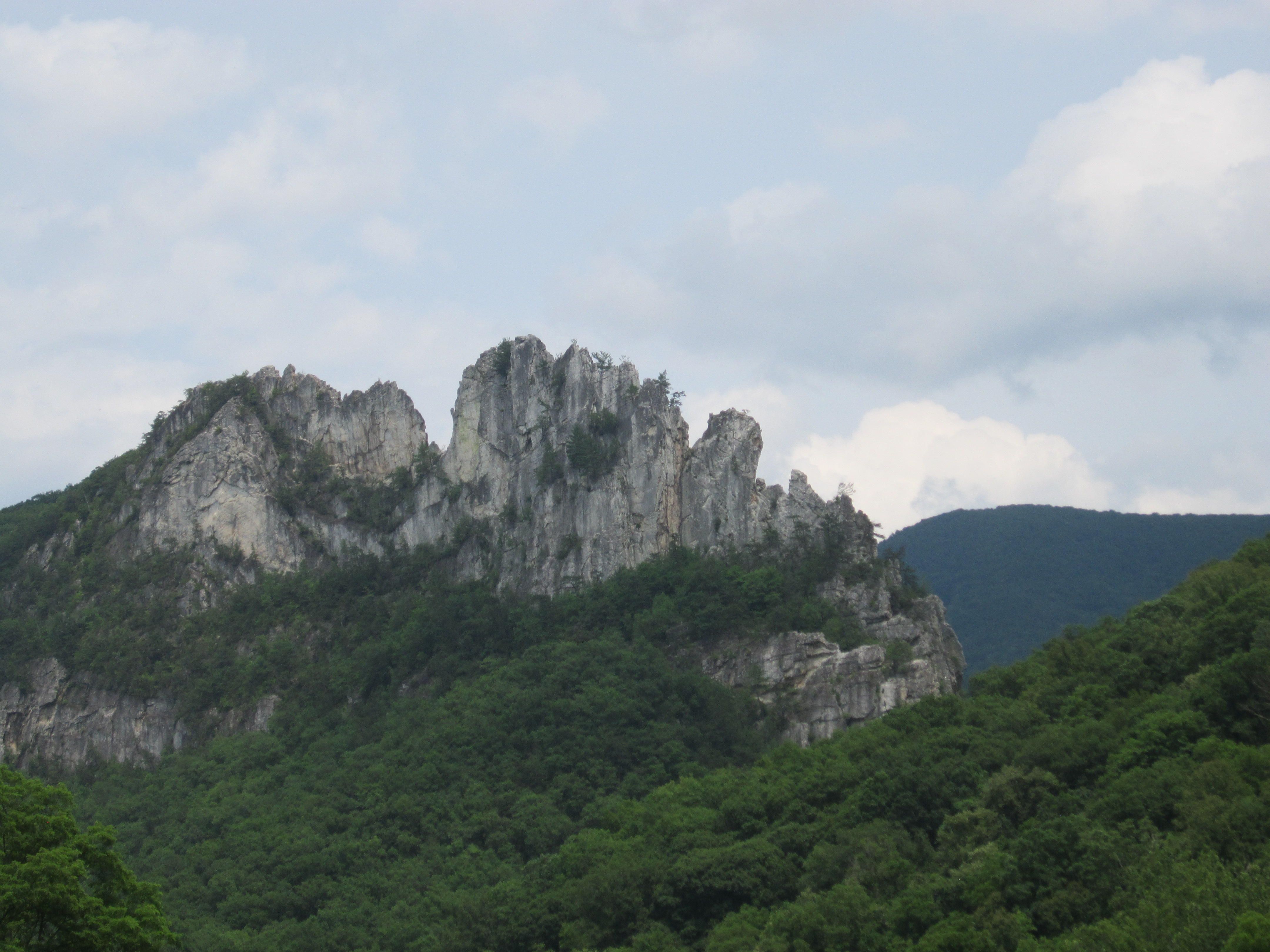
Seneca Rocks in West Virginia
We also drove by the State House in Columbus, Ohio, but found the parking impossible for the kind of rig we had. So we waved and promised ourselves we stop by another time when we weren’t encumbered with so many vehicles.

Ohio State House in Columbus, Ohio
And on our way out of town, we drove through Ohio State University, a HUGE campus that spreads throughout the city. Like most research institutions, it is filled with many large research laboratories that have an industrial feeling about them, but the warm brown brick exteriors are in sync with the charm of the rest of Columbus.


Day 3 Tour State Capitol and other sites in Lansing
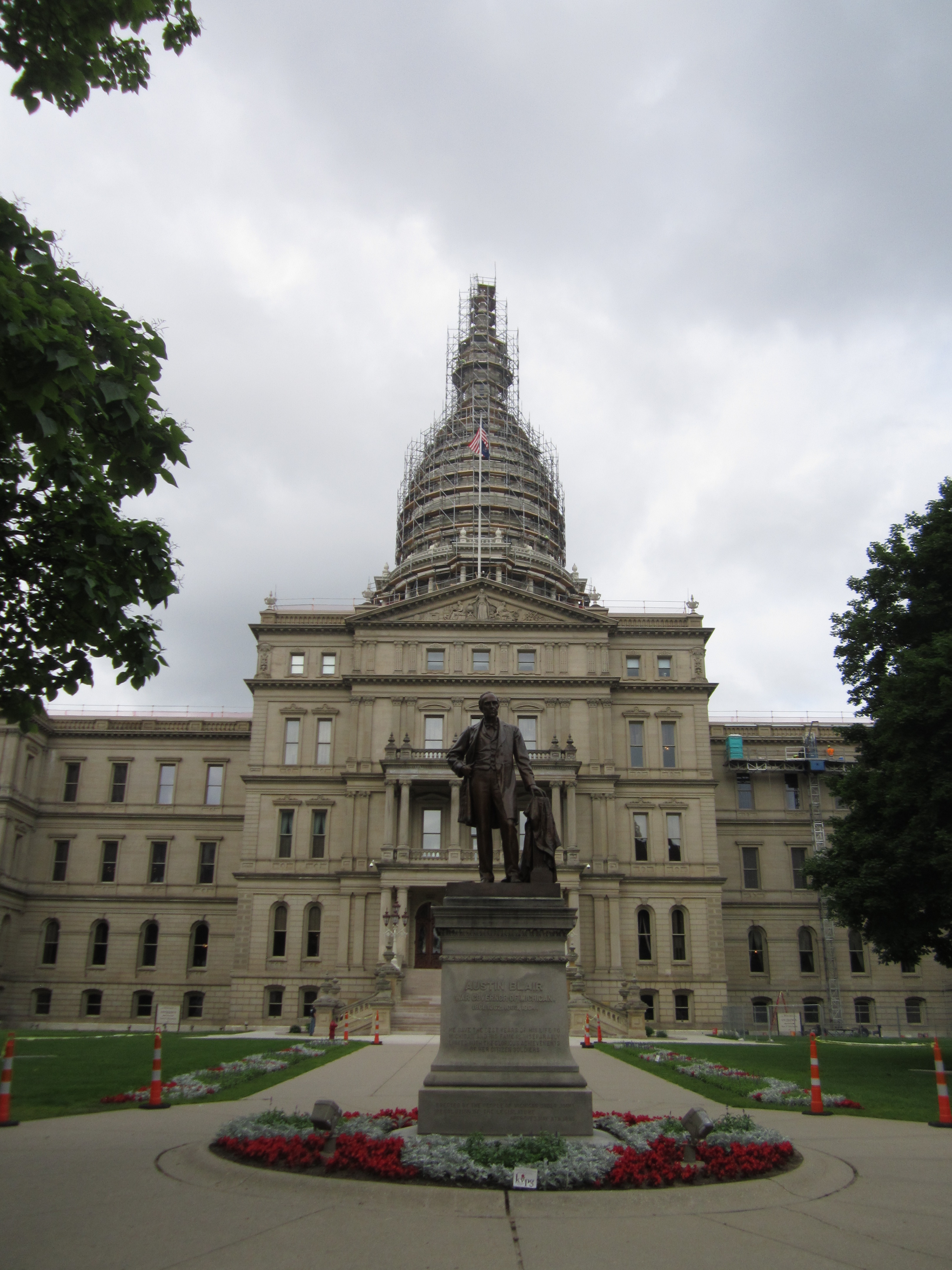
Michigan State Capitol
Lansing was an unusual choice for the capitol when the decision was made by the legislature to move it from Detroit to a more central location. For one thing, it’s hard to determine what is “central” in a state shaped like Michigan. It appears they more or less discarded the Upper Peninsula in the determination and made the population rather than land mass the predominant factor. There wasn’t much to Lansing before the Capitol moved in, and even today its business is primarily the government of Michigan. Most people consider Lansing a “non-destination” in Michigan, with so many other great aspects of Michigan to enjoy. However, we found it had several hidden treasures.
The building we toured was the third Capitol of Michigan; it was built in 1879, and its builders indulged in all the Victorian decorative splendor of the era. A little over a hundred years later, it was worn and shabby, and discussions began whether to tear it down and replace it with something modern or to renovate it. It took only one corridor being restored to its original Victorian deco (and likely a hard look at the comparative costs) for the decision to be made. The Capitol you see today is as close as possible to the 1879 original, while still providing for modern elements like air conditioning and electronics. Like most capitols, it draws primarily from the state’s resources for building materials, in Michigan’s case, wood. However, Michigan pine has been stained and painted to mimic both walnut and marble and look remarkable real.
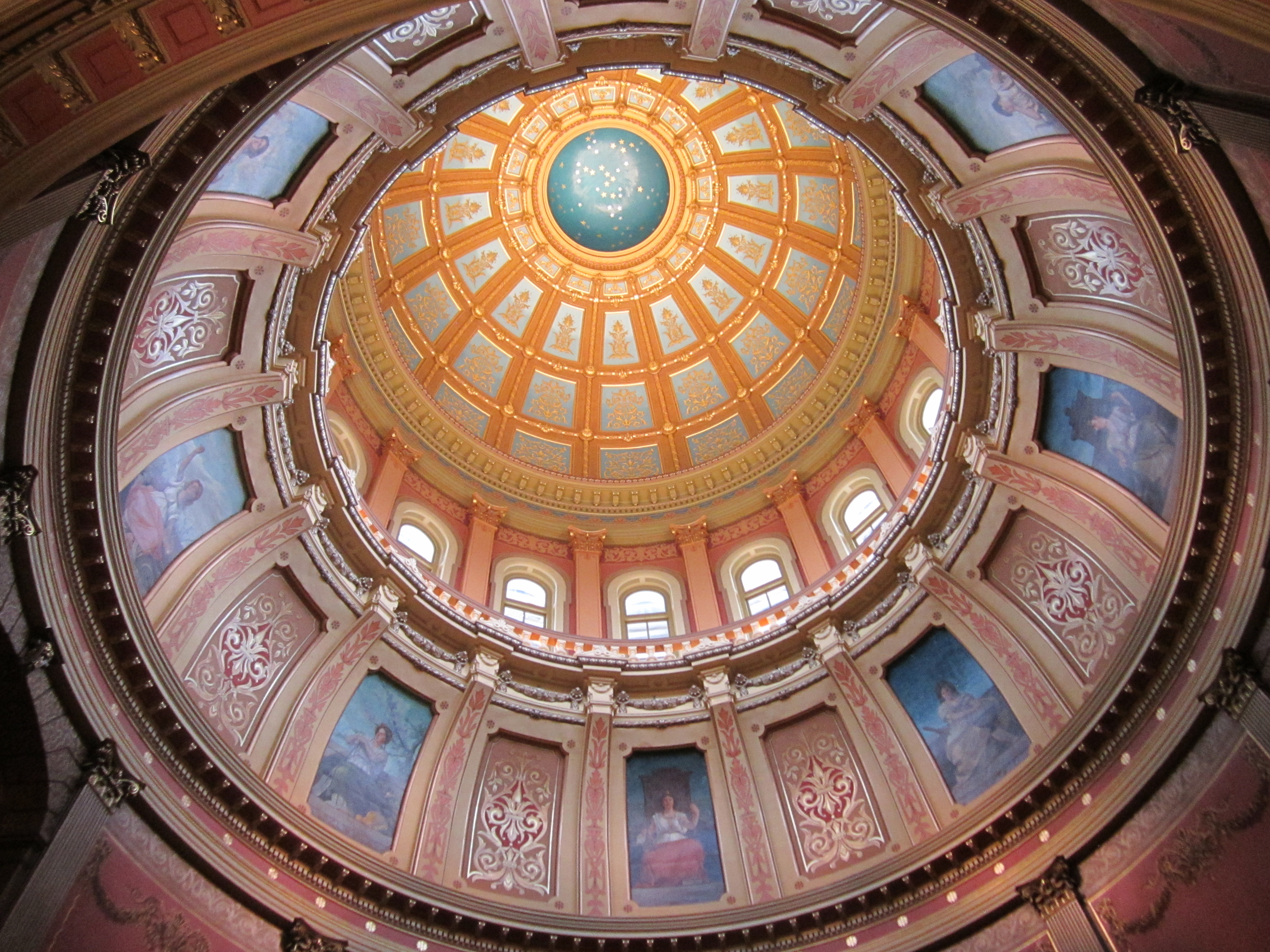

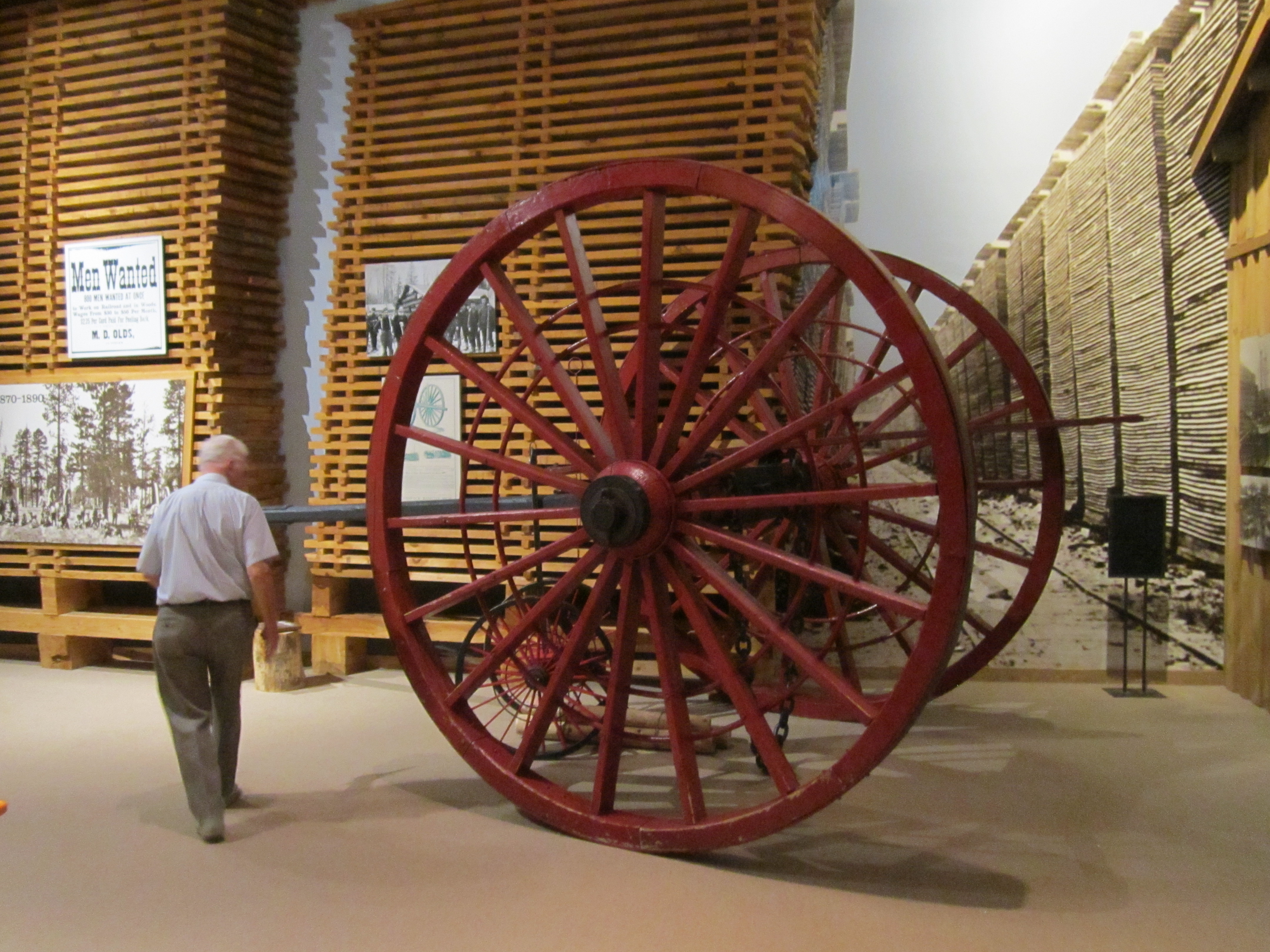
Next we toured the State Historical Museum, a massive building filled with artifacts ranging Native American history (lots of pelts from fur-trading times) to all the marvels of the automotive era. 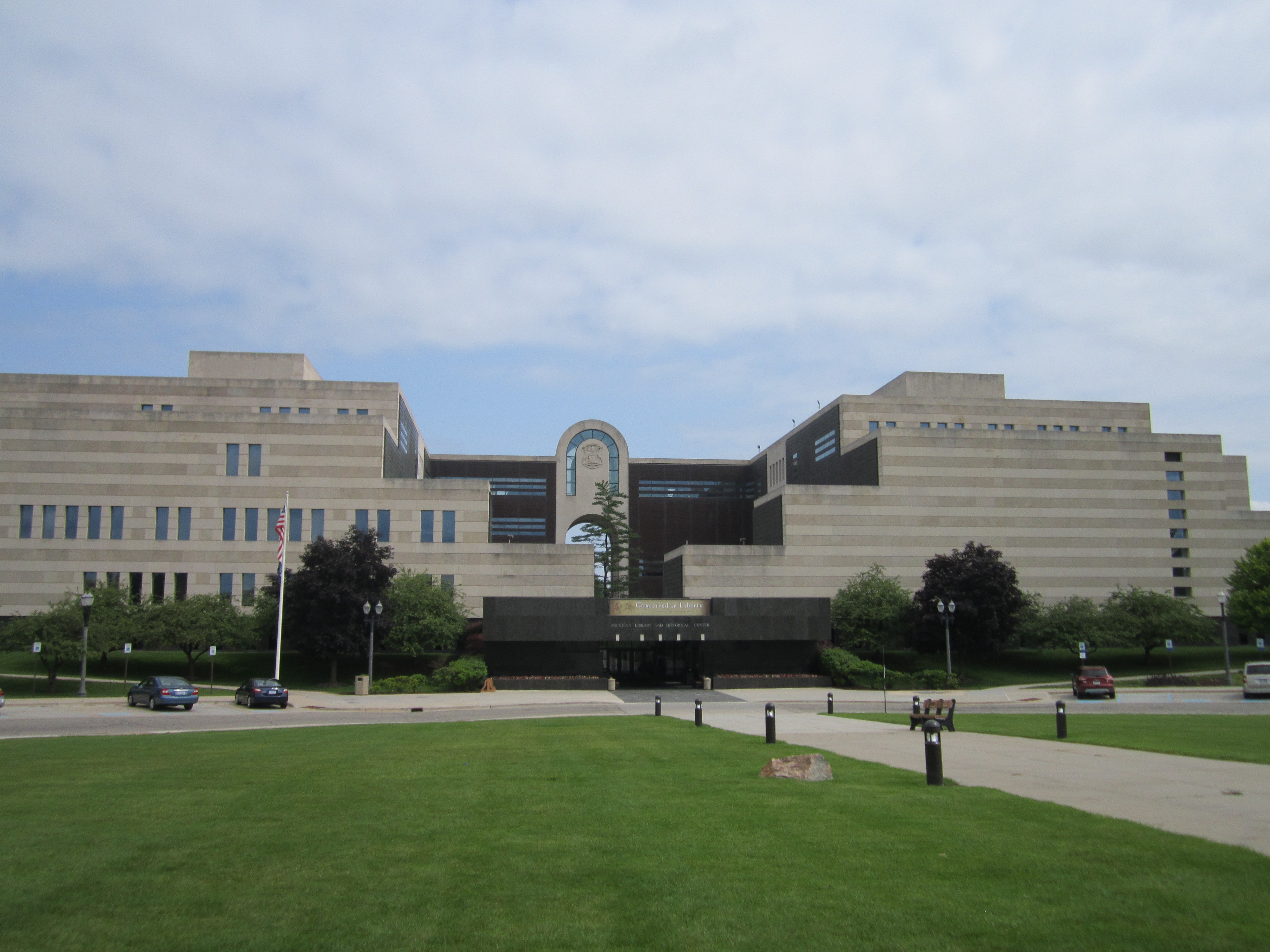 We enjoyed an excellent exhibit of the Civil War from the Michigan perspective; while many Michigan troops engaged in battle, Michigan’s principal contribution was its engineering expertise for the quick construction of pontoon bridges, roads, forts, and railroads. Mining displays also detailed the live of the miners who brought the copper, iron and salt out of the earth into the economy. There was way too much to take it in in one day; definitely this museum is worth a return trip.

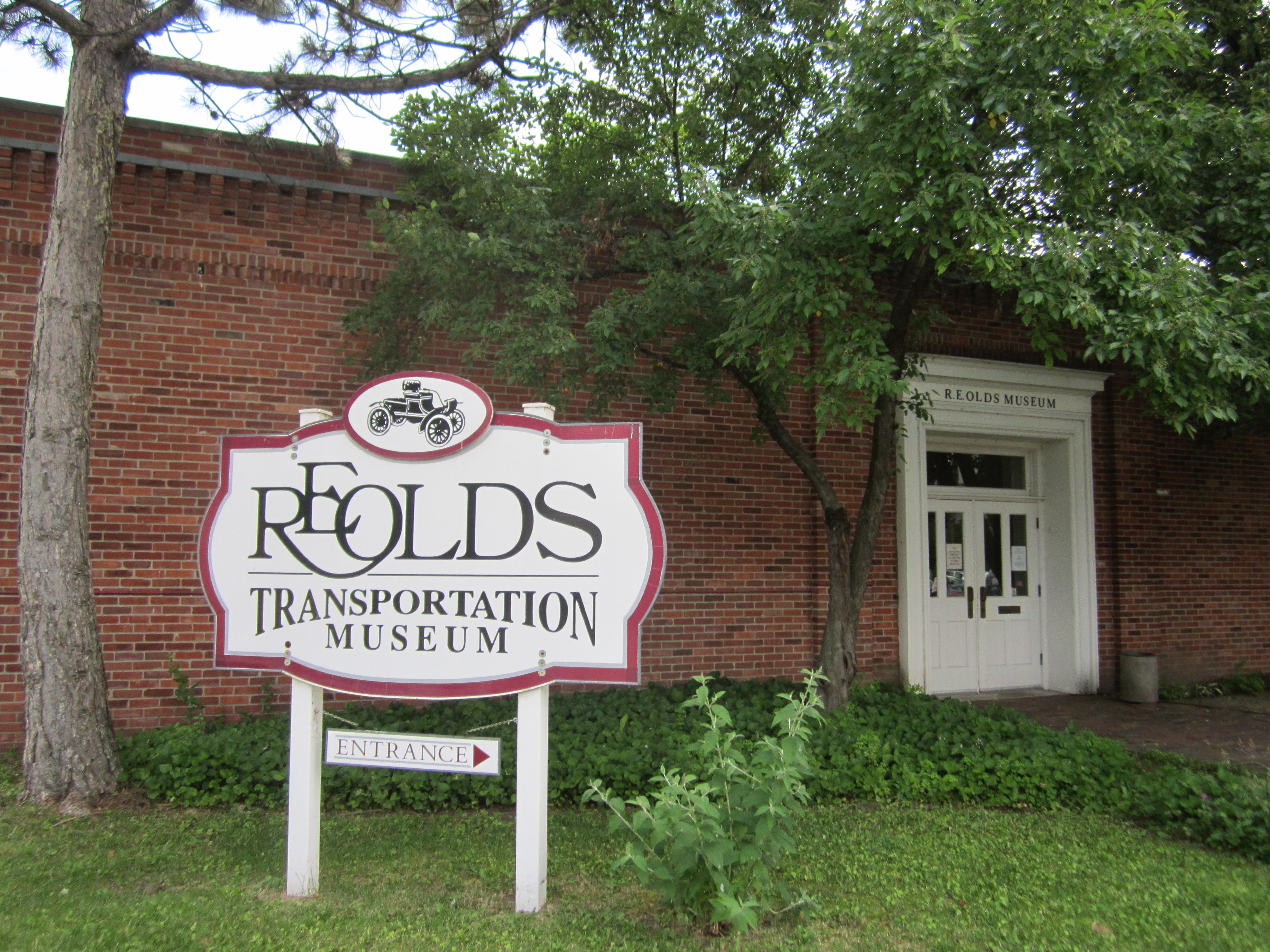
Finally, we couldn’t go through Lansing without taking in the R.E. Olds Museum, which is a kind of home-grown family museum dedicated to one man and his automotive creations. Ransom Olds originally designed stationary engines, and in the early 1900’s began designing trucks and then cars under the brand REO and the Curved Dash Oldsmobile. Eventually his company became part of General Motors and his original designs continued to be develop into the Oldsmobile line. This tiny museum is packed with several hundred vehicles of nearly every year of the REOs and the Oldsmobile. It is also peppered with little video stations where you can learn about all the many facets of R.E. Olds, a man who enjoyed his work, but enjoyed his time with family and friends even more. He and his wife Ursula were also major philanthropists in the Lansing area.
Day 4 Travel to Grand Rapids for Family Get-Together
Day 5 Fourth of July! Visit Grand Rapids Museum of Art for King Tut Exhibition and Meijer Gardens to view newly opened Japanese Garden Exhibit
Grand Rapids is a great city becoming grander all the time. With major support from wealthy families such as the Meijers and the De Vos, the city has become a major medical center for western Michigan as well as a remarkable number of tourist attractions, including the Grand Rapids Art Museum and the Meijer Gardens which we took in on our free day in GR.

The Discovery of King Tut Exhibit was showing at the art museum, an exhibit focused on the story of how the tomb was found, and how the treasures were excavated. It was funded by Lord Carnarvon, who gave much if his fortune and, some would argue, his life to the project. When his canary was eaten by a cobra when the tomb was opened, the Egyptians believed there was a curse on the project and many refused to continue. Lord C wasn’t a believer, but he died from an infected mosquito bite at the age of 57. (No, I am not making this up; truth is always stranger than fiction.)
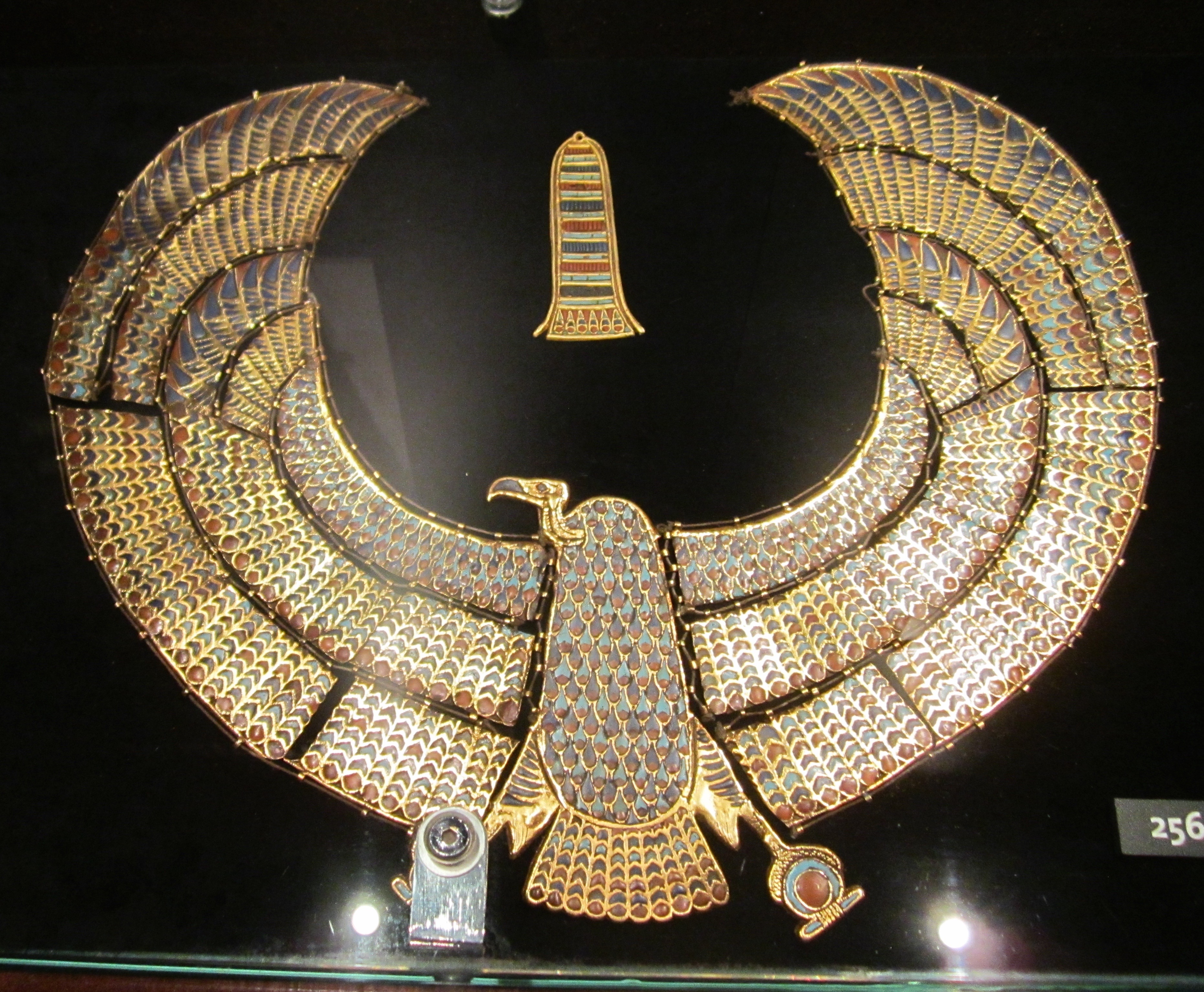
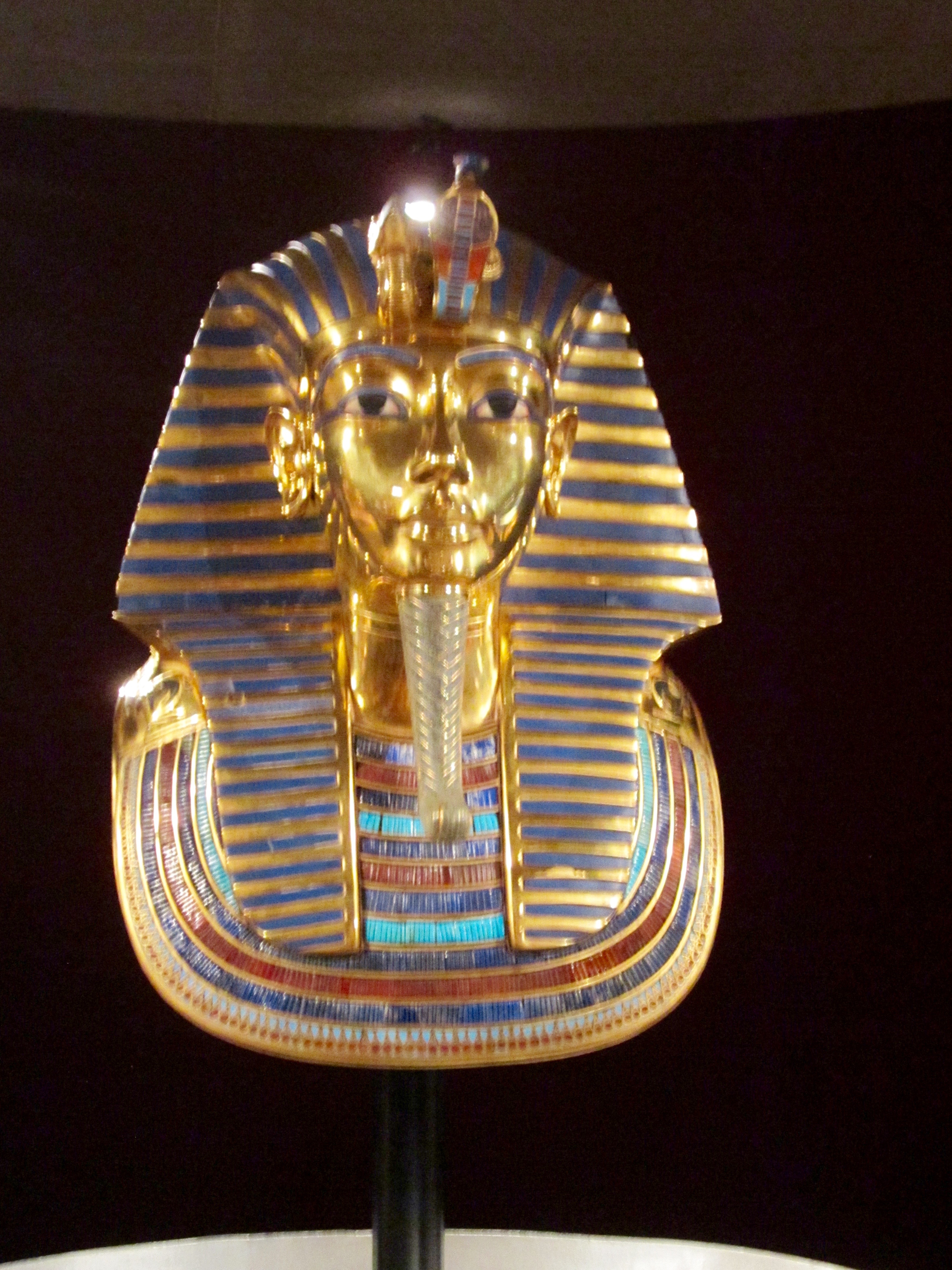
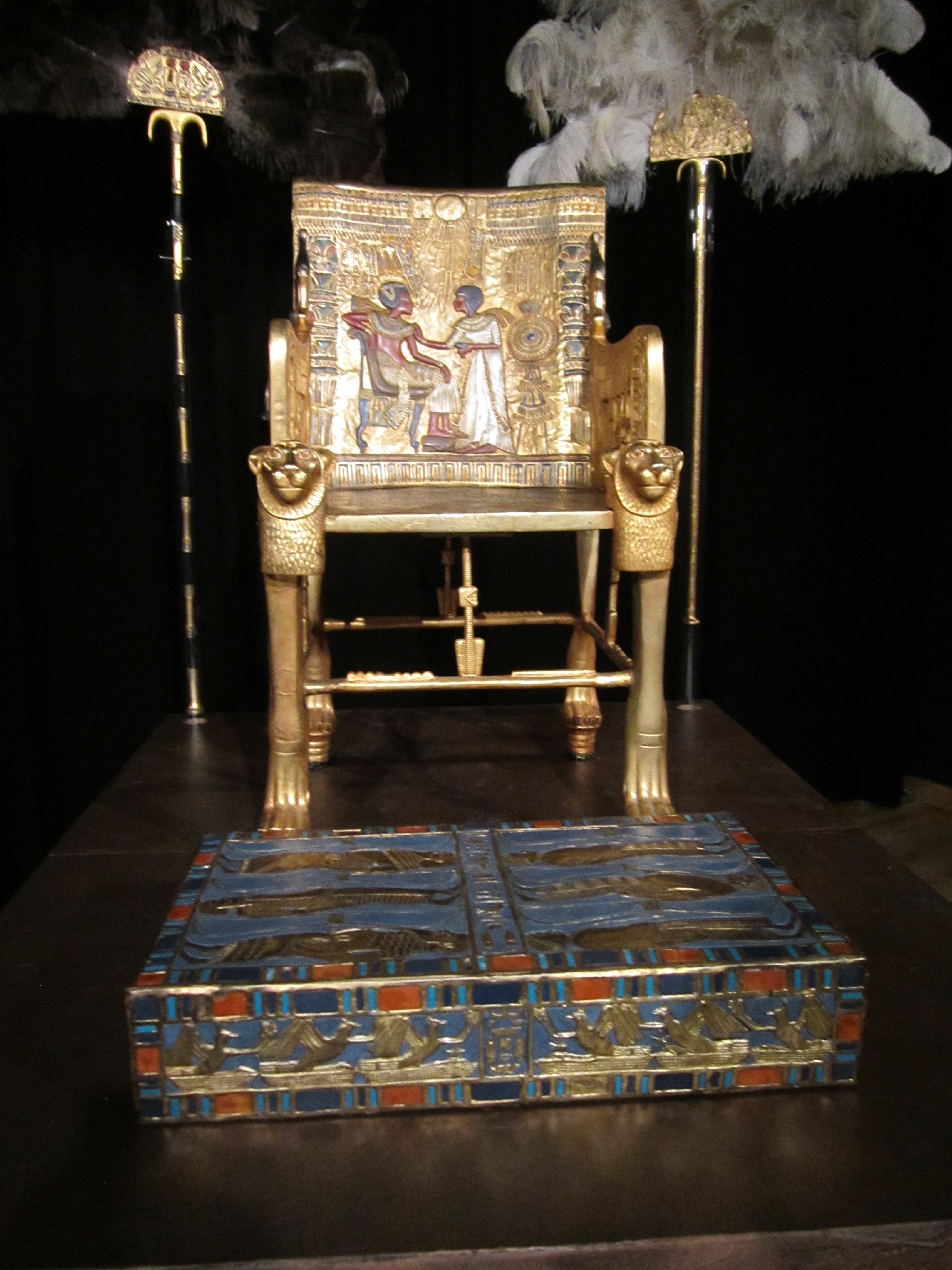
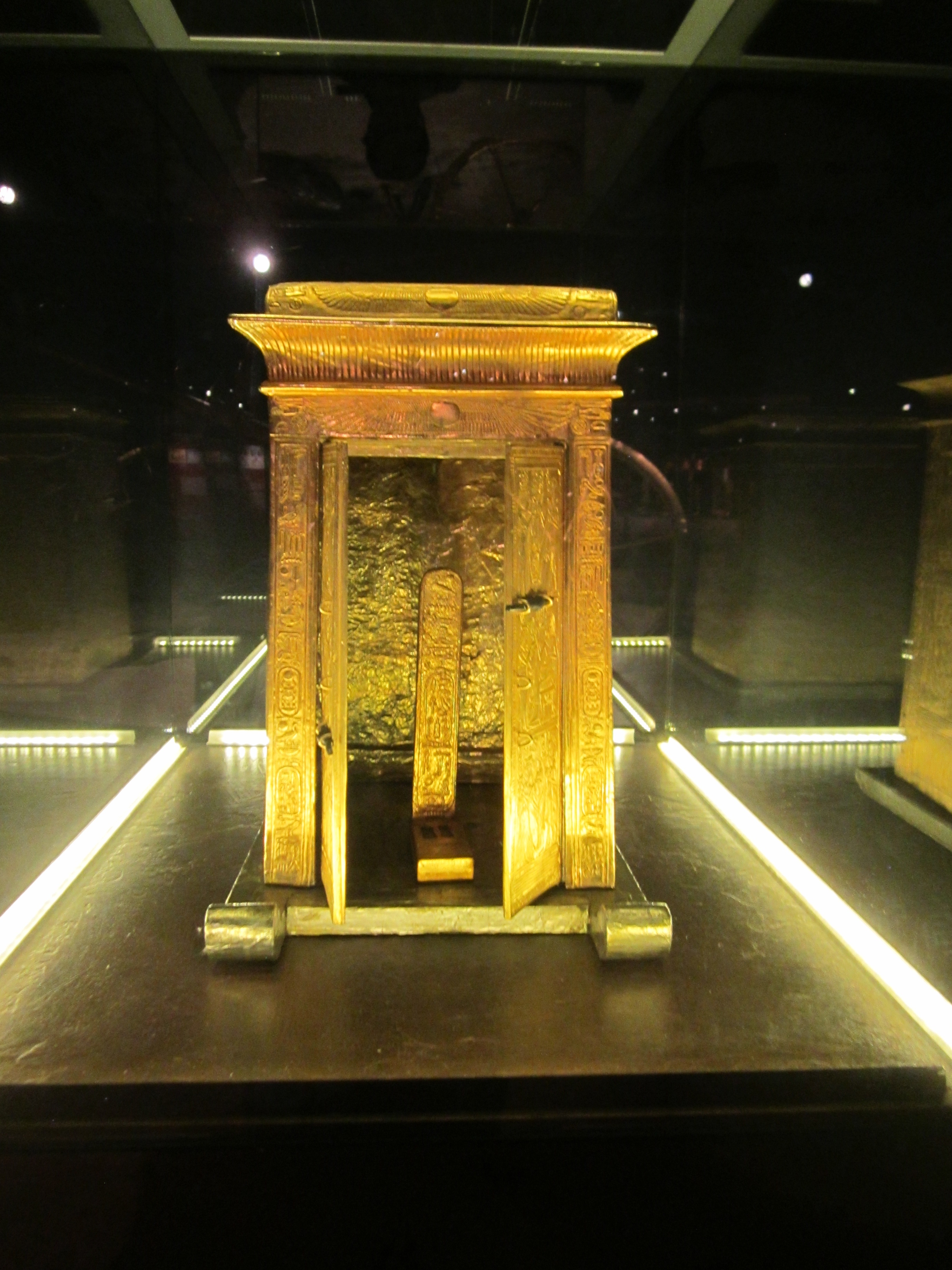
We saw GOLD. In statues, jewelry, funeral temples, caskets, caskets within caskets; if they could build it, they covered it with gold. The artisan’s craftsmanship was exquisite and imaginative, and sometimes very contemporary in appearance. And if you’re interested in how a body is mummified, there’s a video you can watch too. Though the majority of artifacts were reproductions, this exhibit still brings to life an era thousands of years old. If I lived in GR I’d visit at least once more to catch more of the details.

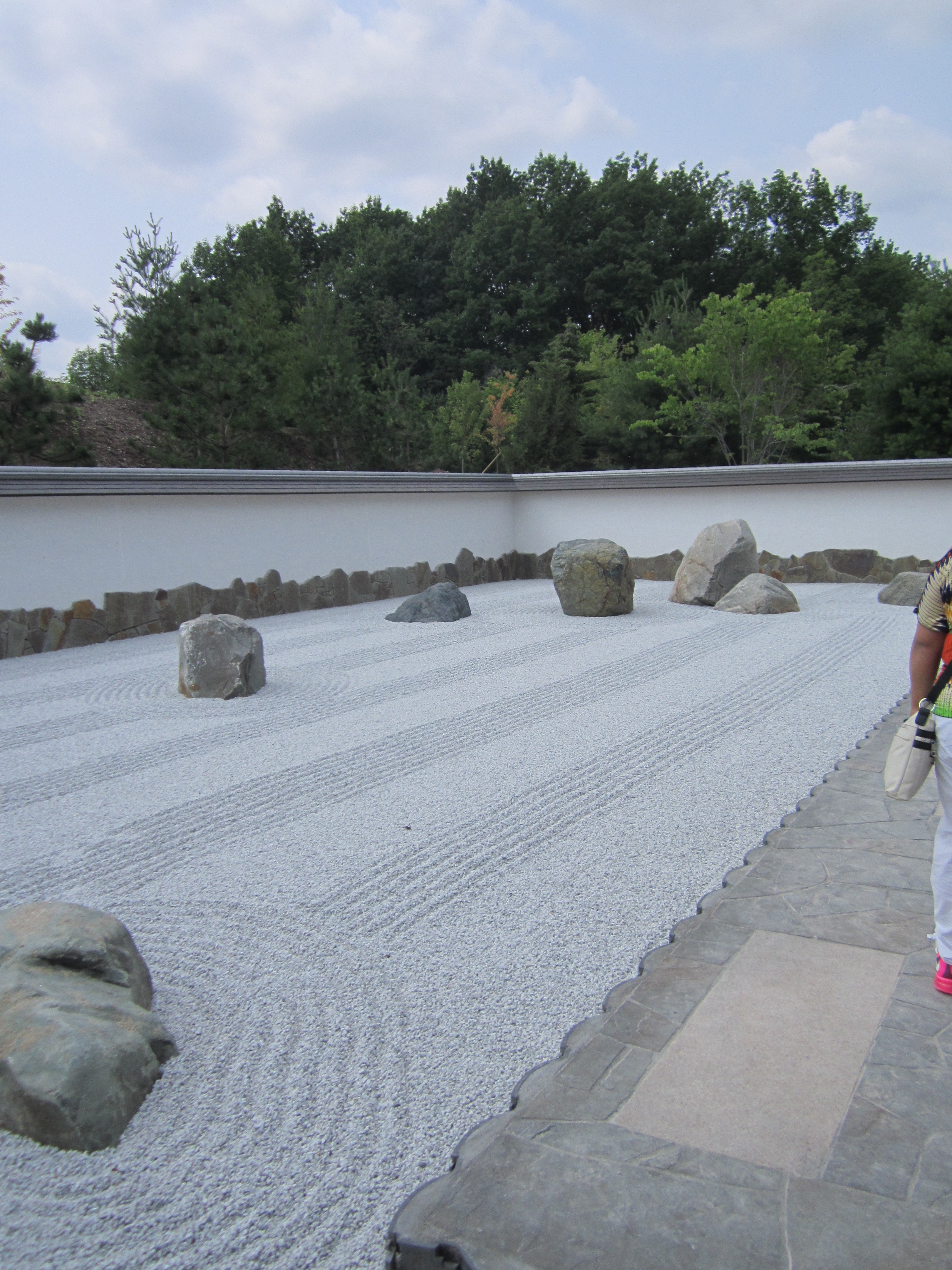
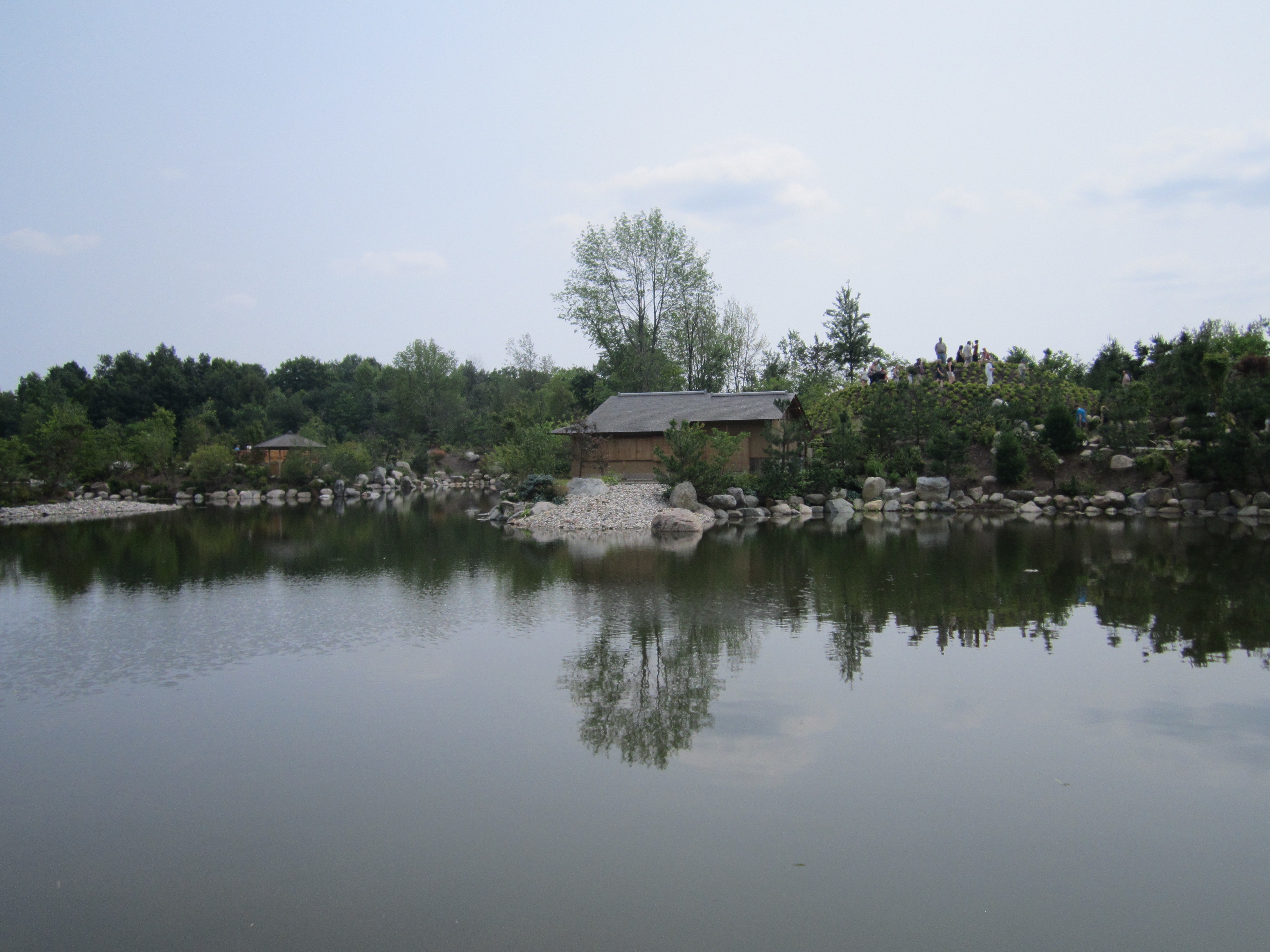
The Frederik Meijer Gardens and Sculpture Park is a 132 acre park that has been named one of the top “30 Must-See Museums.” In 1995, Frederik and Lena Meijers donated the land and their entire outdoor sculpture collection to establish a botanical garden and conservatory.
Trams drive throughout the park which contains waterfalls, seasonal plantings, and many unusual trees and shrubs, all peppered with unique bigger than life sculptures. The most notable is Leonardo Da Vinci American Horse, built from the plans of Leonardo Da Vinci by Nina Akuma. Everyone has to have their photograph taken at least once standing beneath it. But our destination this time was the newest addition to Meijer Gardens, the Japanese Gardens. Just opened a few months ago, it is a huge installation of winding paths centered around a lake, replete with koi and lily pads fed by a lovely waterfall. Though crowded, it still had an aura of tranquility that was hard to leave behind.

Our other stop was the Downtown Market, a fabulous indoor market with dozens of merchants selling baked goods, candies, meats and seafood, cheeses, sushi and anything else edible. We gravitated to The Spice Merchant where I picked up some favorites, some “designer” olive oils (coconut and cherry flavored balsamic oil), and of course some fresh seeded baquettes (still warm.)

Day 6 Travel to London, Ontario Cross Canadian Border at Sarnia
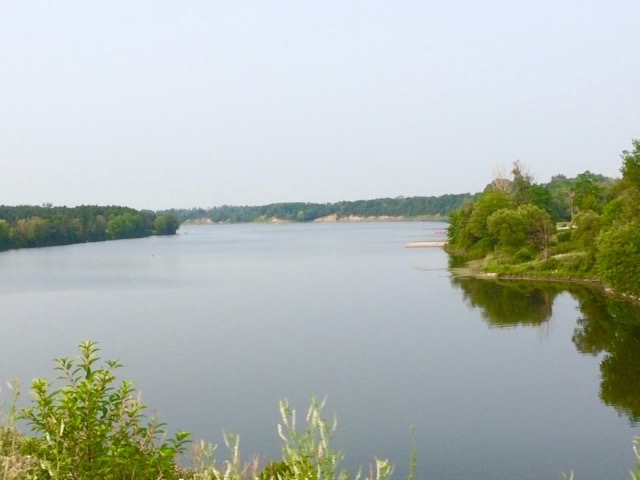
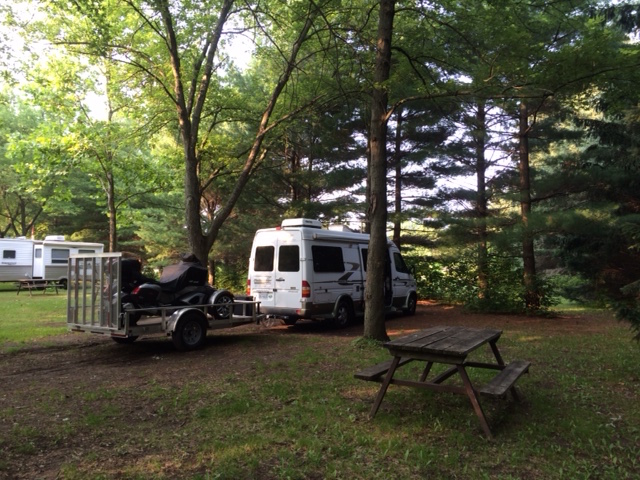
Sunday was primarily a travel day to traverse Michigan from Grand Rapids to Port Huron, cross the border into Canada at Sarnia, and then make our way to London. The border crossing was thankfully a non-event. With the high terrorist alerts because of the Fourth of July holiday, we weren’t certain what we would face, but a normal crawl in a queue of about 20 cars wasn’t bad, and the customs agent deemed us admittable in record time. By 5 p,m we were in London, passing over the winding Thames River any number of times. We drove through the University of Western Ontario, explored the Doentown and then settled into a charming secluded campsite at the Fanshawe Conservation Area, situated on Fanshawe Lake.
Day 7 Travel to Toronto, Ontario
Day 8 Tour Toronto, Ontario
Leaving London, our first stop was one of the many helpful tourist information offices, identified by the huge white question mark on a blue sign. We were helped by a super-friendly young woman who, in addition to giving us a welcome “unity pin” showing the Canadian and US flags together, provided us with Ontario information, and also conveyed some of the high points of the local Brantford history. The most notable was the stilts used by Doug Hunt, a local resident, to set two world records for the most independent steps (29) taken on the tallest (50 ft, 9 in) and heaviest (137 pounds) stilts unaided by any safety lines. The picture below is hard to understand until you find the boots in the right side of the picture. The stilts are hanging from the ceiling over the entrance corridor to the visitor center, and were constructed from sailboat masts. I was duly impressed.


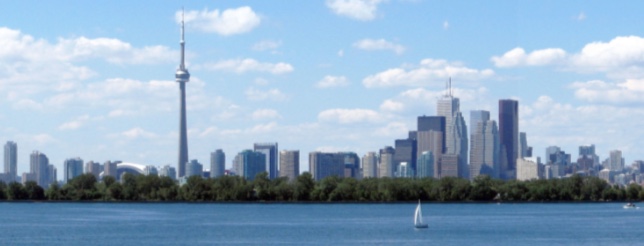
Our maps took us into Toronto, which is the largest city in Canada. With over 6 million people, it definitely had a New York City feeling to it, except that the huge skyscrapers were all quite new, so it reminded me also of cities like Dallas and Atlanta. It’s dominated by the CN Tower which, at 180 stories, is the tallest free-standing structure in North America. You can be “beamed up” in 58 seconds to the viewing deck in a glass elevator. We appreciated it from a distance.
Day 9 Travel to and tour Ottawa
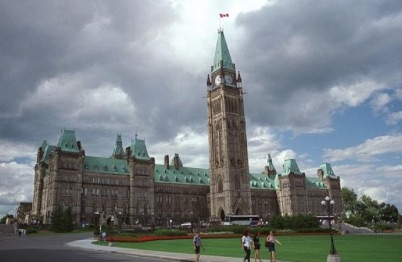
Fifteen years, we breezed through Ottawa on our way to my 55th birthday celebration with my family at Blaney Park, Michigan, where I’d celebrated my 5th birthday. We were on a two-wheel motorcycle then, and I remember how awesome the Parliameny building was, and how beautiful the gardens on the lawn extending down to the Ottawa River.
Today’s Ottawa was full of anticipation for the Pan-American Games that would start at the end of the week. We arrived in time to set up camp in Camp Hither Hills, about 12 km south of Ottawa, unloaded the Spyder and headed for Parliament Hill. The plaza in front of Parliament was filled with demonstrators and there was a strong police presence which slowed traffic to a crawl, so we headed to the next thing on our tour list, the Rideau Falls and Canal. Ottawa has maximized the beauty afforded by the canal that was built alongside the Rideau River on its way to the falls where it joins the Ottawa River by building parkways on either side of the canal and creating a lovely space for bikers, walkers, roller-bladers and a scenic motorcycle ride through lucious plantings. We started with a visit to the Rideau Falls and rode inland along Colonel By Parkway to the end of the canal near the University of Carleton where the Rideau River enters it. Unfortunately there were no parking areas along the parkway so that we could examine the locks, but the weather was perfect and the ride memorable.

Rideau Falls
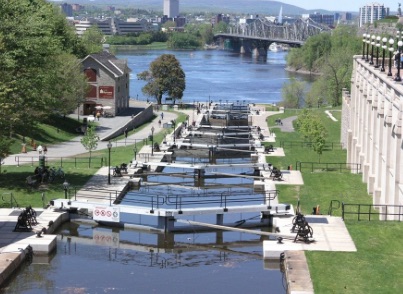
Rideau Canal
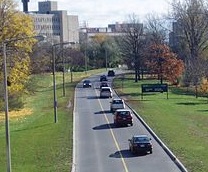
Colonel By Parkway
Afterwards we found a delightful Greek restaurant for a meal of lemon soup, Greek salad and spanokapita, just as good as any Greektown meal in Detroit. Canada has many ethnic groups represented in its population, especially its larger cities, and the dining options are awesome. We arrived back at the campground just before a rain storm moved in and enjoyed sleeping that night with the periodic patter of rain on the roof. By morning it was gone and we headed for Montreal under sunny skies.
Day 10 Travel to Montreal
Day 11 Monster Montreal Molasses
Despite the fact that Canada is known for its maple sugar and maple syrup, the title of this post does NOT refer to our sweet experiences in Montreal but instead to its traffic. It is monstrously congested and it moves like molasses. After negotiating Ottawa with relative ease by motorcycle and managing to find some robustly scenic routes, we had high hopes for Montreal. Wrong.
Our afternoon tour of the city began well enough with a fairly rapid entry to the east side of town, aiming for the 1967 Olympic Village. It’s impossible to miss miles away even across the St. Lawrence River, with its massive stadium rooftop removing Montreal Tower (see below) hovering over the huge park that encompasses what was once part of the Olympic Village. It is the world’s tallest inclined tower at 574 feet.
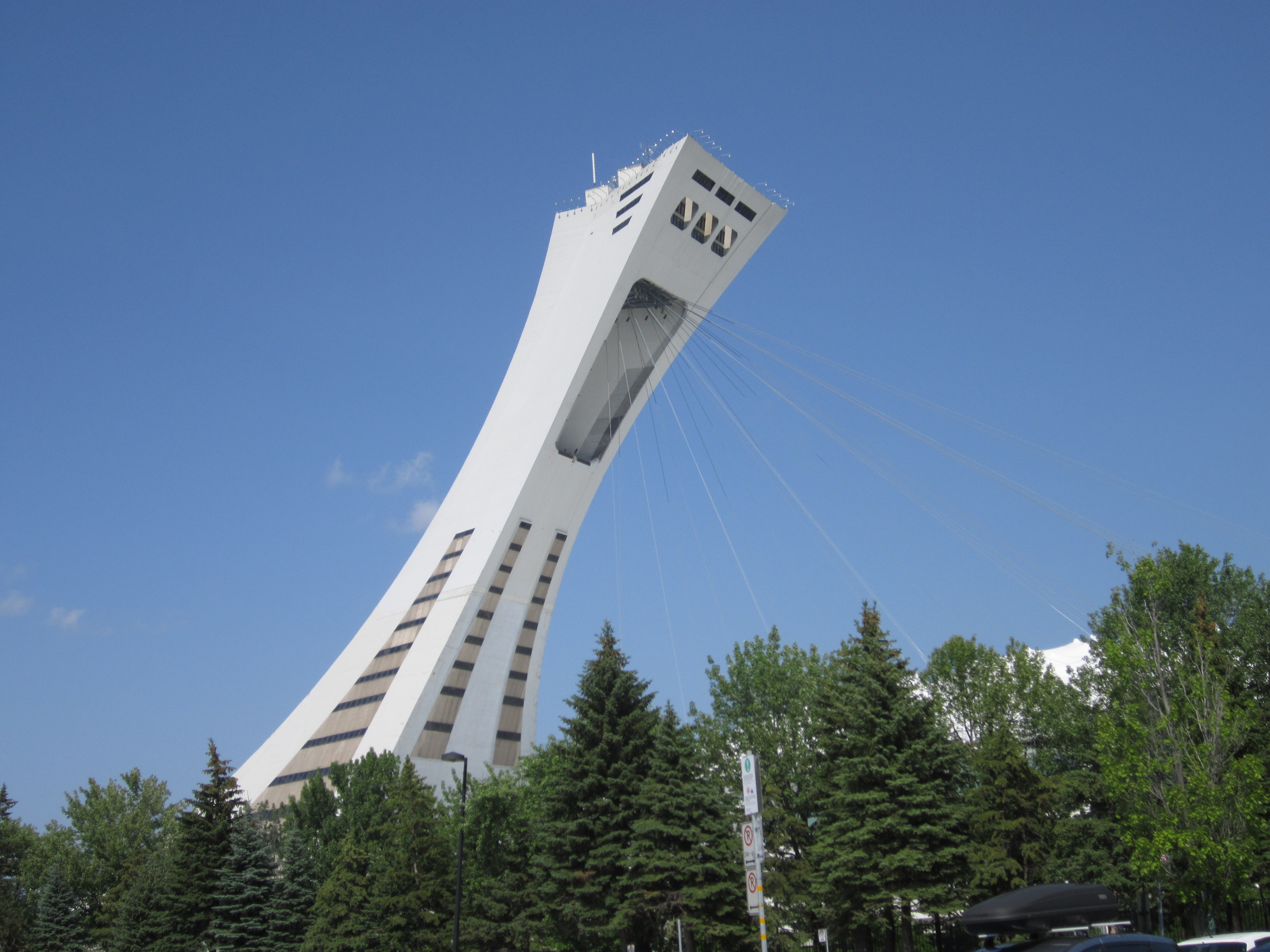
The tower is impressive, even if it’s performance has been less than stellar. For me, it highlights that Montreal, aside from being a major center of commerce and culture for Canada, as well as home to several highly-regarded universities, is consummately a city designed for athletic endeavors. Aside from the Olympic Games, it hosts marathons and triathlons on its lovely winding roadways, as well as international and national road races on a world-class race track. Its streets are covered with cyclists and runners, and it even has an island that appears to be dedicated to all these sports. If its traffic could move as fast as its cyclists or even its runners, it would really be a city on the move.
Instead, from the tower we crawled along Sherbrooke down into the center of town to find McGill University and the McCord Museum, a small museum that covers Montreal’s heritage and history, with equal attention paid to the First People’s contributions as well as its builders of commercial dominance. Throughout the museum, there was a theme of clothing that people wore throughout the different eras of Montreal’s history.
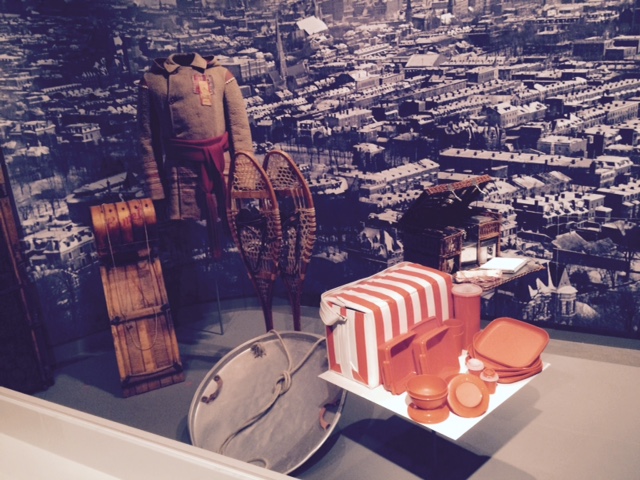
Representative items from Montreal’s history

1920’s Dress
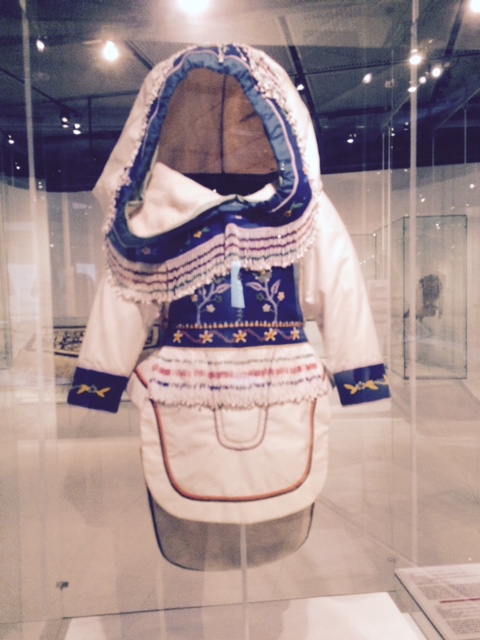
Inuit Parka

Chief’s Ceremonial Dress
We emerged from the museum just in time to experience Montreal’s rush hour traffic, and spent the next half hour moving about a mile that finally brought us to Montreal’s racetrack island. The Circuit Gilles Villeneuve is located on Notre Dame Island and is most noted (for us) to be the Montreal home of the Formula One Canadian Grand Prix. This was Roger’s first opportunity to actually drive a vehicle around a racetrack course, and he enjoyed every minute of it. Fortunately, we were dodging other cyclists and skateboard riders (or perhaps they were dodging us) instead of little insect-looking cars going 200 mph. Even without the crowds and the obnoxiously loud muffler-less cars whizzing by, there was still a feeling excitement emanating from the road. It was a super natural high.
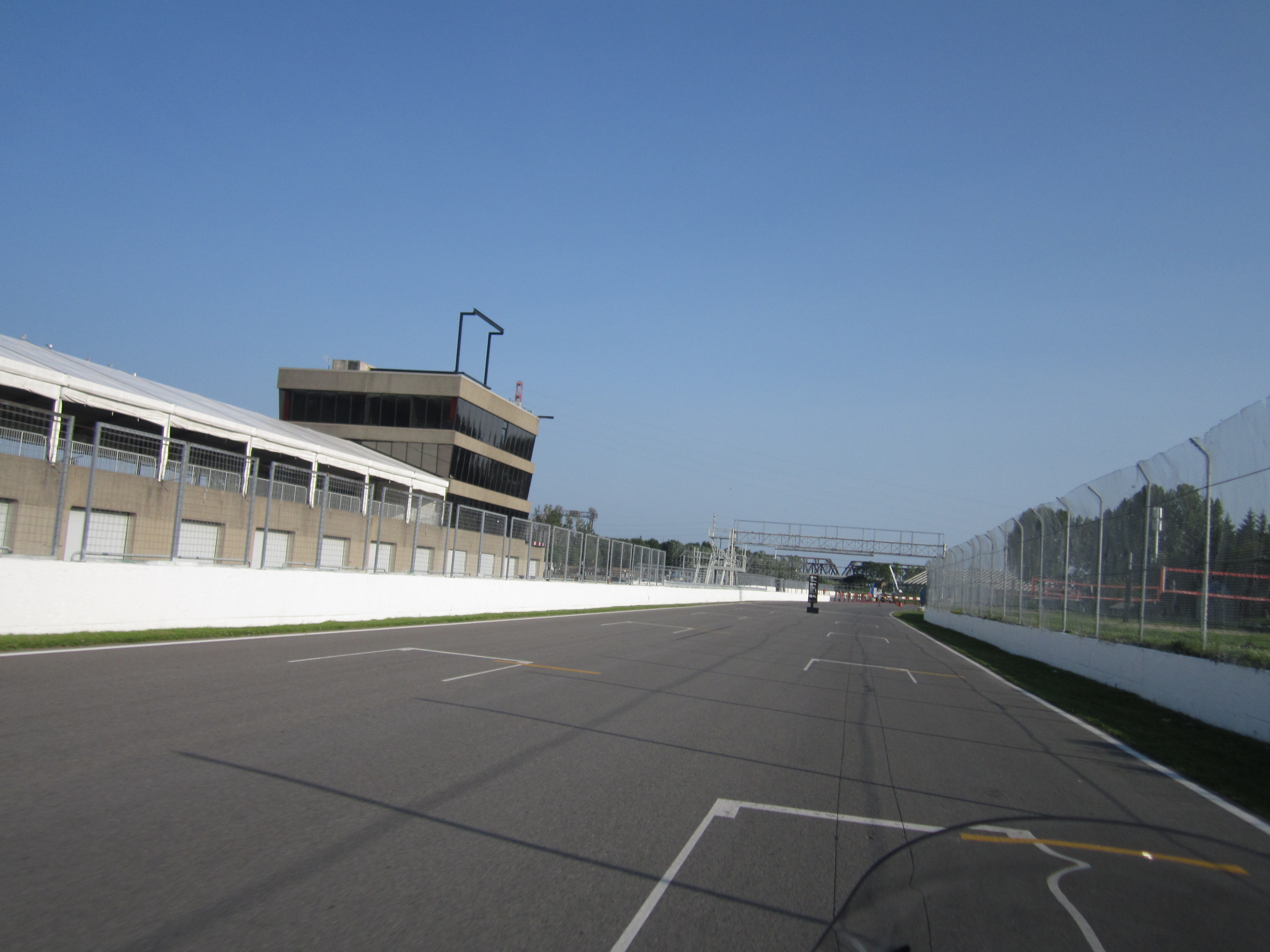
After that, the detours and construction and missing signs that added about 30 km to our original trip home and the delays of crawling traffic sucked the joy out of Montreal. We were truly bedraggled when we got back to our campsite, whipped but at least in one piece. I think we forgot to eat dinner, but at least we slept well.
Day 12 Travel to Quebec City
Day 13 Tour Quebec City
While Quebec was one of the main reasons we had brought along the Spyder, after our experience with city-driving in Montreal, we were delighted to discover that our campground provided a free shuttle to the ferry which in 15 minutes could take us right to the Vieux Ville (Old City) of Quebec. We jumped at the chance and donned the best walking shoes we had.
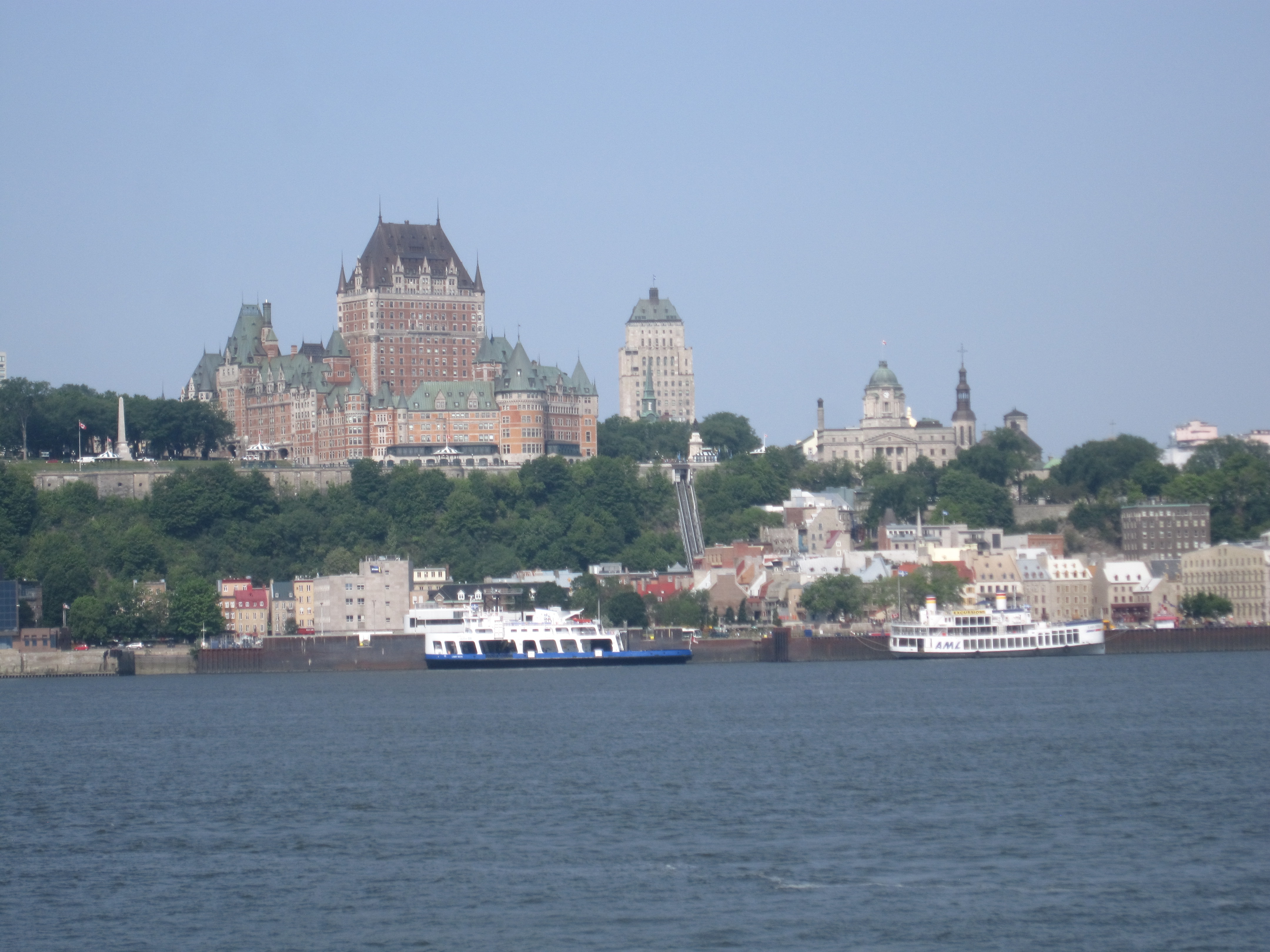
View of Quebec from Ferry
Quebec is a city of hills and stairs, a living version of Chutes and Ladders. It’s divided into the Neuve Ville (the newer, commercial part of town situated farther back from the river,) and the Vieux Ville which has the historic streets and buildings dating back to the 17th and 18th centuries. The streets are cobbled, and shops of all types and sizes fill every building, alcove and alley. There are also rows of semi-permanent kiosks that fill the wider streets, such as the one where we had a lovely lunch at an outdoor café. Street musicians abound; within a few blocks we heard piano, accordion, guitar and harp.
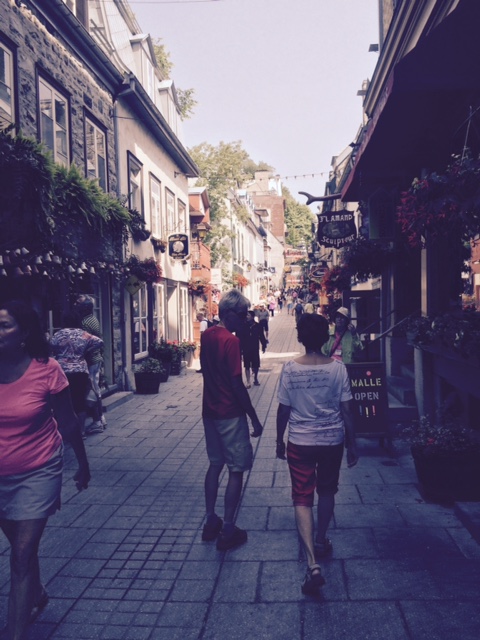
Rue de Petit-Champlain
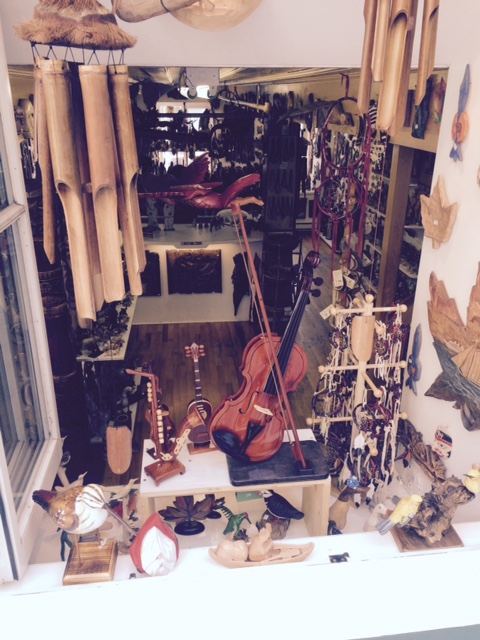
Tempting Shops

Climbing to the Chateau Frontenac
If you imagine San Francisco squished on both sides hard enough to push the center of the city up about twice as high in the middle, you get a good idea of Quebec. Our primary goal was to reach La Citadelle, the huge hill high above the river where the fortifications still stand that once made Quebec the most daunting city to attack.
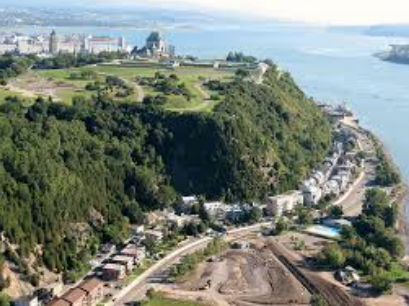
Aerial View of La Citadelle

Chateau Frontenac
When we departed the ferry, our goal was “Conquer La Citadelle!” and we took off with enthusiasm up our first set of stairs onto Rue Petit Champlain where we were quickly distracted by the numerous shops designed to distract tourists. Our second set of stairs brought us to what I though was the foot of La Citadelle, but when I looked up, it was just as high above us as ever. By the time we finally reached the Chateau Frontenac, the huge, historic hotel with at least a thousand rooms that dominates the Vieux Ville, I looked up and saw La Citadel still in the distance. With two more sets of stairs and some pretty steep inclines, we finally reached the outer star-shaped wall separating the fort from the rest of the world, and I forget who persuaded whom that we really didn’t need to go any further up the hill. By then we were on the Plains of Abraham where the British finally defeated the French in 1759.
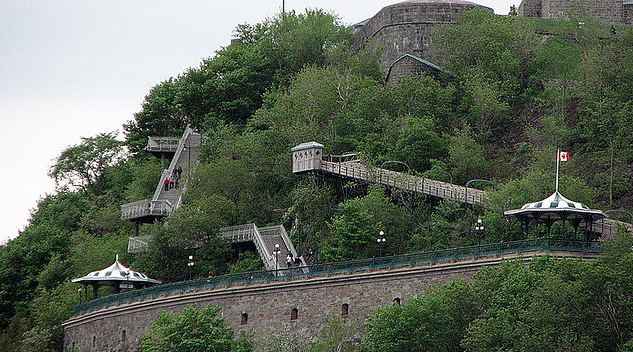
Stairs to La Citadelle
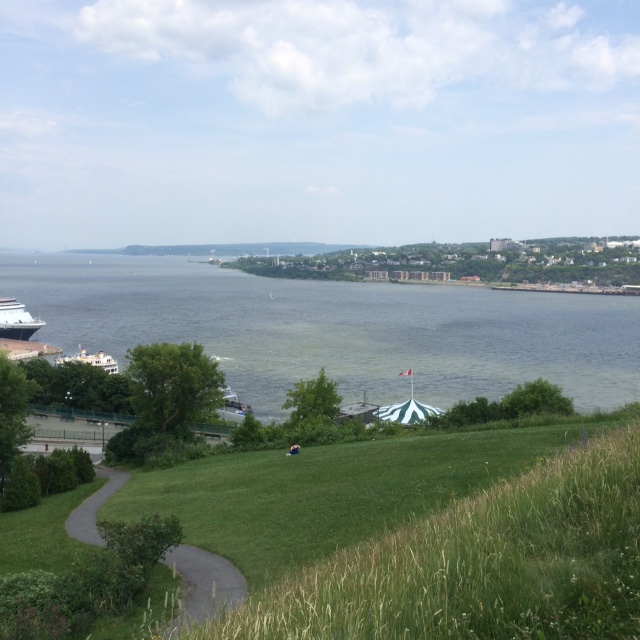
Plains of Abraham…looking out over the St. Lawrence River
At this time (256 years later) the Plains of Abraham (a huge expanse of hillside surrounding La Citadelle now part of the Parc des Champs-de-Bataille) was filled with some heavy metal music, part of the ongoing music festival taking over the town for the weekend. Standing at the wall with the St. Lawrence River below, it was easy to understand how the French believed their location was invincible and withstood the British for so long.
Having conquered La Citadelle as much as we wanted to, we meandered down charming streets, stopped for a lunch here, an ice cream there, wandered in and out of shops, and popped into a few more historic sites, like the Place Royale and Terrace Dufferin, enjoying a Starbucks as we watched a street gymnast, while looking out over the St. Lawrence River. I found a delightful gallery that carried only Inuit art and purchased a small print. It was a lovely but tiring day. We were more than happy to meet the 4:30PM ferry back, and to have pizza delivered to our campsite. Tomorrow we head towards Cape Breton.
Day 14 and 15 Travel through New Brunswick to Nova Scotia
Day 16 Cruising Cape Breton and the Cabot Trail
After working our way quickly to the ultimate destination of our trip, Cape Breton in Nova Scotia, we studied the weather carefully and decided the next day would be the best for donning helmets and motorcycle jackets and doing the 190 miles around the Cabot Trail, conveniently located less than a mile from our campground. Despite a few foggy patches at the beginning, it was a day spent as close to heaven as you can get on earth. The scenery is breathtaking, and my photos barely do it any justice. The Cabot Trail is like taking the best of the California, Oregon and Washington State coastlines, mixing them together with the quiet peace and beauty of the San Juan Islands and concentrating them all together in this one tiny island. We couldn’t stop at every scenic overlook and did bare justice to the miles of hiking trails that take you further inland. You could spend an entire vacation, however long, exploring the Cabo Trail and the Cape Breton Highlands National Park. It’s an “I’ve got to come back” kind of place.
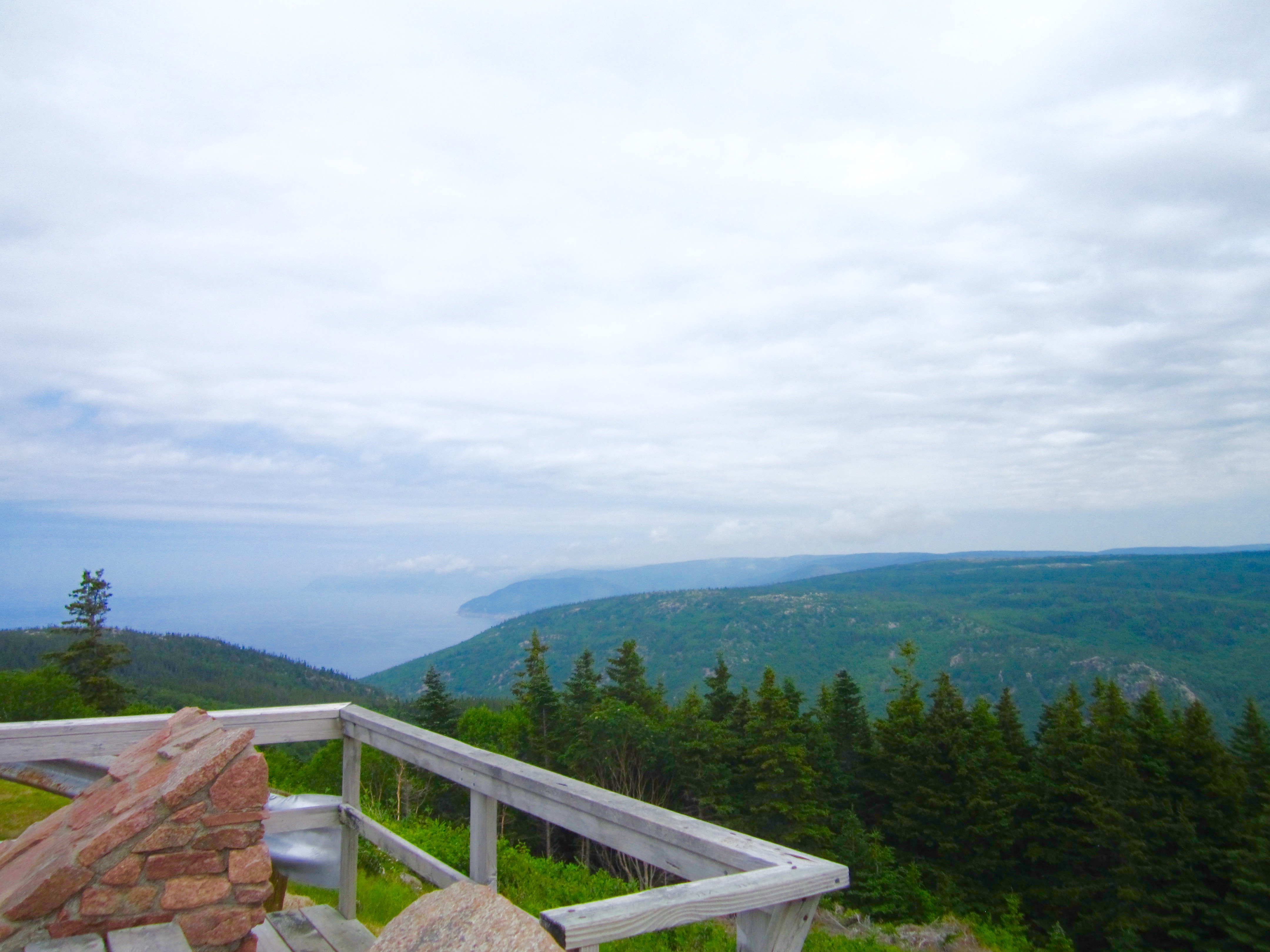
Lookout over the Gulf of St. Lawrence

Small fishing villages abound. We ate lunch at The Happy Clam overlooking this collection of fishing boats.
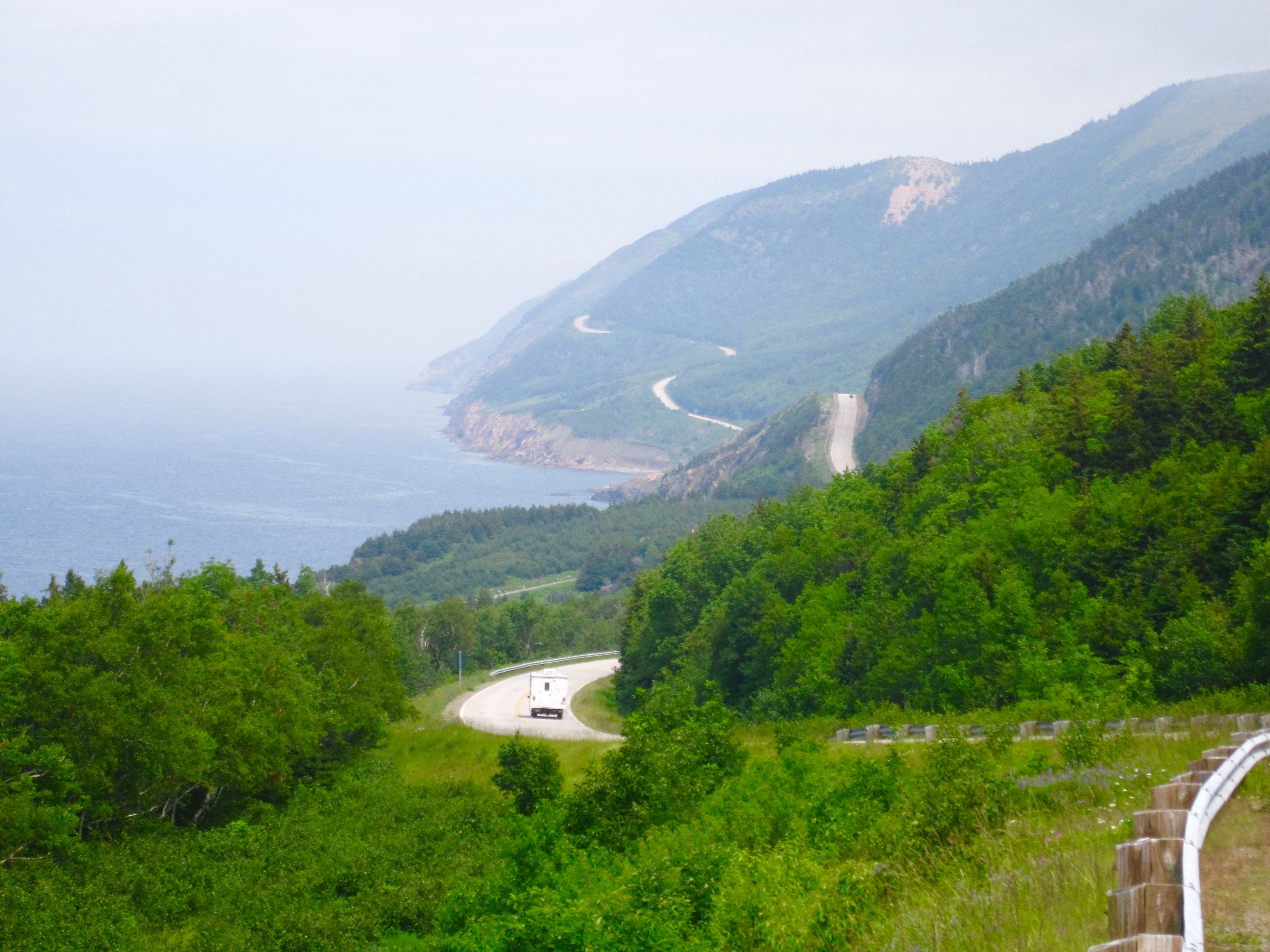
The Cabot Trail wanders along, hugging the coastline as much as possible.
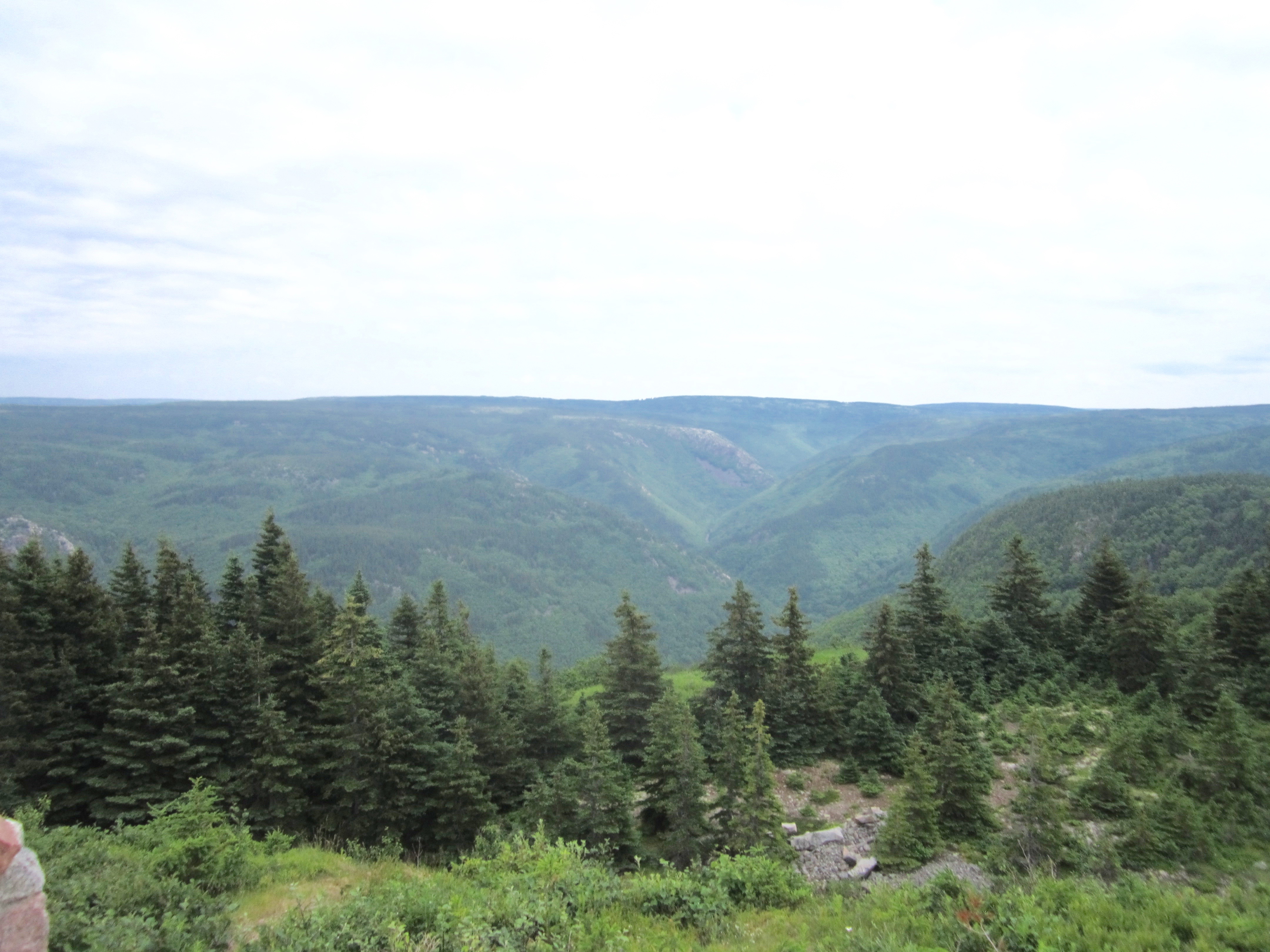
Looking out over the highlands. 10 feet of snow is not unusual here. The roads never close, because about 1600 people live on the island all year.

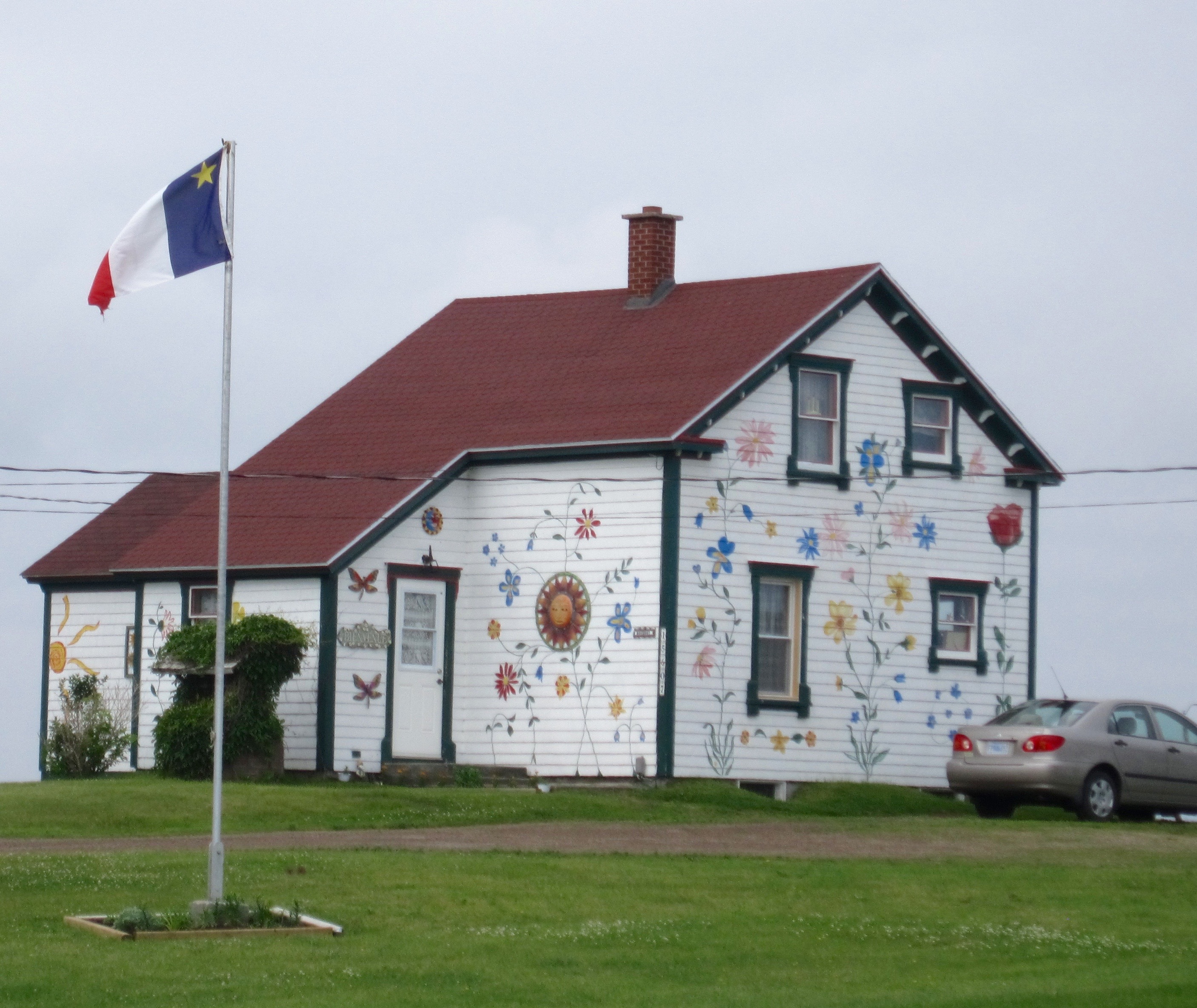
The happiest home I’ve ever seen. I’d love to meet the people who live in it!
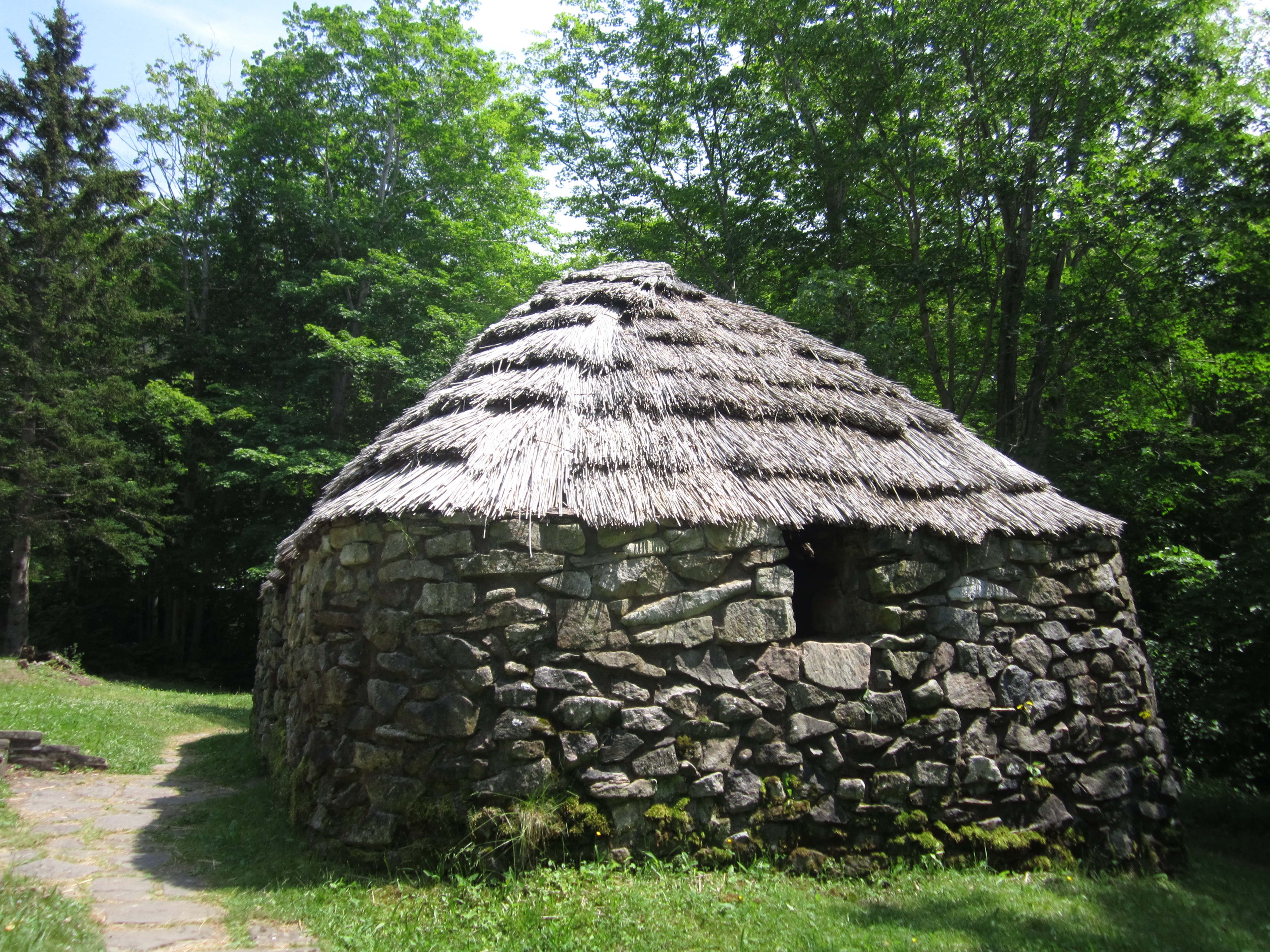
The Lonely Shieling–a replica of the kind of shelter shepherds would use in Scotland where the sheepherder and sometimes the sheep would find shelter from inclement or very hot weather.
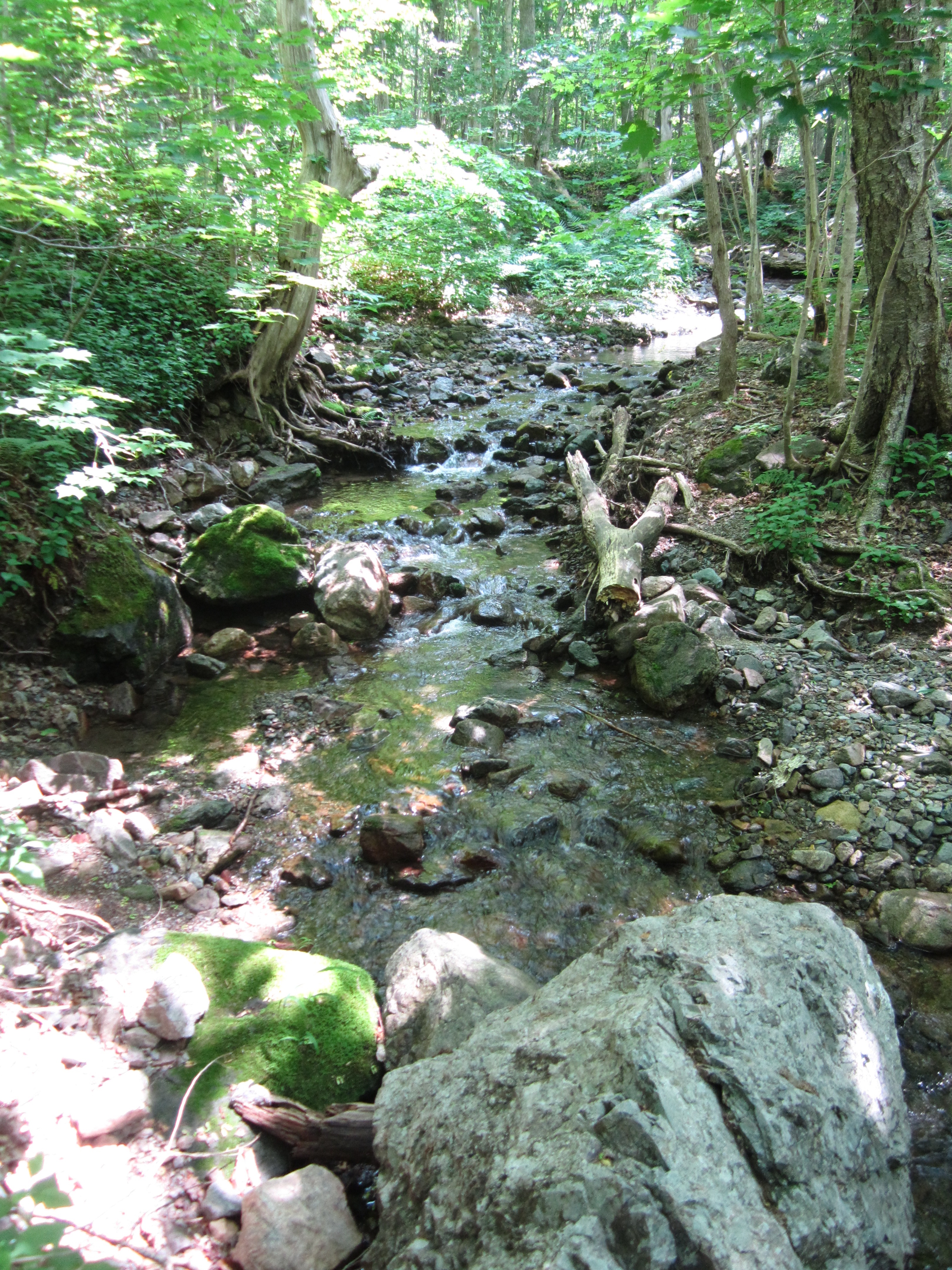
Along the trail to the shieling (above)
Day 17 Baddeck, Nova Scotia – Alexander Graham Bell National Monument

There is so much more to know about Alexander Graham Bell than most people are aware of. His invention of the telephone was only the beginning, and in his opinion was less important than the work he did to bring speech to the deaf. Early in his life, through the influence of his grandfather, he became very interested in speech. He taught lessons in elocution, eventually teaching as a professor of Vocal Physiology and Elocution at Boston University. His research eventually led to working with devices to aid speech, which ultimately brought him to the telephone. Once his fortune was established, he moved on to other inventions in the fields of aviation and hydrofoils, among other things. He also did medical research to develop techniques to teach speech to the deaf.
Prototypes of all these devices were on view, and they were fascinating, but in my opinion they were overshadowed by the details of Bell’s life beyond his laboratory. He married one of his deaf students (he gave her all of his shares except 10 in the newly formed Bell Telephone Company plus a tiny silver model of the first telephone as a wedding gift) and together built a beautiful summer residence not far from the museum on Baddeck, Nova Scotia. The home is private and still held by the Bell Family. Videos of interviews of Bell’s daughters and friends and colleagues stressed how much joy Bell found in life–in his work, his family, and his friends. Though his wife teased him for being a “night owl” as he worked so late into the night on his inventions, he was also a person who could put away his work when he was enjoying his time with his family, and he took great joy in playing with his children and grandchildren. Though he eventually became a naturalized U.S. citizen, Canada claims his as their own, as it was to Canada that the family moved when tuberculosis had already claimed two of his brothers and threatened Bell’s own life as a young man, and it is also where he invented the telephone. The Alexander Graham Bell National Historic Site is a beautiful memorial to this remarkable man who made the world more accessible not just for the deaf but for all of us.

Alexander Graham Bell National Historic Site in Baddeck, Nova Scotia
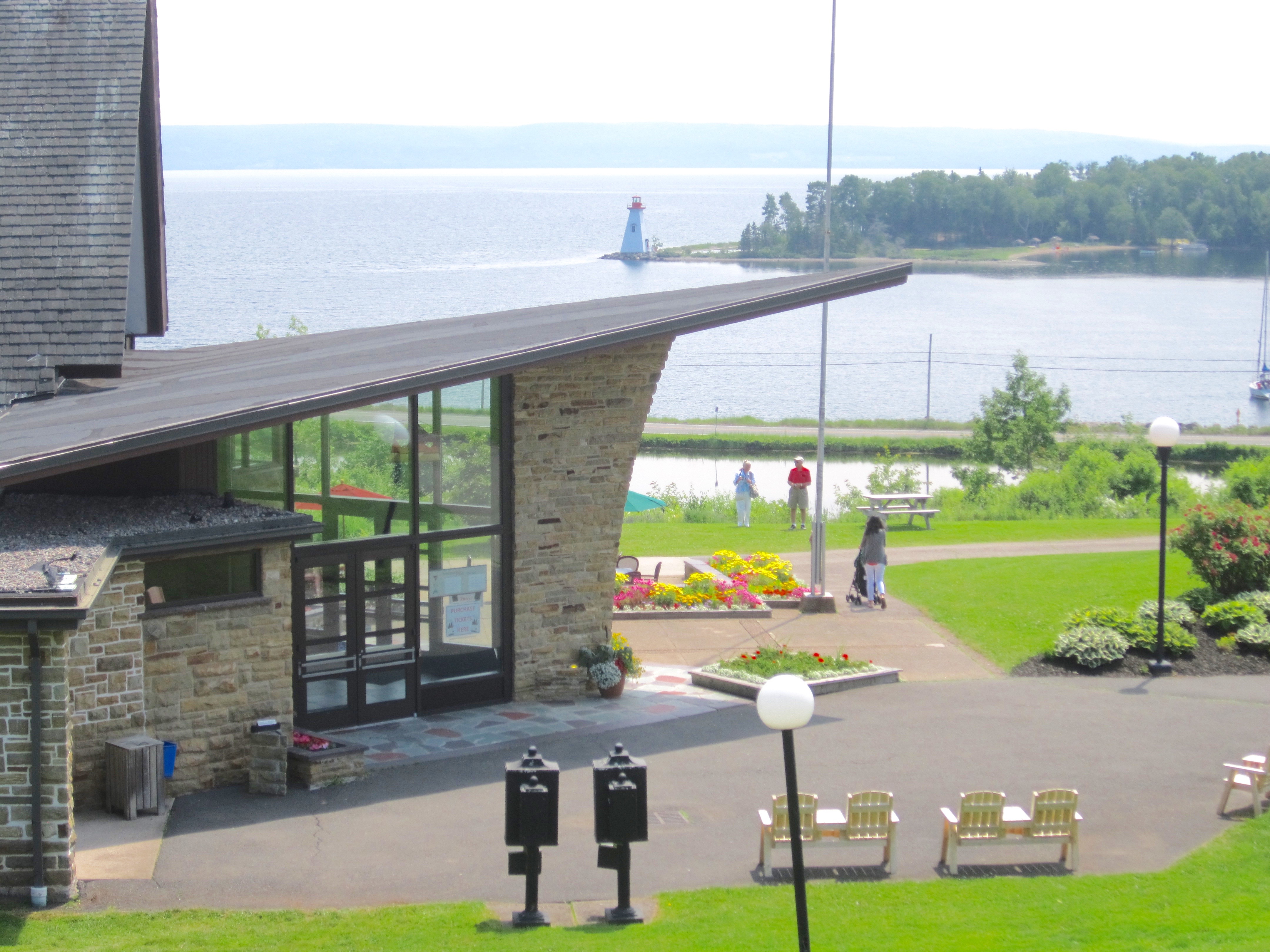

Bell built his home Beinn Bhreagh in the hills across the harbor from the site of the present museum.
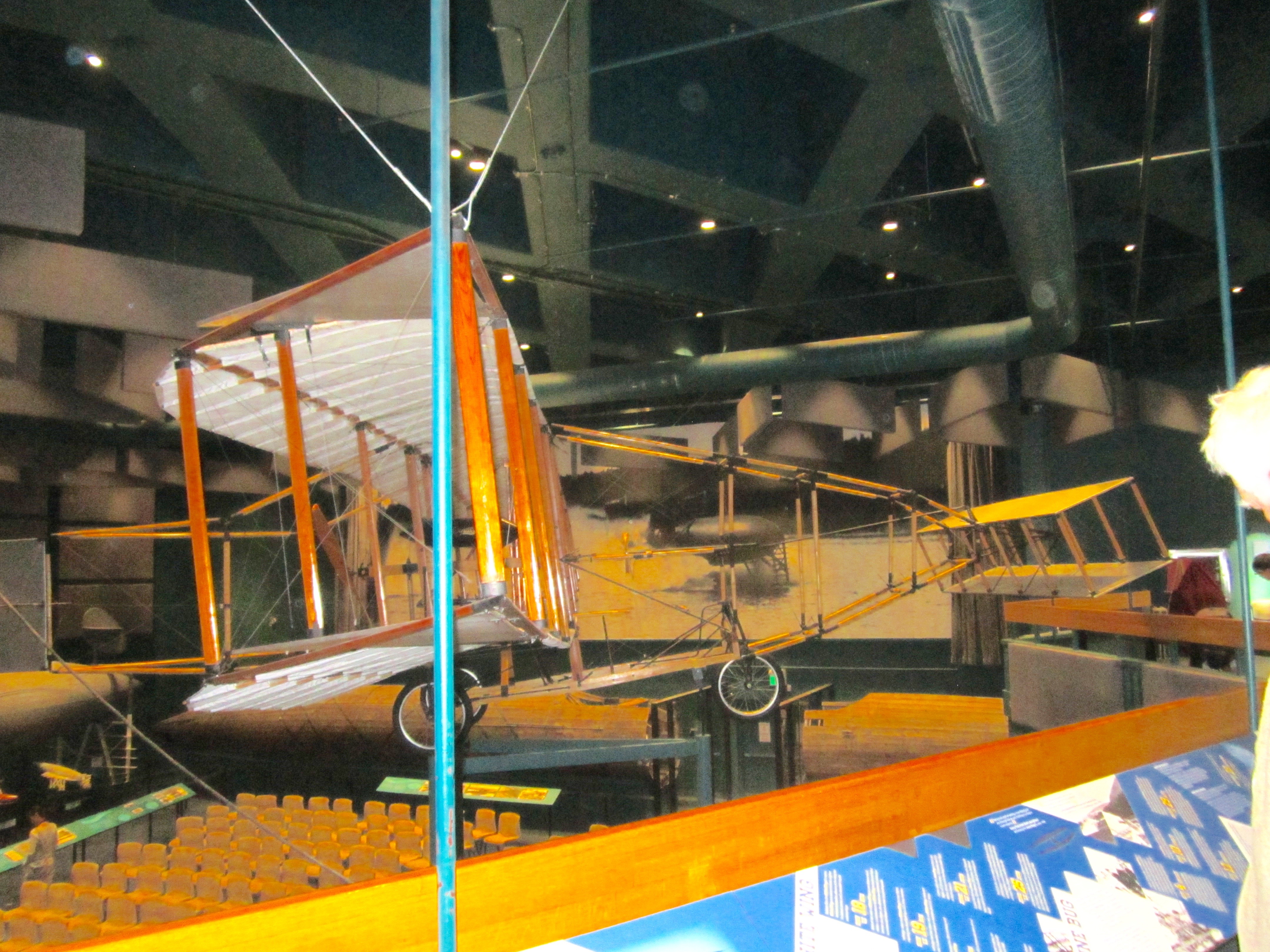
Model of his airplane, the Silver Dart. Bell is hailed as the first inventor to bring flight to Canada.

A model of his hydrofoil that set a world marine speed record in 1919 of 70 mph, a record that stood for 10 years.
Day 17 Travel to Maine
Day 18 Campobello Island
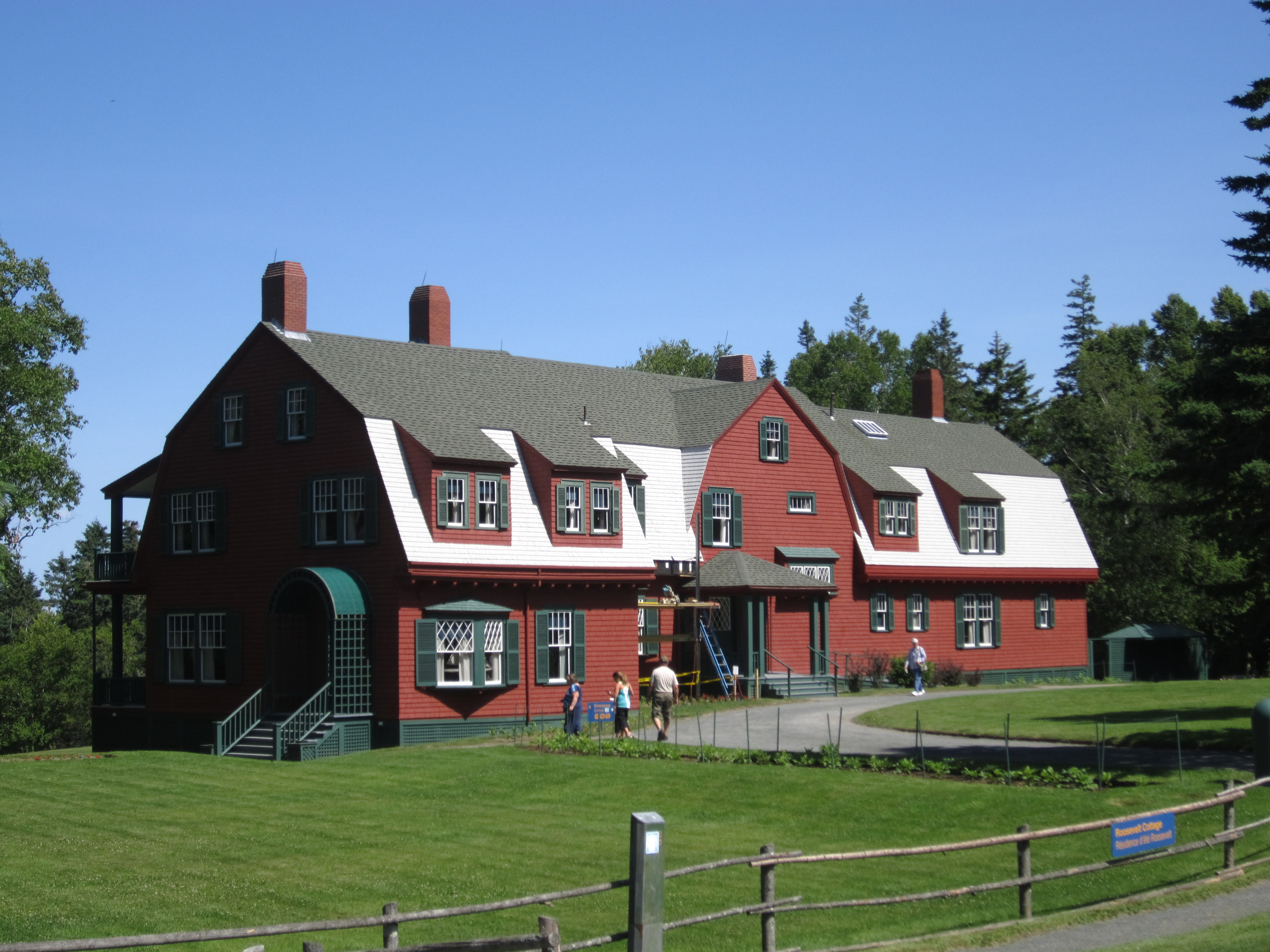
FDR’s Campobello Cottage
Franklin Delano Roosevelt was first brought to Campobello Island by his parents as an infant, and for most of his life up to the time he contracted polio there, their family cottage was the focal point of all his summers. (Afterwards, Warm Springs, Georgia was the place he went to as he dealt with the paralysis of his legs that resulted from polio. During his years as President, he only returned to Campobello three times.) His mother gave Franklin and Eleanor a cottage next to the Roosevelt family cottage as a wedding gift. While the original Roosevelt cottage of FDR’s parents was demolished in the 1950’s, FDR’s has been lovingly restored and this was the site that we visited.
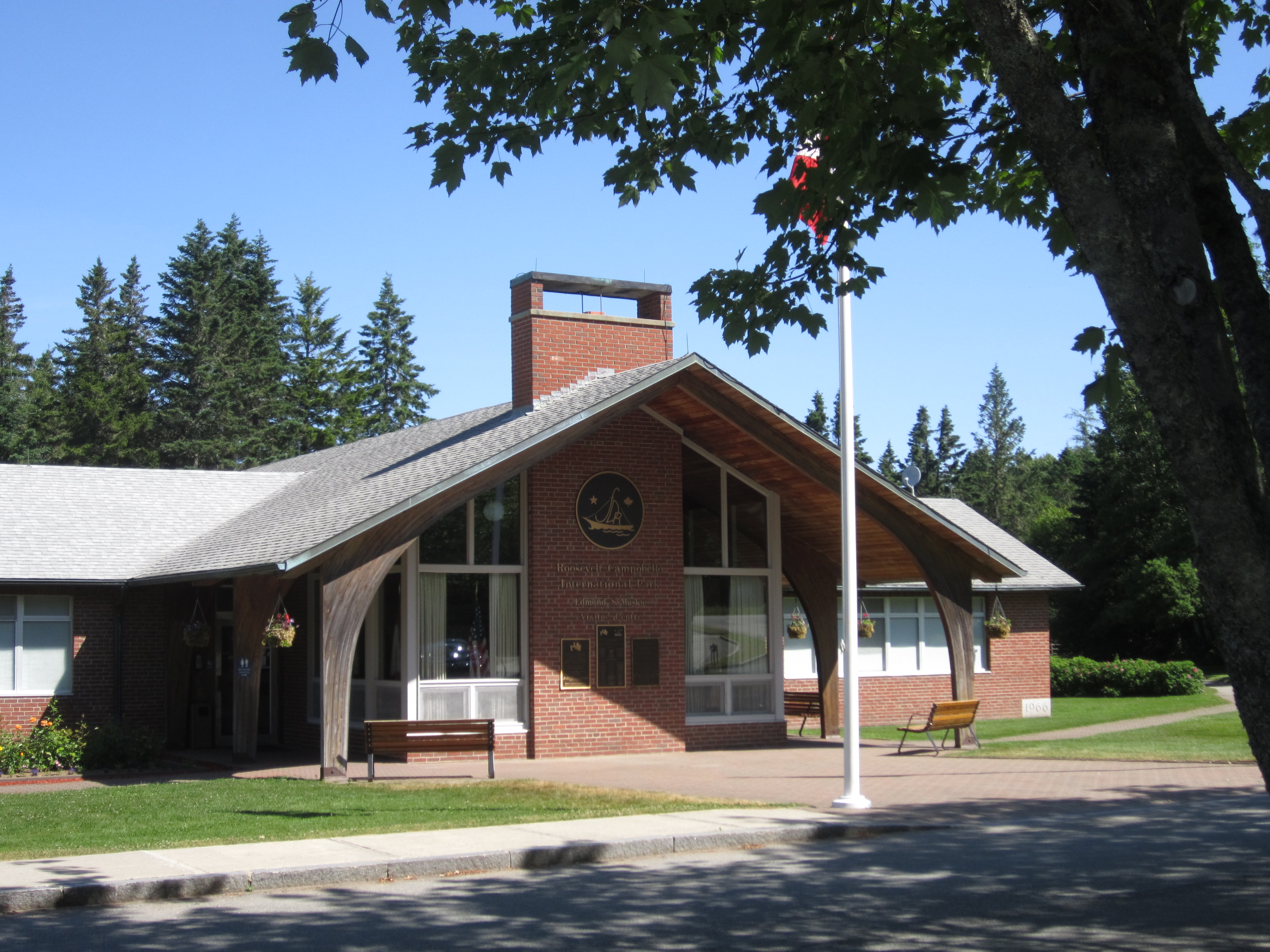
Visitor Center for Roosevelt Campobello International Site
The Roosevelt Campobello International Park is a unique collaboration between Canada and the United State who, as with Alexander Graham Bell, both consider FDR as one of their own. It is a park on Canadian soil that is jointly funded and maintained by both countries. The FDR residence is remarkably simple, considering the wealth of the family. Granted, it’s a “cottage” with 18 bedrooms, seven fireplaces and three stories, and required the services of 7-8 servants, but the bedrooms are very simply furnished and the emphasis in every room is on comfort over elegance. As I hadn’t found any photographs of the interior of the cottage online, I was surprised that photography was allowed within the house, so I splurged with my camera. Enjoy!
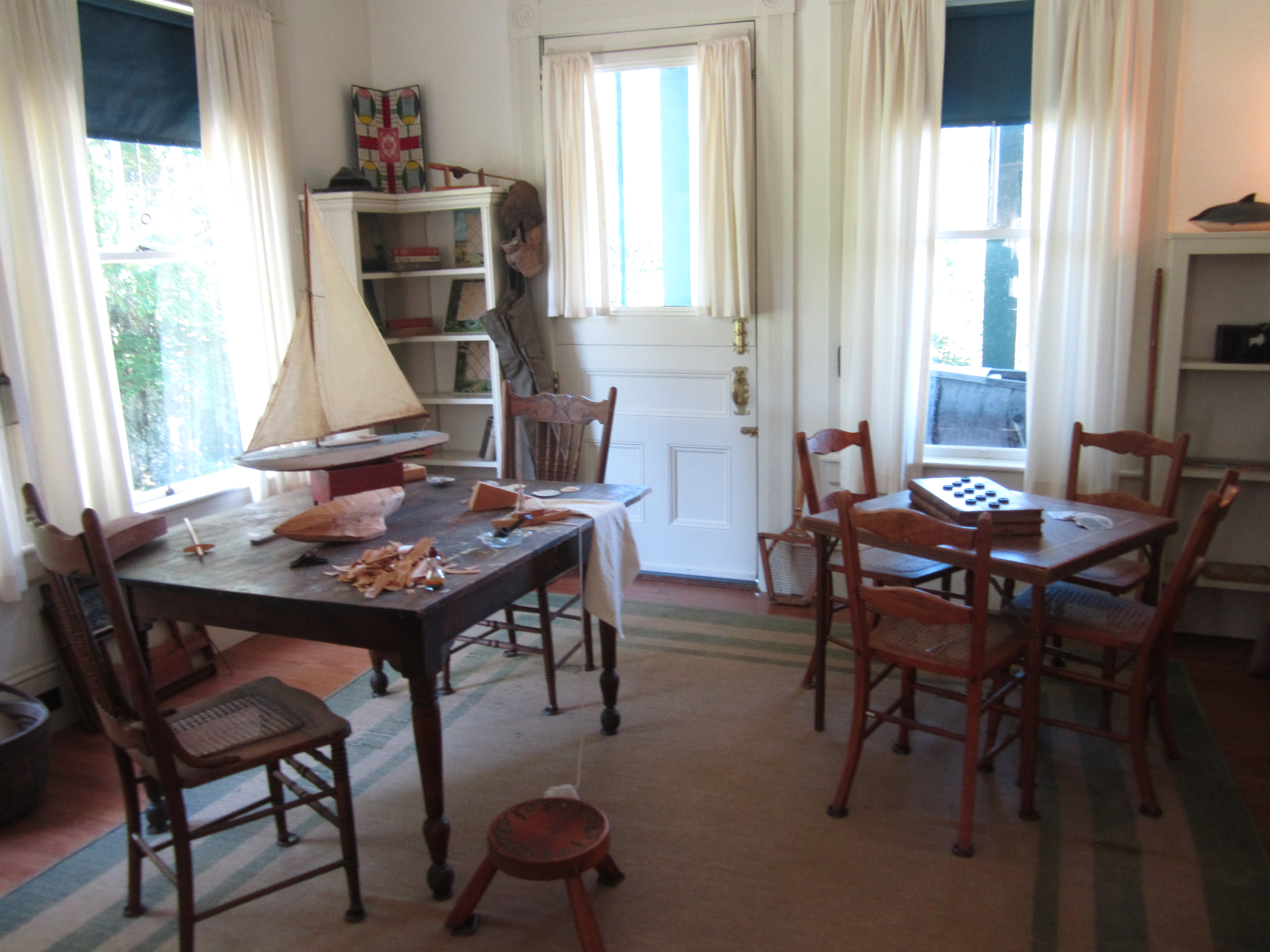
Front Drawing Room
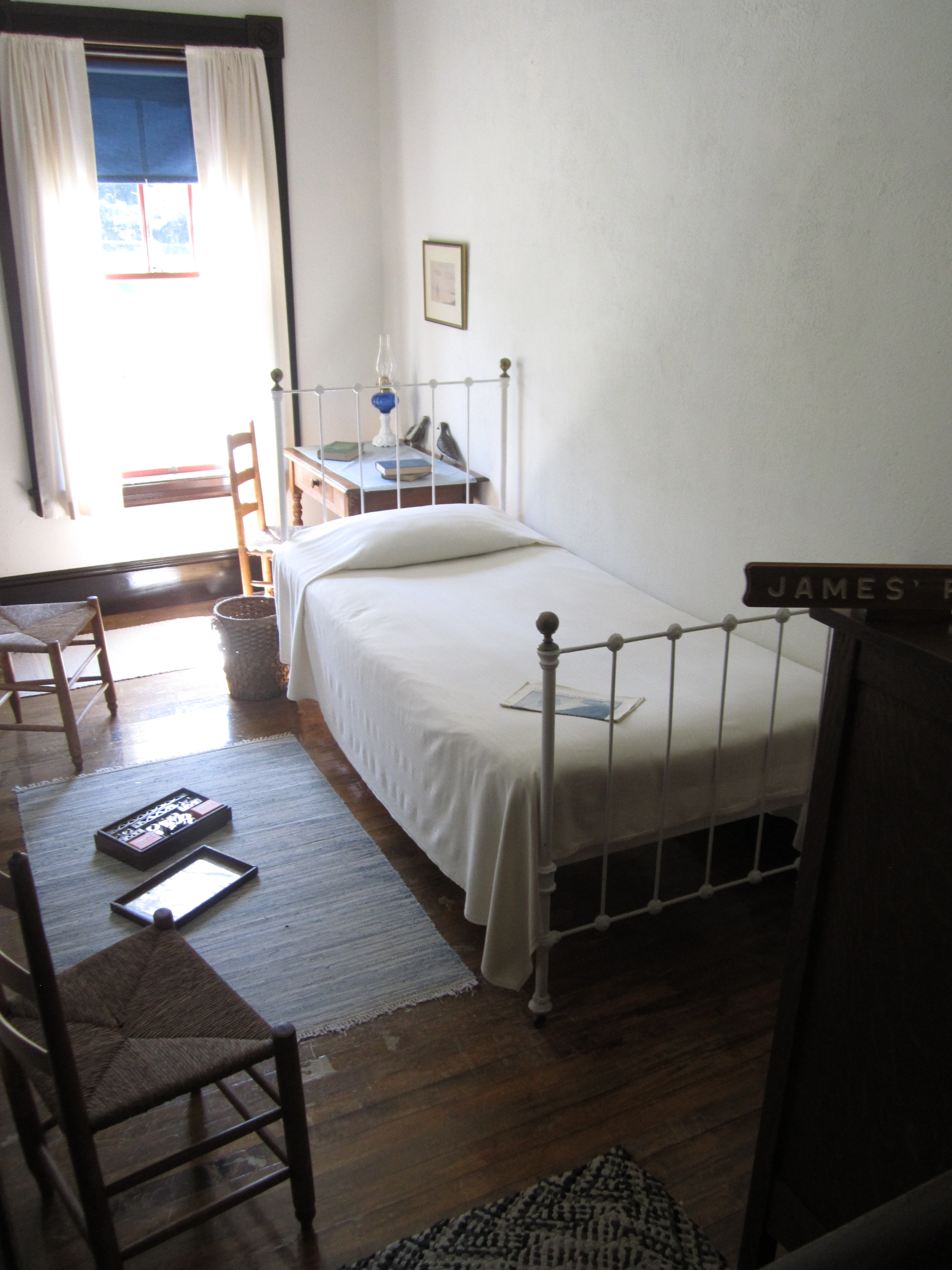
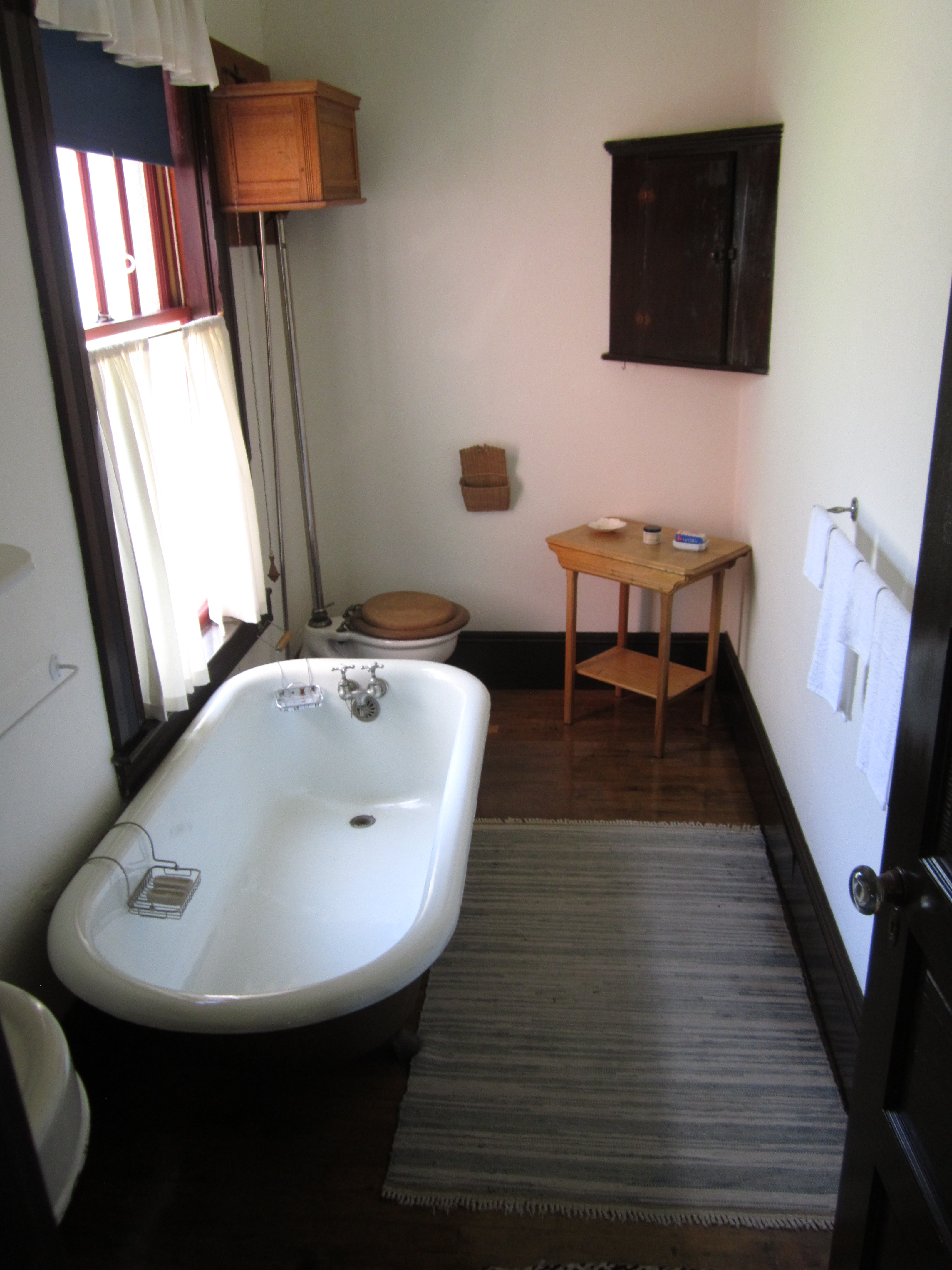


Living Room

Living Room with View of the Bay of Fundy


When I see a piano in a cottage, I can envision hours of family time around the piano.
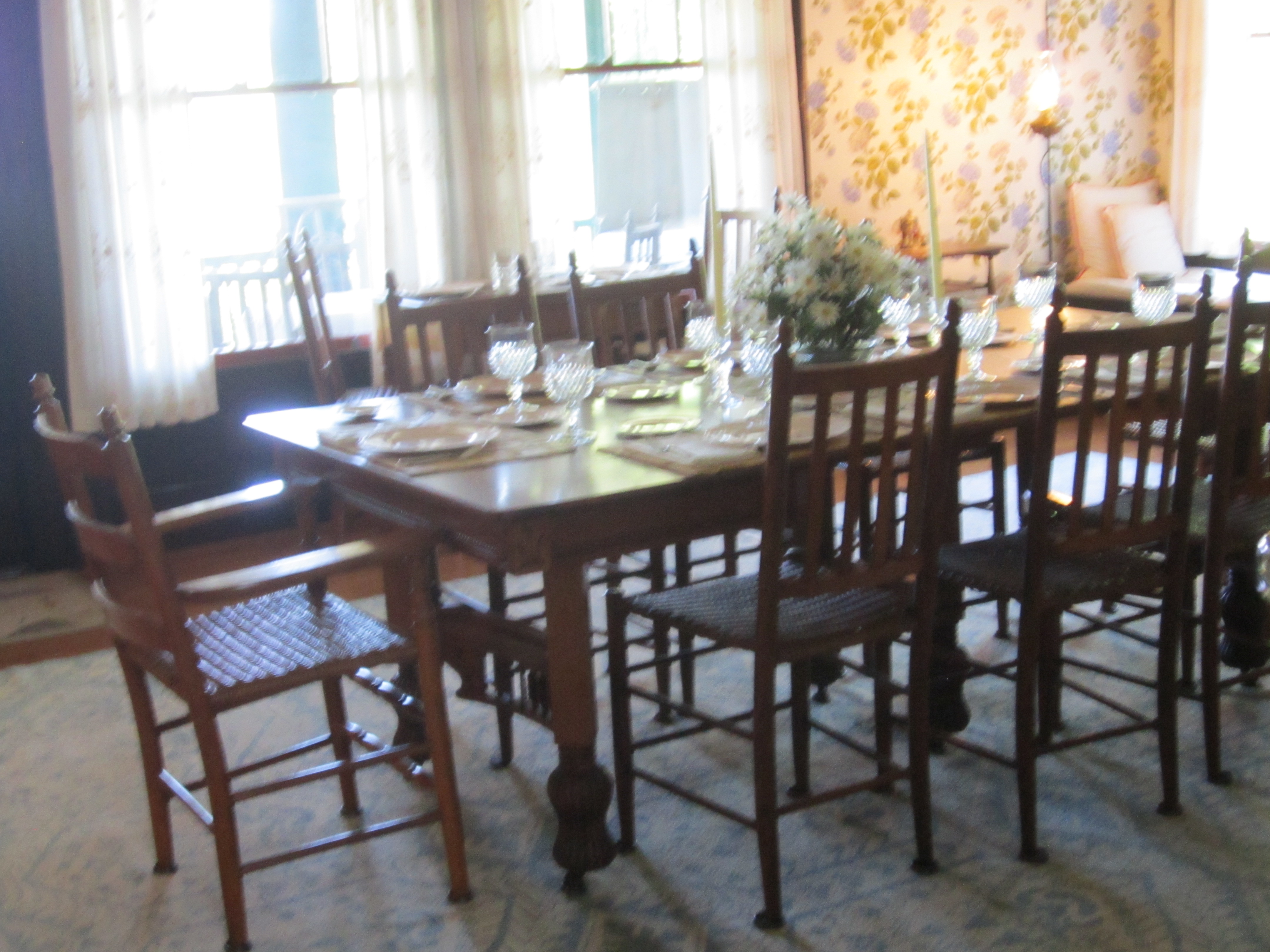
Dining Room The Roosevelts never entertained heads of state at Campobello, only family gatherings.
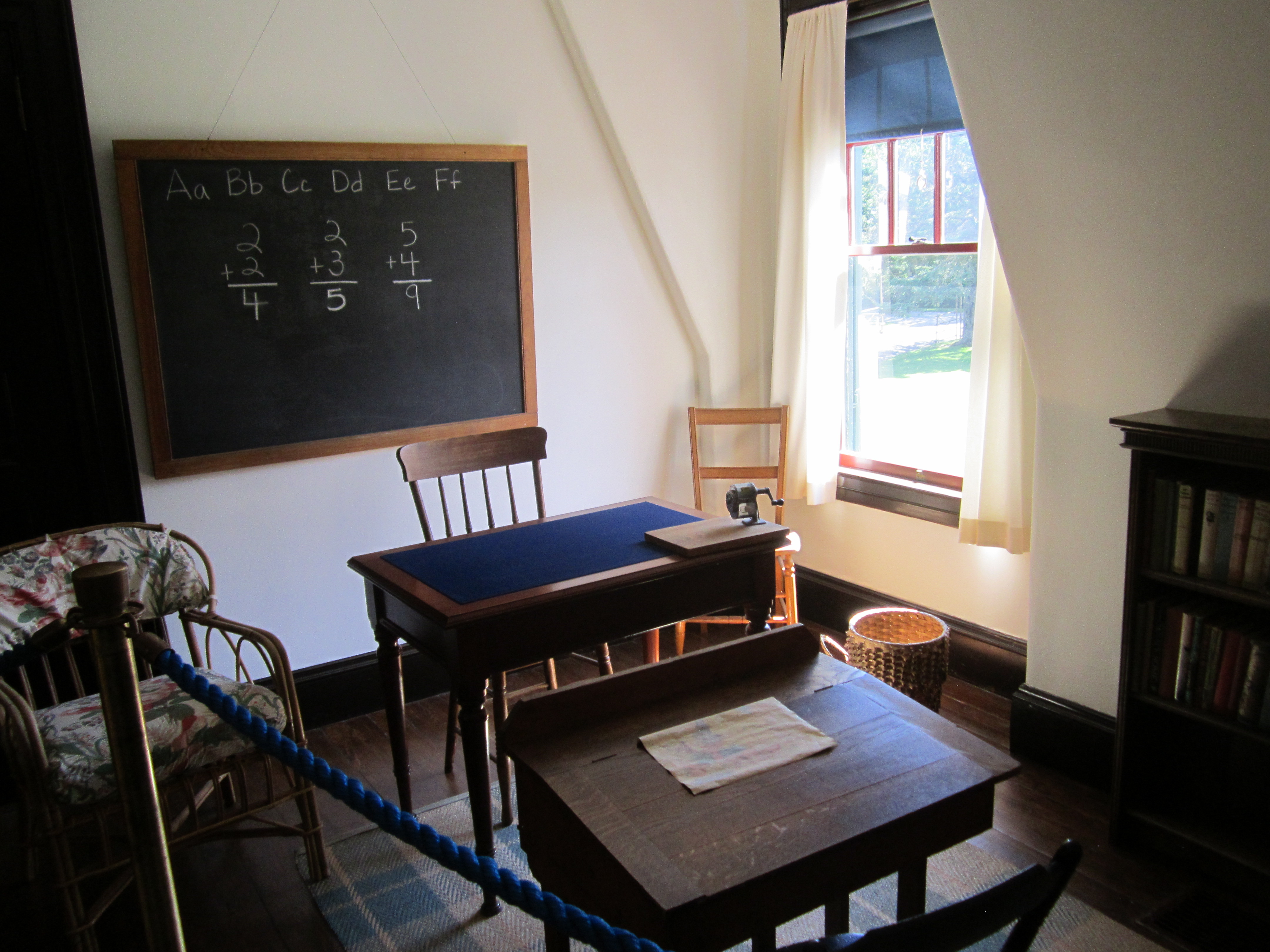
School Room The children had a tutor living with them during the summer and attended school each day.

Kitchen
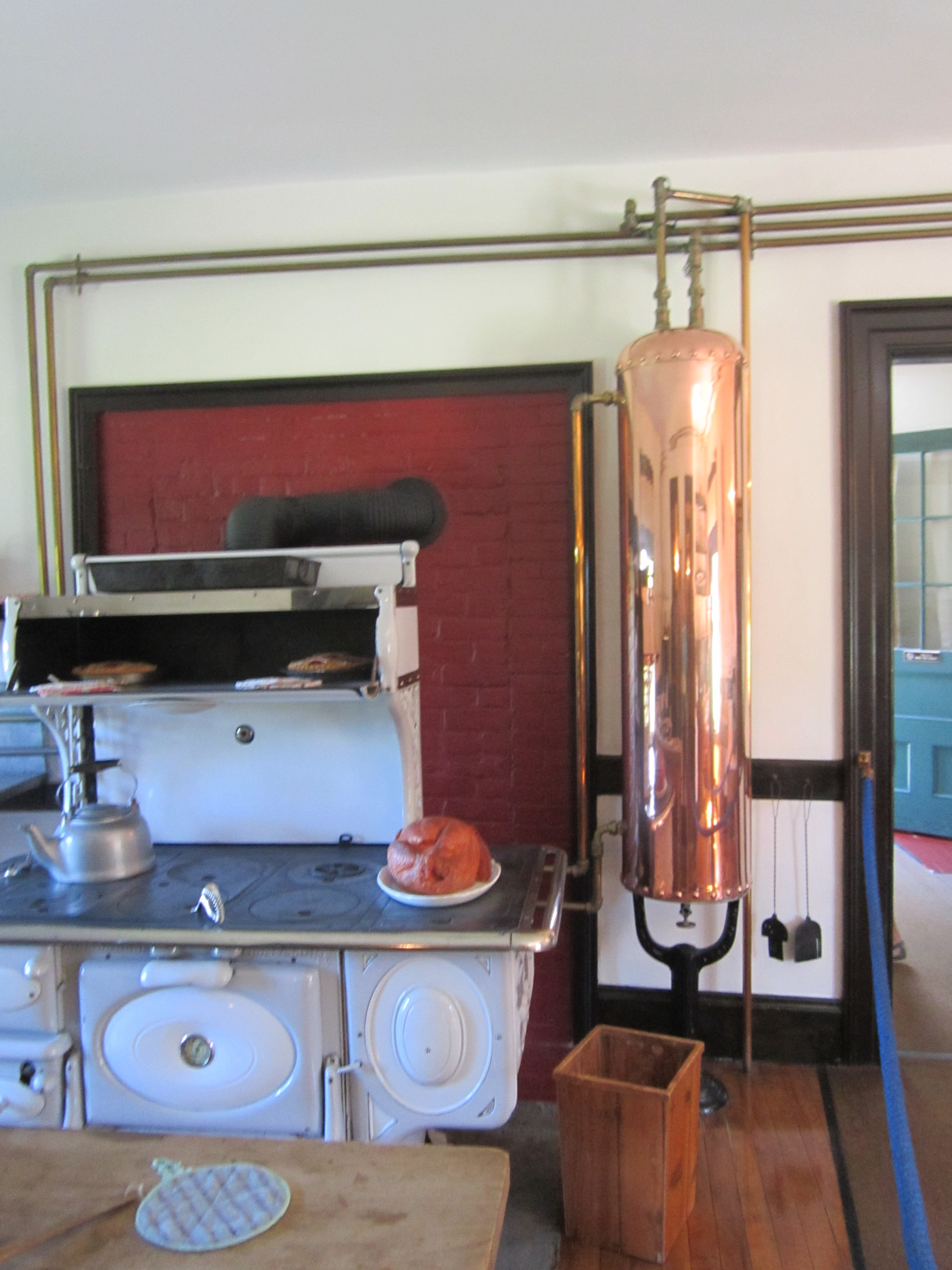
New stove installed for FDR’s last visit in 1939. Note the copper hot Awater heater.
After touring the cottage and the grounds, we enjoyed another lunch (lobster!) and then went on to visit the lighthouse at the easternmost end of the island, one of the most photographed in Canada. You can walk to it IF the tide is out, you’re skilled at walking on wet stones covered with seaweed and climbing rusty ladders between two small islands to get there. We opted to stay on land and take photos.

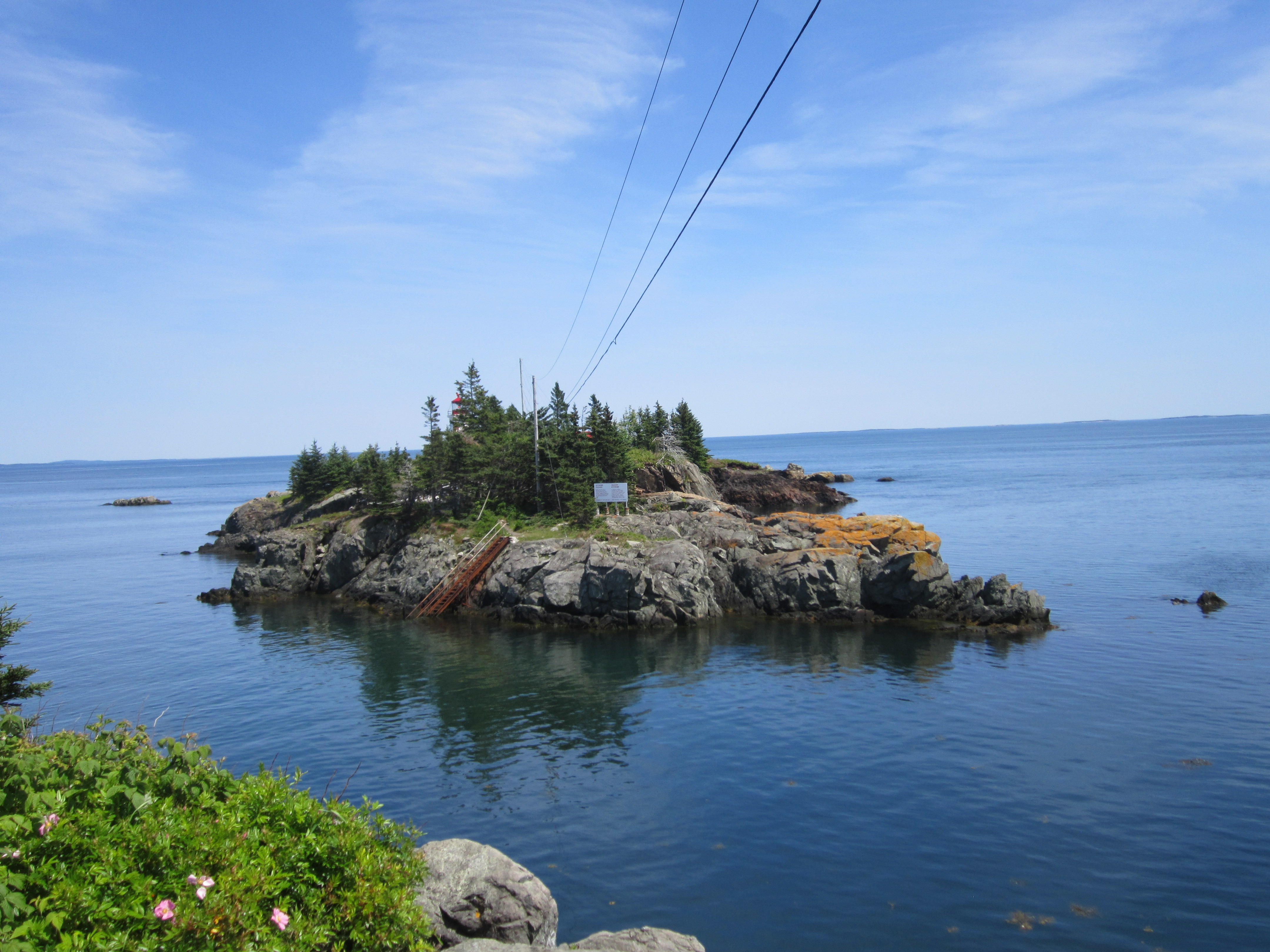
Day 19 Travel to Vermont
Day 20 Vermont State Capitol

We couldn’t have chosen a lovelier day to visit the Vermont State Capital, the 40th we’ve now seen. We were a bit tentative because our plans required us to bring our entire rig into Montpelier, which required finding two adjacent parking spaces free, along with enough space to get in and out of them. The city apparently doesn’t get really moving until about 10:30 because we had no trouble parking directly across from the Capital around 9:30AM.
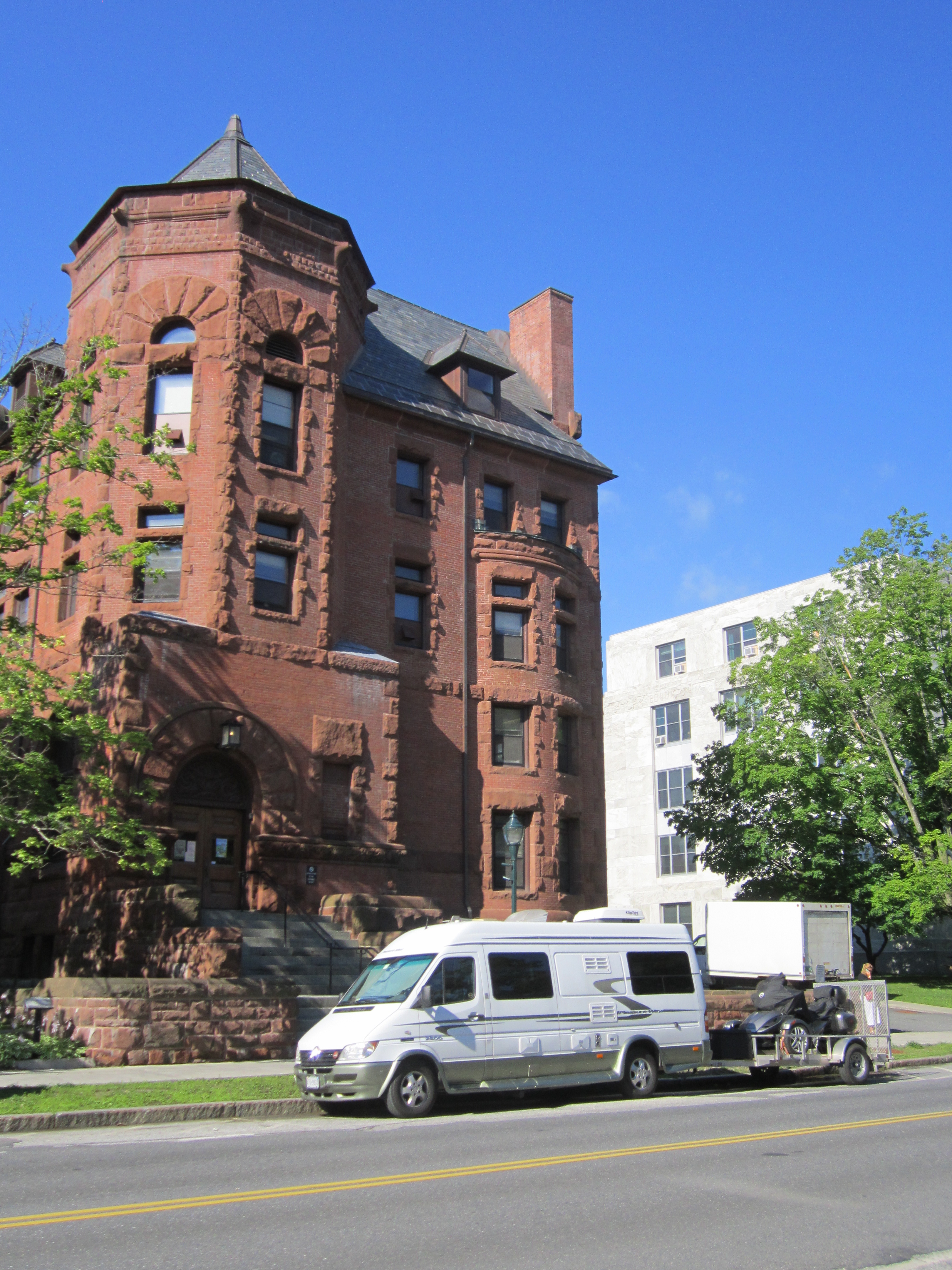
Security was also minimal; we walked right in and eventually the Sergeant-at-Arms caught up with us on the second floor, mainly just to give a welcome. By this time, we’d had the opportunity to view one of the most unique rooms, a gallery that contained art commissioned by the state to commemorate the most significant Civil War Battles in which Vermont troops participated. The largest was a mural of The Battle of Cedar Creek painted by Julian Scott in 1974 which fills nearly one wall.
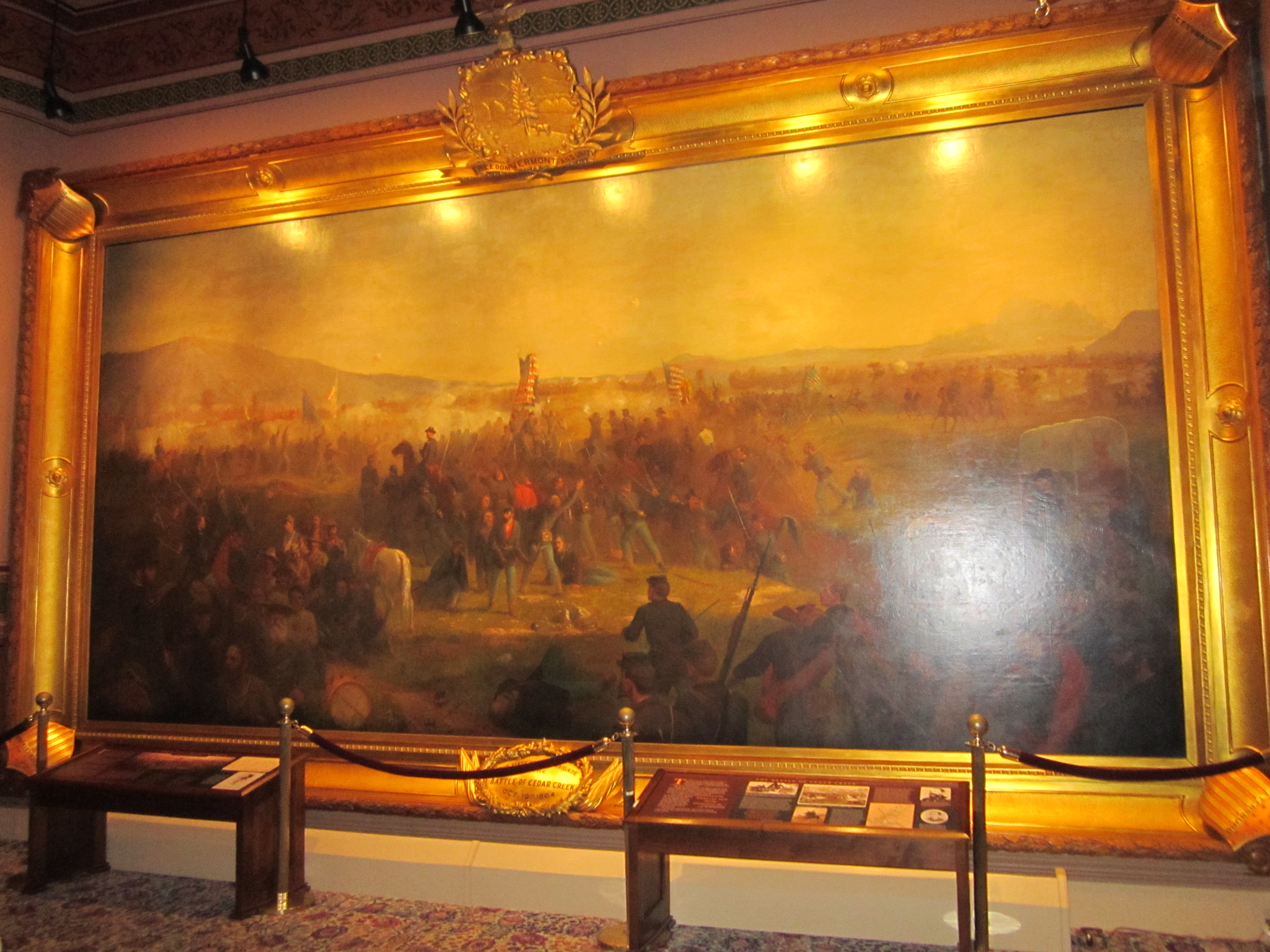
The Battle of Cedar Creek by Julian Scott
In another prominent hallway is found the painting of Howard Dean (Governor from 1991-2003), in a unusually casual pose (as most paintings of governors go) sitting in a canoe.
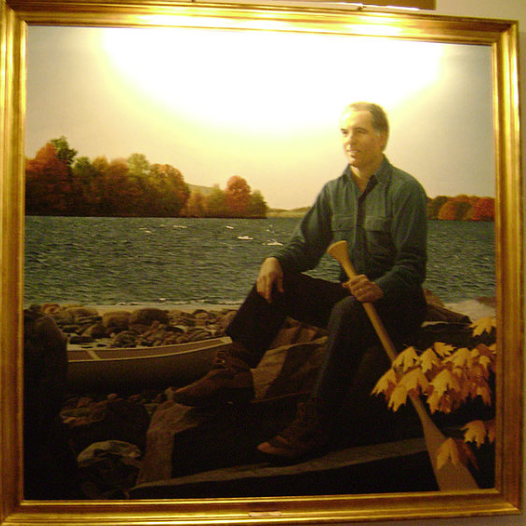
The legislative chambers both reflect the major restoration done in 1980 to bring back the glory of the original strongly Victorian decor of the late 1800’s. The chairs in the back of the Representatives Chamber are for the Senate when they have a joint session. Otherwise, the public is permitted to sit in them.

Representatives Chamber

Senate Chamber
Day 21 Hyde Park, New York
Having started our year’s travels with a stop at Warm Springs, Georgia to visit FDR’s Little White House (at the site where he built a polio rehabilitation center and also where he died), and having seen Campobello, the Roosevelt family’s summer home, earlier on this trip, it was only fitting to stop by Hyde Park to see the other notable homes of this remarkable family, the Roosevelt family estate at Springwood, and to see Eleanor Roosevelt’s private refuge at Val Kill.
FDR was born at Springwood and it was Home to him for his entire life. It was the place he could come to for rejuvenation and peace…as well as to entertain heads of state, like the King and Queen of England, Winston Churchill, the Canadian Prime Minister and European royalty. Over his lifetime Springwood was extended and renovated, primarily to accommodate the Roosevelt’s growing family. Springwood belonged to his mother Sara, and she maintained ownership of it and the estate, held in trust for Franklin, until her death, only four years before FDR’s. Thus, Eleanor never had a home she could truly call her own until Val Kill ( see next post.)
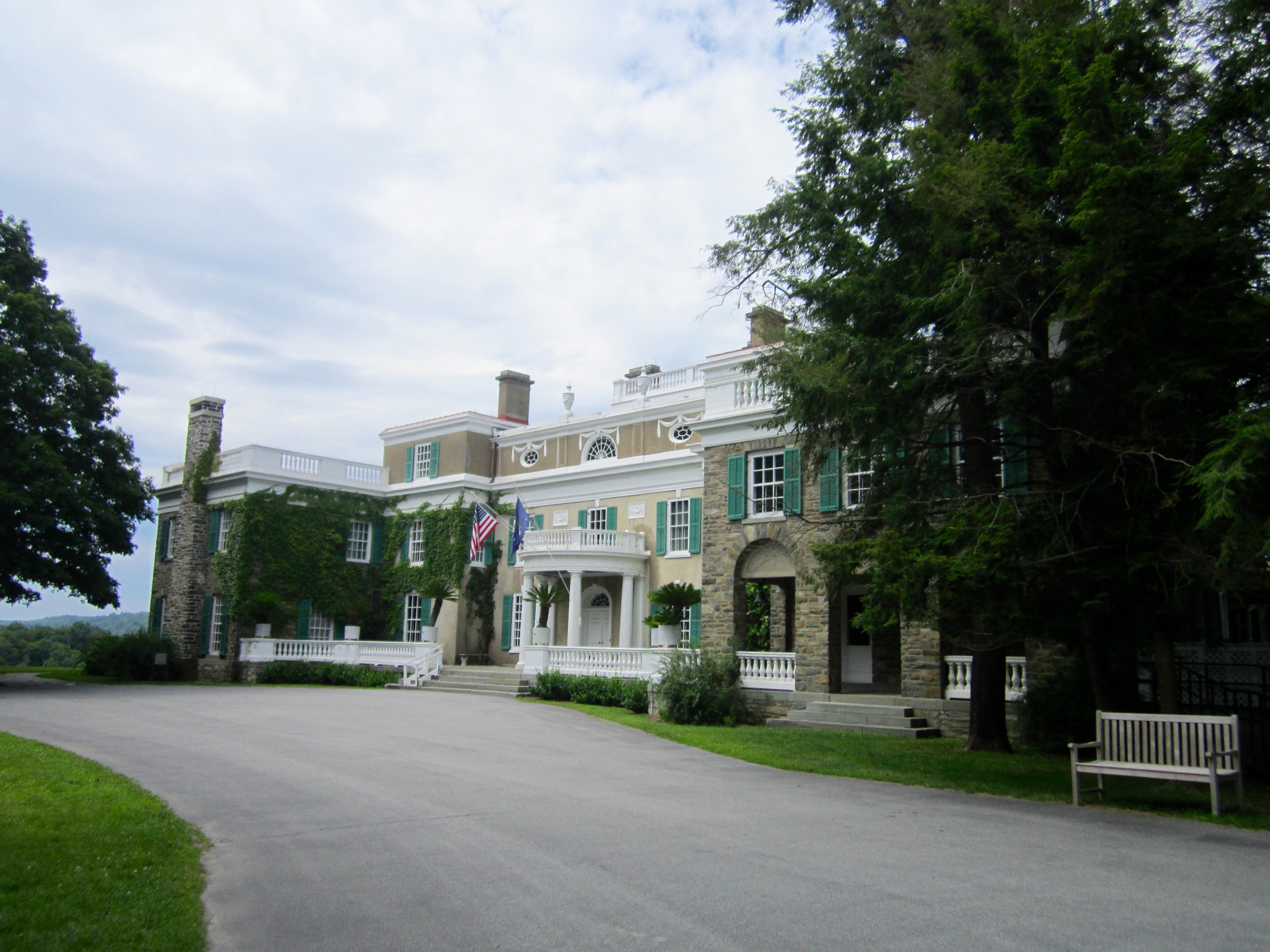
Springwood was built in the middle of the 19th century, and thus the heavy, dark influence of Victorian decor is evident throughout. In general, the rule seems to be that if there is a surface available, cover it with something.

Sculpture of young Franklin, given to the family by a French sculptor. Note the bird collection on the back wall. FDR was an avid bird collector, but his family did not allow him to shoot the bird for his collection until he had researched the bird thoroughly, and then he was required to stuff it himself.


The Snuggery, where Sara Roosevelt met with servants in the morning to give orders and to pursue her correspondence or reading.
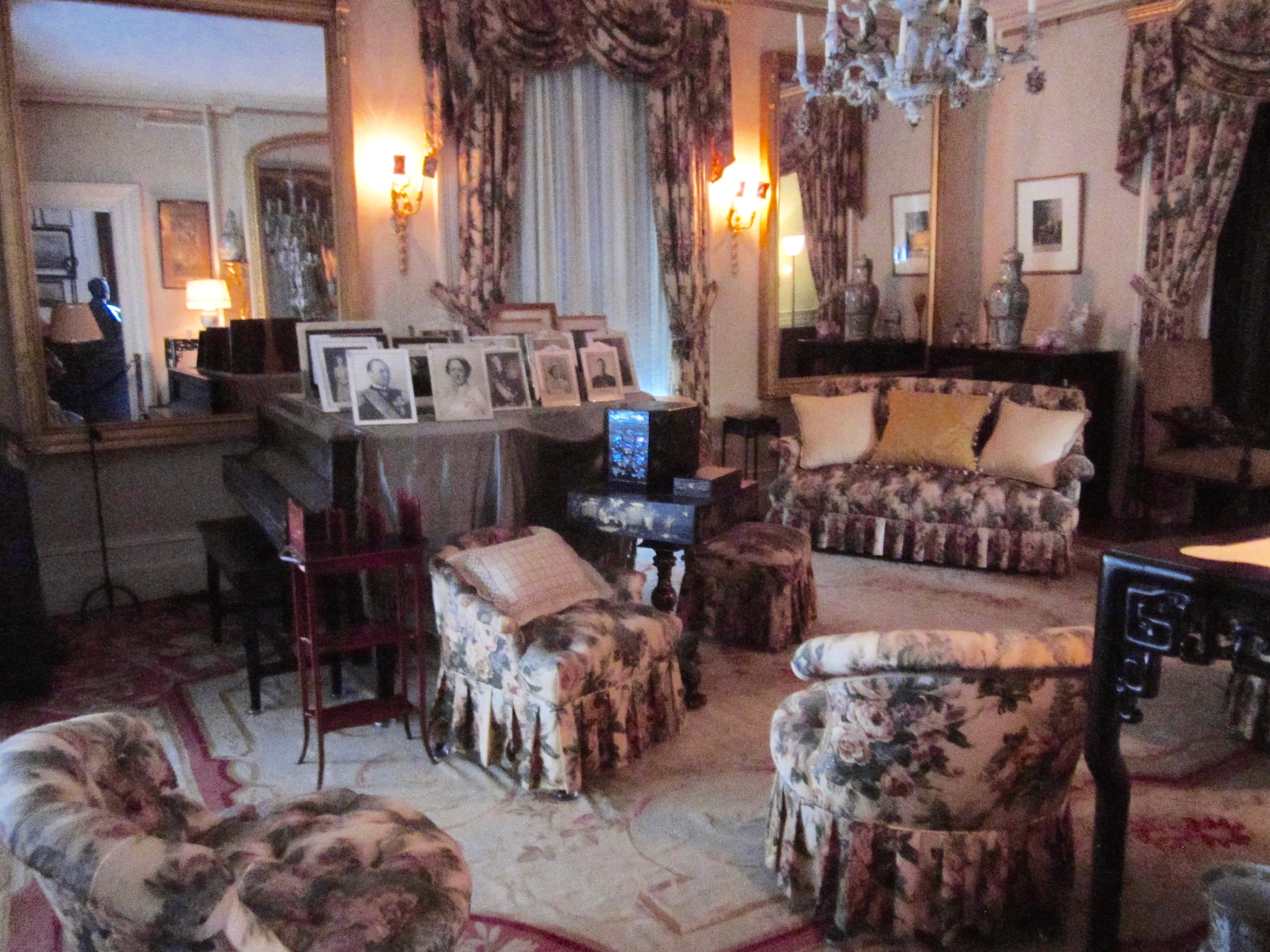
Dresden Room — Downstairs sitting room; note piano in corner covered with photos.
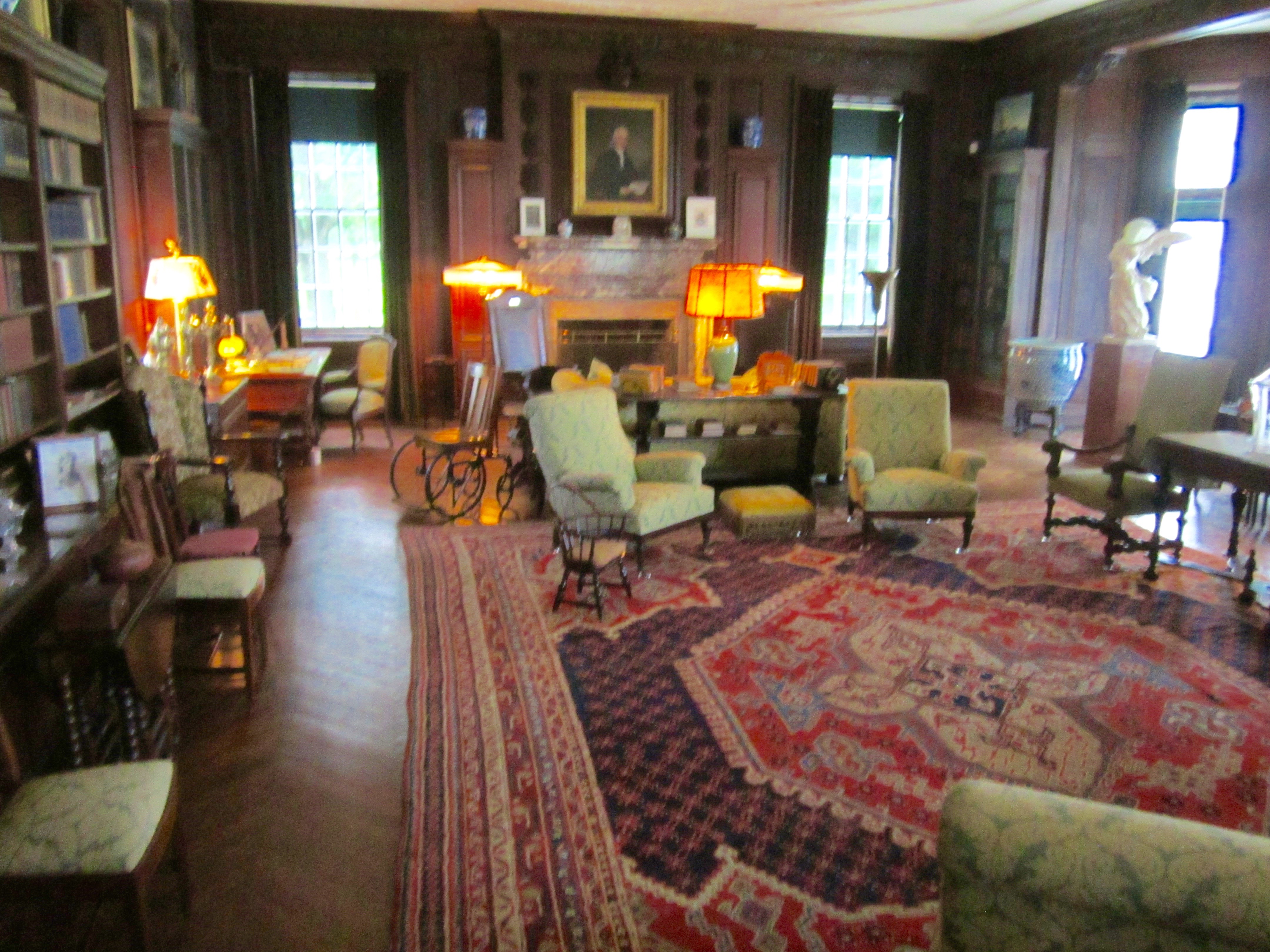
Large sitting room at east which occupies the entire east end of the home, where many receptions were held for heads of state.

 Upstairs, the house contains many wings and bedrooms, including a wing of servants’ quarters. All the rooms are furnished with elegance but not extravagance, the kind of furnishings you’d find in an upscale B&B dedicated to historical accuracy.

The Pink Room – a suite for visiting dignitaries
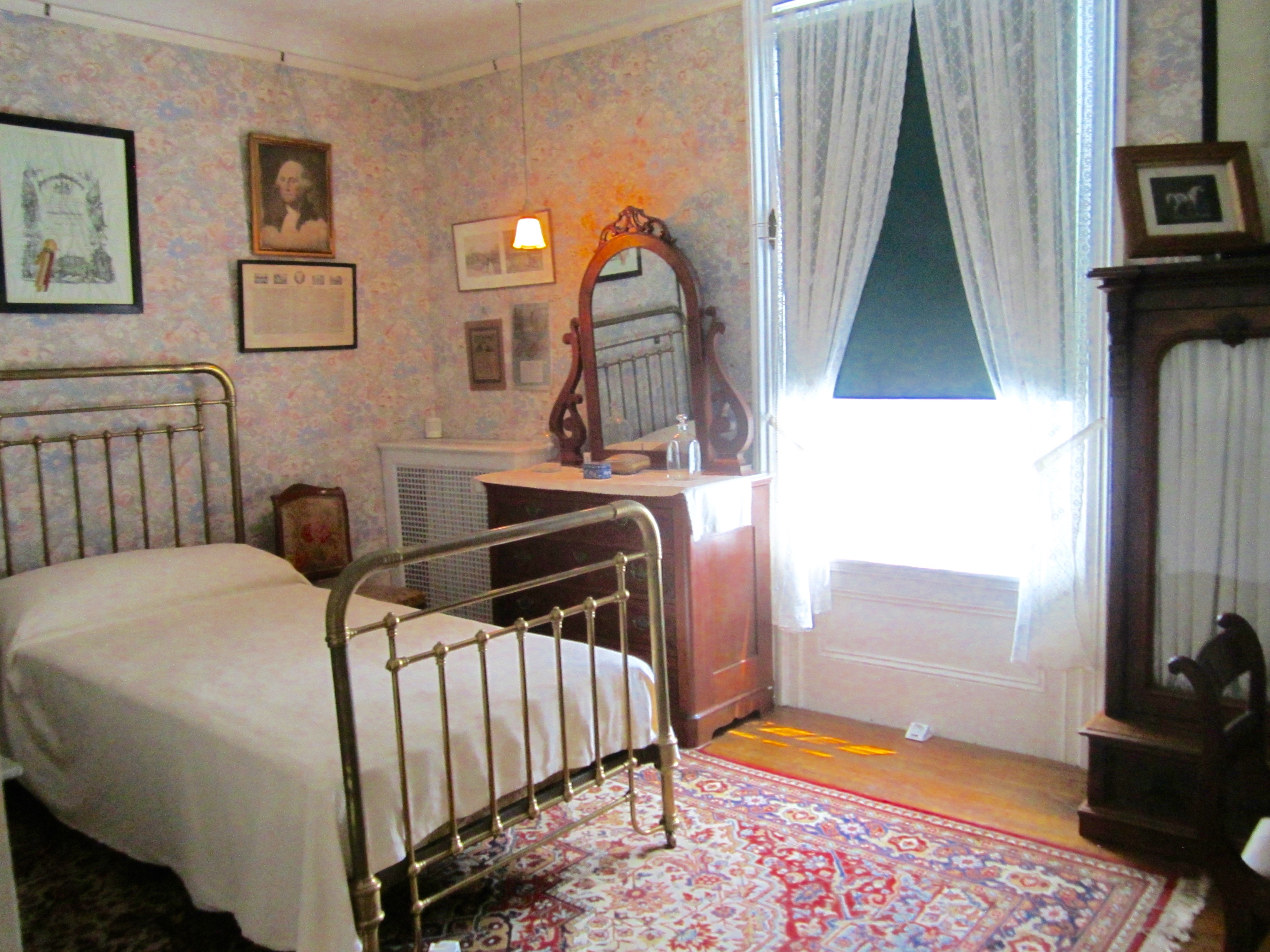
FDR’s boyhood room
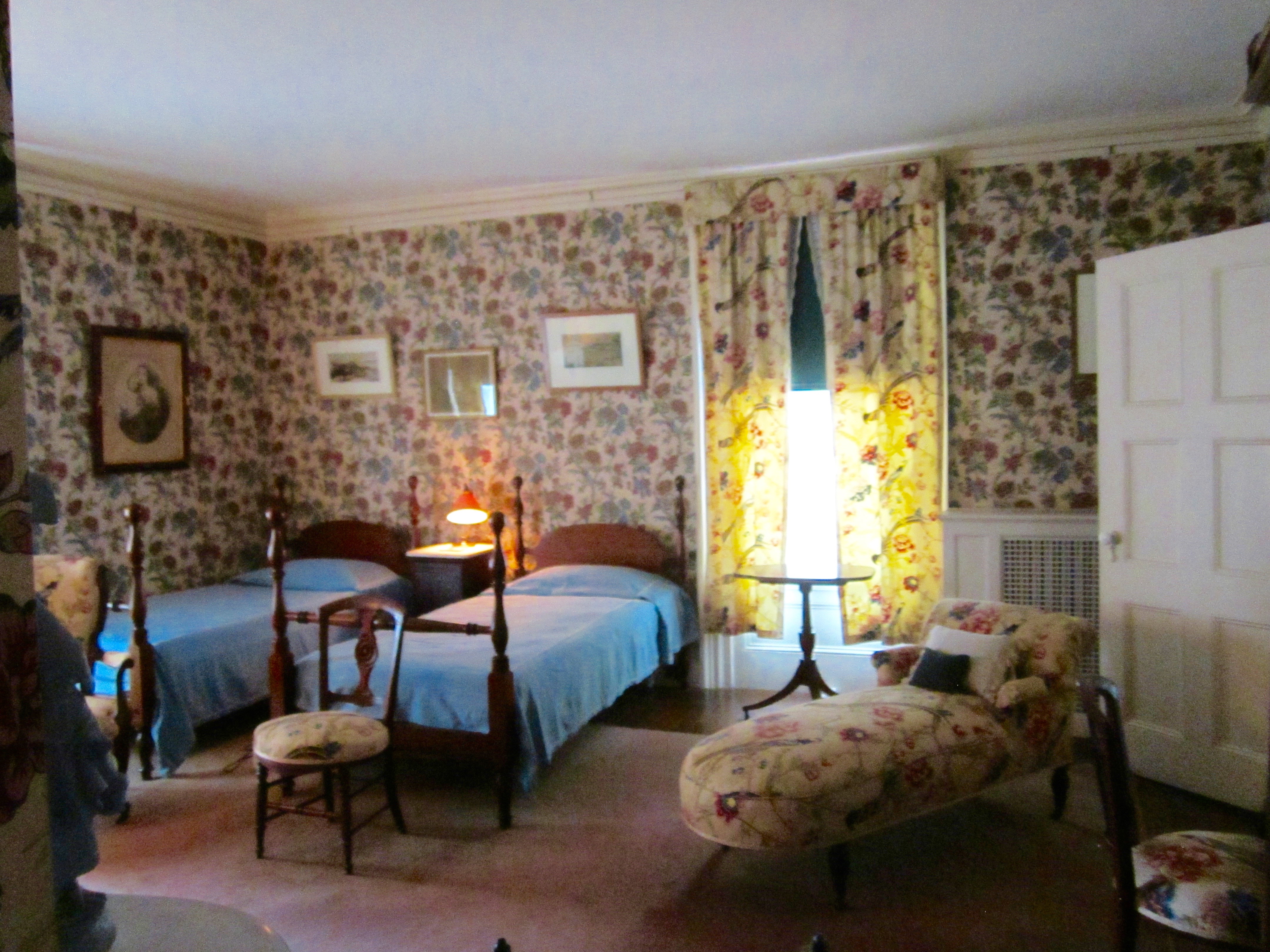
Franklin and Eleanor’s Bedroom

Sara Roosevelt’s Bedroom, where FDR was born, later to become FDR’s bedroom after his illness.

Eleanor Roosevelt’s Bedroom, adjacent to FDR’s.

Eleanor’s room is by far the simplest of them all in decoration. The pictures she preferred were photographs of family and close friends.
While the visit to Springwood gave a good sense of the life FDR experienced growing up in Hyde Park, it was overshadowed, IMHO, by the Franklin Roosevelt Presidential Library and Museum.The museum was built on the grounds of the Springwood estate in 1939-40 by Sara Roosevelt for her son, and it is unique in that it is the only Presidential library which was actually used by a sitting President. We were told that it would take at least an hour and a half to go through the museum, and we could easily have spent twice that amount of time. The artifacts they have on display present a true living experience of the history they speak of, and they have artfully woven together both Franklin’s and Eleanor’s story. We were so engrossed with the early years that we had to make the tough choice of leaving to go see Val Kill with the remaining hours of our afternoon, or forging our way through the years of World War II. We chose Val Kill, but it is definitely a museum worth dedicating a day to. Check it out online at http://www.fdrlibrary.marist.edu where you will find a virtual tour that gives you an idea of what is there. It is definitely an “I’ve got to come back again” kind of museum.
Day 22 Val Kill in Hyde Park
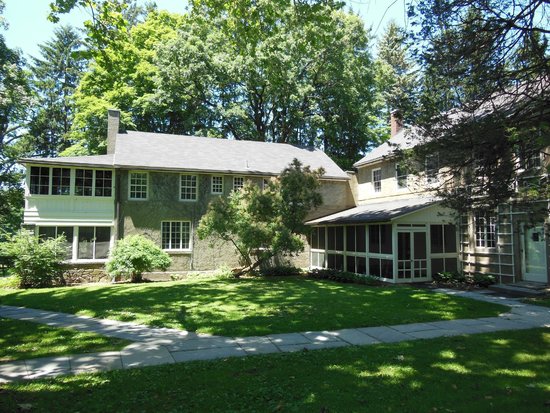
Val Kill, Eleanor Roosevelt’s Home in Hyde Park

Lake in front of Val Kill
Eleanor Roosevelt biggest wish in life was to be useful, and nothing illustrates that better than the home that she created for herself at Val Kill. It is located several miles from the Hyde Park estate of Springwood, which was officially her home. In reality, it was her mother-in-law’s home, and Sara Roosevelt ran it and her family like a general. Thus, Eleanor jumped at the chance when Franklin suggested that she and her friends build a cottage on a piece of property he owned in Hyde Park on a small body of water, the Fall-Kill, a place where the family would come for picnicking and summer outings and sports. It ultimately became part of an experiment to see whether FDR’s ideas that small local industries could help keep farming communities viable during hard times. Eleanor and her friends built a cottage and a small factory for building furniture, and hired local people to work there.
The factory lasted for a few years, but when it was necessary to shut it down, Eleanor converted the factory portion into living quarters for herself, and it was here that at last she was able to create a home of her own. It is a simple home, and many of the rooms remind me of those of my own grandmothers’ cottages. Nothing matches; Eleanor Roosevelt felt that her friends weren’t all of one size, so why should her furniture be. It’s a versatile home, with many small cozy sitting areas. You get the feeling that conversation, not ceremony, was the most important thing in her life. She also decorated her walls primarily with photographs, or with paintings of people she cared for. Her dining room is covered with Christmas cards from the White House staff.
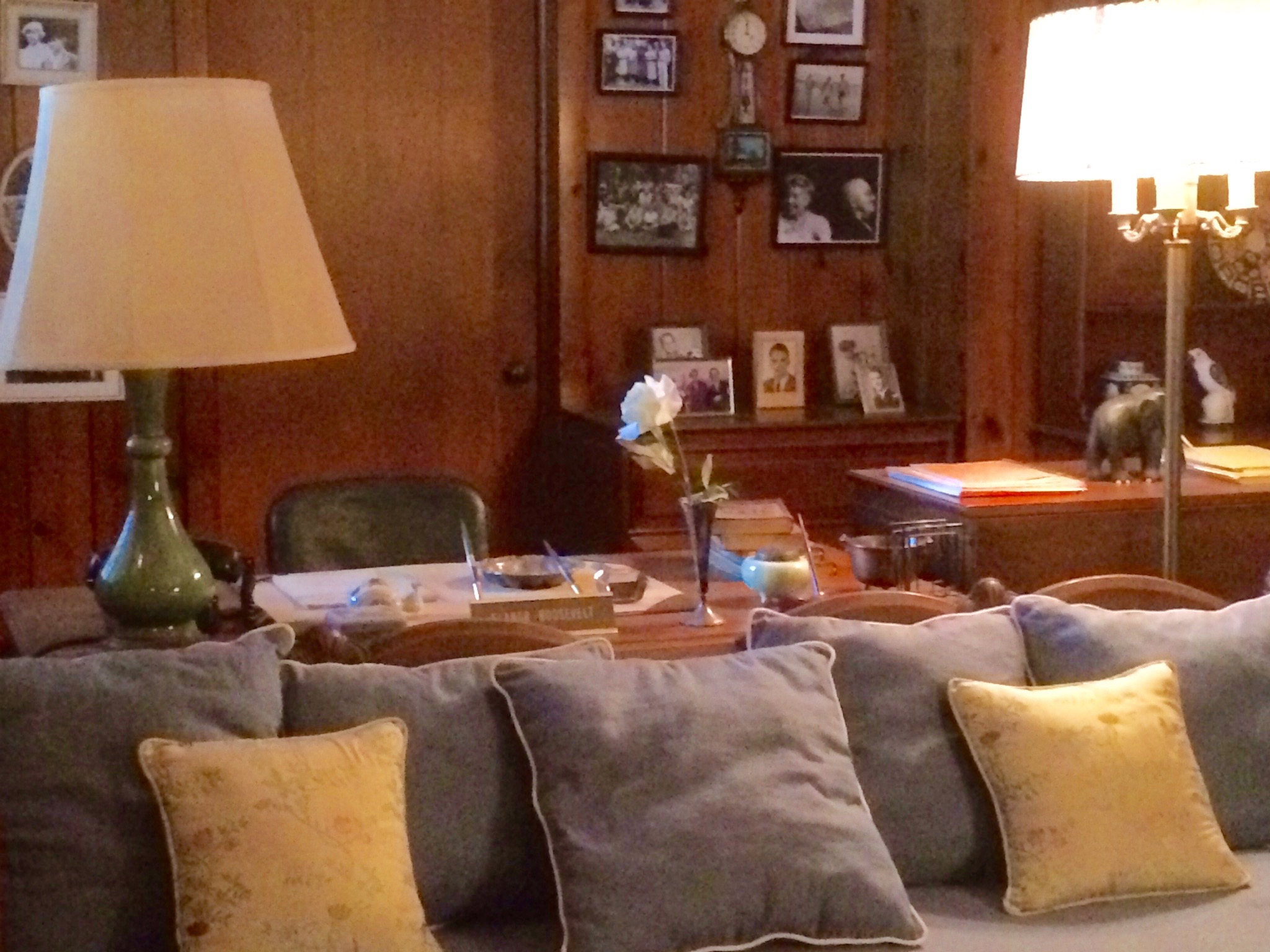
Eleanor Roosevelt’s Desk, where she wrote hundreds of her “My Day” columns, wrote speeches, books and correspondence.

Dining Room — often set buffet style because it was difficult to know how many people might be coming to eat. ER was notorious for running into town for an errand, and inviting many of the people that she met there to come over for dinner. She had a very patient and devoted cook.

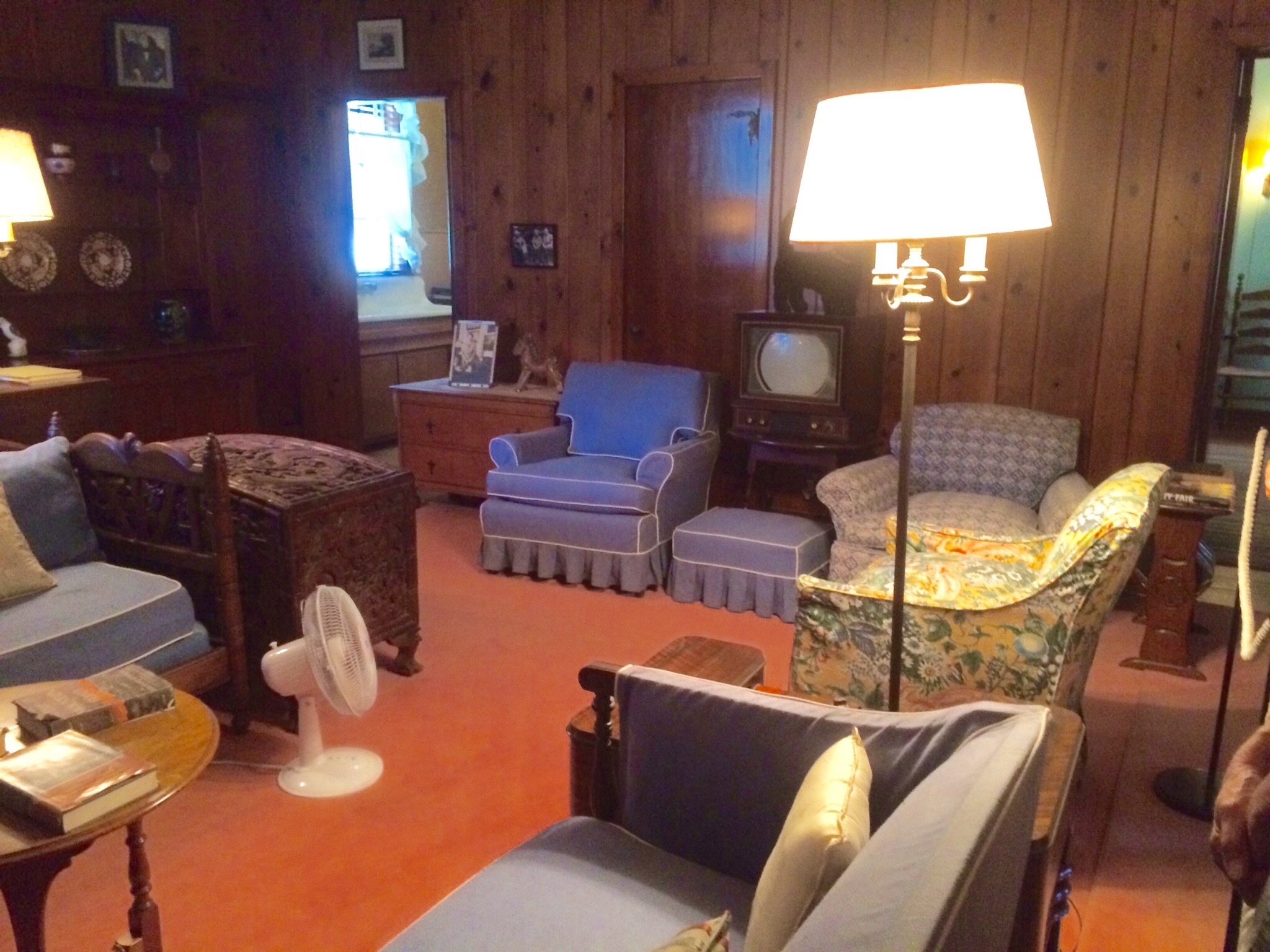
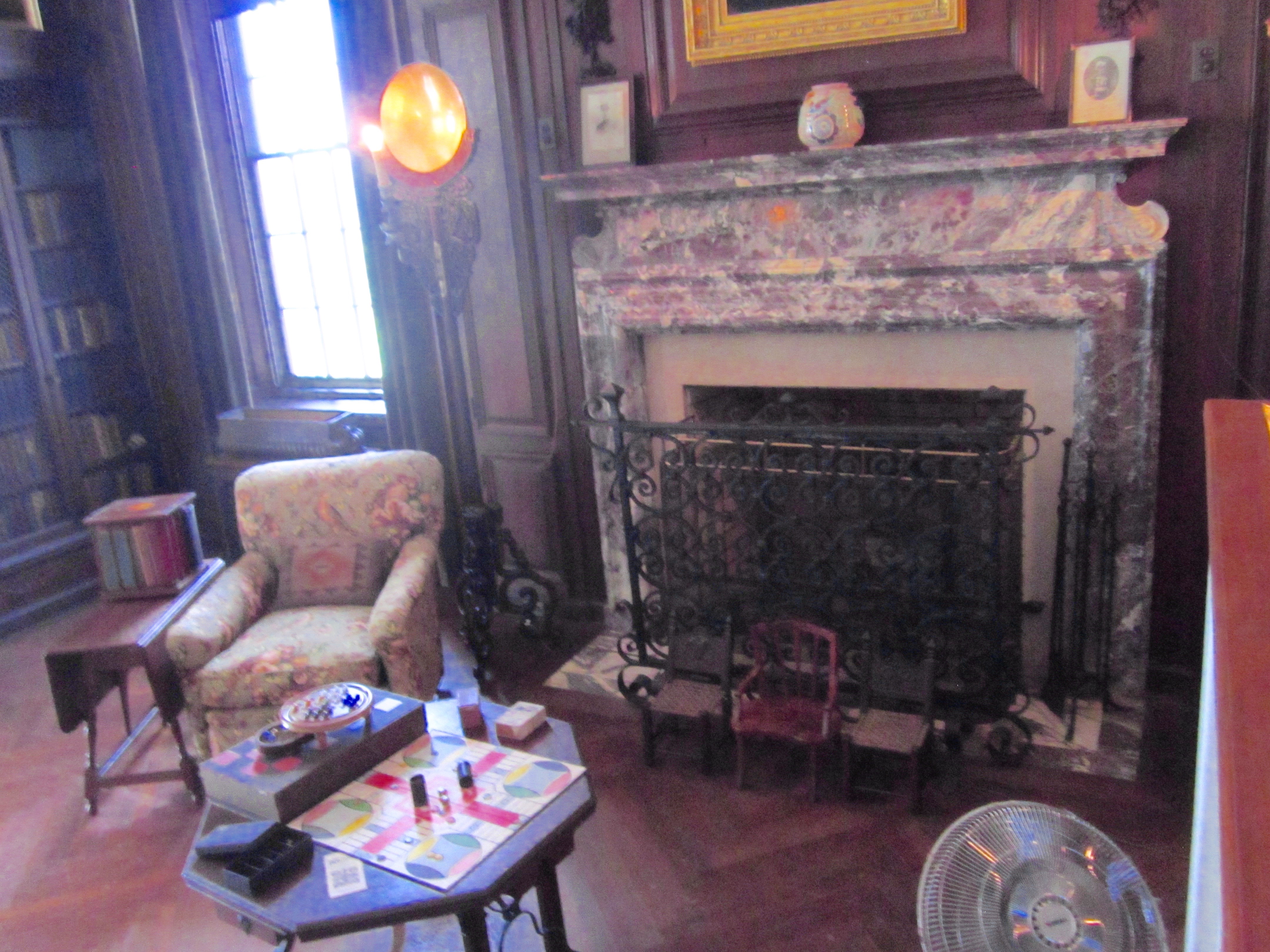
The most impressive moment of this tour came when the guide pointed to the two chairs at the far end of the sitting room below. (Note the blue and pink chairs sitting by the lamp with the orange shade.) It was at that table that John Kennedy met with Eleanor Roosevelt in 1960 to ask for her support with his Presidential campaign. She held out until he agreed to take a more aggressive position regarding civil rights. Even though neither lived to see it happen, it was the beginning of Presidential involvement in ultimately achieving civil rights. There was a thrilling sense in the entire house of the history that was made by this remarkable woman and how much it contributed to all she achieved.
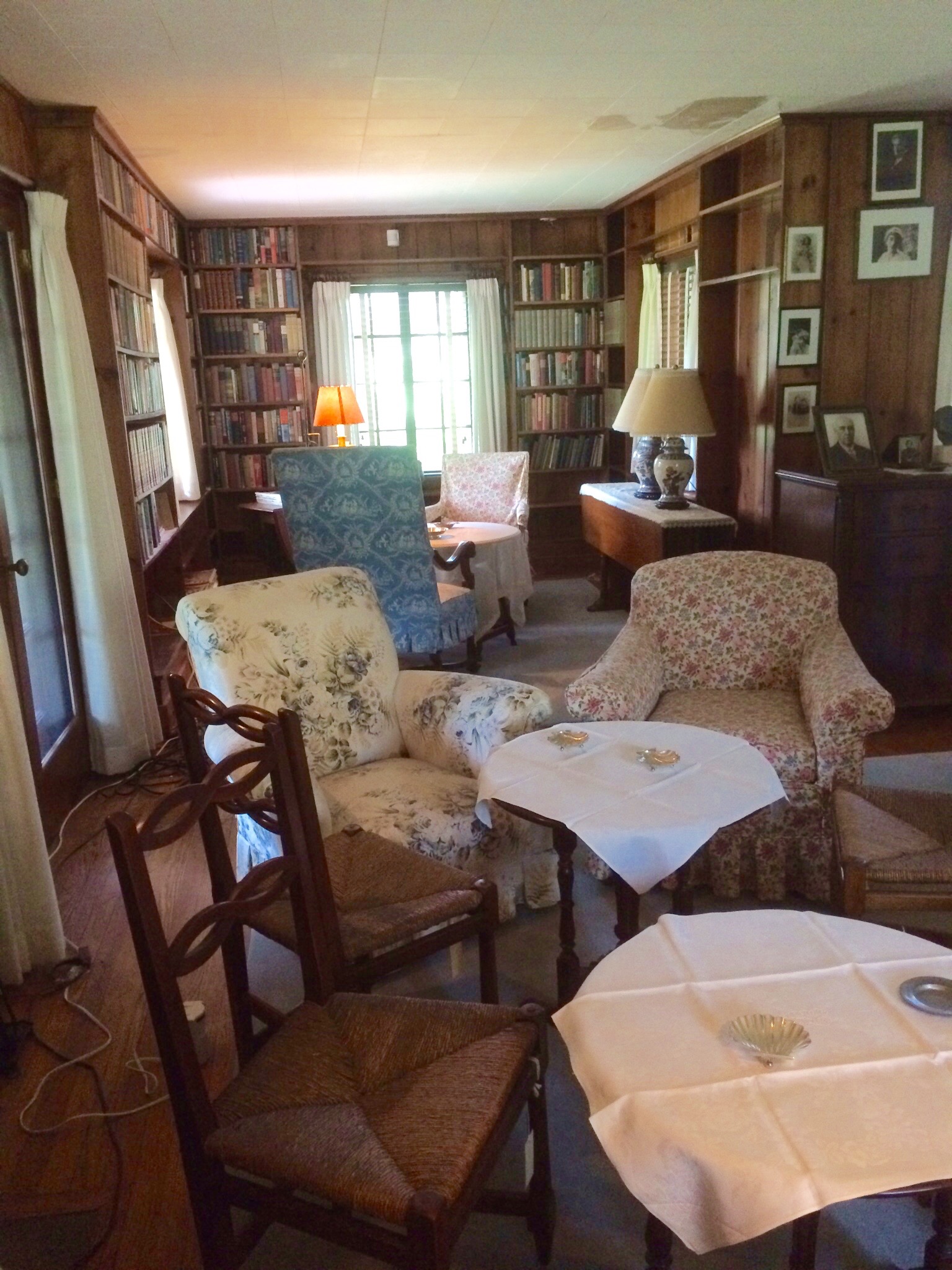

Some Final Thoughts on the Roosevelts

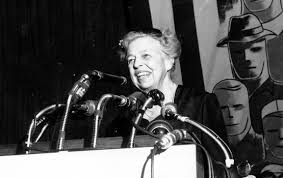
After having spent time at the Roosevelt’s various homes, the take-away feeling is a reinforcement of my belief that one person can make a huge difference in this world. And although these were not “ordinary people”, they were very human, with likely as many foibles and faults as remarkable accomplishments. Much of this sense was conveyed by the docents of the National Park Service that were stationed in each of the houses to explain what we were viewing and to answer questions. In every case, you could feel a warm affection for the Roosevelts that made conveying all the details they knew about them and their family a joy and an honor. I understand there is one docent who is close to 100 at Springwood who knew the Roosevelts personally, and I would love to hear some of the stories she can tell. I’ve been to National Parks all over the country, and I’ve never before experienced this closeness to their subject matter that emanated from the Warm Springs, Campobello, and Hyde Park rangers. Kudos to the National Park Service for doing their job so well, especially in this time of limited funding.
 On the Road Again

What an exciting trip you have planned! And how easy you’re making it for us to follow you in a virtual sense from afar. Please keep us up to date as you wend your way around North America…. Safe travels, and I’ll see you first in Grand Rapids! 😊🚐💌